- Social Justice Part I – Environmentalism: A Theology of Creation Care
- The Deep Blue Church
- Salvation is Liberation: Part I
- Living Water John 4:1-42
- 2020: My Year in Review
Have a great end to your year. See you in 2021.
Have a great end to your year. See you in 2021.
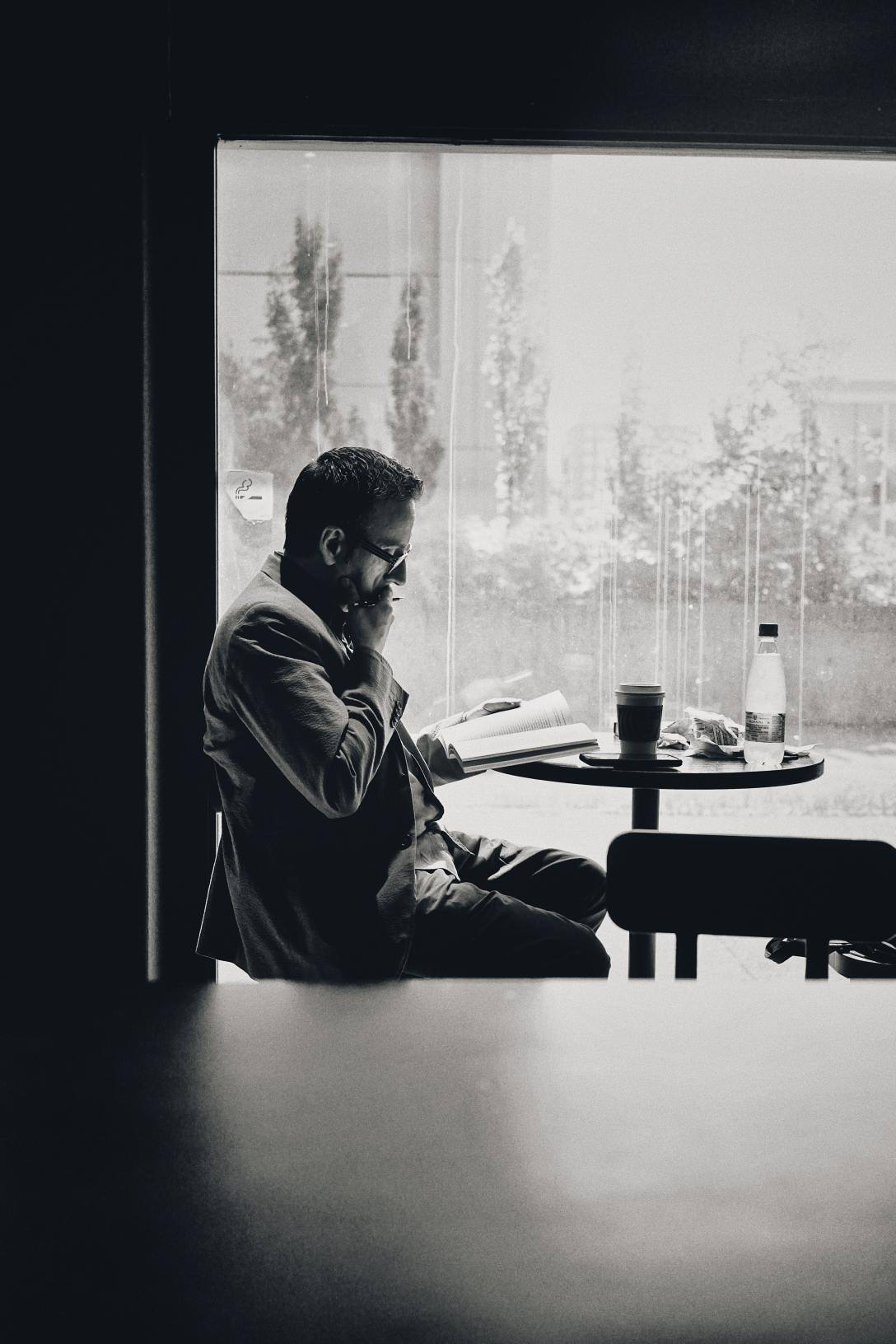
2020 has been one of the most challenging years of my entire life. First, I tackled the new year as a single person for the first time in seven years. Unemployed, with no money, and depression literally crushing me, I had no idea what 2020 would hold. I tried to study, but in the first half of the year, my mental health got the better of me, and I woefully failed. I couldn’t bring myself to find employment; there were days I couldn’t do anything but stare at my phone in an open-eyed coma silently screaming to God for something to change. COVD-19 hit us all; isolation wasn’t just a mental health issue; it was a physical necessity as Australia battled the first wave of the pandemic. Doubt started to crash upon the shores of my mind and heart. I doubted the existence of God; I questioned my place in the world, my life. Every day was a numbing haze of uncertainty and a mental void as I lived each moment almost on autopilot. Books became mush in my hands as the words fell off the pages. The Bible, church, and prayer became God walking through Garden calling out to me as I hid from them (Him) in video games and meaningless distractions.
There were some good times. I started therapy (which I need to go back to). I had supporting friends (they probably didn’t know half of what I was going through). The times we could meet helped me get out of my rut even if they were too fleeting. I met someone new who interestingly enough is an art psychotherapist and a Christian. God has used her to make sense of what I’m going through, and she has encouraged me to get back onto the Path (relationships are always sanctifying). Coffee still tastes good. However, I’ve gone off soy, and I’m onto oat milk now. Seriously, try it. It’s both good for the environment, and it tastes like regular milk. This year God has had me go through some vast transformations regarding my theology around the environment, and with me coming to terms with some of my racial bias’.
Nevertheless, despite some significant change, the world still feels a little less colourful, and a little less bright. Even writing this blog is so much of a mental effort even though I love to write. …. Where am I going with this? I suppose, if nothing else, I want to write to other people who are like me. To those who know God exists yet, He never seems to speak. To those who know that miracles exist yet they seem to only happen in fairy tales. To those who know life is full of beauty and goodness, yet they’ve been without it for so long they’ve forgotten what that means.
I. Totally. Get. It.
I can’t remember the last time God ever spoke to me from the Bible or otherwise. I can’t remember when I saw something miraculous and jumped for joy. I can’t remember the last time I saw colour, or truly enjoyed the smell of saltwater in the air or the sand between my toes. I can’t remember getting that intellectual buzz from a good book or sermon or having a genuine laugh with a good friend. The love of a woman (or a man), fine wine, good food and friendship all seem like out-of-body experiences for the depressed. Unfortunately, I’m not much better than the rest of you so I can only offer some tiny pieces of advice.
I’m not some guru on life or mental health. This is all new (and old) to me. Life is hard. It does suck. It is full of pain and hardships. There are no easy silver bullets or seven steps to a better life. Anyone who says otherwise is full of shit. We do have a lot to look forward to, though. If you’re like me, then you believe that Jesus is coming back to wipe away every tear from every eye. To right every wrong. To make all things new again. I know it feels like you’re hanging on to a thread, and you’ve heard it a million times (and then some), but stay with me here as we walk after Jesus together. I can’t ever guarantee you an easy life, but I can promise a life with purpose, forgiveness and hope. That’s more than what many others find.

Should Christians be environmentalists? Yes. The Church in the West has always done a great job of presenting the Gospel of forgiveness. However, this has often come at the expense of the Gospel that transforms, not only humanity but all of God’s creation. Sandra L. Richter addresses these issues with rich biblical theology as she brings to light what the Bible has to say about the environment, and the Christians place in caring for it. Richter’s book is a must-read for anyone who takes climate change seriously, and who reads Genesis 1-2 and wants to live out humanity’s vocation with rich theological nuance.
2. Reading While Black by Esau McCaulley
Theology throughout church history (especially within the past five hundred years) has been dominated by white western males. Even as I look upon my bookshelf, or as I scroll through my resources on Logos, I’m hard-pressed to find any resources that I haven’t deliberately gone out and purchased that weren’t from someone who was a different ethnicity from me (apart from the early church fathers of course). Insight, wisdom, and meaning is dynamic and can take on various forms depending on one’s cultural lens. Even from within our borders, growing up as an upper-middle classed white male on the Coast can elicit different interpretations from God’s Word, rather than a marginalised lower classed black or aboriginal child living in the West. Esau McCaulley’s book wonderfully demonstrates how a black (African-American) reading of the Bible is an invaluable tradition for the wider church to tap into as it tackles some of the biggest social concerns of our day. Another must-read for anyone wanting to meaningfully engage with the problem of racism and inclusivism in our modern-day.
3. From Every People and Nation: A Biblical Theology of Race by J. Daniel Hays
It can be incredibly easy to forget that you are not the main character of the biblical story. In fact, the protagonist is God; everyone else is either the damsel in distress or the villain taking them captive and corrupting the world around (this includes you). Furthermore, despite the focus of the Bible on the nation of Israel, from Genesis 1 to Revelation 22, the Bible is concerned about every tribe and nation, not just American or Australia. An oldy (2003) but a goldi, Daniel J, Hayes takes a deep dive into a biblical theology of race and ethnicity as he traces these themes throughout the biblical narrative. His book makes us pause and contemplate our place in redemptive history as we come to terms with our identity and shared humanity in the family of God. Read this book if you care what the Bible has to say about race.
4. Untangling Emotions by J. Alasdair Groves and Winston T. Smith
As someone who wrestles with depression and the occasional spout of anxiety, this book could not have come at a better time. Emotions are messy, complicated, and often hard to make sense of. J. Alasdair Groves and Winston T. Smith helped me to come to terms with my emotions and realise that they’re something to embrace rather than suppress or run away from. Humans are crazy, and if you’re even half as crazy as me (or more), then read this book and start putting together the puzzle that is you.
Rumi was a 13th-century Sufi mystic, theologian and scholar that has been recognised as one of the greatest poets in history. Despite not being Christian, Rumi has had a profound impact on me this past year in my battle with depression and the world around me. Rumi has a unique way of expressing the inexpressible. Or, as T. S. Elliot once said, “poetry is a raid on the inarticulate.” Here is one particular poem that spoke to me this past year:
I was going to tell you my story
but waves of pain drowned my voice.
I tried to utter a word but my thoughts
became fragile and shattered like glass.
Even the largest ship can capsize
in the stormy sea of love,
let alone my feeble boat,
which shattered to pieces leaving me nothing
but a strip of wood to hold on to.
Small and helpless, rising to heaven
on one wave of love and falling with the next,
I don’t even know if I am or I am not.
When I think I am, I find myself worthless,
when I think I am not, I find my value.
Like my thoughts, I die and rise again each day
so how can i doubt the resurrection?
Tired of hunting for love in this world,
at last, I surrender in the valley of love
and become free.
Jalāl ad-Dīn Muhammad Rūmī
 Scribbling Theology