My Top 5 Books of 2025

I do not usually read with lists in mind. I read slowly, often distractedly, sometimes devotionally, sometimes just to survive a season. But looking back over this year, a handful of books stand out not because they impressed me intellectually, but because they helped to form me. They changed the way I noticed the world. They softened me. They reoriented my imagination toward God.

These are my top five books of 2025, not ranked by importance, but gathered because each met me where I was and quietly moved me somewhere better.

1. Haiku: Japanese Poems for the Four Seasons edited by Ornella Civardi

This book did something simple. It forced me to slow down.

Haiku does not allow for rushing. There is no room for verbosity or explanation. You must attend. You must notice. A falling leaf. The sound of rain. A moment that would otherwise pass unnoticed. Reading these poems is helping me to train my attention outward again, away from constant abstraction and into the texture of the world around me.

Spiritually, this mattered more than I expected. It reminded me that presence is not a technique but a posture. That the sacred often hides in what is small and fleeting. That God does not always speak in paragraphs but sometimes in a single image, held long enough to be received.

I found myself more deliberate after reading this book. More aware of light, sound, and stillness. In a culture obsessed with speed and productivity, haiku felt quietly resistant. Almost monastic.

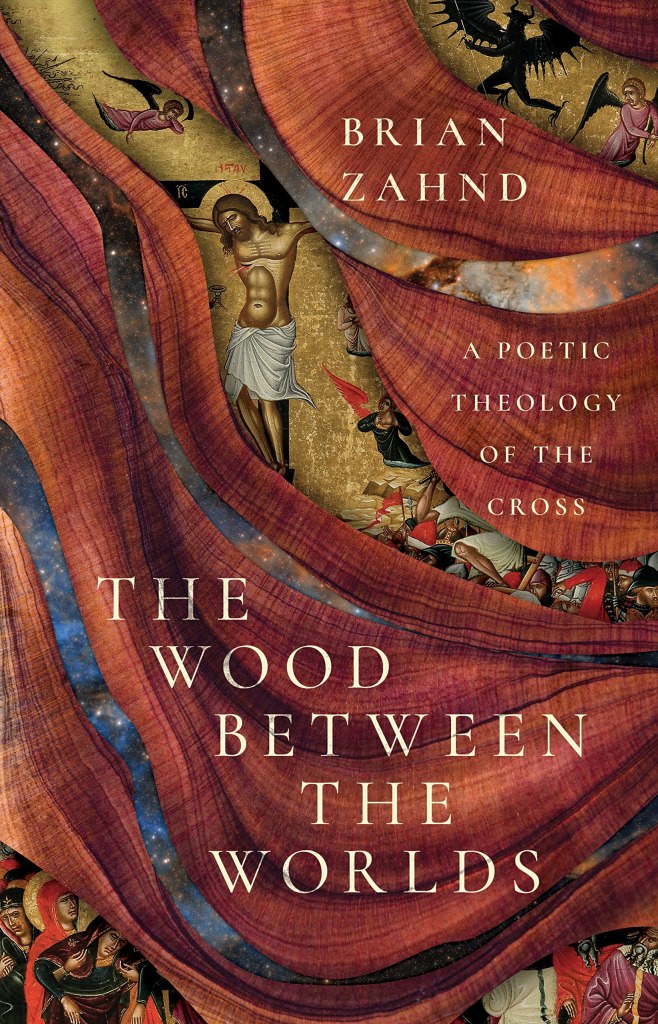
2. The Wood Between the Worlds by Brian Zahnd

Zahnd has a gift for naming the thin places between heaven and earth, and this book lives entirely in that space. Drawing its imagery from C S Lewis, The Wood Between the Worlds explores liminality, transformation, and the places where God meets us between certainty and chaos.

What I appreciated most was its refusal to rush toward answers. This is not a book trying to win arguments. It is a book inviting readers into mystery, into surrender, into the slow work of unlearning false images of God.

It resonated deeply with my own growing sense that faith is less about holding tight to certainty and more about learning how to dwell faithfully in the in between. Zahnd writes with pastoral warmth, theological depth, and poetic imagination, making this a book I returned to more than once.

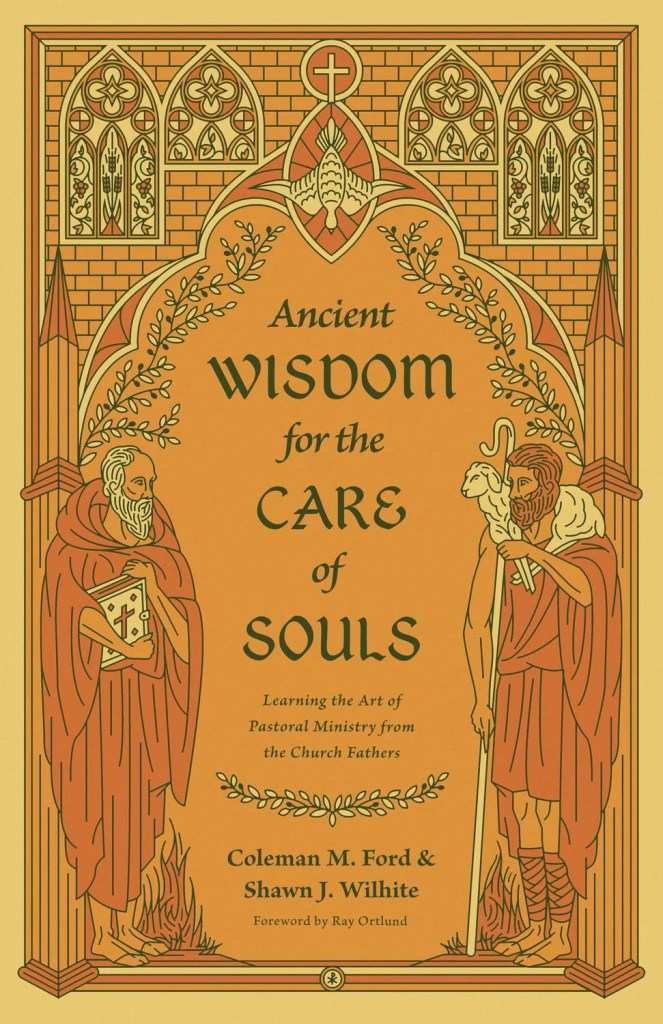
3. Ancient Wisdom for the Care of Souls: Learning the Art of Pastoral Ministry from the Church Fathers By Coleman M. Ford and Shawn J. Wilhite

In an age where pastoral ministry is often shaped by metrics, branding, and performance, this book gently but firmly pulls us back to a much older vision of soul care. One rooted in patience, humility, discernment, and deep attention to the inner life.

The section on Gregory of Nyssa stood out to me in particular. His vision of the soul as endlessly journeying into God, always growing, always becoming, reframed formation not as fixing people but as accompanying them. Gregory does not see humanity as a problem to be solved, but as a mystery to be loved into wholeness.

That perspective has stayed with me. It has shaped the way I think about spiritual direction, formation, and even my own inner life. It reminded me that good pastoral care is slow, relational, and deeply human.

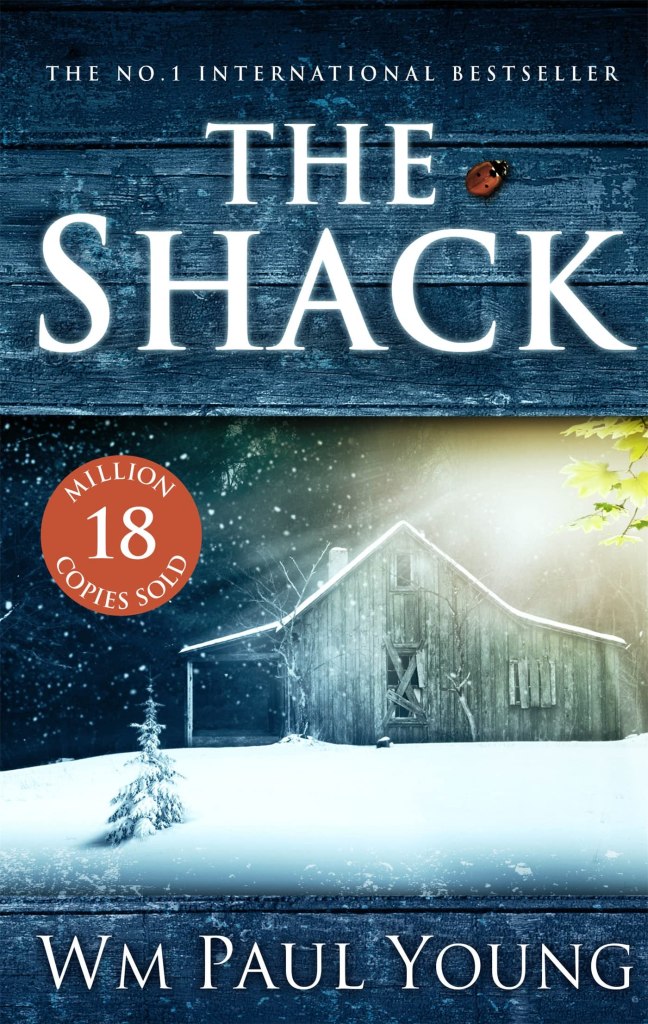
4. The Shack by William Paul Young

I know this book divides opinion. But this year, God used it powerfully in my life.

The Shack met me at a time when I needed healing more than explanation. It did not answer all my theological questions, nor did it try to. Instead, it reintroduced me to a God who is present in suffering, gentle with wounds, and more loving than my fear had allowed me to imagine.

Reading it felt less like consuming a book and more like being accompanied through a difficult conversation. It helped clarify my path toward God this year, not by removing doubt, but by reshaping trust.

For all its simplicity, The Shack carries a deeply pastoral theology. One that prioritises relationship over control, love over fear, and presence over performance. I am grateful for it.

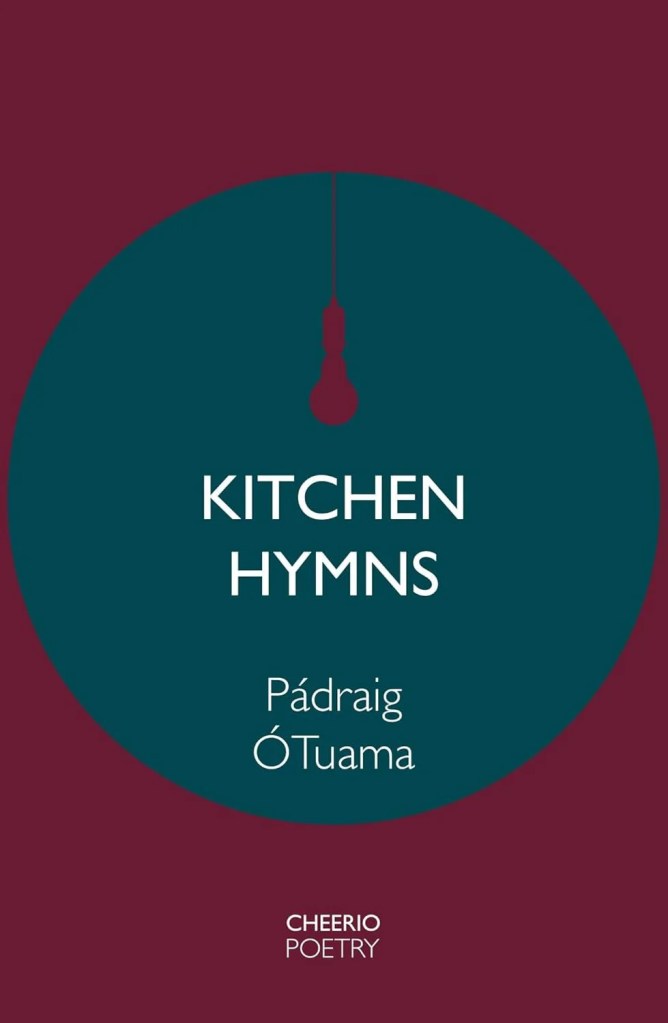
5. Kitchen Hymns by Pádraig Ó Tuama

Reading Pádraig always feels like home.

Ó Tuama has a remarkable ability to write about God without forcing God into the room. Kitchen Hymns is intimate, domestic, and deeply human. It finds the sacred in ordinary spaces, conversations, and moments that rarely feel religious enough to matter.

What I loved most is how gently theological it is. The poems and reflections do not preach. They listen. They honour complexity. They allow grief, joy, doubt, and love to sit at the same table.

This book reinforced something I keep returning to in my own writing and faith. That God is not waiting for us in abstraction or spiritual achievement, but already present in kitchens, friendships, silence, and shared meals.

Recovering the Lost Books: Why Protestants Need the Deuterocanon Again

Why don’t we (Protestants) read the apocrypha? The first Christians read Scripture with wider eyes. Their Bibles included books like Wisdom, Sirach, Baruch, Tobit, Judith, and the Maccabees. These books shaped their imagination, their theology, and their understanding of God.

Modern scholarship confirms this (N T Wright, Larry Hurtado, Lee McDonald). Jesus and the apostles inherited a Greek Jewish Bible that included these writings. In other words, the world of the New Testament is Deuterocanonical.

A Lost Inheritance

During the Reformation, these books were not removed because they were unspiritual or unorthodox. They were moved aside for practical and historical reasons, not theological ones (see Alister McGrath, Bruce Metzger). The Reformers wanted to emphasise Hebrew manuscripts and guard against medieval excess, but in doing so they quietly set aside a treasured part of the early Christian imagination.

The result was a thinner canon. Not heresy-free, but texture-free. A loss of the voices that shaped the spiritual air that Jesus and the early Church breathed.

What These Books Give Us

The Deuterocanon does not contradict Scripture. It enriches it. And the New Testament writers show they knew these books intimately.

1. A wider imagination of divine mercy

The Deuterocanon constantly describes God as patient, restorative, and willing to heal what is broken. Wisdom 11 – 12 speaks of God whose judgment is measured by compassion. Sirach 2 and 17 emphasise mercy that endures and seeks the sinner. Baruch 4 – 5 offers hope of restoration for the scattered.

This is the same tone we hear in the New Testament. Paul’s language of God’s patience in Romans 2 resonates with Wisdom 12. James 1 echoes Sirach 2 almost line for line. Jesus’ teaching on generous mercy mirrors the moral vision of Sirach and Wisdom (see Ben Witherington, Richard Bauckham). Readers who know the Deuterocanon recognise these currents immediately. Those who do not simply sense beauty.

2. A deeper sense of spiritual formation

Sirach in particular reads like the spiritual director of ancient Israel. Its wisdom shaped the early Church fathers (see Athanasius, Augustine, Basil).

Its themes echo throughout the New Testament:
Jesus’ teaching on humility in Luke 14 echoes Sirach 3. The Lord’s Prayer resembles Tobit 13 and Sirach 28.
James’ emphasis on speech discipline mirrors Sirach 19 and 28, and
modern scholars note that James may be the most Deuterocanonical letter in the New Testament (see Richard Bauckham, Luke Timothy Johnson).

3. A vision of suffering that prepares the soul

Four Maccabees shaped the early Christian understanding of martyrdom (see Origen, Gregory of Nazianzus).

Its themes appear in:
Hebrews 11 where the Maccabean martyrs are referenced directly.
Hebrews 2 where the suffering of Christ mirrors the noble endurance central to Maccabean theology and
Revelation’s language of faithful witness through death. Wisdom 3 describes the righteous shining like sparks among stubble. Jesus uses the same imagery in Matthew 13. This is not a coincidence. It is continuity.

4. A sacramental view of creation

The Deuterocanon carries a world where God speaks through the ordinary. Tobit reveals divine guidance in family life. Judith portrays courage as sacrament.

Wisdom 7 paints a breathtaking vision of divine presence infused in creation, a passage that influenced early Christian theology of the Logos (see Justin Martyr, Irenaeus). When John opens his Gospel with the Logos who enlightens everyone, he is standing on the shoulders of Wisdom literature, especially Wisdom of Solomon.

5. A bridge between the Old and the New

The Deuterocanon does not stand apart from the biblical story. It is the bridge between the Testaments. Some examples where the New Testament expressly draws on these books:

Direct Echoes

Hebrews 1 draws heavily from Wisdom 7, describing Christ as the radiance of divine glory.
Romans 1 mirrors Wisdom 13 to 14 in its analysis of idolatry.
Ephesians 6 echoes Wisdom 5 in speaking of divine armour. Matthew 27’s mocking of Jesus recalls Wisdom 2 and its portrait of the righteous sufferer.

Thematic Echoes

Jesus’ parables of divine patience mirror Wisdom 12. Paul’s theology of immortality aligns closely with Wisdom 3.
James’ ethical teaching parallels Sirach everywhere. Revelation’s vision of the righteous shining comes from Wisdom 3. Scholars widely note that New Testament authors quote or allude to the Deuterocanon more often than to many books in the Protestant Old Testament (see Craig Evans, David deSilva).
Without these texts, the New Testament stands true, but strangely suspended. With them, it stands grounded and alive.

Why Protestants Need This Today

Reading the Deuterocanon does not mean abandoning Protestant convictions. It means recovering the breadth of the early Christian mind.

These books deepen:
our vision of divine mercy our understanding of justice as restoration
our sense of the spiritual life as a long obedience
our view of creation as a place where God moves
our ability to understand the New Testament’s theology. When Christians rediscover these books, their faith grows more ancient and more alive. Their picture of God widens. Their hope deepens. Their spirituality becomes more rooted in the world that formed Jesus and the apostles. Not because these books overwrite Scripture, but because they illuminate it. They give back to the Bible its original texture.

A Closing Thought

I am not arguing for a new canon. I am inviting us to remember the older one. The one that shaped the earliest believers. The one Jesus’ world knew. The one the apostles assumed. The one the Church prayed with for centuries.

The Deuterocanon reminds us that God’s story has always been wider than our traditions. That divine mercy is deeper than we imagine. That judgment aims at healing. And that the hope of God stretches further than we often dare to believe.

Sometimes recovering lost books is less about changing doctrine and more about expanding the heart.

Advent: Maybe Christ Is Waiting For Us

Advent is usually described as a season of waiting.
Waiting for Christ.
Waiting for light.
Waiting for hope.
Waiting for God to draw near.

But I have begun to wonder if that might be the wrong way round. Because the more I sit with the story, the more I sit with Scripture, the more I sit with the strange and holy hunger of Advent, the more it feels like Christ is not the one who is slow.

Maybe Christ is already here. Maybe he has already arrived and keeps arriving.
Maybe the world is full of him and we simply have not caught up.

Maybe Advent is not waiting for God. Maybe Advent is God waiting for us.

The slow awakening of the human heart

When Paul tells the Ephesians to wake up from sleep so Christ will shine on them (Ephesians 5:14), he is not telling them to summon Christ from a distant place. He is urging them to open their eyes to a presence already at work. When Jesus says the kingdom is near and among you (Luke 17:21), he is not pointing to a future event on the horizon but to a reality already pressing against the surface of the world.

It is not that God has not come. It is that we have not yet learned how to see.

The Church has always spoken this way. The early fathers taught that the coming of Christ was not a moment locked in the past but a mystery that unfolds in every age. His birth is once for all, but his appearing keeps breaking open wherever hearts soften. Wherever we forgive (Matthew 6:14). Wherever we love without fear (1 John 4:18). Wherever the image of God in us pulls free from the dust (Genesis 1:26). Wherever humanity remembers what it was made to be. In these places Christ is born again.

This is not sentiment.
It is the pattern of salvation itself.

The God who is always arriving

We imagine Christ’s coming as if he moves and we sit still. But what if the deeper truth is that Christ moves in every direction at once and we are the ones struggling to move with him?

Advent hints at this.
The prophets speak of God drawing near (Isaiah 40:10), yes, but they also speak of people returning, lifting their heads, following the path back to the face of God (Isaiah 55:6–7). The story is mutual, relational, alive. James says draw near to God and he will draw near to you (James 4:8). Not as an ultimatum, but as the rhythm of communion. God moves. We move. God comes. We awaken.

Augustine once wrote that God is nearer to us than we are to ourselves. If that is true, then the Advent hope is not that Christ will one day close the gap. It is that He already has.

The long formation of the soul

Most of the time we do not see Christ clearly because we have not grown into the kind of humanity that can recognise him. He is not absent. We are unformed.

Like Israel in exile, we wait for freedom but carry the habits of captivity (Jeremiah 29:11–14). Like the disciples on the Emmaus road, we walk beside him but do not know his name (Luke 24:13–32). Like Mary in the garden, we think he is the gardener until he speaks (John 20:14–16).

Advent is the slow work of becoming attentive.
Advent is the discipline of desire becoming mature enough to discern God’s presence. Advent is the training of the eyes so that we can see the world as it truly is: full of God, held within God (Acts 17:28), moving towards God.

This is why the season emphasises repentance and preparation. Not because God is unwilling to come, but because receiving divine presence requires a heart that is being reshaped. The fathers said that God is always giving God’s self. The problem is not God’s giving. It is our capacity to receive.

Advent asks us to grow that capacity.

Christ in our midst

When Jesus promises that he will be with us always (Matthew 28:20), he is not speaking in metaphors. His presence fills creation and also dwells uniquely among his people. In the gathering of believers (Matthew 18:20), in the breaking of bread (Luke 24:30–31), in the quiet prayers whispered through tears (Romans 8:26), he is there. Not symbolically. Truly.

The Church is not the whole of his presence, but it is the place where his presence becomes visible, embodied, and communal. The early Christians called themselves the body of Christ (1 Corinthians 12:27) because they believed something profound: Christ continues his life in and through the community that bears his name.

In other words, he has already come. He keeps coming in the world.
He keeps coming in the Church. He keeps coming in the human heart.

Christ is not running late.
Christ is waiting for us to join him.

The goal of all things

Advent stretches our desire toward the future. Toward a world renewed. Toward a humanity restored. Toward creation set free from its groaning (Romans 8:19–22). Toward the final unveiling of Christ in all things (Colossians 1:27).

But even this future is not passive waiting. Paul says creation groans as in labour pains. Something is being born. Something is coming to term. God is drawing all things toward fullness (Ephesians 1.9–10), and Christ is the centre of that movement. Everything bends toward union. Everything bends toward restoration. Everything bends toward the One who holds all things together (Colossians 1:17).

The promise is not that Christ will eventually arrive.
The promise is that all creation will eventually open its eyes and be made new (2 Corinthians 5:17, Revelation 21:5).

The end is not Christ drawing near.
The end is us becoming able to recognise the One who has always been near.

Advent as invitation

So perhaps this is the quiet scandal of Advent. We wait for Christ. And Christ waits for us.

He waits for us to trust that God is near.
He waits for us to grow into the likeness he planted within us (2 Corinthians 3.18).
He waits for our vision to sharpen.
He waits for our love to deepen.
He waits for our courage to rise.
He waits for our wounds to be healed.
He waits for our communities to become homes of mercy and fire.
He waits for us to finally recognise that the world is not empty but saturated with his presence.

Advent is not the countdown to God’s arrival. It is the training of the human gaze and heart.

It is the season where Christ says, again and again:
I am here.
Catch up.
Grow.
Wake.
Become.
Step into the fullness I have already begun in you.

Maybe the question is not:
When will Christ come?

Maybe the question is:
When will we become the kind of people who can see that he’s already here dwelling among us?

“The Saviour has already come to dwell among us, and still we must awaken, for only those who learn to see him now will more easily know him in the age to come.”
St Athanasius, St Symeon the New Theologian

Becoming Men Again: A Theology and Philosophy of Manhood

There is a crisis beneath the noise. Beneath the podcasts, the influencers, the political crusades, and the cultural anxiety, there is a simple truth we rarely dare to admit: men no longer know who they are supposed to become.

Culture tells men to be either harmless or dominant.
The church tells men to behave.
Marketing tells men to consume.
Politics tells men to react.
And so men float between bravado and passivity, between swagger and numbness, between silence and anger.

But Scripture does not ask men to perform masculinity.
It calls men to become fully human, and that is far more demanding.

The biblical story begins not with stereotypes but with vocation. Genesis does not give Adam chest hair and a six pack. It hands him responsibility, presence, and the freedom to love.
“Be an image,” God says. “Reflect Me back to the world.”

Every vision of manhood that does not begin with imaging God is too small.

The Counterfeits We’ve Inherited

Much of what masquerades as masculinity today is insecurity wearing armour.
Richard Rohr bluntly observes that most men never leave their boyhood emotionally; they simply acquire “adult toys, adult addictions, and adult costumes.” They age, but they do not grow. They take on roles, but not initiation. They wield power, but not wisdom.

Robert Bly, in Iron John, says the modern world stole the rites of passage men once had. Without initiation, men are left “unparented,” wandering the world with unclaimed grief and an untamed inner life. They try to be men by instinct, imitation, or rebellion instead of transformation.

Gordon Dalbey warns the church has often been complicit. Instead of forming men into courageous, vulnerable, God-shaped humans, it has pushed them toward quiet compliance or performative strength. Men learn to hide their wounds and call it holiness. They learn to avoid sin instead of confronting their brokenness. They learn to serve the institution instead of listening for the voice of God.

And Walter Trobisch, writing decades ago, saw the fracture clearly: men try to find masculinity in sexuality, status, or control because they lack an inner identity rooted in Christ.

The result?
A generation of men strong in the wrong places and weak in the right ones.

The Biblical Shape of Manhood

Scripture forms men not through slogans but through story.
God does not give men a blueprint; He gives them encounters.

Adam must name and cultivate.
Abraham must leave and trust.
Moses must stand and intercede.
David must repent and learn to shepherd, not conquer.
Jeremiah must weep.
Joseph must endure the hidden years.
Peter must fail, break, and rise again.
Paul must unlearn power to embrace suffering love.

None of these men fit a cultural stereotype.
All of them are formed through responsibility, weakness, and divine presence.

Notice the pattern:

God does not build men through ease, applause, or self-expression.
He builds them through responsibility, sacrifice, and surrender.

This is the scandal.
This is why modern visions of masculinity fall apart.

Real masculinity is not the will to power; it is the will to give oneself away.

James K. A. Smith reminds us we become what we love and practice.
If a man loves comfort, he becomes soft.
If he loves dominance, he becomes violent.
If he loves applause, he becomes shallow.
If he loves God, he becomes like Christ.

And Christ is the truly human one.

Jesus and the Inversion of Male Power

Jesus does not abolish masculinity, He purifies it.

He is strong enough to sit with children.
Bold enough to confront injustice.
Tender enough to weep.
Courageous enough to be silent.
Secure enough to be misunderstood.
Steady enough to face death without vengeance.
Alive enough to rise without bitterness.

He shows men that authority is given for service. That strength is measured by restraint.
That courage is the ability to remain present in suffering.
That manhood is not dominance but devotion.

As N. T. Wright says, virtue is not instinct but habit, the shaping of character into Christlikeness. Jesus reveals that the true telos of manhood is not control but communion, not impressiveness but integrity.

The world either romanticises male strength or condemns it.
Jesus redeems it.

The Philosophical Crisis: When We Lost the Meaning of “Man”

Modern society has no unified definition of manhood because it has no unified definition of humanity. When there is no Creator, there is no design. When there is no design, there is no vocation. When there is no vocation, identity becomes performance.

The modern man is told to invent himself, then shamed when he chooses wrong.

In a disenchanted age, the male soul is unmoored.
Without teleology, masculinity fractures into absurdity.

Robert Bly saw this coming long before the cultural debates exploded. He warned that a man without initiation becomes spiritually thin, reacting rather than responding, consuming rather than creating.

Rohr argued the same: uninitiated men misuse power. Initiated men channel power toward blessing.

This is the prophetic word men need today:

Your identity is not self-generated.
It is received.
It is bestowed.
It is discovered in relationship with the God who formed you.

A man without God becomes a caricature.
A man in God becomes a vessel.

The Cost When Men Shrink

This is where the blog becomes uncomfortable.

Most of the pain in the world is carried by women and children when men refuse the call to grow.

When men choose comfort over courage, families bend under the pressure.
When men choose silence over confession, wounds deepen.
When men choose escape over presence, children learn to parent themselves.
When men choose control over love, communities fracture.
When men choose pride over repentance, churches rot.

Every abusive man was once a boy who learned that power is easier than humility.
Every emotionally absent man was once a boy who learned that numbness is safer than love.
Every angry man was once a boy who learned he was not allowed to cry.

The world bleeds when men shrink.

And the church bleeds when men hide.

The Way Forward: Initiation, Identity, and Surrender

Biblical masculinity is not an aesthetic.
Not a stereotype.
Not a political project.
Not a posture.

It is a journey of initiation.

Dalbey says a man becomes a man when he hears the true voice of the Father calling him “beloved” and “responsible.”
Trobisch says a man becomes a man when he learns self-mastery, not self-protection.
Rohr says a man becomes a man through suffering that breaks open the false self.
Bly says a man becomes a man when he faces the wild parts of his soul without fear.

And Scripture says a man becomes a man when he takes up his cross.

When he cultivates instead of consumes.
When he protects without dominating.
When he loves without demanding.
When he speaks truth without cruelty.
When he sacrifices without applause.
When he repents without shame.
When he stands, stays, and gives himself away.

This is not masculinity as performance.
This is masculinity as Christlike maturity.

Men are not called to be impressive.
Men are called to be present.
Men are not called to be invincible.
Men are called to be faithful.
Men are not called to be conquerors.
Men are called to be servants of resurrection.

The Invitation

International Men’s Day should not be a celebration of stereotypes.
It should be a summons.

A call for men to rise from passivity.
To unlearn dominance.
To confront themselves.
To seek healing.
To pursue God.
To become men who carry weight without crushing others.

Men do not need to reclaim power.
Men need to reclaim presence.

The world does not need louder men.
It needs deeper men.

Men who refuse to hide.
Men who listen before they speak.
Men who bless instead of break.
Men who take responsibility for the atmosphere they create.
Men who look like Jesus.

This is not the world’s masculinity.
This is not reactionary masculinity.
This is not churchy, polite masculinity.

This is reborn masculinity.

A Benediction for Men

May you be a man of quiet strength,
rooted in the love of Christ,
guided by His wisdom not fear.

May your courage be gentle
and your power used to heal.
May you carry compassion in your hands
and truth in your bones.

May the wounds you bear find mending,
and the wounds you’ve given find mercy.
May you walk with humility,
speak with kindness,
and live with holy wonder.

And as you go,
may Christ lead you,
steady you,
and shape you into a man who becomes whole.

The Way Back to Orthodoxy Is Through Beauty and Transcendence

If the first part was a diagnosis, this is the path home. If disenchantment thinned our faith, then beauty and transcendence are how God thickens it again. If the church drifted into quiet heresy by losing its wonder, then the way back to orthodoxy is through the restoration of awe.

We will not recover our depth through fear. We will not recover our life through better arguments. We will not recover our centre by defending the truth more loudly.

The world does not need louder Christians. It needs Christians who can see again.

The way back to orthodoxy is through beauty and transcendence. Not as decoration. Not as aesthetic sugar. But as revelation.

Because beauty does what argument alone cannot do.
Beauty wounds us with the presence of God. Beauty opens the heart where logic cannot enter. Beauty re-baptises the imagination and returns the world to its sacred density.

The early church knew this.
The mystics knew this.
The Celtic saints knew this.
The desert elders knew this.
Lewis and Tolkien knew this.
Dostoevsky reminds us that beauty will save the world.
Balthasar wrote millions of words insisting that the glory of God is the beauty of Christ.

And somewhere in our modern scramble for relevance, we forgot it.

Beauty Is Not Optional for Faith

Beauty is not a luxury. Beauty is a mode of truth. A lens. A form of perception through which the soul recognises the presence of God.

Alexander Schmemann in For the Life of the World argues that the world is meant to be a sacrament, a holy sign of divine life. Not a symbol, but a real participation in God.

Hans Balthasar, in his first volume of The Glory of the Lord, insists that beauty is the language in which God speaks creation into being. Beauty is not one of God’s hobbies. Beauty is what God is like.

Lewis, in The Weight of Glory, said that beauty wounds us because it awakens a desire that nothing in this world can satisfy. It whispers of another world, the real one, the one we ache toward.

Tolkien, in On Fairy Stories, said that beauty is “joy beyond the walls of the world,” the sudden rupture of grace in the mundane.

Beauty is the crack in the ceiling where transcendence shines through.

A faith without beauty becomes thin.
A church without beauty becomes functional.
A Christianity without beauty becomes a quiet heresy.

We were not meant to survive on abstract ideas.
We were meant to be pierced by splendour.

Transcendence Is Not Escape

Transcendence does not pull us out of the world. It returns us to the world with new eyes.

Mircea Eliade in The Sacred and the Profane said that transcendence gives the world depth. It does not remove us from reality but roots us more deeply in it. It breaks the illusion that matter is empty and reminds us that creation is a burning bush.

David Bentley Hart in The Experience of God says that transcendence is what gives the world its intelligibility, its weight, its mystery. Without transcendence, the world collapses into flatness, and faith collapses with it.

Transcendence is the awakening of the soul to the fact that the world is alive.

It is what the disciples felt when Christ broke the bread in Emmaus.
It is what Moses felt when the bush burned.
It is what Jacob felt when he woke and said, “Surely the Lord is in this place and I did not know it.”

Transcendence is not the departure of God. It is the discovery that God was here the whole time.

Re-enchantment Begins With Attention

The problem is not that God left.
The problem is that we stopped paying attention.

Evelyn Underhill in Mysticism said that the spiritual life begins with “the art of seeing.” Not with exotic visions, but with simple awareness. The slow opening of the inner eye.

Attention is prayer.
Attention is reverence.
Attention is the beginning of worship.

Simone Weil called attention “the purest form of generosity.”
The Psalms call it “beholding.”
Jesus called it “eyes to see.”

To re-enchant faith is to learn to pay attention again.

To the shimmer of light on water.
To the quiet dignity of bread on a table.
To the holiness of a sigh.
To the presence that fills the room in stillness.

This is transcendence in the ordinary.
This is sacrament.
This is the recovery of the world.

Why Beauty Heals the Church

Beauty heals because beauty unifies. It takes fragmented hearts and pulls them toward a single point. It gathers our desires and raises them toward God.

Beauty also humbles us. It pulls us out of our frantic self importance. It dethrones our obsession with control. It interrupts our strategies and reminds us that we are dust and glory at once.

Beauty also awakens longing.
Longing is the doorway to God.

Lewis argued that longing is the signature of God written inside the soul. Zahnd puts it simply: “Beauty calls us home.”

And beauty heals because beauty is truthful. It reveals what is real in a way that ideas alone cannot. It shows us what goodness looks like, not just what goodness means.

A church that returns to beauty returns to God.

Sacrament Is the Framework of Re-Enchantment

If beauty is the spark, sacrament is the structure.

Schmemann argued that the world is meant to be received as communion. Boersma in Heavenly Participation expands this idea: creation is sacramental because it participates in God’s being.

This means:

Water is not just water.
Bread is not just bread.
Wine is not just wine.
The world is not just itself.

Everything is charged with God.

This was the worldview of the early Christians. They saw the world as a vast cathedral and believed that every created thing carried the trace of its Maker.

We lost this.
But we can recover it.

Re-enchantment is not the invention of something new.
It is the restoration of something ancient.

The world was enchanted long before we arrived.
We simply need to wake up to it.

Beauty Re-Baptises the Imagination

Re enchantment requires the baptism of the imagination.

Lewis said imagination is “the organ of meaning.”
Tolkien said imagination is how we perceive truth through story.
Hart says imagination is the doorway to the infinite.

The modern church mistrusted imagination.
It became suspicious of anything that felt too mysterious, too beautiful, too creative.

But imagination is not the enemy of orthodoxy. Imagination is how orthodoxy becomes visible.

Imagination lets doctrine breathe.
Imagination lets theology sing.
Imagination lets Scripture open like a world instead of a manual.

To re-enchant faith is to re baptise the imagination in wonder.

Transcendence Makes Orthodoxy Alive Again

Orthodoxy is not a set of correct answers.
Orthodoxy is the right way of seeing God.

And we cannot see God rightly without transcendence.

Without transcendence, doctrines become slogans.
Without transcendence, worship becomes noise.
Without transcendence, mission becomes marketing.

Transcendence is what keeps orthodoxy from becoming brittle.
Beauty is what keeps orthodoxy from becoming cold.

Together they return orthodoxy to its true nature:
a living vision of the living God.

What Re Enchantment Looks Like in Practice

Re enchantment is not a new program. It is a posture.

It looks like:

Lighting a candle before prayer.
Receiving the Eucharist slowly.
Walking in silence at dusk.
Reading Scripture as a world rather than a text.
Blessing your children with real hands and real words.
Singing without watching the clock.
Naming beauty as revelation.
Letting awe interrupt your certainty.
Letting mystery be mystery.
Letting God be God.

It is not complicated.
It is simply a return to attention, reverence, and wonder.

The Church Will Be Healed by Beauty

We have tried everything else.

We tried being relevant.
We tried being impressive.
We tried being loud.
We tried being clever.
We tried being strategic.
We tried being modern.

None of it saved us.
None of it brought back awe.
None of it made the world thick again.

Beauty will.
Transcendence will.
The recovery of sacrament will.
The return of mystery will.

Because the soul was made for wonder.
And a church that cannot wonder cannot be orthodox.

The way back to orthodoxy is through beauty and transcendence.