Video Game Theology: No Man’s Sky

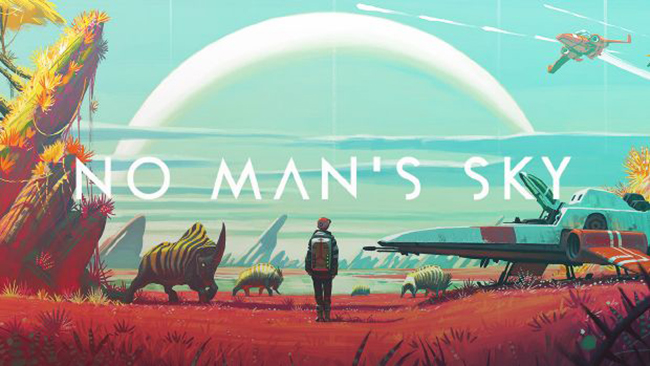
No Man’s Sky is probably one of the most “Ecclesiastical” video games to date. What I mean is that No Man’s Sky is very real, very raw, very deep….. very Solomon in Ecclesiastes. The game starts you off on a random unknown planet, scrounging for resources in order to survive the harsh terrain of whatever forsaken planet an unknown power just happened to place you on. If you do manage to finally gather enough resources to make it off the first planet, you soon realise that there are 18,446,744,073,709,551,616 planets in the galaxy you occupy. You’re lost and with no real direction or purpose apart from vague clues and message that slowly move you ever forward. You’re alone. When you do meet other lifeforms, they all speak in unknown languages, unknown tounges, some barely recognise your existence, others try to bridge the communication gap, others try to kill you. As I made my way through the game I started to realise how very real it all was and how it depicts almost the Ecclesiastical life. For Solomon, it seems life is very….. well….. real. Seasons come and seasons go (Ecclesiastes 3:1-8), people mourn and people leap for joy, people live and people die….. yet life goes on (Ecclesiastes 1:1-11). For Solomon life is one big never-ending journey of trying to find meaning and purpose through various means like work, the accumulation of knowledge, friendships, parties, religion….  but at the end of the day, it is vanity. Even when you do get to the end of the game where you reach the centre of the galaxy (spoiler alert) you just end up at the very beginning again, on another planet, trying to make your way through the vastness of space meeting the same sort of people, visiting the same sort of planets, and building the same sort of technologies. Vanity indeed.

Ecclesiastes is my favourite book of the Bible because Solomon who was the wisest person on earth, who was a king during Israels most prosperous era, who had probably experienced more in life that most of us ever will, was so very realistic about the world we live in. No matter what one does in this life, no one will remember you in the years to come. One’s achievements will be but a speck on the infinite cosmos. For Solomon, there was only one thing worth doing “fear God and keep his commandments, for this is the whole duty of man. For God will bring every deed into judgment, with every secret thing, whether good or evil” (Ecclesiastes 12:13-14). This verse in the context of the book (give it a read) brings to light a few thoughts I want to leave you with.

1. No matter what you do, no matter what life has you caught up in, there is a God who has, in Jesus, reached out to the world in order to shatter the illusion that this life is all there is. God is real, life then ought to be lived in light of that. 2. What you do, therefore, does matter (a bit contradictive I know) because God will judge us according to our deeds whether good or evil. 3. Knowing what I know about Solomon, he was looking forward to the One, Jesus, who would take away the sin of the world, your sin (John 1:29; Romans 3:25; Hebrews 9:5; 1 John 2:2). Therefore, if you’re in Christ, the day of judgement is actually a day we look forward to, not something we’re to be afraid of. 4. This sort of confidence is available to each and every one of us. Stop living your life aimlessly, travelling through this world without a purpose or a hope. Rather trust in Jesus. The life He offers is abundant, full of joy, meaning and lasting hope (John 10:10). 

Peace.
Your Idols are like Coffee (unless you hate coffee… that sucks to be you then).

For me, my idols are like coffee. When I had my first ever coffee it was like a dessert, sweet, chocolatey and kept me hyped (it was a mocha at Zaraffas). Then slowly but surely I moved on to stronger, more bitter, darker brews. Desserts just didn’t do it for me anymore. Soon I found myself finding exotic ways to brew my drop. I wasn’t content anymore with a simple flatty from Starbucks or even from the more boutique cafes that do speciality coffee. Now I use cold drip towers and Chemix’s and unless somebody stops me I’m probably going to be drinking coffee that comes out of the butt of a Civet (Google it, it’s a thing). The relentless pursuit of the perfect, satisfying cup of hot steaming caffeinated marshmallow liquid that spills forth from the divine is unending and has probably cost me thousands of dollars over the years. This single endeavour though fun (everyone needs a hobby right?) has left me ultimately unfulfilled never truly being satisfied with whatever it is I’m drinking. Bam, what a perfect analogy for idolatry.

Immediately my mind now flicks through dozens of passages and stories in Scripture that talk about this (Adam and Eve for a start). Even if you hate coffee (you heathen) think about that one thing you spend the most money on, the most time thinking about, the most time given to, that’s probably what you love most in this world, it is probably what you worship, it is probably your idol, your god. Let me be blunt. Idols are bad. They’re not really stone statues in your garden tempting you into yoga or asking for a blood sacrifice… idols are the things that rule over your life, your very soul. Idols rule over you, you give them power and in turn, you hope to receive some benefit usually peace or prosperity … even life. The irony is the very things that God intended to give your life shape and joy actually now suck it out of you, they leave you high and dry, they leave you unfulfilled, depressed, and ultimately they lead to spiritual death.

For me personally, idolatry, the worship of other gods have been the eternal war being waged over my soul. It feels like every time I look to something to satisfy me I lose apart of who I am (or at least of who I’m supposed to be), I change, I’m always different. Idolatry has always lead me down a darker path of uncertainty always looking for another path, another fix to warm my longing heart and to quench my thirsty soul (Prov 4:23; Jer 2:13). There is, however, a lasting fix, a lasting quench, a lasting path that leads to life. Jesus says in John’s Gospel “but whoever drinks of the water that I will give him will never be thirsty again. The water that I will give him will become in him a spring of water welling up to eternal life” (Jhn 4:14). For those who are lost in their idols, Jesus offers us a way out if only we come and depend on Him if only we look to Him for true and lasting life and satisfaction.

The Kingdom of God & the Local Church

“Repent, for the kingdom of heaven is at hand” (Matt 3:2, Matt 4:17, Mk 1:15). The Kingdom of God is perhaps the biggest theme in all of Scripture. Stretching from Genesis to Revelation God’s Kingdom seems to be almost in every idea, thought, and page. It seems God wants to establish and create an everlasting Kingdom where He would reign forever (Ps 2; 45:6; 89: 29, 36-37; Heb 1:8; Rev 11:15) with and over His people in perfect unity (Ps 8; 2 Tim 2:12) free from sin, Satan, and death (Rev 21:4). That all sounds lovely doesn’t it? It is a great hope and a great promise for God’s people to be looking forward to. However, just because there is a future hope it doesn’t mean there isn’t a present hope, a present kingdom, where God rules and gives us a taste of His goodness well before we see Him face to face.

So where do we find this taste of the good life, this taste of goodness that only comes from God? In His Church. Theologically speaking the Church is made up of two parts, the Church universal and invisible, and the Church local and visible. I make this argument elsewhere in another essay but 1. the Church (universal and invisible) is God’s Kingdom (redemptive rule) expanding throughout the earth and 2. the local church is a primary visible and tangible expression of God’s redemptive rule and mission. Think of it like this, the local church acts as an embassy for its nation (God’s Kingdom) so that those who would want to take asylum would find shelter, protection, and even eventually citizenship are able. This is the predominant function of the Church, to bring about God’s Kingdom, God’s Redemptive rule to every facet of creation. The thing is though unless a local church is functioning as God intends it to, then it can’t be a place of God’s goodness, it can’t but a place where God’s Kingdom is redeeming people and His creation, it can’t be that embassy that people can run to in their time of need. So then what does a healthy church look like?

In order for a local church to be considered healthy according to the Scriptures, it must consist of 1. God’s people gathering together regularly (Heb 10:25) as members of the body (1 Cor 12:13) united to Christ (Gal 3:27) 2. There must be a healthy leadership that guides and instructs the sheep that is made up of a plurality of elders and deacons and qualifies for said roles according to Scripture (1 Tim 3; Tit 1). 3. There must be the preaching of Scripture every gathering in order that the sheep would be sanctified, feed and fully equipped for every good work (2 Tim 3:16-17). The administration of the sacraments (the preaching of Scripture, baptism and the Lord’s Supper). 4. Church discipline (Matt 18:15-17; 1 Cor 5:1-13). 5. It must be missional (Matt 28:16-20).

At the end of the day God’s Kingdom will come, His will, will be done on earth as it is in Heaven. However, God’s means for doing this is through biblical local churches (with Christ as the head) which there needs to be more of. Discipling, baptising, teaching, evangelising, bringing about the Kingdom (God’s redemptive rule) is done through the Gospel and healthy, Spirit-filled churches obedient to their King and Saviour Jesus Christ.


The Spiritual Power of Video Games: Part I

Some of you might not know this but I love video games. I really love video games. It probably all started when my mum and dad owned a Sega (not sure which) and we’d play Alex the Kid. Next, came the Super Nintendo where we played Yoshi’s Island and Mario is Missing then finally the console that probably defined my gaming experience the Nintendo 64. This console was one of a kind, a classic. Amazing games such a James Bond: Golden Eye, Star Wars: Rogue Squadron, Mario 64, Lylat Wars, Pokemon Stadium, and of course (probably my favourite game of all time), The Legend of Zelda: Ocarina of Time. Since then gaming has come such a long way. From the 8 bit Pong to amazing graphically built games like The Elder Scrolls: Skyrim and even into virtual reality (VR), gaming has radically shaped the way humanity experiences the world around them and even God and spirituality.

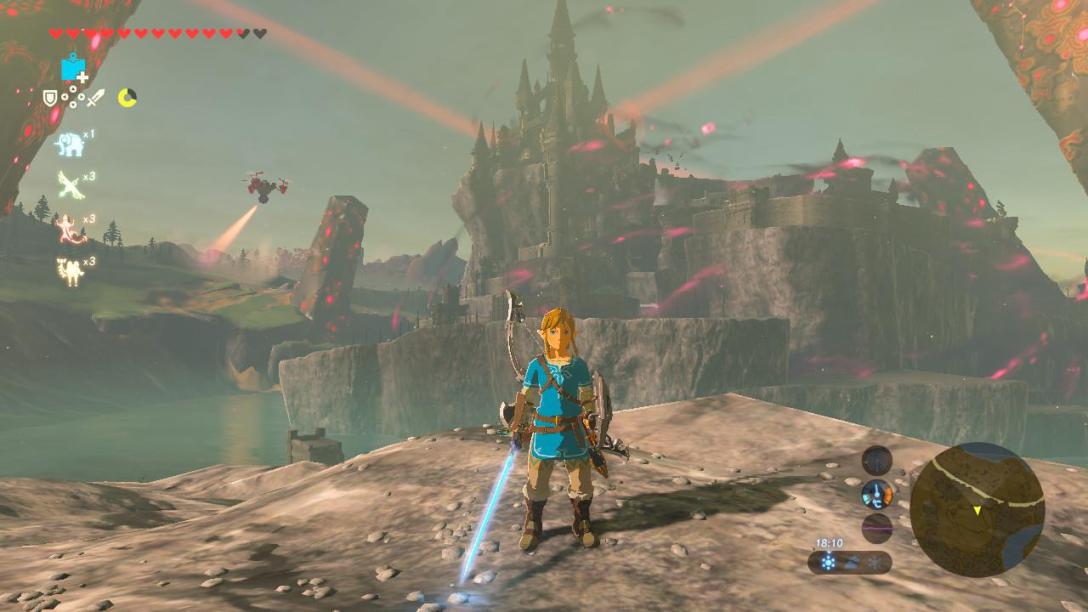
I remember not long ago reading a book called “You Are What You Love: The Spiritual Power of Habit” by James K. A. Smith. The title is pretty self-explanatory but essentially Smith writes about how what we do actually forms us into who we are. For example, if all you do is hate on people then inwardly you will become a hate-filled chaotic person. But, if you go around loving others as you would yourself then slowly but surely you become a love-filled Shalom (whole) kind of person. That’s fairly simplistic but this got me thinking… I’ve put a lot of hours into gaming but what has it put back into me? How have the games I’ve played shaped the person I am today? What stories have they told that I’ve retained? Are video games good for me or are they bad for me? Now I can imagine the typical average Christian probably thinking “video games are bad for you, so don’t play them.” You’re probably right. I’ve had some very negative experiences with games before… mostly me rage quitting when I don’t get my way on Halo or now on Fortnite (I hate when scrubs kill me). Also, the toxicity in some games like Overwatch just gets to you and makes you feel terrible. People spit poison and genuinely hate you if you don’t play up to a certain standard. Gaming can create a really negative culture that isn’t good for you and you have to be aware of those cultures and experiences and stay away from them. However, I’ve also had some of the most positive moments of my life while gaming as well. Again, I think back to Zelda tracking through Hyrule slaying monsters and being in genuine awe of the world around me as I strived to save the princess.

The narratives Zelda told of good versus evil, of heroes versus villains, of the underdog, rising up and often sacrificing himself for the greater good and winning, of gods and demons, of the transcendent, feels all very Biblical. Turn almost anywhere in Scripture and you see the cry out for evil to be defeated, for people to be rescued, for the hero to win, and to bring peace and liberty to the world  It is these sort of narratives that seem to permeate almost every form of entertainment, but in video games, you get to be apart of that story. You get to live out their experience and make it your own. How then does this perhaps shape who I am in reality?

… To be continued

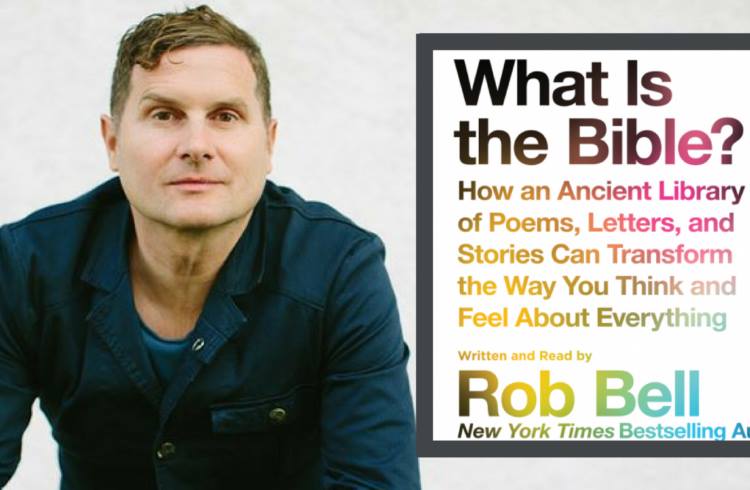
My Favourite Heretic: Rob Bell and his “What is the Bible?”

Well after years of hearing a lot of people bashing on Rob Bell (myself included) as to why he is a heretic, why he is going to Hell, how he is leading people astray etc. I actually decided to get some first-hand insight and I started listening and reading his stuff.

When I first became a Christian seven years ago I remember watching Bell’s “Everything is Spiritual.” At the time I thought it was brilliant (I still do). Since then I’ve only been in circles where people have said nothing but negative things about Bell and to be honest I sort of struggled reconciling what I first watched and what a lot of people were saying….. but these were smart people so they must have been right. Seven years later I decided to read one of his latest books “What is the Bible?” and…I…loved…It.

Yes, I loved it. I totally get why people are attracted to what he has to say. Bell asks a lot of good questions and challenges a lot of things the average Christian would consider sacred and necessary. I resonate a lot with what he talks about. But. Yes… there is a but. Bell’s greatest strength is also his greatest weakness. After putting down his book and taking that deep breath of fresh air I couldn’t help but realise how time and time again Bell would throw the baby out with the bath water. In Bell’s attempt to rethink sacred cows within the Christian religion, it seems to me that Rob also rethinks things which have been the most fundamental to our faith for thousands of years (God, the nature of Scripture, sin etc.). Bell rethinks everything from humanity and its collective meaning all the way through to the very person and nature of God…. and…this…matters.

Should we be asking questions, wrestling, shaping our thinking? Yes. Should we be challenging, pursuing, and sharpening our iron? Yes. But we cannot let our desires to be thinkers, to be edgy theologians or philosophers crumble the walls of authentic, thought out, Spirit-filled Christianity. God is who God is. We can question and wrestle with that as much as we like but at the end of the day, Scripture has some pretty clear things to say about who He is (have a read).

So would I recommend the book? That’s kind of a weird question. Read. Read everything. I love books. I love knowledge. I love understanding. I loved this book. I love Rob Bell. It’s a great book but with bad theology which is why he is my favourite heretic.