Thoughts on the Sacraments

Hey guys. I’ve written elsewhere on church here and here and this is sorta in that same vein with a focus on the sacraments. Enjoy 🙂

Church. It is vitally essential for the life of a Christian. A church is a place where people from all tribes, tongues, and nations can come together to worship their King Jesus as one body; one family unified to one another in Christ. Churches look different all over the world from place to place, from context to context. However, there should be fundamental biblical principles that guide every church in how it looks. Why? Because Jesus is the head of the Church, and it’s up to him, not us, in how it is ultimately governed, in how it runs. Where do we turn to then to discover what a biblically healthy church is? Well, of course, the Bible. 

As good Christians, we believe that “All Scripture is God-breathed and is useful for teaching, rebuking, correcting and training in righteousness so that the man of God may be complete, fully equipped for every good work” (2 Timothy 3:16-17). Notice the implications of this passage. Scripture (the Bible) is:

  1. “God-breathed.” This means the Bible comes from God Himself and therefore carries a certain weight of authority that no other text does. 
  2. “Useful for teaching, rebuking, correcting and training in righteousness so that the person of God may be complete, fully equipped for every good work.” This means that the authoritative scriptures have everything we need in them to live the Christian life. Or in other words, if you want to know how to build a healthy church, read the Bible (especially the New Testament). 

Of course, that doesn’t mean it’s always as simple as picking up the Bible and knowing exactly what God wants for the church. The Bible is by no means an exhaustive treatise on building a church, but the New Testament does give the standard for one. Here are some of those principles now: 

  1. The Word. God speaks in different ways (through nature, people, and other sources). However, the most straightforward and most authoritative way God has spoken is through the Scriptures. Therefore, coupled with the idea of 2 Timothy 3, it makes complete sense then to have faithful teaching as the centrepiece of church.
  2. The Sacraments.
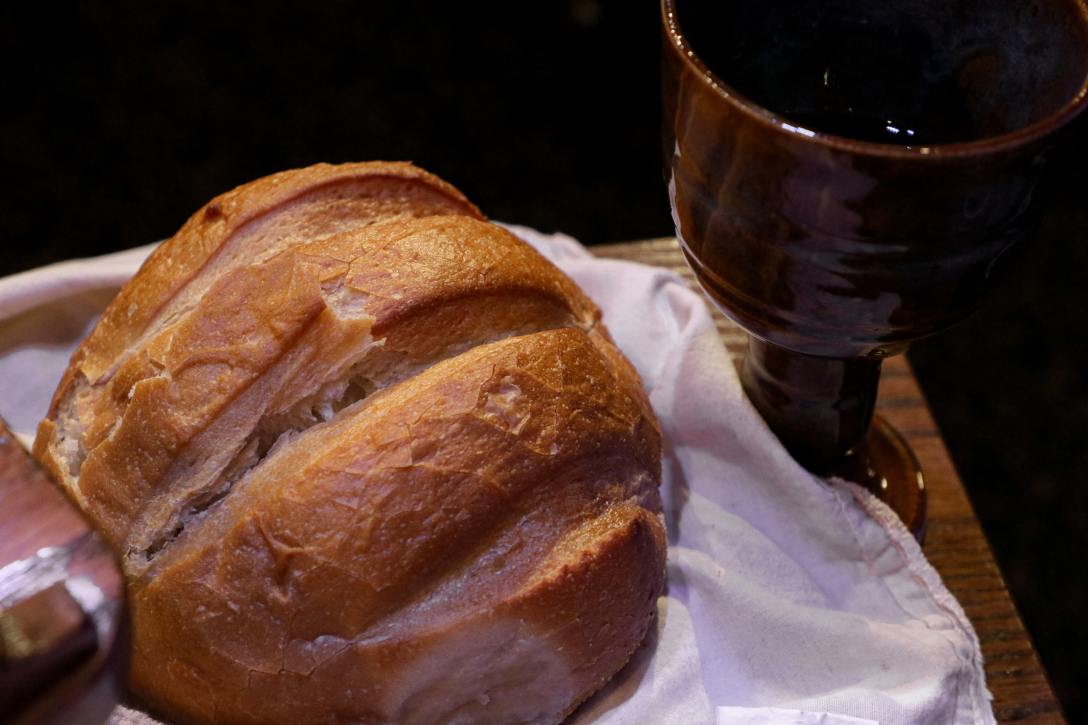
  •  The Lord’s Supper: the sacraments have had various use throughout church history and have all been interpreted differently. Yet, one thing in common remains; among nearly every major Christian tradition, these two sacraments have been observed regularly in one way or another. Why? Because it’s thoroughly biblical. Every Gospel mentions Jesus having Passover (the Lord’s Supper) with his disciples (Mt. 26:17–30, Mk. 14:12–26, Lk. 22:7–39 and Jn. 13:1–17:26). The early church carried on this tradition (Acts 2: 42, 46; 20:7), where they did it regularly in remembrance of Jesus (1 Cor 11:24-25). The Lord Supper took on three principal dimensions. 1. The remembrance of Jesus’ death and resurrection (the new covenant) and the churches unity to Christ. 2. the unity believers had with one another. 3. The covenant’s performance or drama. As the local church takes up the elements (the bread and wine), they are acting out the establishment of the new covenant as the Spirit draws them closer into the presence of Christ and one another.  
  • Baptism: The occurrences of baptism in the Bible are numerous. First, we see Baptism in the New Testament performed by John the Baptist (Matt 3) and subsequently, Jesus being baptised (Matt 3:13-17). As He was being baptised, Jesus said, “Let it be so now, for thus it is fitting for us to fulfil all righteousness.” Whatever this means, it at least proposes that baptism is extremely important, so much so that Jesus expected us to baptise people as part of the great commission (Matt 28:19). The early church took up this sacrament as it was an integral part of their life and ministry (Acts 2:38). It was an important part of the salvation process (Acts 2:38, “repent and be baptized”) and was accomplished via confession and prayer “in the name of Jesus Christ” (Acts 2:38; 8:16; 10:48; 19:5). Like the Lord’s Supper, Baptism took on three principles dimensions. 1. The symbolism of a new believers passage from death in the world to life in Christ (Rom 6:1-11). 2. The unity they now had with Christ (Gal 3:27). 3. the unity they had with other believers (1 Cor 12) hence the need for it before one becomes a member of a local church in some traditions (i.e. reformed traditions). As a local church baptises a new believer into the faith, they are publicly declaring their identification and unity to Christ and that new believer as the Spirit works through the drama of passing from death to life. What about Spirit baptism? Both baptisms are taught in the Bible and typically are inseparable (Jhn 3:5). No one denies that Spirit baptism is a thing, but to be baptised by the Spirit without water would have been an unthought of practice in the early church and vice versa. 

As I’ve explained, these sacraments are essential to any church for three main reasons. 1. The Bible and, in turn, God expects a church to practice them (this in itself should be reason enough). 2. They’re transformative in that the Spirit works through the practice of them to sanctify the participant in a similar way that He works through the Word. 3. They supplement good preaching and demonstrate the Good News to new believers and people we invite to church. 

Finally, all this presupposes the assembly of a local church which consists of members (1 Cor 12:21-26), elders and deacons (1 Tim 3:1-13; Tit 1), and discipline (Matt 18:13-17). 

With all these elements in place, a local church can image God and fulfil the great commission. Without them, a local church will become deficient and simply unbiblical. We should never trade a biblical principle for a pragmatic one, no matter how much it seems to work. If something is working, it might be cause for us to re-evaluate our theology, but never to compromise on it. God’s standards are there for a reason, and it’s our job to simply obey even if droves of people aren’t coming through the doors. 
Church

“Friend, what are you looking for in a church? Good music? A happening atmosphere? A traditional order of service? How about: a group of pardoned rebels . . . whom God wants to use to display his glory . . . before all the heavenly host . . . because they tell the truth about him . . . and look increasingly just like him – holy, loving, united?”

― Mark Dever, Nine Marks of a Healthy Church

What is the Church? 

Systematically, there are two theological categories one should have in their mind when they think of the word “church.” There is the Church universal (historically this has been labelled catholic – Latin for universal – Church; not the Roman kind), and the church local.

The Universal Church 

The universal Church is invisible (meaning no one can tangibly recognise it except for God). It is made up of God’s people who the blood of the lamb has saved throughout all time (past, present, and future), from all tribes, nations and tongues (Revelation 7:9). God’s people exist among every tradition (typically despite them), in every context (such as persecution), and demographic (from rich to poor). The universal church is God’s redemptive work or kingly rule over the entire cosmic order as He seeks to renew all things. Therefore, the universal church is in a sense that mustard seed slowly sprouting throughout the course of history so that all of creation may nest in its branches (Luke 13:18-19). Therefore, I would argue that the universal Church is another way of describing God’s Kingdom. As Scot McKnight says

“It is reasonable to say that the kingdom is the church, and the church is the kingdom – that they are the same even if they are not identical. They are the same in that it is the same people under the same King Jesus even if each term – kingdom, church – gives off slightly different suggestions”

The Local Church 

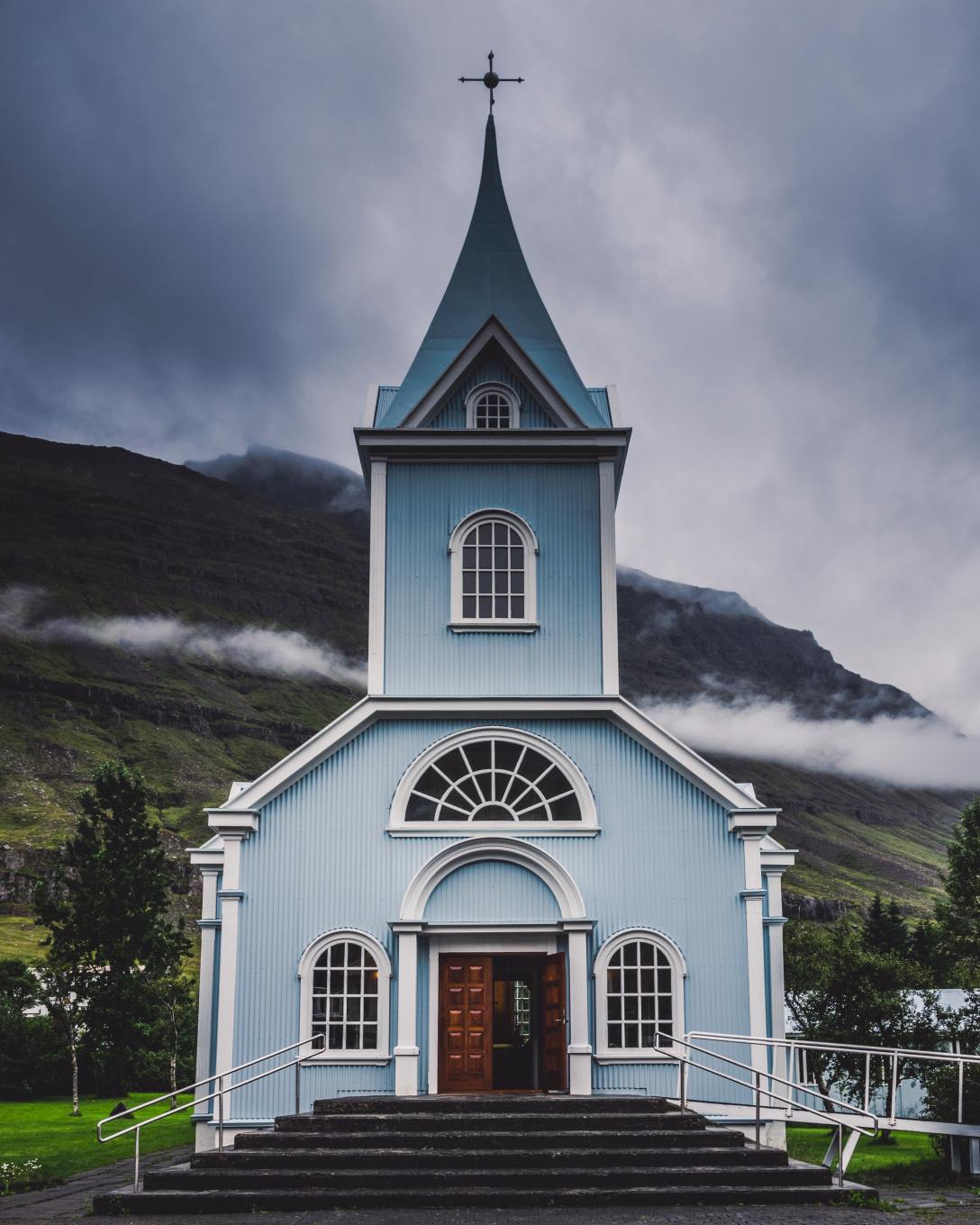
The local church is the God-ordained, tangible, yet imperfect expression of the universal body of Christ (God’s Kingdom). It is where both the world and the Kingdom come together as it is made up of both believers and unbelievers (Matthew 13:24-30), sheep and wolves (Matthew 7:15), God’s people and those who pay lip service to God but who’s hearts are far from Him (Matthew 15:8). Biblically, the local church has a polity (church government – elders, deacons, members), sacraments (the Lord’s Supper and Baptism), worship (singing and prayer) all centred around the exegetical teaching of God’s Word. The local church is ground zero (after the Cross) for God’s mission to go forth and redeem the world through the preaching of the Gospel.

Implications

  1. If the local church is ground zero for God’s mission and the Gospel, you cannot be an effective Christian without being in a biblical local church.
  2. Looking for a good church no longer means finding out if it has a good kids clubs, men’s group, or women’s ministry. It no longer means flashy lights, feel-good messages, and social homegroups. Looking for a good church now means looking for a biblical one (a plurality of elders, deacons, membership sacraments, worship and prayer, the exegetical preaching of God’s Word, and mission). This might mean a biblical church is a bit smaller then you’re used to, a little slower, a little less flashy (they might not be). Yet it is these things that God’s Spirit works through. Without a strong biblical local church, the Christian can not hope to flourish in God’s kingdom effectively.
  3. Becoming effective in the local church leads to being effective in the world in our mission to take forth the Good News of Jesus. Learning to love the Lord and your brothers and sisters in Christ, equipped with God’s Word and Spirit will compel you to herald the Gospel to any and all who would hear.

Final Thoughts

In Australia, churches too quickly jump to what is pragmatic at the expense of a solid biblical foundation for their ministries. Programs are good, but only if they’re built upon these principles first. If we rely on a men’s breakfast or on a woman’s coffee day once a month to facilitate fellowship (the command to love one another), perhaps we should be questioning our ways of doing church, to begin with before we implement even more programs that often replace genuine Spirit-filled love for our fellow members. If we rely on youth groups to disciple our young people, perhaps we’re doing something wrong from the pulpit or even from our own homes. If we have to rely on our church programs to feed the poor, to look after the environment and to address other social issues, then we’ve missed the point of what it means to be an effective Christian in the world. I don’t hate programs. I’m not suggesting we get rid of them. What I am suggesting is that we recover a strong biblical foundation of church (at the expense of all else if we must), and I can almost guarantee that the Christian landscape, at least in Australia, would experience a sort of reformation that has been needed for man, many decades.

My prayer for 2021 is that we will plant, grow and revitalise healthier churches so God may be glorified, and the Gospel will go forth effectively in our nation.

2020 Mix Up: My Five Favourite Blogs of the Year

  1. Social Justice Part I – Environmentalism: A Theology of Creation Care
  2. The Deep Blue Church
  3. Salvation is Liberation: Part I
  4. Living Water John 4:1-42
  5. 2020: My Year in Review

Have a great end to your year. See you in 2021.

2020: My Year in Review

2020 has been one of the most challenging years of my entire life. First, I tackled the new year as a single person for the first time in seven years. Unemployed, with no money, and depression literally crushing me, I had no idea what 2020 would hold. I tried to study, but in the first half of the year, my mental health got the better of me, and I woefully failed. I couldn’t bring myself to find employment; there were days I couldn’t do anything but stare at my phone in an open-eyed coma silently screaming to God for something to change. COVD-19 hit us all; isolation wasn’t just a mental health issue; it was a physical necessity as Australia battled the first wave of the pandemic. Doubt started to crash upon the shores of my mind and heart. I doubted the existence of God; I questioned my place in the world, my life. Every day was a numbing haze of uncertainty and a mental void as I lived each moment almost on autopilot. Books became mush in my hands as the words fell off the pages. The Bible, church, and prayer became God walking through Garden calling out to me as I hid from them (Him) in video games and meaningless distractions. 

There were some good times. I started therapy (which I need to go back to). I had supporting friends (they probably didn’t know half of what I was going through). The times we could meet helped me get out of my rut even if they were too fleeting. I met someone new who interestingly enough is an art psychotherapist and a Christian. God has used her to make sense of what I’m going through, and she has encouraged me to get back onto the Path (relationships are always sanctifying). Coffee still tastes good. However, I’ve gone off soy, and I’m onto oat milk now. Seriously, try it. It’s both good for the environment, and it tastes like regular milk. This year God has had me go through some vast transformations regarding my theology around the environment, and with me coming to terms with some of my racial bias’.

Nevertheless, despite some significant change, the world still feels a little less colourful, and a little less bright. Even writing this blog is so much of a mental effort even though I love to write. …. Where am I going with this? I suppose, if nothing else, I want to write to other people who are like me. To those who know God exists yet, He never seems to speak. To those who know that miracles exist yet they seem to only happen in fairy tales. To those who know life is full of beauty and goodness, yet they’ve been without it for so long they’ve forgotten what that means. 

I. Totally. Get. It. 

I can’t remember the last time God ever spoke to me from the Bible or otherwise. I can’t remember when I saw something miraculous and jumped for joy. I can’t remember the last time I saw colour, or truly enjoyed the smell of saltwater in the air or the sand between my toes. I can’t remember getting that intellectual buzz from a good book or sermon or having a genuine laugh with a good friend. The love of a woman (or a man), fine wine, good food and friendship all seem like out-of-body experiences for the depressed. Unfortunately, I’m not much better than the rest of you so I can only offer some tiny pieces of advice. 

  1. See a professional therapist/ psychologist. I cannot encourage you enough. Talking to someone who doesn’t judge you, who is paid to help you and to listen is worth its weight in gold. If the first one doesn’t work, keep looking. But get help (I promise I’ll start going again as well). 
  2. Awe. You’re mentally flatlining. You’re dull and without life. You need a shock to the system. Lay on a blanket, naked, in the middle of the night, look up at the stars. Find the longest stretch of beach and walk it. Swim until you can’t breathe any longer. Go to an art museum. Eat food you usually wouldn’t. Spice up the bedroom. Experience the world God has given you in new ways, from new perspectives and meditate on it all. 
  3. Cry—a lot, and often. Real people cry (Jesus wept).
  4. Listen to good music to get the creative music flowing (I suggest lofi chill music like this. It matches the depressing mood while it slowly and gently lifts you out of it). Also, if you’re a reader but depression has killed it for you try audiobooks (Audible is excellent).
  5. Community. I know it’s hard, but keep going to church and hanging out with friends. Have your pastor or someone at your church come to drag you out of bed. Have your friends literally pick you up off the bed and chuck you in the shower if that’s what it takes. You have to stay connected. 
  6. Finally, to the others who have someone in their life that suffers from depression, be patient. Depression won’t go away overnight. If they can even do one or two of these things within a year, that’s progress. I know its frustrating. You see laziness; they see despair. You see unwillingness; they see unmeaningful. 

I’m not some guru on life or mental health. This is all new (and old) to me. Life is hard. It does suck. It is full of pain and hardships. There are no easy silver bullets or seven steps to a better life. Anyone who says otherwise is full of shit. We do have a lot to look forward to, though. If you’re like me, then you believe that Jesus is coming back to wipe away every tear from every eye. To right every wrong. To make all things new again. I know it feels like you’re hanging on to a thread, and you’ve heard it a million times (and then some), but stay with me here as we walk after Jesus together. I can’t ever guarantee you an easy life, but I can promise a life with purpose, forgiveness and hope. That’s more than what many others find. 

The Best Books I’ve Read In 2020

  1. Stewards of Eden by Sandra L. Richter

Should Christians be environmentalists? Yes. The Church in the West has always done a great job of presenting the Gospel of forgiveness. However, this has often come at the expense of the Gospel that transforms, not only humanity but all of God’s creation. Sandra L. Richter addresses these issues with rich biblical theology as she brings to light what the Bible has to say about the environment, and the Christians place in caring for it. Richter’s book is a must-read for anyone who takes climate change seriously, and who reads Genesis 1-2 and wants to live out humanity’s vocation with rich theological nuance.

2. Reading While Black by Esau McCaulley

Theology throughout church history (especially within the past five hundred years) has been dominated by white western males. Even as I look upon my bookshelf, or as I scroll through my resources on Logos, I’m hard-pressed to find any resources that I haven’t deliberately gone out and purchased that weren’t from someone who was a different ethnicity from me (apart from the early church fathers of course). Insight, wisdom, and meaning is dynamic and can take on various forms depending on one’s cultural lens. Even from within our borders, growing up as an upper-middle classed white male on the Coast can elicit different interpretations from God’s Word, rather than a marginalised lower classed black or aboriginal child living in the West. Esau McCaulley’s book wonderfully demonstrates how a black (African-American) reading of the Bible is an invaluable tradition for the wider church to tap into as it tackles some of the biggest social concerns of our day. Another must-read for anyone wanting to meaningfully engage with the problem of racism and inclusivism in our modern-day.

3. From Every People and Nation: A Biblical Theology of Race by J. Daniel Hays

It can be incredibly easy to forget that you are not the main character of the biblical story. In fact, the protagonist is God; everyone else is either the damsel in distress or the villain taking them captive and corrupting the world around (this includes you). Furthermore, despite the focus of the Bible on the nation of Israel, from Genesis 1 to Revelation 22, the Bible is concerned about every tribe and nation, not just American or Australia. An oldy (2003) but a goldi, Daniel J, Hayes takes a deep dive into a biblical theology of race and ethnicity as he traces these themes throughout the biblical narrative. His book makes us pause and contemplate our place in redemptive history as we come to terms with our identity and shared humanity in the family of God. Read this book if you care what the Bible has to say about race.

4. Untangling Emotions by J. Alasdair Groves and Winston T. Smith

As someone who wrestles with depression and the occasional spout of anxiety, this book could not have come at a better time. Emotions are messy, complicated, and often hard to make sense of. J. Alasdair Groves and Winston T. Smith helped me to come to terms with my emotions and realise that they’re something to embrace rather than suppress or run away from. Humans are crazy, and if you’re even half as crazy as me (or more), then read this book and start putting together the puzzle that is you.

5. Hidden Music by Rumi

Rumi was a 13th-century Sufi mystic, theologian and scholar that has been recognised as one of the greatest poets in history. Despite not being Christian, Rumi has had a profound impact on me this past year in my battle with depression and the world around me. Rumi has a unique way of expressing the inexpressible. Or, as T. S. Elliot once said, “poetry is a raid on the inarticulate.” Here is one particular poem that spoke to me this past year:

I was going to tell you my story

but waves of pain drowned my voice.

I tried to utter a word but my thoughts

became fragile and shattered like glass.

Even the largest ship can capsize

in the stormy sea of love,

let alone my feeble boat,

which shattered to pieces leaving me nothing

but a strip of wood to hold on to.

Small and helpless, rising to heaven

on one wave of love and falling with the next,

I don’t even know if I am or I am not.

When I think I am, I find myself worthless,

when I think I am not, I find my value.

Like my thoughts, I die and rise again each day

so how can i doubt the resurrection?

Tired of hunting for love in this world,

at last, I surrender in the valley of love

and become free.

Jalāl ad-Dīn Muhammad Rūmī