
2020 Mix Up: My Five Favourite Blogs of the Year

  1. Social Justice Part I – Environmentalism: A Theology of Creation Care
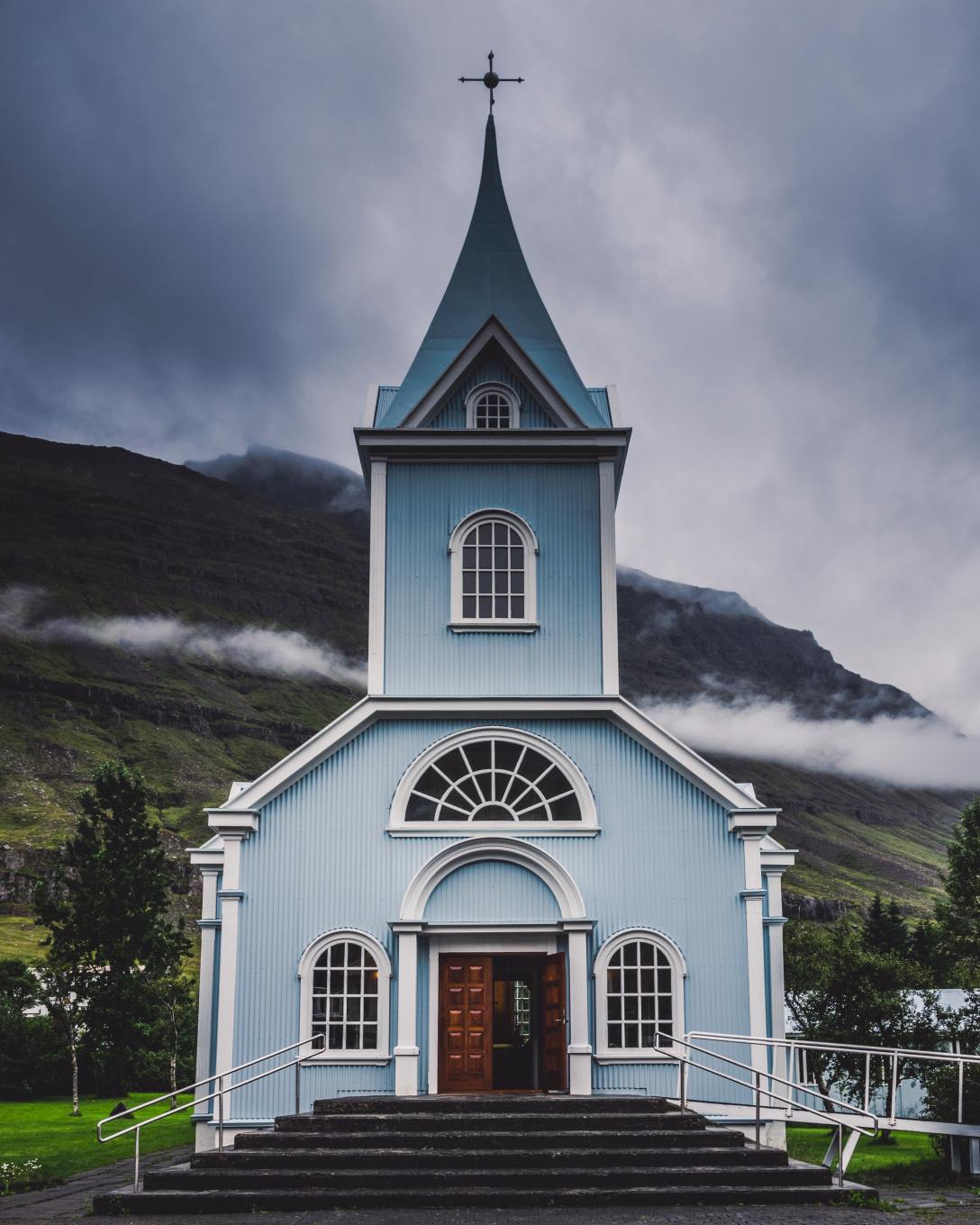
  2. The Deep Blue Church
  3. Salvation is Liberation: Part I
  4. Living Water John 4:1-42
  5. 2020: My Year in Review

Have a great end to your year. See you in 2021.

2020: My Year in Review

2020 has been one of the most challenging years of my entire life. First, I tackled the new year as a single person for the first time in seven years. Unemployed, with no money, and depression literally crushing me, I had no idea what 2020 would hold. I tried to study, but in the first half of the year, my mental health got the better of me, and I woefully failed. I couldn’t bring myself to find employment; there were days I couldn’t do anything but stare at my phone in an open-eyed coma silently screaming to God for something to change. COVD-19 hit us all; isolation wasn’t just a mental health issue; it was a physical necessity as Australia battled the first wave of the pandemic. Doubt started to crash upon the shores of my mind and heart. I doubted the existence of God; I questioned my place in the world, my life. Every day was a numbing haze of uncertainty and a mental void as I lived each moment almost on autopilot. Books became mush in my hands as the words fell off the pages. The Bible, church, and prayer became God walking through Garden calling out to me as I hid from them (Him) in video games and meaningless distractions. 

There were some good times. I started therapy (which I need to go back to). I had supporting friends (they probably didn’t know half of what I was going through). The times we could meet helped me get out of my rut even if they were too fleeting. I met someone new who interestingly enough is an art psychotherapist and a Christian. God has used her to make sense of what I’m going through, and she has encouraged me to get back onto the Path (relationships are always sanctifying). Coffee still tastes good. However, I’ve gone off soy, and I’m onto oat milk now. Seriously, try it. It’s both good for the environment, and it tastes like regular milk. This year God has had me go through some vast transformations regarding my theology around the environment, and with me coming to terms with some of my racial bias’.

Nevertheless, despite some significant change, the world still feels a little less colourful, and a little less bright. Even writing this blog is so much of a mental effort even though I love to write. …. Where am I going with this? I suppose, if nothing else, I want to write to other people who are like me. To those who know God exists yet, He never seems to speak. To those who know that miracles exist yet they seem to only happen in fairy tales. To those who know life is full of beauty and goodness, yet they’ve been without it for so long they’ve forgotten what that means. 

I. Totally. Get. It. 

I can’t remember the last time God ever spoke to me from the Bible or otherwise. I can’t remember when I saw something miraculous and jumped for joy. I can’t remember the last time I saw colour, or truly enjoyed the smell of saltwater in the air or the sand between my toes. I can’t remember getting that intellectual buzz from a good book or sermon or having a genuine laugh with a good friend. The love of a woman (or a man), fine wine, good food and friendship all seem like out-of-body experiences for the depressed. Unfortunately, I’m not much better than the rest of you so I can only offer some tiny pieces of advice. 

  1. See a professional therapist/ psychologist. I cannot encourage you enough. Talking to someone who doesn’t judge you, who is paid to help you and to listen is worth its weight in gold. If the first one doesn’t work, keep looking. But get help (I promise I’ll start going again as well). 
  2. Awe. You’re mentally flatlining. You’re dull and without life. You need a shock to the system. Lay on a blanket, naked, in the middle of the night, look up at the stars. Find the longest stretch of beach and walk it. Swim until you can’t breathe any longer. Go to an art museum. Eat food you usually wouldn’t. Spice up the bedroom. Experience the world God has given you in new ways, from new perspectives and meditate on it all. 
  3. Cry—a lot, and often. Real people cry (Jesus wept).
  4. Listen to good music to get the creative music flowing (I suggest lofi chill music like this. It matches the depressing mood while it slowly and gently lifts you out of it). Also, if you’re a reader but depression has killed it for you try audiobooks (Audible is excellent).
  5. Community. I know it’s hard, but keep going to church and hanging out with friends. Have your pastor or someone at your church come to drag you out of bed. Have your friends literally pick you up off the bed and chuck you in the shower if that’s what it takes. You have to stay connected. 
  6. Finally, to the others who have someone in their life that suffers from depression, be patient. Depression won’t go away overnight. If they can even do one or two of these things within a year, that’s progress. I know its frustrating. You see laziness; they see despair. You see unwillingness; they see unmeaningful. 

I’m not some guru on life or mental health. This is all new (and old) to me. Life is hard. It does suck. It is full of pain and hardships. There are no easy silver bullets or seven steps to a better life. Anyone who says otherwise is full of shit. We do have a lot to look forward to, though. If you’re like me, then you believe that Jesus is coming back to wipe away every tear from every eye. To right every wrong. To make all things new again. I know it feels like you’re hanging on to a thread, and you’ve heard it a million times (and then some), but stay with me here as we walk after Jesus together. I can’t ever guarantee you an easy life, but I can promise a life with purpose, forgiveness and hope. That’s more than what many others find. 

Social Justice Part I – Environmentalism: A Theology of Creation Care

I’m almost 30 years old, and it has only been within the last 12 months of my life that I’ve begun the journey of being self-aware and reflective. I’m flawed and sinful. I’m more racist and sexist then I’d like to admit. I care less about our earth than I think I should. I don’t love my neighbours (Mark 12:30-30) as I ought, I don’t bless those who persecute me (Matthew 5:11-12, 44), I’m not a peacemaker (Matthew 5:9) or pure in heart (Matthew 5:8). Nevertheless, I ask you, dear reader, to evaluate yourself as I invite you to consider some of the most significant social justice issues of our time and whether or not you’re working towards the love of others and the glory of God, or against them. In this series, together, we will explore:

  1. Environmentalism: A theology of caring for creation
  2. Racism: A theology of race and inclusivism
  3. Gender: A theology of biblical manhood and womanhood
  4. Poverty: A theology of the outcast and marginalised

I desire that together we prayerfully consider our place in these issues and act in a way that images God and loves others more then we have before. In this post, we will be discussing environmentalism: a theology of land and creation.

 Right now, we are facing a human-made disaster of global scale, our greatest threat in thousands of years: climate change. If we don’t take action, the collapse of our civilisation and the extinction of much of the natural world is on the horizon.

Sir David Attenborough 

That is a scary quote. Environmental experts estimate that at least 95% of the current global warming trend is human contributed. According to the journal of nature, in 2015, the global number of trees has fallen by approximately 45.8% since the onset of human civilisation as we know it. The Royal Society estimates that since preindustrial times, greenhouse gases such as CO2 emissions have increased 40% with more than half of those emissions increasing from the ’70s. Coupled with a 150% increase in methane gases and a 20% increase in nitrous oxide (and the above data), this has lead to increase in the earth’s average surface temperature, rising oceans, and the extinction of wildlife. If we are to take this evidence seriously, then we are destroying the planet. Corporations, governments, and consumers have taken advantage of the world that we live in, and have profited off it without remorse. We have been given Eden, and instead of guarding and keeping it (Gen 2:15), we have used and abused it. What though, does the Scriptures have to say about our earth and the role we play in looking after it as Christians?

“In the beginning, God created the heavens and the earth” (Genesis 1:1). As we read the Bible, if we can be sure of anything, it’s that creation finds itself in the hands of Yahweh, the God of the Bible. “For in him all things were created: things in heaven and on earth, visible and invisible” (Colossians 1:16 c.f. Romans 11:36). Because all of creation finds its very being in the hands of Yahweh, Christians everywhere can have a certain sense of peace knowing that God is sovereign over history and creation itself (Job 42:2; Proverbs 16:33; Isaiah 45:7-9; Matthew 10:29-31; Romans 8:28; Ephesians 1:11). However, it would be unwise to believe that God is sovereign and to make the illogical conclusion that we’re then to do nothing. For whatever reason, Yahweh has decided to partner with humanity in the looking after of His good created order. From Adam and Eve (Genesis 1-2), Cain and Abel (Genesis 5), Noah (Genesis 6-9), Abraham (Genesis 15), Moses (Exodus 4:16; 7:1), Israel (Exodus 19:6), then finally to Christ and the Church (1 Peter 2:9; Revelation 1:26), God has chosen to partner with humanity in the ruling and care of the earth, and its inhabitants (Genesis 1:28).

God, it seems, didn’t make a good investment. Humanity ruined their chance and couldn’t keep up their end of the bargain (Genesis 3). Instead of ruling over creation by guarding and keeping it, they let evil enter into creation and rule over them. As a consequence, humanity and creation are cursed (Genesis 3:14-19), humanity is exiled from the presence of God (Genesis 3:22-24), and sinful creation groans for redemption and new life (Romans 8:19-23). We pollute the land through bloodshed and war (Numbers 35:33-34). We defile the earth by transgressing God’s law (Isaiah 24:4-6). God gives us guidelines on how to farm that we reject (Exodus 23:10-11). All of this is still true today. Creation coughs and spits as it absorbs the consequences of our polluted behaviour.

It doesn’t matter if you believe in the statistics quoted above. If you are a Christian, it should bother you how we take care of the Garden God has given us. If the Bible calls us to look after the earth, and I believe it does, then we should be doing our part. We should be eating less meat, which leads to less farm land, and it turn, less deforestation. We should be making wise investments in renewable energy. We should be protecting our wild life and biodiversity. We should be thinking of ways we can better distribute resources so everyone has clean water, food, and education. However, the issue goes deeper than merely recycling and buying LED lights for the house (though that’s a great start).

True creation care happens at the very core of the issue, the human heart. Unless people change inwardly, we can’t hope to have an outward effect on the world. The Gospel, the Good News of Jesus Christ, the new covenant supernaturally changes the hearts and minds of the people (Ezekiel 36:26; Jeremiah 31:33). If we want to combat climate change, if we’re going to guard and keep our Garden, we need people transformed by God’s Holy Spirit. Then, we will love others by lifting them out of poverty, fight gender inequality and racism, and partner with God in saving people from their sins. This is simply obeying the command to love others as ourselves. As we love others better, as our hearts are changed, the environment is naturally cared for. Real change starts with the people, not with the policy. The political policy will reflect the people as they are conformed to the image of God’s son (Rom 8:29).

As a longtime professor of biblical studies, a professional exegete, an author, a theologian, and – most importantly – a committed Christian, my objective in this little book [Stewards of Eden] is to demonstrate via the most authoritative voice in the church’s life, that of Scripture, that the stewardship of this planet is not alien or peripheral to the message of the gospel. Rather, our rule of faith and praxis has a great deal to say about this subject. And what the Bible has to say is that the responsible stewardship of creation is not only an expression of the character of our God; it is the role he entrusted to those made in his image.

Sandra L. Richter

Biblical Themes: Messiah

Recently, I got asked to trace the development of the theme of Messiah throughout the Old Testament for a college essay. I’ve got to say it was a lot of fun. So, I thought that I would share the main parts of it with all of you and, edited it for a blog, and turn it into a bit of a series. I’ve written on biblical themes here and here. In the mean time, enjoy!

In the Old Testament, the term messiah means “anointed one” and refers to someone who is given a specific task or duty (e.g., Lev 4:3, 16; 1 Kgs 19:16; 1 Chr 16:22; Isa 45:1). Specifically, we see the word messiah most often used to refer to the anointed kings of Israel (e.g., 1 Sam 2:10, 35; 12:3; 2 Sam 1:14, 16). Therefore, the title of the messiah (anointed one) was given to specific people (by God) to rule over the nation of Israel.

Like with most biblical themes, you can find the developing concept of the messiah on the first few pages of Genesis. Even though explicitly the idea of the anointed one does not start appearing until Leviticus. In some of the earliest Christian and Judaic traditions, the theme of the messiah is closely tied in with the apparent messianic promises in Genesis 3:15, and Genesis 49:8-12. Even further back in the story, a careful reading of Genesis 1:26-28 (God’s mandate to humanity to rule over creation as God’s vice-regents), and 2:15 (God’s command to humanity to cultivate and keep the Garden) can lead one to draw clear parallels between Adam and Eve (humanity) being priestly rulers (a messiah you could say) in the Garden and the Levitical priesthood in Leviticus 11:1-11.

The idea of messiah (priestly ruling) can be found in the story of Cain and Abel. The two brothers are seen offering up sacrifices to God (something only priests do), then Abel finds favour in God’s sight for his sacrifice where God passes over Cain’s. Cain becomes angry and God, knowing His heart, warns him the sin crouches at the door and that he must rule over it (Gen 4:1-7). Why are Cain and Abel here to begin with? Some ancient Jewish traditions have Adam and Eve in the gate of the Garden offering up sacrifices in an attempt to re-enter the Garden. Nevertheless, here we have clear echoes back to the Garden where Adam and Eve were supposed to be priestly and rule over creation, yet like their parents, Cain allows sin (the serpent) to rule over him instead. As a result, Cain murders his brother, and is further exiled east (Gen 4:8-16).

Noah is very messianic. In a world of evil, he is the only one to find favour in God’s sight as he is called to build an ark and save any who would heed his call and enter into it (Gen 6). Towards the end of the flood narrative we find Noah leaving the ark after the waters subside and he offers up sacrifices to God. God gives Noah the mandate to go forth and multiply and Noah plants a vineyard (a garden). Unfortunately, Noah gets drunk and naked and sin enters the world yet again (Gen 9).

Furthermore, we see the idea of a messiah hinted at in the story of Abraham in the person of Melchizedek, the king of Salem (Gen 14; Ps 110; Heb 7:10). Abraham himself sets the archetypal tone for the future messianic promise from when God promises him that he will be a father of many descendants and is promised the land of Canaan (Gen 12:1-3; 15; 17). Throughout the narrative, he is even presented as having a similar status as that of other monarchs and kings (Gen 14:1-24; 21:22-34; 23:6), and Yahweh Himself promises Abraham that “kings will come from you” (Gen 17:6, 16) a clear connection to the future anointed kingly lineage (Saul, David, and Solomon).

Elsewhere in the Old Testament, we see that the king (David) is unambiguously referred to the “son of God,” another reference (though not explicitly) to divinely appointed rulers and kings (Ps 2; 89; 2 Sam 7). Here there seems to be a clear connection to Exodus 4:22-24 where God called Israel “His son” and later in Exodus 19:6 a royal priesthood (cf. Isa 61:6; 1 Pet 2:9; Rev 1:6) and in Psalms 45 and 110 the king seems to be given a sense of divinity. Also, another passage worth mentioning is Isaiah 61:1, where God Himself does the anointing on the servant who has been given the spirit. Here we have reference to a future person who will bring good tidings to the afflicted, set captives free, bind up the broken-hearted, who will proclaim the year of the LORD’s favour and the day of His judgement. Though the figure is not explicitly given the title of a future king, he is anointed and seems fit the definition we earlier explored of an expected king.

Though Israel has returned to the land, and the temple rebuilt, there is a sense of despair. Israel and the temple have not returned to their former glory, and it leaves the reader wondering what will happen next? The Old Testament ends with Malachi prophesying that a day is still to come where God will judge, and the sun of righteousness will come with healing in its wings. Yet God will send another Elijah before that day to prepare the hearts of the people (Mal 4). He will pour out His Spirit on to all flesh (Joel 2:28), establish a new covenant (Jer 31), establish a new temple (Ezek 40-48) and a new messiah whose reign will last forever (Mic 5). Next, let us consider the theme of the messiah in 1 and 2 Kings specifically.

The entire Old Testament is looking forward to a messiah that can crush the serpent (Gen 3:15), fulfil the promises given to Abraham (Gen 15; 17), and finally liberate the Israelite’s (and the entire world) from their ongoing exile from God’s presence. Chris Wright says it well when he writes “the messiah was the promised one who would embody in his own person the identity and mission of Israel, their representative, king, leader and saviour… the eschatological redemption and restoration of Israel would issue in the in-gathering of the nations”. Many Jews in the first century were looking to passages like Daniel 7-9 in anticipation of their inevitable liberation from Roman oppression. They eagerly awaited the messiah to overturn their rulers and reinstall the kingdom that their forefathers experienced under the rule of David and Solomon.

As New Testament Christians, we find that fulfilment in the person of Jesus Christ. A cursory reading of the Gospels makes it evident that the authors thought of Jesus as the messiah fulfilled (see Mk 1:1) despite Jesus often neglecting to claim the title for Himself. This was due to the political climate of the day where Jesus would have been almost certainly killed for having come out as messiah. In all three of the synoptic Gospels, the baptism of Jesus occurs with God the Father saying “this is my son” (Matt 3:13-17; Mk 1:9-11; Lk 3:21-22), an apparent reference to the son-ship of the kings in Israel. Jesus took His messianic mission a step further with not only the salvation of Israel but all nations tribes and tongues (Matt 28:16-20; Lk 24:44-49; Acts 1:8; Rev 7:9). Jesus turned the messianic expectations on their heads. He both shared in our pains, sufferings, and experiences now as the messianic king, and anticipated a future fulfilment of his work.

In Revelation, Jesus brings about new creation as the King of kings and Lord of lords (Rev 1:5; 17:14; 19:12-13, 16). Jesus is the second or better Adam, the second Abraham, the second and better David, the better Solomon, and the everlasting Hezekiah as Jesus brings all things together in the newly created order. The Kingdom will no longer be divided, and God will dwell among them with Jesus as their eternal king.

Theological Reflections on Spiritual Formation

The outcome or ultimate goal of spiritual formation is described in Scripture in a variety of general ways: “righteousness” (Matt 5:20; Eph 4:24), doing the Father’s will (Matt 7:22; 12:50; 1 John 2:17), transformed into Christ’s image (Rom 8:29; 2 Cor 3:18) / God’s image and likeness (Eph 4:24; Col 3:10), holiness (Eph 4:24; 1 Pet 1:15), godliness (1 Tim 2:2; 4:8), obedience (1 Pet 1:14), etc. Other words or phrases are used to describe the outcome of spiritual formation more specifically: “fruit” (Rom 7:4; Gal 5:22), “works” (Jas 2:14–26), “a new life” (Rom 6:4), “no longer . . . slaves to sin” (Rom 6:6), to “live as Jesus did” (1 John 2:6), etc. 

The ‘umbrella’ word used to describe what all the above terms and phrases are driving at is love (Rom 13:8; 1 Cor 13:13; Gal 5:6, 14; Jas 2:8; 1 Pet 4:8; John 13:34–35; 15:12; 1 John 3:14, 16; 4:7–11). The reason love is the umbrella word used to describe the Spiritually formed life is because every one of God’s commands is an expression of love (Rom 13:9). For it is love that sums up the Law and the Prophets (Matt 7:12; 22:36–40; Rom 13:8–10). Love, in other words, is the defining mark of a Christian. However, love is not something that we define. Love has been prescribed for us: it is seen in Jesus laying down his life on the cross for us (Rom 5:6–8; John 3:16; 15:13; 1 John 4:10). Hence, to love others, in the way that the Bible thinks about love, is to love as Jesus loved (e.g., John 13:34; 15:12; Eph 5:2, 25).

None of the descriptions in the above two paragraphs can be achieved by merely keeping more laws or commands, regardless of how diligently or sincerely. Real spiritual formation is not only outward and cannot even be summed up as mere obedience, even committed obedience. Obedience is certainly a way to describe the spiritually formed life, but outward obedience without inward change is nothing more than Pharisaic formation (see, e.g., Matt 15:8; 23:25). Neither should we think that the above paragraphs describe a sinless state. Spiritual formation is a journey, hence the reason the Christian life is often described as a “walk” (e.g., Eph 4:1). Furthermore, one can be holy/righteous/obedient/bear fruit, etc. without being ‘sinless.’ This is clear from something like the Sermon on the Mount, which essentially describes the surpassing righteous life while at the same time acknowledging the need for forgiveness of sins (Matt 6:12). 

Because spiritual formation is not limited to outward change, no amount of motivation and willpower can produce it. One may as well try and push a camel through the eye of a needle (Matt 19:24). The two necessary ingredients—if I can call them “ingredients”—for spiritual formation are faith and the Spirit. The Spirit is essential because spiritual formation is ultimately supernatural and not only beyond our mere human abilities but beyond our inclinations. Furthermore, because spiritual formation is also internal, the Spirit is the only one who is able to go to work in the deepest parts of our being (see Eph 3:16). Faith (in Christ) is necessary because the Spirit only works through faith (e.g., Gal 3:1–5). This is best seen in Galatians 5, where faith in Christ produces love (Gal 5:6), but the Spirit also produces love (Gal 5:22). Hence, the righteous will live by faith (Rom 1:17), but it is the Spirit that enables one to live a righteous life (Rom 8:4). Faith produces obedience (Rom 1:5; 16:16; 1 Thess 1:3; Jas 2:14–26) but so too does the Spirit (Rom 7:6; 1 Pet 1:2). Both faith and the Spirit are necessary (Gal 5:5).

To explain this further, the basic principle behind spiritual formation is that we become like what we worship, or in the words of Psalm 115:8, we become like what we have faith in. (Thus, genuine faith and worship cannot be separated). This is true of those who have faith in idols (e.g., Ps 135:18; Isa 44:9; Jer 2:5), but equally true when talking about Christian spiritual formation. For example, faith in Christ who “loved” us by dying for us (Gal 2:20) produces “love” for others (Gal 5:6). The principle is best summarised in 2 Corinthians 3:18 where those who behold “the glory of the Lord, are being transformed into the same image from one degree of glory to another.” But notice how this happens: through “the Spirit” (2 Cor 3:18). Such was Moses’ experience who upon seeing the glory of the LORD, “worshipped” (Ex 34:8) and was subsequently transformed (34:29–35). Isaiah, likewise, saw the LORD—described as Jesus’ “glory” in John 12:41—and was transformed (Isa 6). Thus, when we finally see Christ face to face “we shall be like him” (1 John 3:2). In summary, then, worship of Christ/seeing Christ/faith in Christ leads to transformation. And because one can only worship/see/have faith through the Spirit, transformation, or spiritual formation is ultimately something that is God’s doing. But it is only God’s doing in the sense that he is forming himself in us and working to transform every part of us, so that as Paul says, we might “be filled to the measure of all the fullness of God” (Eph 3:19). 

The dynamic at work here, briefly, is that our hearts influence our conduct, attitudes and how we live (e.g., Matt 15:18–19), but it is “treasure” that influences our hearts (Matt 6:21). Treasure is simply that which we worship or trust in; treasure engages our affections! Hence, it is treasure and not law that moves the heart, and it is the heart that determines how we live. The point is that it is not enough to simply fix or deal with the heart, one must focus the heart on the right treasure, which is Christ and his rule (e.g., Matt 13:44). This explains why the apostle Paul, for example, resolved to “boast” in and “preach” nothing “except Jesus Christ and him crucified” (1 Cor 2:2; see also Gal 6:14). For in the cross is power to save and transform (1 Cor 1:18—2:5). In the cross, we see the glory of Christ (John 7:39; 12:16, 23; 17:1, etc.), which among other things means that in the cross we see the full heart and character of the Father revealed in his Son (John 1:14, 18). In short, we are put in contact with treasure / that which we can trust in and worship.

This gets to the heart of what Paul means by walking by the Spirit. The Spirit’s goal is to glorify Christ (John 15:26; 16:14), and it is only through trusting and treasuring Christ that we have any hope of resisting the desires of the flesh (Rom 8:13; Gal 5:16) in a way that brings glory to God (see also 1 Pet 2:11–12).

To put this another way, everyone will experience transformation, but the transformation we will experience will be determined by what we treasure/worship/trust in. This process then will happen regardless. This helps explain why spiritual formation is not passive. The person who treasures money or career does not sit idly by waiting for money or their career to change their life. The same is true for those who treasure Christ and the life he offers (see, e.g., Matt 6:33). We do not become transformed people through some kind of divine osmosis. 

Hence, while God’s “divine power has given us everything we need for a godly life through” knowing Christ (2 Pet 1:3), we are also to “make every effort” (2 Pet 1:5, 10; 3:14). And yet making every effort, as defined by Peter here, is not and cannot be the kind of effort that produces outstanding outward obedience, but with no or little change in the heart. The rich young ruler serves as a good example. By all accounts, he was a man characterized by effort in his approach toward God’s commandments. However, his effort was powerless to move his heart when asked by Jesus to sell his possessions and give to the poor (Matt 19:16–22). The kind of effort that Peter is talking about is the effort required to trust in God’s “very great and precious promises,” for it is through these promises that we “participate in the divine nature” (2 Pet 1:4). Since promises are received by faith, making every effort is to trust that one has been “cleansed from their past sins” (2 Pet 1:9)—that is, to grow in grace (2 Pet 1:18)—to trust in the sure and reliable Word of God (2 Pet 1:16–21; 3:2), to be vigilant about those that would seek to distort God’s Word and his promises and trust the warnings against those who don’t (2 Pet 2; 3:3–7, 16–17), and to patiently rely in the future restoration of the new heavens and new earth (2 Pet 3:8–15).

Effort must be driven by faith; otherwise it is powerless. And “everything that does not come from faith is sin” (Rom 14:23). Faith produced effort will be Spirit or divine produced effort (see, e.g., Phil 2:12–13). For example, if we become like what we trust in or worship, this means that those who trust in idols will lack the ability to speak, see, hear, smell, feel, etc. since that is what idols are like (Ps 115:4–8). In other words, those who trust in idols will lack the ability to ‘experience’[1] God. One way to illustrate how this works in spiritual formation is from Hebrews 12:14: “Make every effort to live in peace with everyone and to be holy; without holiness, no one will see the Lord.” “Every effort to live in peace”—defined here as “holiness”—is driven by the desire to “see the Lord,” whether that being seeing the Lord in eternity (1 John 3:2) or now (Eph 1:18). I, therefore, make every effort to live in peace, trusting that my eyes will be opened further to God. Or Matthew 5:8: “Blessed are the pure in heart, for they will see God.” Again, the effort required to be pure in heart is driven by the desire to want to see God. I, therefore, make every effort to be pure in heart, trusting that my eyes will be opened further to God. In this way, a number of things from above come together:

  • Faith/trust produces transformation.
  • We increasingly “participate in the divine nature” “through” God’s “very great and precious promises.” 
  • Treasure influences the heart, which in turn affects our actions and attitudes. 
  • Worship leads to transformation.

When this is understood, the role of spiritual disciplines (e.g., prayer, reading God’s word, etc.) is understood as various means of serving us in the spiritual formation process. They serve us in the same way that a phone or cutlery might serve us: they put us in contact with the person on the other end of the phone or with the food on our plate. They are not an end in themselves, and neither do they necessarily define a spiritually formed person. Clouds are necessary for rain, but the presence of clouds does not mean rain. Similarly, spiritual disciplines are essential as we seek to know Christ, but their presence in our lives by no means indicate a (healthy) knowledge of Christ. The Pharisees being a case in point.

Life, of course, is not as neat and tidy as the above suggests. Tests are always coming at us, in the form of trials and temptations, to test our faith (Jas 1:2–4; 1 Pet 1:6–7). They may either rule us, in which case, escape, pleasure and comfort become more of a treasure than clinging to Christ (Luke 8:13–14). Or they may serve us, in which case, clinging to Christ becomes more of a treasure than escaping, pleasure or comfort offers (Rom 5:3–5; Jas 1:2–4). The reality is that “now we see only a reflection as in a mirror” (1 Cor 13:12), in other words, “what we will be has not yet been made known” (1 John 3:2). But once again, spiritual formation is a journey; and it is a journey of grace. The ego, because of its need to accomplish and be rewarded, resists grace and unconditional love. Grace effectively puts the ego (think of the “flesh”) out of a job. But there is power in grace to transform (Titus 2:11–12 cf. 1 Cor 15:10; Acts 11:23 and Isa 6:6–8). In fact, Paul articulates it well by indicating that it is only by experiencing Christ’s unconditional love that we experience “the fullness of God” (Eph 3:17–20), indeed this is the goal of spiritual formation. Thus, as we experience more of Christ’s grace and love, we become more like what we worship, Christ formed in us, loving others as Christ himself has loved us.   

  [1] I am using the word “experience” to summarise what idols cannot do in Ps 115:5–7. 

By Alan P. Stanley