

Christian Deconstructionism: The Good and the Bad

When I first became a Christian, I swallowed everything hook, line and sinker. I was taught premillennialism, young-earth creationism, and that the Bible was always meant to be read literally unless there was an excellent reason to read it otherwise. Of course, anyone else was wrong and against the purest form of our Faith. These days as I’ve gone through my own sort of deconstructionism, I find myself in a very different place. I’m now an amillennial, an evolutionary creationist, and I’ve learnt to read Scripture according to its literary genre and context. Some of these things might sound fairly mundane to some of you, but for me, even the most basic of these concepts set me on a trajectory that would radically shape the way I relate to God, the Word, humanity and creation. So, rather than walking away from Christianity (which so often happens with people who go through things like this) I pressed forward trusting that God would conform me to the image of His Son (Rom 8:29).

So what is Deconstructionism? Philosophically, it is the idea that there is no fixed meaning in a text. Instead, everything in any given text is subjective and open to rigorous interpretation (originated by Jacques Derrida 1930-2004). As all things often do, this idea spilt over into a popular Christian movement in the West where traditionally held to beliefs like I’ve listed above (among others) are challenged and pulled apart (deconstructed) and are held up to scrutiny. Once plainly understood verses and passages are now challenged, reinterpreted and reapplied. Sometimes for the better, sometimes for the worse. One author defines deconstructionism like this:

“Let’s say our faith was like a sweater. Yarn: our ideology. Weave: our tradition. This is how you wear it. Don’t change it, even if the sweater doesn’t keep you warm any more. Even if it’s too tight or the threads cut off oxygen at your neck. This is the way. Doubts and questions mean disrespect, and those are the seeds of evil, so just don’t.

But over the years, a thread comes loose and you try to just tuck it in alongside the others. You can cover the fraying up. You can pull the thread and think, ‘Oh, I don’t need this one, because it is harmful to me; it’s itchy and gets caught on corners.’ It comes out easily. And the sweater stays together. Then you pull another, and another, and soon you find all the yarn is gone. You have deconstructed the entire thing. You are left naked. People gawk and run away, and you feel two opposing things: the freedom of glorious nakedness, and the fear of the same.”

Lisa Gungor, writing in The Most Beautiful Thing I’ve Seen (Zondervan)

I have to admit I have felt the freedom of being naked and the fear that comes with change and the judgement you often feel from the people around you who still hold firmly to their traditional beliefs (God bless ’em). Deconstructing one’s Faith is a beautiful, liberating endeavour where (at least in my experience) it has led me into a deeper faith than I ever had before. However, that hasn’t been true for everyone. Unfortunately, people stay naked and join a commune (if you’re still tracking with the metaphor) and never come back. Over the years, there have been a few famous people who have fit this category. Rob Bell started off fairly conservative/ fundamental went through his own deconstruction and now (as much as I love the guy) is hardly even a Christian. This process needs to be walked with wisdom and discernment. That’s ironically a little subjective I know, but my point is that the human heart, while we often mean well and strive for goodness, it’s quite deceptive and easily led astray.  Human nature is a chaotic mess that needs order which takes time and patience under the hand of God. Deconstructionism coupled with dedication for reconstructionism can be either a beautiful part of this process (which we usually call sanctification) or, if done without wisdom it can be destructive.

So here are a few thoughts and perhaps guidelines for people going through this or for people watching their loved ones going through it:

1. Christ-like humility. Whether your a black and white fundamentalist or a Christian who is wrestling with some of the hardest questions of our Faith, it all must be done with extreme humility. That is to say, if you’re worried about your friend going through deconstructionism, remember that at some point in your walk with God you didn’t have all the right answers either and I’m sure you still don’t. Don’t let your dedication to guarding that which you’ve been bought up in cloud your ability to love your brother or sister in Christ.

If you are deconstructing, remember that tradition is wisdom. There have been dozens if not hundreds of learned scholars and theologians throughout church history who have tackled the same things you’re wrestling with. You aren’t a lone wolf. Humbly seek the advice of the sages and saints who have gone before you and of those who are around you.

2. The centrality of God’s Word. God speaks, and He does so primarily through the Scriptures. If you’re watching your friend go through deconstructionism trust that God will work through His Word and through His people (even you). If you’re going through deconstruction, remember that God’s Word is trustworthy and good. You might be struggling with the idea of inerrancy (I’ve been there) or inspiration, but there is a reason why it’s the most popular book in the history of humanity.

The Way of the Righteous and the Wicked
Blessed is the man
who walks not in the counsel of the wicked,
nor stands in the way of sinners,
nor sits in the seat of scoffers;
but his delight is in the law of the LORD,
and on his law he meditates day and night.

He is like a tree
planted by streams of water
that yields its fruit in its season,
and its leaf does not wither.
In all that he does, he prospers.
The wicked are not so,
but are like chaff that the wind drives away.

– Psalm 1:1–4

3. Finally, as you deconstruct your Faith do so prayerfully and with the expectation that God will work in you good things. Invite God along for the ride, continuously examine yourself, making sure that you’re deconstructing with the right intentions and attitudes. Some use deconstruction as a way out of the Faith, seeking to justify other lifestyles. Instead, let the Spirit move in you as you work out your salvation with fear and trembling. Oh and remember, take every question to God no matter how heretical or silly it sounds. God wants to work at it with you.
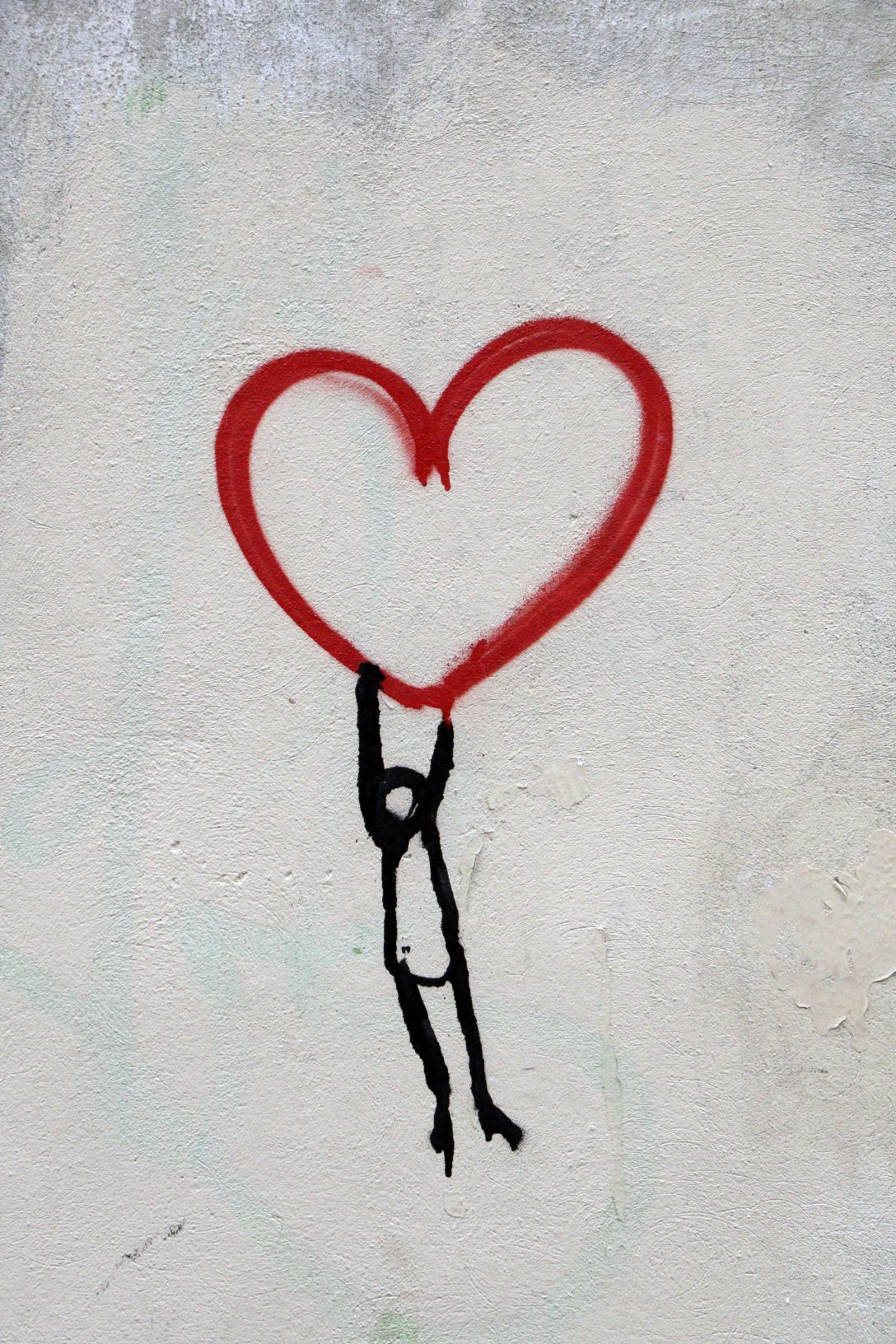

Chaotic Love

I hate love stories, they always make cry, I’ve never even read a love novel. My favourite stories are love tragedies. Samson and Delilah, Romeo and Juliet, West Side Story, The Titanic. The 2003 classic Love Actually has to be one of my all-time favourite love movies though. In particular, the scene where Andrew Lincoln stands outside of Keira Knightley’s door as he boldly declares his love for her all the while her new husband is inside watching T.V always makes me cry. Oh, what could have been? I feel for the guy. Completely in love with a woman he can never have. How long has he been thinking about her, imagining what life what have been like had he met her first? Then, finally, he spills his feelings in a romantic gesture to only walk away from it all, leaving us all wondering if there was a next? What I love about the scene is that he was, at least eventually, so forward with his feelings, yet it didn’t end up the way he’d hope despite his years of dreaming.

Presenting the unfortunate drama of love and life.

Personally, love has taken its toll. There’s always a cost with love, a risk that we’re usually blind to because we so desperately want to believe that a knight in shining armour will rescue us from our towers. Thanks, Dinsey. For a lot of people, we swipe right, meet, fall in love and get married. We spend thousands and thousands of dollars on a day where despite the vows, despite the promises made, despite the people cheering and wishing you well, nothing is assured. Meet reality.

Love is real, but Disney is a myth. Love is as whimsical and as magical as it is practical and painful. Love can happen in an instant, or it develops over time and can be gone the next day again. Love can make you giddy, content, or crazy. People have fought wars over love and swam across oceans, others have simply knocked on the door while being invited in for some ice tea, or they walk away knowing that may never get the one they want. Love binds and breaks, it enlightens and makes us stupid. It cannot be controlled, simply guided. For the Christian love is governed by the Bible, for others, it’s guided by whatever it is their worldview presupposes. However, even for the Christian, as much as we want to believe it, the Bible isn’t a sure way to cover us from the chaotic nature that is love. Love is patient, love is kind and Christian marriage should endure. Life though throws us a curveball, and when love comes crashing down around you in all of its forms, we must beg the questions what now?

Many of you know my story, many of you may not. This isn’t a sceptical reaction to love. I love, love. I thrive on it, and I think you do too. If I can offer any wisdom or advice on the topic of love, it is this:

  1. Love is a chaotic force that can bring a lot of peace and order to your life. It is not to be taken lightly, yet there is something about it that’s magical.
  2. How love works depends on your choices, yet it can’t be controlled.
  3. Let love take you places, yet be wise in your dealings with it.
  4. Never, ever give up on it, despite its fickle nature, it doesn’t give up on you.

Politically Christian

Australia is on fire, and the Greens are to blame, or maybe Scott Morrison is. Trump ordered an assassination on the Iranian Major General Qasem Soleimani which, as Iran promises, guarantees severe consequences and international backlash. Climate change, LGBTQI, international trade and globalisation, human rights. The world is in rapid flux. Peace one day, on fire the next. Politics are unavoidable.

I never thought I’d admit it but to be Christian is to be inescapably political. Here’s why:

  1. Christians live in a kingdom with a king who rules over every other system of government and power (Psalm 2, Daniel 2:21, Matthew 28:18, Revelation 1:4-5).
  2. Christians, therefore, are inherently monarchists who bow the knee to King Jesus. This is a political stance. We’re saying every other government is on borrowed power and time from a higher power which reigns over them eternally.
  3. Therefore, whenever we vote for a leader or a policy, we do it with Jesus in mind. We must ask ourselves if what it is we’re voting for is aligned with God’s kingdom revealed in His Word (Matthew 5-7 is a great place to start).
  4. Whenever we do vote, whenever we get involved in politics, as citizens of God’s kingdom, we are declaring something about who God is. If we vote for climate change policies, we are saying God cares about the environment. If we vote against abortion, we’re declaring that God cares about all life. If we vote for religious freedom, we’re showing that God, at least in this age, gives everyone the freedom to decide who they will worship.

In the ever-intensifying geopolitical climate that we all live in, we must prepare ourselves for what is to come. Politics is unavoidable, and because of the Gospel we preach, and the King that we worship we’re already involved in politics anyway. Let’s hold up a minute. Before we go gate crashing the government and rioting for change, Christian, change happens first within the Church itself. If you haven’t already go and read Awaiting the King by James K. A. Smith, one of the best books I read last year among others. In it, Smith argues that

  1. Being political is actually worship
  2. Worship is actually political
  3. That influencing the political world happens first in and through the Church.
  4. When we do inevitably engage in the political sphere, do so with hopeful reservation.

Which begs the question, what is worship? Singing? Yes. Reading the Bible? Yes. Prayer? Yes, though worship is more. Worship is loving one another as yourself. It’s actually everything you do every day for the rest of your life to the glory of God. Why? Because as a Christian, you are in Christ, the temple, the place where worship happens, where communion between God and His people meet. You cannot escape worship, and you cannot escape than being political because we don’t worship only God but a King of Kings and a Lord of Lords. So here are my easy steps to being a healthy political Christian in 2020:

  • Go to a sacramental centred church. As Smith argues, it is through the liturgical means of the church that the people of God are transformed. Baptism and the Lord’s Supper demonstrate the Gospel, and the Word proclaims it (these are the three sacraments given to the church by Christ).
  • As the Word transforms, as the Supper of the Lord’s death seeps into your soul and Baptism brings you life, love one another fiercely, so that the rest of the world looks on with jealousy and awe. This means that you need to meet other’s needs. Meet them in brokenness, forgive them when they sin against you.
  • Go out and proclaim the Gospel, which is the power of God to save. Before any political reform happens, hearts need to be changed, and only God can do that through the Good News proclaimed by the Church.
  • Engage in the public sphere with a now but not yet mentality. What we do and vote for matters in eternity, however, remember that Jesus is still to return and make all things new at His second coming.

This 2020 be wise in your engagement in the political sphere. Love, worship and rest knowing Jesus reigns and the world is indeed running on fumes.


The call to follow Christ, the call to desire his kingdom, does not simplify our lives by segregating us in some “pure” space; to the contrary, the call to bear Christ’s image complicates our lives because it comes to us in the midst of our environments without releasing us from them. – James K. A. Smith

2019 Mix Up: My Five Favourite Blogs of the Year

Here is a list of my top five favourite blogs I’ve written this year for your viewing pleasure:

  1. Genesis 1-11 Part I: Authorship, Context and Genre
  2. Let’s Fight Depression
  3. The Local Church: A Slice of the New Earth
  4. Between Churches
  5. My Year in Review: 2019

My Year in Review: 2019

“And men go abroad to admire the heights of mountains, the mighty waves of the sea, the broad tides of rivers, the compass of the ocean, and the circuits of the stars, yet pass over the mystery of themselves without a thought.”
― St. Augustine of Hippo, Confessions

As 2019 wraps up, as the Earth begins to make its final trip around the Sun, as people all over the world scurry to a fro in a capitalistic drive to purchase an overabundance of gifts for people who’s hearts will never be truly satisfied… I sit back and reflect on the year gone by. What a year it has been. If I were to describe it in one word, that word would be “wearisome.” We’re only days away from Christmas, and as I write this, I can say that I am tired and broken. I’ve moved from the city to the coast, changed jobs by buying a cafe, struggled to settle into a church, I’ve changed positions on some big theological ideas, and on top of all that my wife and I separated. It’s been a tough year of change and heartache, and I have as many questions as I have things to be thankful for.

One of the biggest things I’ve been thankful for is my family and friends (cliche I know, but it’s true). Despite what I’ve been going through, everyone has been there for me from the entire spiritual spectrum. From non-believers to conservative Christians, they’ve all loved me, prayed for me and have been there for me as much as possible without any judgement. They’ve born my burdens, watched me cry and have listened. I couldn’t have had better people in my life. It’s times like these that genuinely prove who your friends are and they’ve gone above and beyond. They’ve genuinely fulfilled the golden rule.

However, I’m still left with a lot of questions and mixed feelings.

  • Where’s God in all of this?
  • Why has this happened to me?
  • Isn’t God supposed to do good things for me?

Theologically, I know the answers to all of these.

  • God never leaves or forsakes me
  • This has happened to conform me to the image of His Son
  • God works out all things for good for those who love Him

It doesn’t make it any easier, though. It leaves me doubting my God and my faith. It makes me wonder what is next for 2020 and where I’m supposed to go from here. I want to rebel and fly off the handle, wake up in a strangers bed with a hangover and indulge in the typical hedonistic life the world has on offer. As I write this though, I’m reminded to not escape the pain and trials through meaningless distractions (entertainment, booze and parties… trust me it’s very tempting), instead, to embrace the pain and to grow in wisdom. The wisest of us suffer and learn, they don’t escape. I want to walk through the flame, look back and be assured that God had more profound things in store for me. I want to experience the Spirit and be infused with His great love for others. I want to sing the Gospel and witness the might of His Kingdom.

For I consider that the sufferings of this present time are not worth comparing with the glory that is to be revealed to us. – Romans 8:18