
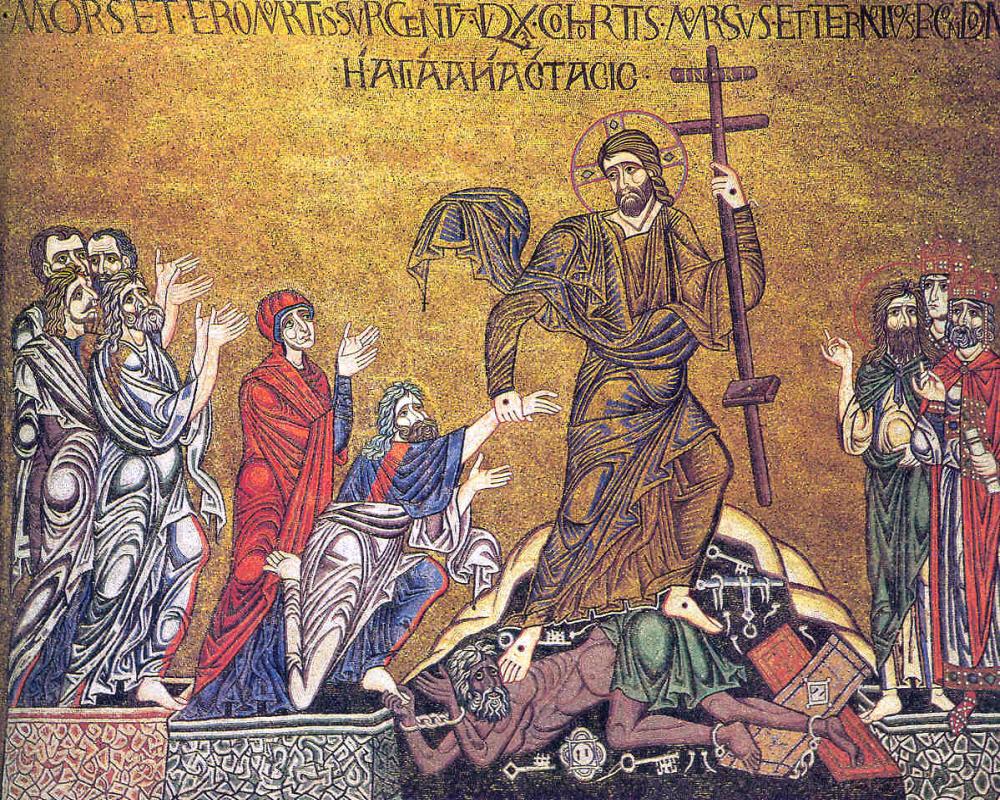
This question might make us uneasy, but it matters. When we say Jesus saves, what do we really mean?Did Jesus save us from God, or did Jesus save us from sin and death? How we answer this question reveals what we believe the real problem is.
What Is the Fundamental Barrier?
The Bible shows that something is deeply wrong with humanity. This story does not begin in the New Testament, but in Genesis. The sense of exile, of being cut off from the life we’re meant for, is not just an ancient tale; it is a feeling that still shadows our lives today. It’s like the sudden ache of finding yourself scrolling through photos of people you once knew, realising the distance that has quietly grown between you and them. Or waking in the night, feeling strangely out of place in your own skin, longing for a wholeness you can’t name. The story of Genesis is one of lost belonging and deep separation, but the ache it describes lives on in our day-to-day experience.
Genesis 1 says people are made in God’s image and given a purpose. We are created for relationships, trusted to care for creation, and invited to share life with God.
Genesis 2 shows that life comes from being close to God. The tree of life reminds us that immortality is a gift, not something we possess.
In Genesis 3, everything changes. The serpent tricks, trust is broken, disorder grows, and death enters the story. Things go downhill quickly: deception breaks trust, distrust leads to chaos, and the world moves toward death. Shame appears, fear replaces closeness with God, the ground is cursed, and death starts to spread.
God says, “You are dust, and to dust you shall return.”
Exile follows.
Look at what happens next. God doesn’t respond with anger. Instead, people become separated, life becomes disordered, and mortality enters. The break is about our relationships and who we are. Death becomes part of our story.
The rest of the Old Testament unfolds under that shadow.
In Genesis 4, sin is described as crouching at the door like a predator.
In Psalm 51, David speaks of being conceived in iniquity.
In Isaiah 59, the prophet says iniquities have separated us from God.
In Ezekiel 37, Israel is pictured as a valley of dry bones, in need of resurrection, not merely acquittal. The problem deepens into exile, idolatry, injustice, and even national death. Yet throughout the prophets, there is a promise.
Isaiah 25 – 26 speaks of one who will swallow up death forever.
Hosea 13 anticipates ransom and redemption from the power of Sheol.
Daniel 12 foresees resurrection.
By the time we reach the New Testament, these ideas are already there.
Paul says sin reigned in death in Romans 5.
He says we were enslaved to sin in Romans 6 (for insight into the theme of redemption in Romans, click here).
Death is called an enemy in 1 Corinthians 15.
Hebrews 2 says Christ became human so that through death he might destroy the one who has the power of death, that is, the devil.
1 John 3 says the Son of God appeared to destroy the works of the devil.
Colossians 2 says Christ disarmed the rulers and authorities and put them to open shame.
This pattern runs throughout the story.
Sin leads to corruption.
Corruption leads to death.
Death leads to exile and alienation.
From Genesis on, the Bible’s main problem isn’t that God needs to be appeased. It’s that people have come under the power of sin and death. The Bible’s main crisis is the tyranny and rule of sin and death, not the anger of a God who needs to be satisfied. This idea anchors the biblical story, and every major theme points back to it. So if the cross is the main point of the story, it must address that rule.
This isn’t legal language. It’s about a real victory, where Christ faces our true enemies: sin, death, and the devil. Think of the resurrection, Jesus rises from the tomb, breaking death’s power and showing that sin and the devil don’t have the final say. Just as the Israelites were freed from slavery in the Exodus, Christ leads a rescue, breaks our chains, and restores what was lost. This victory is real; it’s a win over the forces that keep us trapped. So when we struggle with temptation, discouragement, or habits that seem impossible to break, we’re not alone. Christ’s victory means those old powers don’t control us anymore. When you face daily battles, fear, anger, or habits that feel too strong, remember that His victory is at work in you. We can ask for His strength, trust His freedom, and find new hope even in everyday moments.
Here’s how the Bible tells the story: sin leads to corruption.
Corruption produces death.
Death produces alienation.
Isaiah says our iniquities have separated us from God.
Paul says we were dead in our trespasses. This separation is connected to being trapped and to decay.
But What About Wrath?
Scripture also speaks plainly about wrath.
Romans 1 says the wrath of God is revealed.
John 3 says the wrath of God abides.
But if we look closely at Romans 1, we see that God’s wrath is shown by letting people go their own way. He allows humanity to face the results of its choices. Wrath isn’t God losing control. It’s God’s holy stand against anything that harms what he loves.
It’s real. It’s serious. It isn’t downplayed. But it is responsive.
The Bible says God is love (1 John 4:8), but it never says God is wrath. God’s love isn’t weak or easy; it’s deeply holy. Wrath is how God’s holiness responds to sin, showing his steady opposition to anything that destroys what he loves. So we must ask a deeper question. Is wrath the root problem, or is wrath God’s righteous response to a deeper disease?
Two Different Logics of the Cross
In penal substitution theology, especially in the Reformed tradition, the main problem is guilt before a holy God. Divine justice must be satisfied. Christ takes the penalty we deserve, and wrath falls on him instead of us. Forgiveness comes because justice is met. This courtroom way of thinking has given many Christians real comfort and assurance, offering a clear sense of security before God and a solid foundation for knowing they are forgiven. Many of us have sung hymns that value this image, and it’s important to recognise the pastoral strength and deep devotion that come from this understanding. This view has been held by many faithful believers and has shaped the faith of countless Christians. But it has also caused harm. The issue isn’t just about doctrine. It’s about how we are formed.
You become what you worship
If, deep down, you picture God as mainly wrathful and needing to be satisfied before he can embrace you, that image doesn’t just stay in a textbook. It shapes you. If you believe ultimate reality is about payback, you slowly become that way, too. If you think God relates to you mostly through anger that must be appeased, you start to treat yourself and others the same way.
It can create a constant, low-level spiritual anxiety. There’s a steady sense of fear, like you’re always one mistake away from letting God down. You feel like you’re never quite enough, always at risk of messing up. Over time, that changes you.
It breeds insecurity.
It creates scrupulosity.
It amplifies shame.
It makes obedience feel like walking through a minefield.
You start to wonder if every decision could be a failure, if every doubt disqualifies you, or if every mistake brings back God’s displeasure. Even if you believe Jesus took on wrath, the feeling can stay. You might think, ‘Lucky me, Jesus died,’ but the Father still feels distant, still feels harsh, still feels basically unsafe. I know this not as a stereotype, but from my own experience.
For years, I kept hearing how wretched I was. That changes you. It made me unsure of myself, anxious, and often depressed. I saw God as distant and unloving. The cross felt like a technical fix for a problem that always felt personal. I never felt free to just live without always fearing I was messing up.
That is not abundant life.
When the focus changed from ‘you are a wretched sinner barely tolerated because of Jesus’ to ‘you are deeply loved, and sin is the brokenness Christ came to heal,’ something shifted. The difference is subtle but huge. If God loves you only because his wrath is satisfied, love feels like a transaction.
But
If God loves you because God is love, and Christ stepped into your brokenness to restore you, then love becomes the foundation.In that second view, sin is still serious. It still destroys and still matters. But it’s not the main headline of your story. It’s not your identity. It’s the sickness Christ defeated.
About six months ago, something changed in me. After years of feeling distant and going through what felt like a dark night of the soul, I started to experience God’s love as real, not just as an idea. The cross stopped being about barely escaping wrath. It became about being rescued from brokenness and brought home. And when love comes first, you start to change.
If you worship an angry God, you become anxious and angry in turn. If you worship a God whose deepest instinct is self-giving love, you begin to soften. You start to trust. You start to really live.
Theology is never just abstract. It shapes who we are.
If the cross shows a God who must punish to forgive, that shapes one kind of Christian. If the cross shows a God who enters death to destroy it and restore connection, that shapes another. For me, the second view has brought freedom instead of fear, trust instead of tension, and a sense that I’m not always worried about making a mistake before God. And that difference isn’t just theoretical. It is life-changing.
In the Christus Victor view, the main problem is being trapped by sin, death, and the devil. Christ enters our world, becomes human, and defeats these powers from the inside. Church historians say that in the first century, when Roman generals won, they paraded through the city with captives and trophies. A freed slave would receive a special cap to mark their freedom and begin a new life. Early Christians used this powerful image to show Christ’s victory over the forces that held people captive. He destroys death by dying, removes the power of rulers and authorities, and sets people free. In this view, something real changes inside a person, not just in a legal sense.
The cross is primarily a battlefield.
Both affirm wrath.
Both affirm judgment.
Both seek to be faithful to Scripture.
The difference is what stands at the centre.
Is the problem God’s wrath that must be satisfied, or is the problem sin and death that must be defeated?
The Early Church’s Emphasis
Picture early believers gathered in a candlelit stone room, singing hymns about Christ’s victory that echo off the walls. In the flickering light, baptismal waters splash as new Christians rise up, greeted by the joyful shout, ‘Christ has trampled down death by death.’ The air is full of freedom and healing. For these communities, the story of Jesus wasn’t just a doctrine; it was an experience of rescue. In the first centuries, Christian thought focused strongly on victory and healing.
Irenaeus of Lyons described Christ as recapitulating humanity, retracing Adam’s steps and healing human nature from within. Athanasius of Alexandria argued that Christ became human to destroy death and restore incorruption. Gregory of Nyssa spoke of humanity held captive by a tyrant and liberated through Christ’s self-giving victory. Their main images were liberation, restoration, and sharing in God’s life. This doesn’t mean they ignored wrath or judgment. It means they saw the cross mainly as a victory over death and a way to heal human nature.
So What Did Jesus Save Us From?
If sin enslaves, if death reigns, if the devil accuses, salvation isn’t about a change in legal status. Christ defeats sin. Christ destroys death. Christ disarms the powers. And when these powers that enslave us are broken, wrath has nothing left to oppose.
He saves us from sin and death by bringing us back into relationship with the Father. To live in this restored relationship, try a simple practice: spend a few quiet moments each day praying the Lord’s Prayer slowly, letting each line remind you that you belong to God as your Father. Or, if you’re part of a group, gather this week to share communion, letting the bread and cup remind you that Christ’s victory over sin and death is real for you. Through these practices, the truth of your restored relationship with God becomes something you not only believe but also experience.
He saves us from sin and death by bringing us back into communion with the Father. The cross is not God changing his mind about us. It is God in Christ changing our condition.
Sin enslaves.
Death reigns.
Christ conquers.
And because of that victory, the separation ends, and life with God is possible again.
 Scribbling Theology