
Jesus The: Sage

A short series of short reflections on the person of Christ in the Scriptures

For me, Jesus is The Sage. He is enlightened, inspiring, and His teachings reach into the very depths of one’s soul. Out of all that Jesus said and did, the sermon on the mount (Matt 5-7) is probably among some of His greatest teachings. From “blessed are the poor in spirit” (Matt 5:3), “salt and light” (Matt 5:13-16), the lord’s prayer (Matt 6:5-14), to the golden rule (Matt 7:12-14), Jesus’ teachings drip with wisdom for all to come and drink from. If the Bible is anything, it’s wisdom literature that reaches its crux in the teachings of Jesus (Ps 19:7). As I walk through the pages of God’s Word, I can almost feel Jesus leading me by the hand from Genesis 1 to Revelation 22 into a life long journey to wisdom. The Bible says in Proverbs 4:6-7, “Do not forsake wisdom, and she will protect you; love her, and she will watch over you. Wisdom is supreme; therefore, get wisdom. Though it cost all you have, get understanding.”

The cost of following The Sage is your life. Yet, The Sage will protect you and watch over you if you love Him. However, a life walking after The Sage feels like anything but. I believe wisdom’s most effective tools in the classroom of life is time plus suffering. Jesus Himself spent a life full of suffering up to the cross itself, and no servant is greater than The Master (Jhn 15:20). The Sage has taught me much about suffering, much about self, much about God. The greatest lesson? “to fear God, keep His commandments, and to love others as yourself” (Ecc 12:13; Lev 19:18; Mk 12:31).

“By three methods we may learn wisdom: First, by reflection, which is noblest; Second, by imitation, which is easiest; and third by experience, which is the bitterest.”

― Confucious

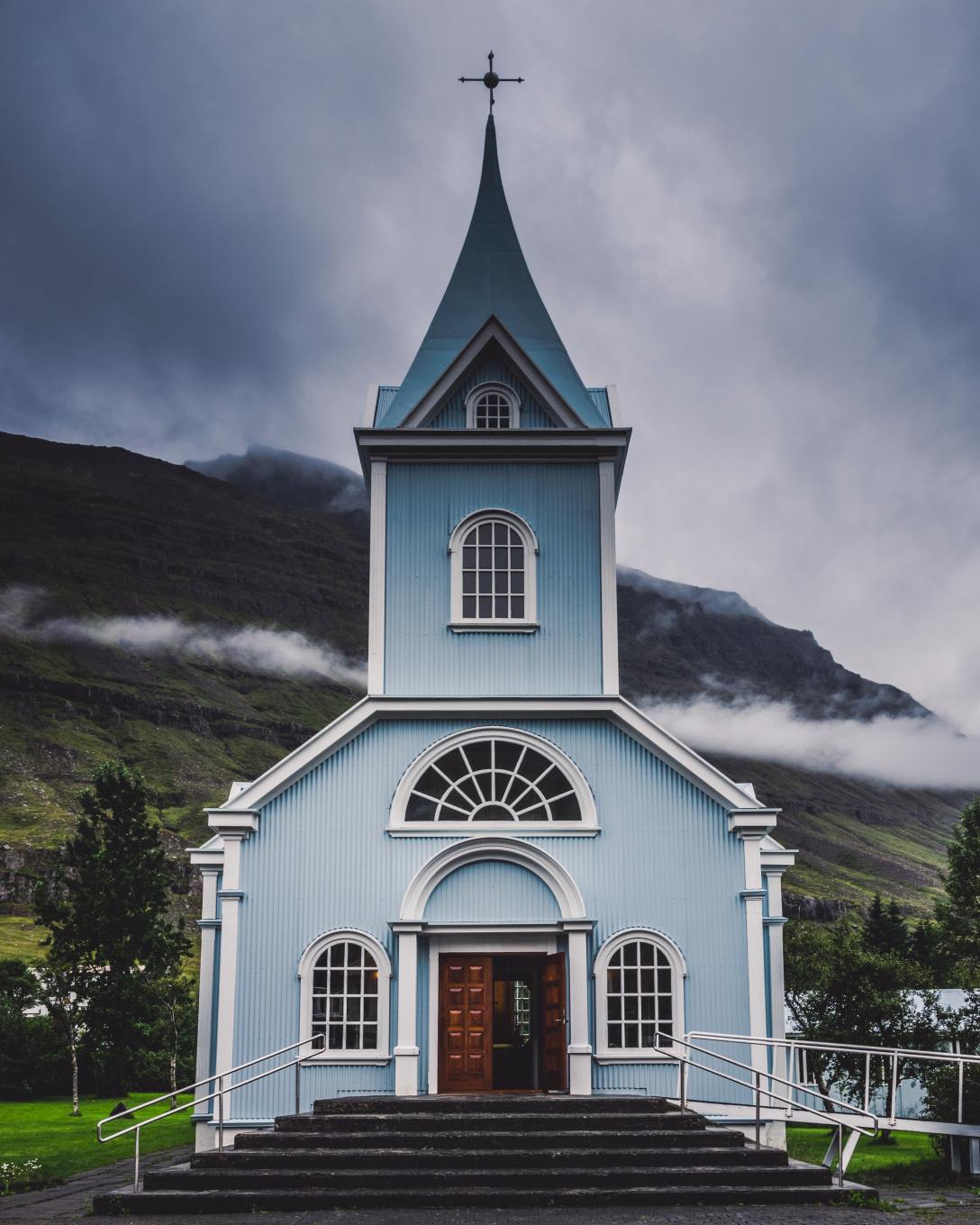
Church

“Friend, what are you looking for in a church? Good music? A happening atmosphere? A traditional order of service? How about: a group of pardoned rebels . . . whom God wants to use to display his glory . . . before all the heavenly host . . . because they tell the truth about him . . . and look increasingly just like him – holy, loving, united?”

― Mark Dever, Nine Marks of a Healthy Church

What is the Church? 

Systematically, there are two theological categories one should have in their mind when they think of the word “church.” There is the Church universal (historically this has been labelled catholic – Latin for universal – Church; not the Roman kind), and the church local.

The Universal Church 

The universal Church is invisible (meaning no one can tangibly recognise it except for God). It is made up of God’s people who the blood of the lamb has saved throughout all time (past, present, and future), from all tribes, nations and tongues (Revelation 7:9). God’s people exist among every tradition (typically despite them), in every context (such as persecution), and demographic (from rich to poor). The universal church is God’s redemptive work or kingly rule over the entire cosmic order as He seeks to renew all things. Therefore, the universal church is in a sense that mustard seed slowly sprouting throughout the course of history so that all of creation may nest in its branches (Luke 13:18-19). Therefore, I would argue that the universal Church is another way of describing God’s Kingdom. As Scot McKnight says

“It is reasonable to say that the kingdom is the church, and the church is the kingdom – that they are the same even if they are not identical. They are the same in that it is the same people under the same King Jesus even if each term – kingdom, church – gives off slightly different suggestions”

The Local Church 

The local church is the God-ordained, tangible, yet imperfect expression of the universal body of Christ (God’s Kingdom). It is where both the world and the Kingdom come together as it is made up of both believers and unbelievers (Matthew 13:24-30), sheep and wolves (Matthew 7:15), God’s people and those who pay lip service to God but who’s hearts are far from Him (Matthew 15:8). Biblically, the local church has a polity (church government – elders, deacons, members), sacraments (the Lord’s Supper and Baptism), worship (singing and prayer) all centred around the exegetical teaching of God’s Word. The local church is ground zero (after the Cross) for God’s mission to go forth and redeem the world through the preaching of the Gospel.

Implications

  1. If the local church is ground zero for God’s mission and the Gospel, you cannot be an effective Christian without being in a biblical local church.
  2. Looking for a good church no longer means finding out if it has a good kids clubs, men’s group, or women’s ministry. It no longer means flashy lights, feel-good messages, and social homegroups. Looking for a good church now means looking for a biblical one (a plurality of elders, deacons, membership sacraments, worship and prayer, the exegetical preaching of God’s Word, and mission). This might mean a biblical church is a bit smaller then you’re used to, a little slower, a little less flashy (they might not be). Yet it is these things that God’s Spirit works through. Without a strong biblical local church, the Christian can not hope to flourish in God’s kingdom effectively.
  3. Becoming effective in the local church leads to being effective in the world in our mission to take forth the Good News of Jesus. Learning to love the Lord and your brothers and sisters in Christ, equipped with God’s Word and Spirit will compel you to herald the Gospel to any and all who would hear.

Final Thoughts

In Australia, churches too quickly jump to what is pragmatic at the expense of a solid biblical foundation for their ministries. Programs are good, but only if they’re built upon these principles first. If we rely on a men’s breakfast or on a woman’s coffee day once a month to facilitate fellowship (the command to love one another), perhaps we should be questioning our ways of doing church, to begin with before we implement even more programs that often replace genuine Spirit-filled love for our fellow members. If we rely on youth groups to disciple our young people, perhaps we’re doing something wrong from the pulpit or even from our own homes. If we have to rely on our church programs to feed the poor, to look after the environment and to address other social issues, then we’ve missed the point of what it means to be an effective Christian in the world. I don’t hate programs. I’m not suggesting we get rid of them. What I am suggesting is that we recover a strong biblical foundation of church (at the expense of all else if we must), and I can almost guarantee that the Christian landscape, at least in Australia, would experience a sort of reformation that has been needed for man, many decades.

My prayer for 2021 is that we will plant, grow and revitalise healthier churches so God may be glorified, and the Gospel will go forth effectively in our nation.

2020 Mix Up: My Five Favourite Blogs of the Year

  1. Social Justice Part I – Environmentalism: A Theology of Creation Care
  2. The Deep Blue Church
  3. Salvation is Liberation: Part I
  4. Living Water John 4:1-42
  5. 2020: My Year in Review

Have a great end to your year. See you in 2021.

2020: My Year in Review

2020 has been one of the most challenging years of my entire life. First, I tackled the new year as a single person for the first time in seven years. Unemployed, with no money, and depression literally crushing me, I had no idea what 2020 would hold. I tried to study, but in the first half of the year, my mental health got the better of me, and I woefully failed. I couldn’t bring myself to find employment; there were days I couldn’t do anything but stare at my phone in an open-eyed coma silently screaming to God for something to change. COVD-19 hit us all; isolation wasn’t just a mental health issue; it was a physical necessity as Australia battled the first wave of the pandemic. Doubt started to crash upon the shores of my mind and heart. I doubted the existence of God; I questioned my place in the world, my life. Every day was a numbing haze of uncertainty and a mental void as I lived each moment almost on autopilot. Books became mush in my hands as the words fell off the pages. The Bible, church, and prayer became God walking through Garden calling out to me as I hid from them (Him) in video games and meaningless distractions. 

There were some good times. I started therapy (which I need to go back to). I had supporting friends (they probably didn’t know half of what I was going through). The times we could meet helped me get out of my rut even if they were too fleeting. I met someone new who interestingly enough is an art psychotherapist and a Christian. God has used her to make sense of what I’m going through, and she has encouraged me to get back onto the Path (relationships are always sanctifying). Coffee still tastes good. However, I’ve gone off soy, and I’m onto oat milk now. Seriously, try it. It’s both good for the environment, and it tastes like regular milk. This year God has had me go through some vast transformations regarding my theology around the environment, and with me coming to terms with some of my racial bias’.

Nevertheless, despite some significant change, the world still feels a little less colourful, and a little less bright. Even writing this blog is so much of a mental effort even though I love to write. …. Where am I going with this? I suppose, if nothing else, I want to write to other people who are like me. To those who know God exists yet, He never seems to speak. To those who know that miracles exist yet they seem to only happen in fairy tales. To those who know life is full of beauty and goodness, yet they’ve been without it for so long they’ve forgotten what that means. 

I. Totally. Get. It. 

I can’t remember the last time God ever spoke to me from the Bible or otherwise. I can’t remember when I saw something miraculous and jumped for joy. I can’t remember the last time I saw colour, or truly enjoyed the smell of saltwater in the air or the sand between my toes. I can’t remember getting that intellectual buzz from a good book or sermon or having a genuine laugh with a good friend. The love of a woman (or a man), fine wine, good food and friendship all seem like out-of-body experiences for the depressed. Unfortunately, I’m not much better than the rest of you so I can only offer some tiny pieces of advice. 

  1. See a professional therapist/ psychologist. I cannot encourage you enough. Talking to someone who doesn’t judge you, who is paid to help you and to listen is worth its weight in gold. If the first one doesn’t work, keep looking. But get help (I promise I’ll start going again as well). 
  2. Awe. You’re mentally flatlining. You’re dull and without life. You need a shock to the system. Lay on a blanket, naked, in the middle of the night, look up at the stars. Find the longest stretch of beach and walk it. Swim until you can’t breathe any longer. Go to an art museum. Eat food you usually wouldn’t. Spice up the bedroom. Experience the world God has given you in new ways, from new perspectives and meditate on it all. 
  3. Cry—a lot, and often. Real people cry (Jesus wept).
  4. Listen to good music to get the creative music flowing (I suggest lofi chill music like this. It matches the depressing mood while it slowly and gently lifts you out of it). Also, if you’re a reader but depression has killed it for you try audiobooks (Audible is excellent).
  5. Community. I know it’s hard, but keep going to church and hanging out with friends. Have your pastor or someone at your church come to drag you out of bed. Have your friends literally pick you up off the bed and chuck you in the shower if that’s what it takes. You have to stay connected. 
  6. Finally, to the others who have someone in their life that suffers from depression, be patient. Depression won’t go away overnight. If they can even do one or two of these things within a year, that’s progress. I know its frustrating. You see laziness; they see despair. You see unwillingness; they see unmeaningful. 

I’m not some guru on life or mental health. This is all new (and old) to me. Life is hard. It does suck. It is full of pain and hardships. There are no easy silver bullets or seven steps to a better life. Anyone who says otherwise is full of shit. We do have a lot to look forward to, though. If you’re like me, then you believe that Jesus is coming back to wipe away every tear from every eye. To right every wrong. To make all things new again. I know it feels like you’re hanging on to a thread, and you’ve heard it a million times (and then some), but stay with me here as we walk after Jesus together. I can’t ever guarantee you an easy life, but I can promise a life with purpose, forgiveness and hope. That’s more than what many others find. 

Social Justice Part I – Environmentalism: A Theology of Creation Care

I’m almost 30 years old, and it has only been within the last 12 months of my life that I’ve begun the journey of being self-aware and reflective. I’m flawed and sinful. I’m more racist and sexist then I’d like to admit. I care less about our earth than I think I should. I don’t love my neighbours (Mark 12:30-30) as I ought, I don’t bless those who persecute me (Matthew 5:11-12, 44), I’m not a peacemaker (Matthew 5:9) or pure in heart (Matthew 5:8). Nevertheless, I ask you, dear reader, to evaluate yourself as I invite you to consider some of the most significant social justice issues of our time and whether or not you’re working towards the love of others and the glory of God, or against them. In this series, together, we will explore:

  1. Environmentalism: A theology of caring for creation
  2. Racism: A theology of race and inclusivism
  3. Gender: A theology of biblical manhood and womanhood
  4. Poverty: A theology of the outcast and marginalised

I desire that together we prayerfully consider our place in these issues and act in a way that images God and loves others more then we have before. In this post, we will be discussing environmentalism: a theology of land and creation.

 Right now, we are facing a human-made disaster of global scale, our greatest threat in thousands of years: climate change. If we don’t take action, the collapse of our civilisation and the extinction of much of the natural world is on the horizon.

Sir David Attenborough 

That is a scary quote. Environmental experts estimate that at least 95% of the current global warming trend is human contributed. According to the journal of nature, in 2015, the global number of trees has fallen by approximately 45.8% since the onset of human civilisation as we know it. The Royal Society estimates that since preindustrial times, greenhouse gases such as CO2 emissions have increased 40% with more than half of those emissions increasing from the ’70s. Coupled with a 150% increase in methane gases and a 20% increase in nitrous oxide (and the above data), this has lead to increase in the earth’s average surface temperature, rising oceans, and the extinction of wildlife. If we are to take this evidence seriously, then we are destroying the planet. Corporations, governments, and consumers have taken advantage of the world that we live in, and have profited off it without remorse. We have been given Eden, and instead of guarding and keeping it (Gen 2:15), we have used and abused it. What though, does the Scriptures have to say about our earth and the role we play in looking after it as Christians?

“In the beginning, God created the heavens and the earth” (Genesis 1:1). As we read the Bible, if we can be sure of anything, it’s that creation finds itself in the hands of Yahweh, the God of the Bible. “For in him all things were created: things in heaven and on earth, visible and invisible” (Colossians 1:16 c.f. Romans 11:36). Because all of creation finds its very being in the hands of Yahweh, Christians everywhere can have a certain sense of peace knowing that God is sovereign over history and creation itself (Job 42:2; Proverbs 16:33; Isaiah 45:7-9; Matthew 10:29-31; Romans 8:28; Ephesians 1:11). However, it would be unwise to believe that God is sovereign and to make the illogical conclusion that we’re then to do nothing. For whatever reason, Yahweh has decided to partner with humanity in the looking after of His good created order. From Adam and Eve (Genesis 1-2), Cain and Abel (Genesis 5), Noah (Genesis 6-9), Abraham (Genesis 15), Moses (Exodus 4:16; 7:1), Israel (Exodus 19:6), then finally to Christ and the Church (1 Peter 2:9; Revelation 1:26), God has chosen to partner with humanity in the ruling and care of the earth, and its inhabitants (Genesis 1:28).

God, it seems, didn’t make a good investment. Humanity ruined their chance and couldn’t keep up their end of the bargain (Genesis 3). Instead of ruling over creation by guarding and keeping it, they let evil enter into creation and rule over them. As a consequence, humanity and creation are cursed (Genesis 3:14-19), humanity is exiled from the presence of God (Genesis 3:22-24), and sinful creation groans for redemption and new life (Romans 8:19-23). We pollute the land through bloodshed and war (Numbers 35:33-34). We defile the earth by transgressing God’s law (Isaiah 24:4-6). God gives us guidelines on how to farm that we reject (Exodus 23:10-11). All of this is still true today. Creation coughs and spits as it absorbs the consequences of our polluted behaviour.

It doesn’t matter if you believe in the statistics quoted above. If you are a Christian, it should bother you how we take care of the Garden God has given us. If the Bible calls us to look after the earth, and I believe it does, then we should be doing our part. We should be eating less meat, which leads to less farm land, and it turn, less deforestation. We should be making wise investments in renewable energy. We should be protecting our wild life and biodiversity. We should be thinking of ways we can better distribute resources so everyone has clean water, food, and education. However, the issue goes deeper than merely recycling and buying LED lights for the house (though that’s a great start).

True creation care happens at the very core of the issue, the human heart. Unless people change inwardly, we can’t hope to have an outward effect on the world. The Gospel, the Good News of Jesus Christ, the new covenant supernaturally changes the hearts and minds of the people (Ezekiel 36:26; Jeremiah 31:33). If we want to combat climate change, if we’re going to guard and keep our Garden, we need people transformed by God’s Holy Spirit. Then, we will love others by lifting them out of poverty, fight gender inequality and racism, and partner with God in saving people from their sins. This is simply obeying the command to love others as ourselves. As we love others better, as our hearts are changed, the environment is naturally cared for. Real change starts with the people, not with the policy. The political policy will reflect the people as they are conformed to the image of God’s son (Rom 8:29).

As a longtime professor of biblical studies, a professional exegete, an author, a theologian, and – most importantly – a committed Christian, my objective in this little book [Stewards of Eden] is to demonstrate via the most authoritative voice in the church’s life, that of Scripture, that the stewardship of this planet is not alien or peripheral to the message of the gospel. Rather, our rule of faith and praxis has a great deal to say about this subject. And what the Bible has to say is that the responsible stewardship of creation is not only an expression of the character of our God; it is the role he entrusted to those made in his image.

Sandra L. Richter