
The Best Books I’ve Read In 2020

  1. Stewards of Eden by Sandra L. Richter

Should Christians be environmentalists? Yes. The Church in the West has always done a great job of presenting the Gospel of forgiveness. However, this has often come at the expense of the Gospel that transforms, not only humanity but all of God’s creation. Sandra L. Richter addresses these issues with rich biblical theology as she brings to light what the Bible has to say about the environment, and the Christians place in caring for it. Richter’s book is a must-read for anyone who takes climate change seriously, and who reads Genesis 1-2 and wants to live out humanity’s vocation with rich theological nuance.

2. Reading While Black by Esau McCaulley

Theology throughout church history (especially within the past five hundred years) has been dominated by white western males. Even as I look upon my bookshelf, or as I scroll through my resources on Logos, I’m hard-pressed to find any resources that I haven’t deliberately gone out and purchased that weren’t from someone who was a different ethnicity from me (apart from the early church fathers of course). Insight, wisdom, and meaning is dynamic and can take on various forms depending on one’s cultural lens. Even from within our borders, growing up as an upper-middle classed white male on the Coast can elicit different interpretations from God’s Word, rather than a marginalised lower classed black or aboriginal child living in the West. Esau McCaulley’s book wonderfully demonstrates how a black (African-American) reading of the Bible is an invaluable tradition for the wider church to tap into as it tackles some of the biggest social concerns of our day. Another must-read for anyone wanting to meaningfully engage with the problem of racism and inclusivism in our modern-day.

3. From Every People and Nation: A Biblical Theology of Race by J. Daniel Hays

It can be incredibly easy to forget that you are not the main character of the biblical story. In fact, the protagonist is God; everyone else is either the damsel in distress or the villain taking them captive and corrupting the world around (this includes you). Furthermore, despite the focus of the Bible on the nation of Israel, from Genesis 1 to Revelation 22, the Bible is concerned about every tribe and nation, not just American or Australia. An oldy (2003) but a goldi, Daniel J, Hayes takes a deep dive into a biblical theology of race and ethnicity as he traces these themes throughout the biblical narrative. His book makes us pause and contemplate our place in redemptive history as we come to terms with our identity and shared humanity in the family of God. Read this book if you care what the Bible has to say about race.

4. Untangling Emotions by J. Alasdair Groves and Winston T. Smith

As someone who wrestles with depression and the occasional spout of anxiety, this book could not have come at a better time. Emotions are messy, complicated, and often hard to make sense of. J. Alasdair Groves and Winston T. Smith helped me to come to terms with my emotions and realise that they’re something to embrace rather than suppress or run away from. Humans are crazy, and if you’re even half as crazy as me (or more), then read this book and start putting together the puzzle that is you.

5. Hidden Music by Rumi

Rumi was a 13th-century Sufi mystic, theologian and scholar that has been recognised as one of the greatest poets in history. Despite not being Christian, Rumi has had a profound impact on me this past year in my battle with depression and the world around me. Rumi has a unique way of expressing the inexpressible. Or, as T. S. Elliot once said, “poetry is a raid on the inarticulate.” Here is one particular poem that spoke to me this past year:

I was going to tell you my story

but waves of pain drowned my voice.

I tried to utter a word but my thoughts

became fragile and shattered like glass.

Even the largest ship can capsize

in the stormy sea of love,

let alone my feeble boat,

which shattered to pieces leaving me nothing

but a strip of wood to hold on to.

Small and helpless, rising to heaven

on one wave of love and falling with the next,

I don’t even know if I am or I am not.

When I think I am, I find myself worthless,

when I think I am not, I find my value.

Like my thoughts, I die and rise again each day

so how can i doubt the resurrection?

Tired of hunting for love in this world,

at last, I surrender in the valley of love

and become free.

Jalāl ad-Dīn Muhammad Rūmī
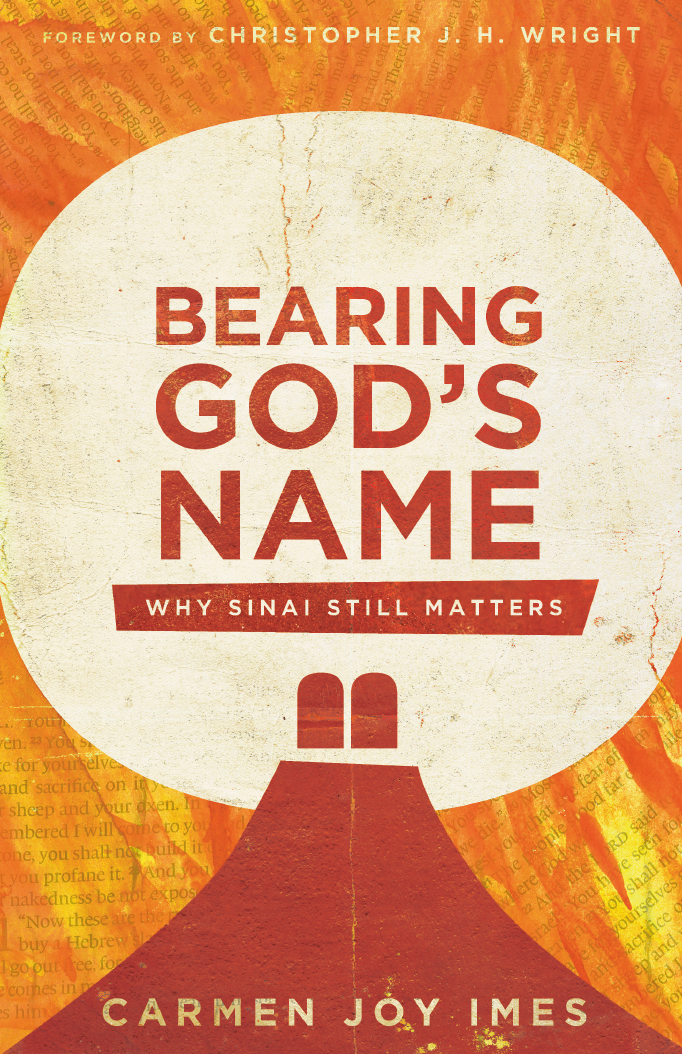
One Covenant Just Renewed: A Review on Why Sinai Still Matters by Carmen Joy Imes

As some of you may know, I absolutely love the Old Testament. One day I aspire to be an Old Testament scholar where I do work in Genesis 1-11. However, until then I plod away on blog posts sharing my divine insights into God’s Word with all ya’ll. Recently, I picked up this tasty treat “Bearing God’s Name: Why Sinai Still Matters” by Carmen Joy Imes. I’ve gotta say right off the batt, I loved it. The stress Imes places on the importance of the Old Testament, the love of God’s law and its role in the Christian life, and how she digs deep into the meaning of “taking the Lord’s name in vain” (Ex 20:7) excites me to no end. In my opinion, there can not be enough good Old Testament scholarship in the academy (but maybe I’m a little bit biased).

I don’t know about you, but when I was first started reading the Bible, I was taught that the Old Testament was mostly about two or three things: The age of the earth, the story of Israel for some reason, and a bunch of good morally therapeutic stories we can become better people from. Be faithful like Abraham, or as bold as Moses, or as mighty as David, but never like Jonah (but God will use you anyway). The law is used to sort of place rules around humanity; a list of dos and don’ts. Don’t murder, don’t take the Lord’s name in vain by swearing, don’t steal or cheat and definitely don’t worship other gods (as if they existed anyway right?). I was taught when Jesus and the New Testament happened, the Old Testament became mostly irrelevant, replaced and kinda done away with. The Old Testament became a sort of novelty that none of us really knew what to do with. Personally, the Old Testament was way more interesting because it read more like The Lord of the Rings with battles, love lost, and deceit and the New Testament became a boring monologue from one person (Paul) to an invisible audience (the Church).

It took me a long time to realise this couldn’t be further from the truth. While the Old Testament is full of these things to be sure, it is so much more than all of that. Let me be clear, without the Old Testament, there would be no New Testament, and there would be no Jesus Christ. To this day I’m still discovering the implications and importance of the Old Testament and absolutely loving it. That journey began at Bible College where I started to realise that the Bible was one unified story about God, humanity and our salvation leading to Jesus. I often found myself asking the question “why is none of this taught in our churches?” However, Bible College only gave me the tools to do the digging. It was through years of personal study, resources like The Bible Project and other scholars like Carmen Imes that I fell head over heels in love with the Old Testament. I’m yet to learn Hebrew but it’s on the to-do list.

Personally, Imes has sharpened my thoughts around three main ideas:

  1. God’s law (the ten commandments) was given as a gift in response to Israel’s liberation and salvation, not to achieve it.
  2. That the law is about Israel living out their vocation so that people may know Yahweh.
  3. That Jesus and in turn, the Church united to Christ are the ones who take up this vocation and bear God’s name.

Traditionally, God’s law has been seen as something the Israelites must obey to be saved, to be God’s people. This isn’t entirely wrong. Imes does point out in her book that the law was a fence given to Israel so that life could flourish (pg 35). God does require obedience, however, the law was given and the obedience required comes after salvation, not before it. Imes argues that the law was a gift. She says:

Remember – the Israelites had already been resuced from Egypt when they were given the law. God did not say to them, “Do all these things and I will save you from slavery.” He saved them first, and then gave them the gift that goes with salvation, instructions on how to live as free men and women.

What a freeing truth. God’s law was given to His people as a gift to help them flourish, to help them carry His name, not to achieve salvation. There were no requirements, God simply saw His people in anguish and brokenness and said “I will save them,” and He did. This has some profound implications around my thinking of salvation as a New Testament Christian. God sees humanity and wants to rescue them out of the slavery of this world into His own Kingdom without any prerequisites. It’s only after we’ve been liberated from sin, forgiven, washed clean and united to God in Christ are we then given God’s law (i.e. to love God and others as ourselves) to flourish and carry His name. Which leads me to the next great idea.

Imes argues that the law was given to Israel to help them to live out their vocation. Israel wasn’t giving God’s law as a list of rules to obey otherwise God’s wrath and anger would just come down on them without a second chance. It was given as a gift so that His people could living out their calling, their vocation as the representatives of God on earth. As Imes breaks down the ten commandments in chapter three she argues that the command to not take the Lord’s name in vain should better be translated to not carry the name of Yahweh in a way that would dishonour Him (pg 49). Imes argues that all of Israel was supposed to carry Yahweh’s name in the same way that the high priest was (pg 50-52). Israel was to be a treasured possession, a kingdom of priests, a holy nation carrying Yahweh’s name before the nations. As Imes says:

As His treasured possession, Israels vocation – the thing they were born to do – is to represent their God to the rest of humanity. They function in priestly ways, mediating between Yahweh and everyone else. They are set apart for his service.

The problem? Israel failed woefully at this. They constantly fell into idolatry and sin as they misrepresented Yahweh to the nations. Which brings us to the final thought I loved in this book.

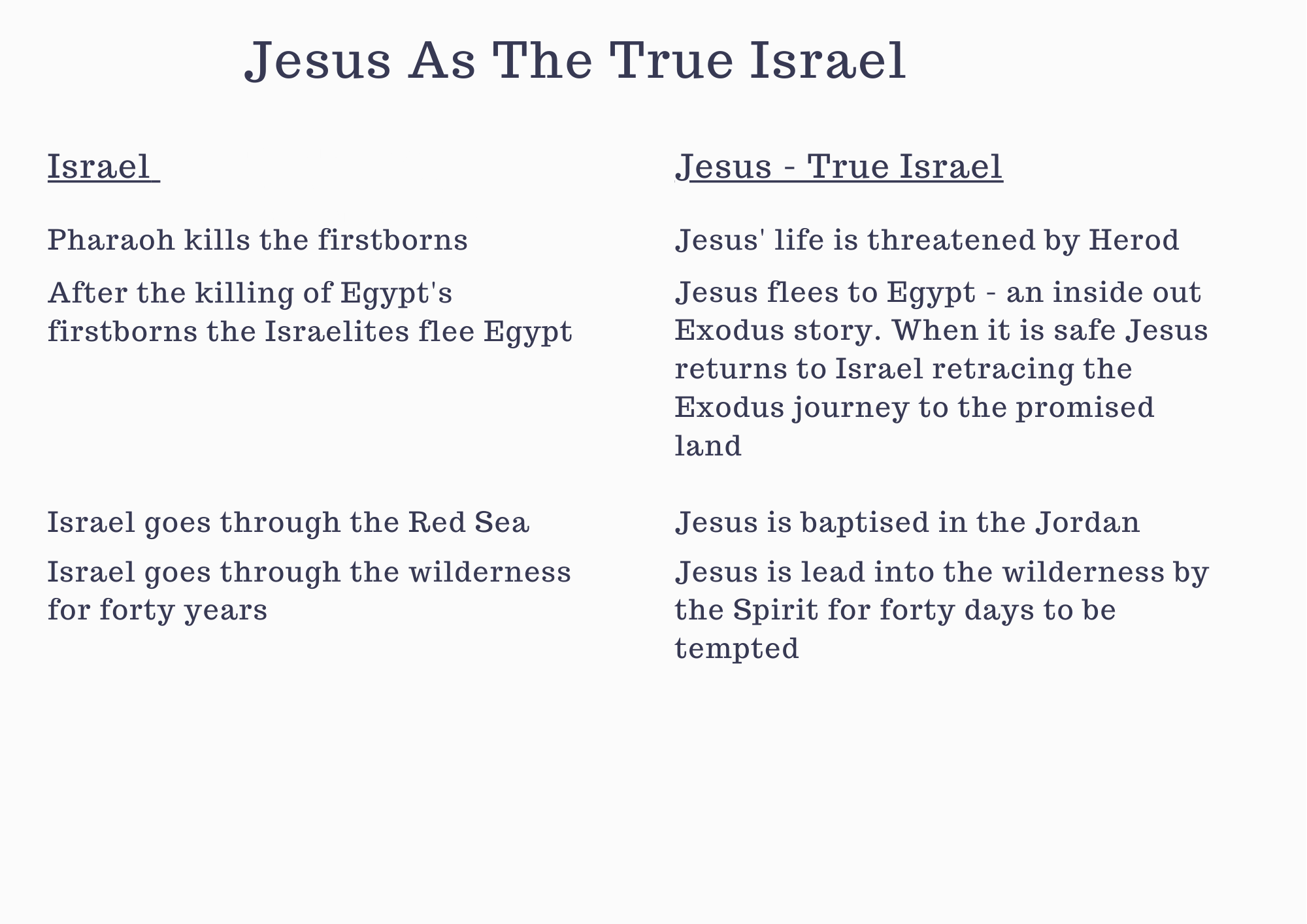
Imes beautifully and biblically argues that Jesus is the true Israel. She carefully traces this idea through the Gospel of Matthew where she compares the obvious imagery in Jesus’ story to that of Israel. Here are some examples (among many others) that she mentions:

Blue and Orange Compare and Contrast Graphic Organizer

She goes on to argue that because Jesus is the perfect image of God, that because He is in covenant relationship with the Father, Jesus ultimately fulfils all that Israel failed at. Therefore, our election is about representation, taking God’s name and carrying it to the ends of the earth (pg 164-166). The law is given to the Church as a gift for human flourishing as we’re united to God in Christ.

This was a very brief overview of Imes’ book. All in all, it was a really great read and I recommend that people read it to gain a healthier understanding of the relationship between the law and the Christian. 10/10.

The Best Books I’ve Read In 2019

  1. On The Road With Saint Augustine by James K. A. Smith

Already one of my favourite theologians, James K. A. Smith, the author of “Desiring the Kingdom” and “How (Not) to Be Secular” delivers another timely book for the wayward soul. Smith brilliantly lays out and takes apart modern existentialism (the Western meta-narrative) while being sympathetic to the restlessness of the human heart. Restlessness Smith argues is a part of the human experience, it’s a part of our nature. However, the never-ending journey is not our home. Instead, God is. This book is a must-read for those, like me, who find themselves at the crossroads of life without a map or a guide. This book is for the exiles and sojourners who can’t settle and especially for the Christian who has become disillusioned with Western Existential Christianity.

  2. Old Testament Theology For Christians by John H. Walton

You may not know it, but there is a fight happening right now on the fields of theology to uphold the Old Testament. John H. Walton (one of my favourite Old Testament scholars) enters the fray with this timely book. Author of the Lost Word series, a commentary on Genesis and many other great books on the Old Testament, this book in particular stresses the importance of not divorcing the Old Testament from the New Testament, instead, seeing the continuity and relevance of the Old Testament for Christians. Furthermore, Walton challenges our readings of the Old Testament as he invites us to leave aside our modern notions of how Scripture should be read and instead, interpret it on its own terms. A must-read for any serious student of the Old Testament.

  3. The Unseen Realm by Micheal S. Heiser

In his book “The Unseen Realm” Heiser focus’ on ancient near eastern context to help uncover what the Bible has to say about the spiritual realm, angels, demons and even God Himself. Meiser argues that ancient Israel lived in a polytheistic world and that particular worldview would have informed the way they understood these things. Heiser does so with a lot of research, precision and grace as he tackles this difficult topic. Another must-read for those wanting more insight into what the Bible has to say about the spiritual realm and its inhabitants.

  4.  In The Shelter by Padraig O Tuama

Padraig O Tuama is a poet and theologian (albeit a liberal one) who writes with a lot of insight into the nature of humanity. Despite the things I disagree with him over, I feel like he’s one of those people we can learn a lot from.

  5. The Bear and the Nightingale by Katherine Arden

A great book if you’re into historical fantasy. Set in old Russia, the story follows the life of a young girl Vasya who can communicate with mythological creatures of tales she was told as a child. The book itself explores the conflict between Christianity and the old stories and folklore of Russia as Christianity dominates Russian life. Exceptionally fascinating and even though Christianity is painted to be the bad guys in the story, it serves as a reminder to those of us who would use religion for the wrong reasons (something we’re all privy to). I highly recommend it.

Must Read Books and Theologians: Part I

N.T. Wright

Wright will probably go down in history as one of the greatest theologians/scholars of our age. He is a monster when it comes to writing books (he pumps one out every day I swear), and his work in the historical Jesus is unmatched. There isn’t a single book that won’t make you walk away with a fresh perspective and a greater appreciation for Scripture and theology.

  • Surprised by Hope 

Surprised by Hope is probably one of his more well-known works. This book almost single-handedly changed the way modern evangelicals think about the last days, heaven, the judgement to come. If there was one book out of this list you should absolutely read it’s this one.

  • The Day the Revolution Began

An excellent book on thinking over the life, death, and resurrection of Jesus. For a more in-depth review click here.

  • Pauline Perspectives: 1978-2013

This was my first introduction to Wright. I gotta admit, when I first read it, I had no idea what was being said. It’s a dense read and has over thirty years of scholarship for you to comb through. If you can get through it then you deserve a clap. Good luck.

  • Paul: A Biography

A great introduction to the person and work of the Apostle Paul. For a good review on this book click here.

G. K. Beale 

Beale is an absolute genius and knows his biblical theology almost better than anyone I’ve read. If you want to understand how our eschatology integrates with the here and now as well as with the biblical narrative look no further.

  • A New Testament Biblical Theology

No pastor’s library is complete without Beale’s A New Testament Biblical Theology and A Commentary on the New Testaments Use of the Old Testament. These books are worth their weight in gold as you go back to it time and time again to make sense of the passage you’ll be preaching through.

  • The Temple and the Church’s Mission

Originally recommended to me by a good friend of mine, The Temple and the Church’s Mission coupled with Kingdom Come by Sam Storms thoroughly convinced of Amillennialism and it’s implications for the Christian life. Look no further dear reader.

  • We Become What We Worship

I first heard of this book through my old bible college lecturer as he was going through the idea of identity and idolatry (another great book by the way). I’ve gotta say, thinking about sin, and how we become what we worship changes the way you look at life on a fundamental level. I cannot recommend this book enough.

  • Revelation

I’ll be blunt. If you want a solid commentary on the book of Revelation, start here.

C.S. Lewis 

Does this man need an introduction? If you’re not sure who he is… where have you been? This guy is a legend and definitely belongs in the theological hall of fame.

  • The Chronicles of Narnia

Yes… ok… not very theological I know. However, go deeper dear reader and you’ll begin to discover and taste some of Lewis’ idea as they jump off the page in this grand story. Besides, this is a classic… so just read it ok?

  • The Screw Tape Letters

Edgey, scary, and so very thought provoking. The Screw Tape Letters are probably one of the best books ever written on the topic of spiritual warfare. It won’t be long until you start to adopt a more spiritual perspective of reality.

  • The Great Divorce

Hell yes. This book is so confusing but rich at the same time. I recently wrote a blog on hell that mentions this book, and let me just say The Great Divorce adds a lot of shape to the conversation around the nature of hell. Go! Read it.

John Walton

Walton is a great as he can be controversial. Personally, I love everything he does. However, he stirs up Christians who tend to read the Bible more literally. What fun!

  • The Lost World of Genesis One

The first book in his lost world series, Walton really digs deep into the ancient near eastern world, develops the context, and places the Scriptures in that world. Worth a read he is honestly one of the best people for this job. For a deeper review, click here.

  • The Lost World of the Flood

I personally clicked with this book better than Genesis one, but it’s similar in style and content, copy and paste above 🙂

  • A Survey of the Old Testament

A Survey of the Old Testament by Hill and Walton was actually my textbook for bible college. It’s easy to read, informative and a great resource to introduce anyone to the big picture of the Old Testament.

Other Must-Read Books and Theologians

  • The Cradle, The Cross, and the Crown by Andreas J. Konstenberger

One of the best New Testament introductions I’ve personally had the pleasure of reading.

  • Desiring the Kingdom by James K. A. Smith

Amazing. Compliments Beale’s theology on idolatry and worship. Smith is simply brilliant.

  • The Unseen Realm by Michael Heiser

Still making my way through it as I’ve given it a friend. From what I’ve read of it and heard of Heiser on his podcast, the biblical theology in this is stunning, challenging and extremely thought-provoking. Expect a more in-depth review of this in the future.

Delightful.

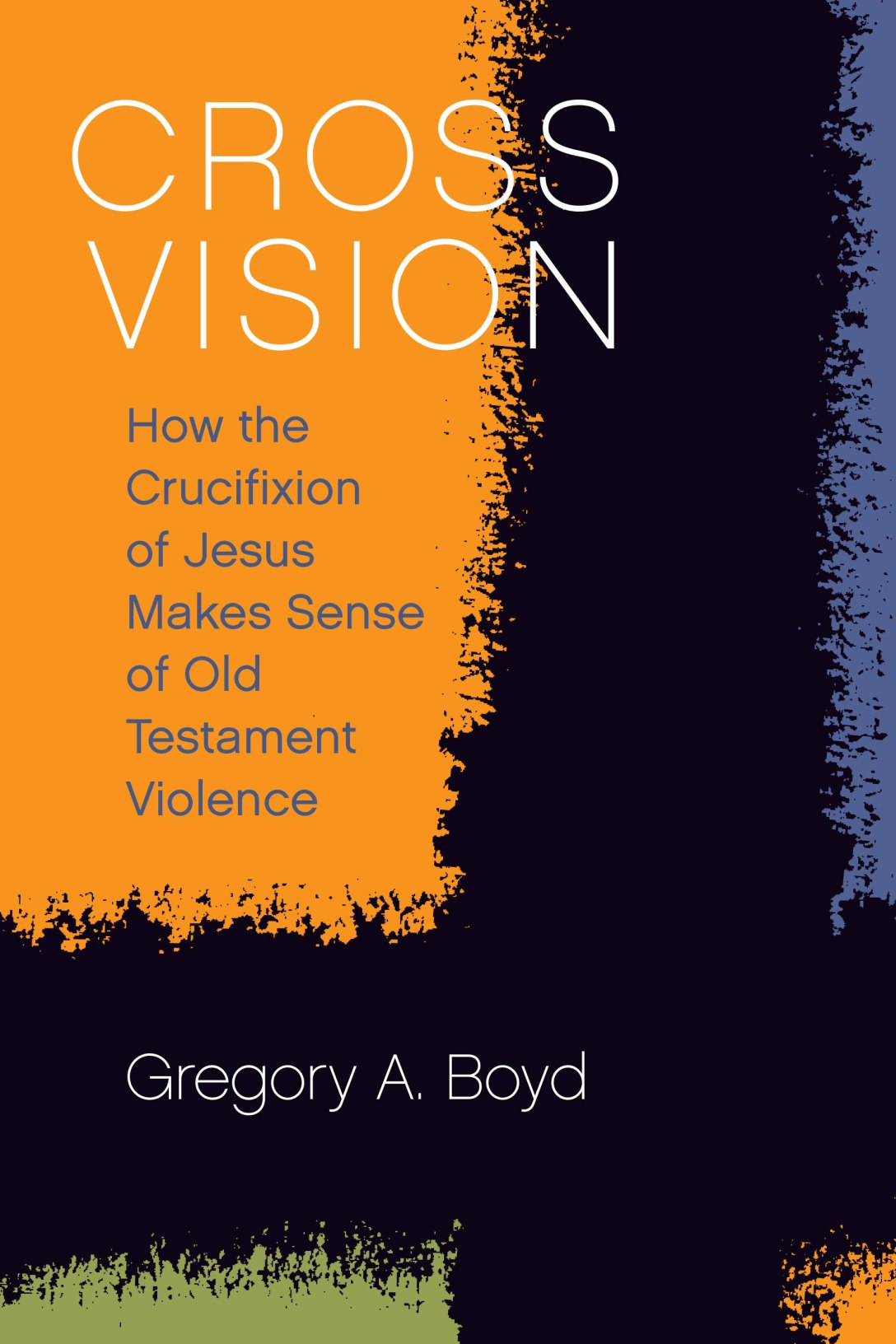
Blurred Vision: A Review on Boyd’s “Cross Vision.”

Take a seat, sit back and peruse the theological landscape of the 21st century. One doesn’t have to look far to notice that traditional perspectives of God’s wrath, violence and judgement are in a bloody war with more progressive interpretations and theology. The more progressive positions on God’s wrath abandon the traditional ways of thinking and instead strive to replace them with what is knowing as a “cruciformed hermeneutic.” In other words, everything we see in Scripture (particularly in the Old Testament) must be interpreted in light of the revelation of Jesus Christ and His work on the Cross. This cruciformed hermeneutic is championed by Gregory A. Boyd who is an esteemed pastor, theologian and scholar who has written his magnum opus “The Crucifixion of the Warrior God” and at a more popular level, his abridged version “Cross Vision.” This post will be focused on his later work.

Cross Vision was a great book to read, easy to follow, thought-provoking, very challenging at times. Like I mentioned in my review on Rob Bell’s “What is the Bible?” there’s never a time where I’d say “don’t read this book.” Every book is probably worth reading, meditating over and then considering in light of the Bible. Boyd is no exception to this rule, in fact, I’d encourage people to read if for no other reason then it is good to be challenged on ideas we’ve held for granted for so long. We all need to be rethinking and revisiting things we’ve been taught to make sure we remain faithful to the story of the Bible. To do this Boyd brings out some very heart-wrenching parables to drive his point home. Here’s one of those stories for the sake of the review:

It’s a few thousand years ago. A young Canaanite couple is enjoying an afternoon with their newborn infant. Like everybody else in their small town, this couple has heard rumors of a warring nomadic tribe called the Hebrews who worshipped a mighty warrior god named Yahweh. But the people of their town had prayed and made sacrifices to their chief god, Baal. And since Baal had protected them from other warring tribes and deities in the past, they had hope that the Hebrews would not attack their town. On this day, however, their prayers and sacrifices prove futile. This couple hears the battle horns and war cries of an approaching army. They see and hear neighbors screaming and frantically running down the dirt path outside their tiny hut. Their hearts pound as they stare at each other for a brief bewildered and terrified moment. Suddenly realizing what is taking place, the teenage mother sweeps up her newborn, the husband grabs his sword, and they turn to run out the door. Unfortunately, they’re too late. Before they reach the door, two sword-wielding Hebrew soldiers appear before them screaming, “Praise Yahweh! Yahweh is great!” The terrified husband raises his weapon, but the soldiers quickly run their swords through him. Seeing the hopelessness of her situation, the petrified mother curls up in the corner of her hut, crying and shaking as she clutches her wailing infant. As the two Hebrew soldiers approach her with their bloodied swords raised above their heads, she holds up her baby, begging the soldiers to at least have mercy on her infant. One of the soldiers is moved and hesitates for a moment as he thinks about his own young wife and newborn daughter. His comrade notices his hesitation and reminds him that Yahweh had specifically commanded Moses to have his people worship him by showing no mercy toward anyone or anything. “The mother and baby must also be offered up to Yahweh,” he the first soldier reluctantly nods his head, closes his eye, and shouts, “Praise be to Yahweh!” as he puts his full weight and strength into his falling sword. Both soldiers are splattered with blood as the sword splits the young mother’s skull. The other soldier then shouts the same praise as he bludgeons the crying infant to death.

Picture this on CNN or Fox News. This is a gut-wrenching story of how those early Canaanite conquests in the book of Joshua may have played out. Anyone today would call this genocide, and rage in protest if not vomit at such an incident. We’d be protesting and petitioning our governments to get involved and put an end to such injustice. Fair enough, I totally get that. I’d probably be protesting as well. The problem is, however, we want just that, someone to get involved and for there to be justice. There is this innate sense of retribution and a desire for justice that screams out in every one of us.

At this point, it is worth pointing out that I have written a two-part series here and here on the issue of God’s violence and wrath that will help give shape this discussion. However, in short, I’d like to say this. This is a blurry issue. I think where things become messy is in how God is presented in Scripture, and whether or not we’re ok with the person we see. Is God loving? Absolutely. Except, let’s stop defining love by our 21st Century Western standards and just take God for who He is portrayed in Scripture. This, I believe is ultimately where Boyd fails. I understand why he reinterprets God’s acts of “violence” (I’d say judgement in response to sin), but it just doesn’t stack up to the entire biblical story. God is ultimately about redeeming all of creation through Jesus, yes. But sometimes He also has to remove sinful people, places, and nations in order to achieve that ultimate goal.

Boyd is a great writer, theologian, pastor and brother in Christ. In a debate, I probably couldn’t hold my own against him but I’d still love to chat with him over a steaming hot cup of coffee. Read the book, it is a great read but stack it against other books like “Is God a Moral Monster?” by Paul Copan and “Confronting Old Testament Controversies” by Tremper Longman III (to be released in April) that I believe do a more faithful job in dealing with the issue of God’s violence and wrath.

All in all, I’d give this book a 7/10. Read it, love it, hate it, but most of all be challenged and prayerful about it. Never swallow any pill without reading the label if you catch my drift.