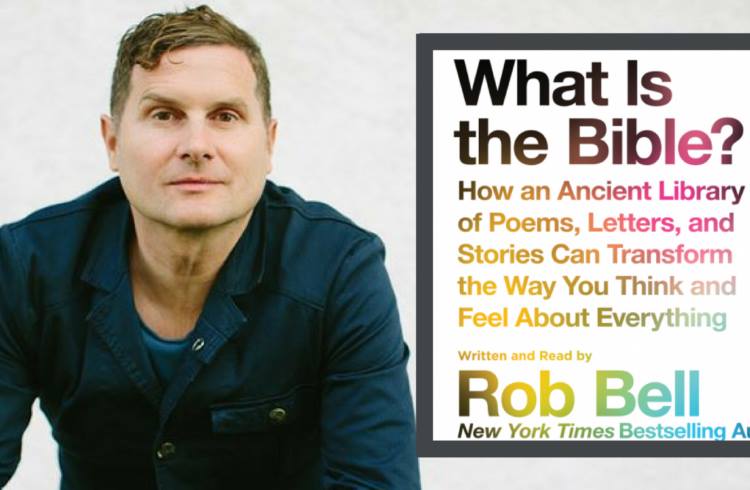
My Favourite Heretic: Rob Bell and his “What is the Bible?”

Well after years of hearing a lot of people bashing on Rob Bell (myself included) as to why he is a heretic, why he is going to Hell, how he is leading people astray etc. I actually decided to get some first-hand insight and I started listening and reading his stuff.

When I first became a Christian seven years ago I remember watching Bell’s “Everything is Spiritual.” At the time I thought it was brilliant (I still do). Since then I’ve only been in circles where people have said nothing but negative things about Bell and to be honest I sort of struggled reconciling what I first watched and what a lot of people were saying….. but these were smart people so they must have been right. Seven years later I decided to read one of his latest books “What is the Bible?” and…I…loved…It.

Yes, I loved it. I totally get why people are attracted to what he has to say. Bell asks a lot of good questions and challenges a lot of things the average Christian would consider sacred and necessary. I resonate a lot with what he talks about. But. Yes… there is a but. Bell’s greatest strength is also his greatest weakness. After putting down his book and taking that deep breath of fresh air I couldn’t help but realise how time and time again Bell would throw the baby out with the bath water. In Bell’s attempt to rethink sacred cows within the Christian religion, it seems to me that Rob also rethinks things which have been the most fundamental to our faith for thousands of years (God, the nature of Scripture, sin etc.). Bell rethinks everything from humanity and its collective meaning all the way through to the very person and nature of God…. and…this…matters.

Should we be asking questions, wrestling, shaping our thinking? Yes. Should we be challenging, pursuing, and sharpening our iron? Yes. But we cannot let our desires to be thinkers, to be edgy theologians or philosophers crumble the walls of authentic, thought out, Spirit-filled Christianity. God is who God is. We can question and wrestle with that as much as we like but at the end of the day, Scripture has some pretty clear things to say about who He is (have a read).

So would I recommend the book? That’s kind of a weird question. Read. Read everything. I love books. I love knowledge. I love understanding. I loved this book. I love Rob Bell. It’s a great book but with bad theology which is why he is my favourite heretic.
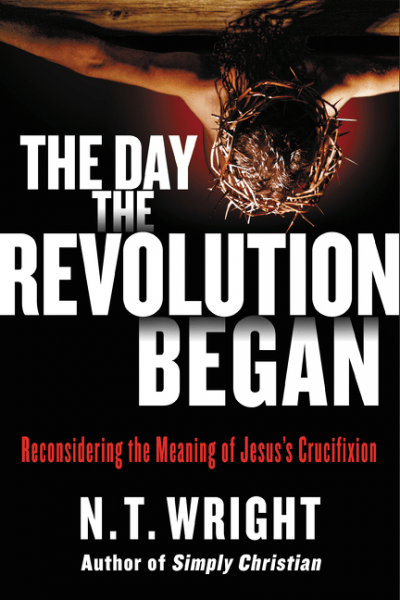


The Day the Revolution Began: A Developing Book Review

So I’m reading “The Day The Revolution Began” by N. T. Wright. I’m up to chapter 5 and I thought I’d share my thoughts on the book and Wright so far. My hope is that this review will serve as a platform for discussion and edification. I’m interested to hear any of your thoughts.

1. N. T. Wright is one of my favourite modern day theologians for a multiplicity of reasons including his work on Second Temple Judaism, justification and works, and his refreshing take on Christus Victor. Revolution, in particular, has given some great insight so far into the background of the Cross and into biblical themes such as priesthood and how that is fulfilled in Christ as well as clarifying some things around Christus Victor and the context that the Reformers were writing in.

2. I have read either in parts or all of many of his books and have always found myself challenged and often motivated to live out the Christian life in its fullness, in some ways Revolution is no exception to this. I have certainly been spurred to take seriously idolatry which is always for me personally, refreshing.

3. Despite the praises I give to Wright, I have some issues with Revolution. I have told one friend of mine that reading the book is sort of like an abusive relationship, there are things I hate about the book but I’m always drawn back to it. In particular, I have an issue with the way Wright caricatures Penal Substitutionary Atonement (PSA). I have always come to appreciate the scholarship and academic tone of Wright’s works, however, so far whenever he talks about PSA he speaks about it with venom and likens PSA to that of pagan worship. If I didn’t know any better (but I do) I would say that Wright and anyone who believes this about PSA completely misunderstands PSA’s depths and beauty.

(However, I understand that Wright is broad brushing from experience and usually wouldn’t pit this against theologians such as Thomas R. Schreiner. In fact, Wright both affirms PSA and doesn’t lump him into his broad brushing of PSA in a recent debate with Schreiner centred around Revolution.

4. Unfortunately, I can understand how some could be led to reject altogether the idea of PSA in favour of Christus Victor or any other model of the atonement. However, don’t fall into the trap of pitting one against the other. Properly taught, the atonement incorporates so many things including both PSA, CV and I suspect other theories as well. But to reject PSA in favour of other models is grossly unbiblical and can have vastly unhealthy implications that I’m not sure I could predict (this can be true of holding exclusively to PSA as well).

5. Would I recommend the book? In short, yes. It is worth a read. But I recommend it lightly seasoned with a warning. Wright is not a heretic, nor is he dangerous, but Revolution (at least so far) can have you asking more questions than rolling around in answers. Wright is unforgiving in his treatment of PSA but don’t let that lead you to reject it in favour of exclusively any other model.

Conclusion: The atonement is vast, deep and stunning. A proper approach to it would lead any soul to be reconciled to God and any Christian into a deeper relationship with Him. I pray that a book such as this would lend towards that goal for any who pick it up as I firmly believe that was Wright’s intent in writing it.