

Thoughts on the Sacraments

Hey guys. I’ve written elsewhere on church here and here and this is sorta in that same vein with a focus on the sacraments. Enjoy 🙂

Church. It is vitally essential for the life of a Christian. A church is a place where people from all tribes, tongues, and nations can come together to worship their King Jesus as one body; one family unified to one another in Christ. Churches look different all over the world from place to place, from context to context. However, there should be fundamental biblical principles that guide every church in how it looks. Why? Because Jesus is the head of the Church, and it’s up to him, not us, in how it is ultimately governed, in how it runs. Where do we turn to then to discover what a biblically healthy church is? Well, of course, the Bible. 

As good Christians, we believe that “All Scripture is God-breathed and is useful for teaching, rebuking, correcting and training in righteousness so that the man of God may be complete, fully equipped for every good work” (2 Timothy 3:16-17). Notice the implications of this passage. Scripture (the Bible) is:

  1. “God-breathed.” This means the Bible comes from God Himself and therefore carries a certain weight of authority that no other text does. 
  2. “Useful for teaching, rebuking, correcting and training in righteousness so that the person of God may be complete, fully equipped for every good work.” This means that the authoritative scriptures have everything we need in them to live the Christian life. Or in other words, if you want to know how to build a healthy church, read the Bible (especially the New Testament). 

Of course, that doesn’t mean it’s always as simple as picking up the Bible and knowing exactly what God wants for the church. The Bible is by no means an exhaustive treatise on building a church, but the New Testament does give the standard for one. Here are some of those principles now: 

  1. The Word. God speaks in different ways (through nature, people, and other sources). However, the most straightforward and most authoritative way God has spoken is through the Scriptures. Therefore, coupled with the idea of 2 Timothy 3, it makes complete sense then to have faithful teaching as the centrepiece of church.
  2. The Sacraments.
  •  The Lord’s Supper: the sacraments have had various use throughout church history and have all been interpreted differently. Yet, one thing in common remains; among nearly every major Christian tradition, these two sacraments have been observed regularly in one way or another. Why? Because it’s thoroughly biblical. Every Gospel mentions Jesus having Passover (the Lord’s Supper) with his disciples (Mt. 26:17–30, Mk. 14:12–26, Lk. 22:7–39 and Jn. 13:1–17:26). The early church carried on this tradition (Acts 2: 42, 46; 20:7), where they did it regularly in remembrance of Jesus (1 Cor 11:24-25). The Lord Supper took on three principal dimensions. 1. The remembrance of Jesus’ death and resurrection (the new covenant) and the churches unity to Christ. 2. the unity believers had with one another. 3. The covenant’s performance or drama. As the local church takes up the elements (the bread and wine), they are acting out the establishment of the new covenant as the Spirit draws them closer into the presence of Christ and one another.  
  • Baptism: The occurrences of baptism in the Bible are numerous. First, we see Baptism in the New Testament performed by John the Baptist (Matt 3) and subsequently, Jesus being baptised (Matt 3:13-17). As He was being baptised, Jesus said, “Let it be so now, for thus it is fitting for us to fulfil all righteousness.” Whatever this means, it at least proposes that baptism is extremely important, so much so that Jesus expected us to baptise people as part of the great commission (Matt 28:19). The early church took up this sacrament as it was an integral part of their life and ministry (Acts 2:38). It was an important part of the salvation process (Acts 2:38, “repent and be baptized”) and was accomplished via confession and prayer “in the name of Jesus Christ” (Acts 2:38; 8:16; 10:48; 19:5). Like the Lord’s Supper, Baptism took on three principles dimensions. 1. The symbolism of a new believers passage from death in the world to life in Christ (Rom 6:1-11). 2. The unity they now had with Christ (Gal 3:27). 3. the unity they had with other believers (1 Cor 12) hence the need for it before one becomes a member of a local church in some traditions (i.e. reformed traditions). As a local church baptises a new believer into the faith, they are publicly declaring their identification and unity to Christ and that new believer as the Spirit works through the drama of passing from death to life. What about Spirit baptism? Both baptisms are taught in the Bible and typically are inseparable (Jhn 3:5). No one denies that Spirit baptism is a thing, but to be baptised by the Spirit without water would have been an unthought of practice in the early church and vice versa. 

As I’ve explained, these sacraments are essential to any church for three main reasons. 1. The Bible and, in turn, God expects a church to practice them (this in itself should be reason enough). 2. They’re transformative in that the Spirit works through the practice of them to sanctify the participant in a similar way that He works through the Word. 3. They supplement good preaching and demonstrate the Good News to new believers and people we invite to church. 

Finally, all this presupposes the assembly of a local church which consists of members (1 Cor 12:21-26), elders and deacons (1 Tim 3:1-13; Tit 1), and discipline (Matt 18:13-17). 

With all these elements in place, a local church can image God and fulfil the great commission. Without them, a local church will become deficient and simply unbiblical. We should never trade a biblical principle for a pragmatic one, no matter how much it seems to work. If something is working, it might be cause for us to re-evaluate our theology, but never to compromise on it. God’s standards are there for a reason, and it’s our job to simply obey even if droves of people aren’t coming through the doors. 
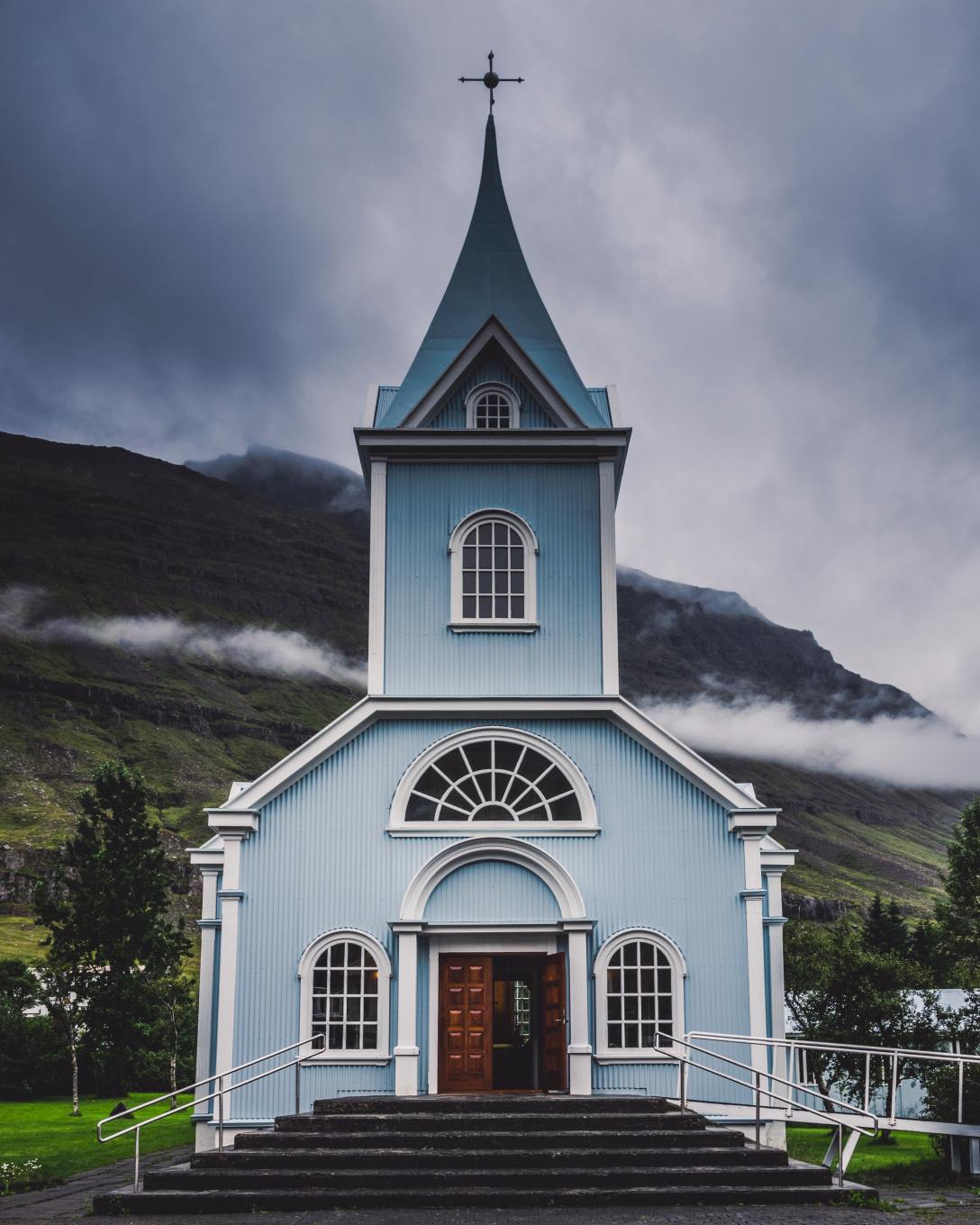
Church

“Friend, what are you looking for in a church? Good music? A happening atmosphere? A traditional order of service? How about: a group of pardoned rebels . . . whom God wants to use to display his glory . . . before all the heavenly host . . . because they tell the truth about him . . . and look increasingly just like him – holy, loving, united?”

― Mark Dever, Nine Marks of a Healthy Church

What is the Church? 

Systematically, there are two theological categories one should have in their mind when they think of the word “church.” There is the Church universal (historically this has been labelled catholic – Latin for universal – Church; not the Roman kind), and the church local.

The Universal Church 

The universal Church is invisible (meaning no one can tangibly recognise it except for God). It is made up of God’s people who the blood of the lamb has saved throughout all time (past, present, and future), from all tribes, nations and tongues (Revelation 7:9). God’s people exist among every tradition (typically despite them), in every context (such as persecution), and demographic (from rich to poor). The universal church is God’s redemptive work or kingly rule over the entire cosmic order as He seeks to renew all things. Therefore, the universal church is in a sense that mustard seed slowly sprouting throughout the course of history so that all of creation may nest in its branches (Luke 13:18-19). Therefore, I would argue that the universal Church is another way of describing God’s Kingdom. As Scot McKnight says

“It is reasonable to say that the kingdom is the church, and the church is the kingdom – that they are the same even if they are not identical. They are the same in that it is the same people under the same King Jesus even if each term – kingdom, church – gives off slightly different suggestions”

The Local Church 

The local church is the God-ordained, tangible, yet imperfect expression of the universal body of Christ (God’s Kingdom). It is where both the world and the Kingdom come together as it is made up of both believers and unbelievers (Matthew 13:24-30), sheep and wolves (Matthew 7:15), God’s people and those who pay lip service to God but who’s hearts are far from Him (Matthew 15:8). Biblically, the local church has a polity (church government – elders, deacons, members), sacraments (the Lord’s Supper and Baptism), worship (singing and prayer) all centred around the exegetical teaching of God’s Word. The local church is ground zero (after the Cross) for God’s mission to go forth and redeem the world through the preaching of the Gospel.

Implications

  1. If the local church is ground zero for God’s mission and the Gospel, you cannot be an effective Christian without being in a biblical local church.
  2. Looking for a good church no longer means finding out if it has a good kids clubs, men’s group, or women’s ministry. It no longer means flashy lights, feel-good messages, and social homegroups. Looking for a good church now means looking for a biblical one (a plurality of elders, deacons, membership sacraments, worship and prayer, the exegetical preaching of God’s Word, and mission). This might mean a biblical church is a bit smaller then you’re used to, a little slower, a little less flashy (they might not be). Yet it is these things that God’s Spirit works through. Without a strong biblical local church, the Christian can not hope to flourish in God’s kingdom effectively.
  3. Becoming effective in the local church leads to being effective in the world in our mission to take forth the Good News of Jesus. Learning to love the Lord and your brothers and sisters in Christ, equipped with God’s Word and Spirit will compel you to herald the Gospel to any and all who would hear.

Final Thoughts

In Australia, churches too quickly jump to what is pragmatic at the expense of a solid biblical foundation for their ministries. Programs are good, but only if they’re built upon these principles first. If we rely on a men’s breakfast or on a woman’s coffee day once a month to facilitate fellowship (the command to love one another), perhaps we should be questioning our ways of doing church, to begin with before we implement even more programs that often replace genuine Spirit-filled love for our fellow members. If we rely on youth groups to disciple our young people, perhaps we’re doing something wrong from the pulpit or even from our own homes. If we have to rely on our church programs to feed the poor, to look after the environment and to address other social issues, then we’ve missed the point of what it means to be an effective Christian in the world. I don’t hate programs. I’m not suggesting we get rid of them. What I am suggesting is that we recover a strong biblical foundation of church (at the expense of all else if we must), and I can almost guarantee that the Christian landscape, at least in Australia, would experience a sort of reformation that has been needed for man, many decades.

My prayer for 2021 is that we will plant, grow and revitalise healthier churches so God may be glorified, and the Gospel will go forth effectively in our nation.

Social Justice Part I – Environmentalism: A Theology of Creation Care

I’m almost 30 years old, and it has only been within the last 12 months of my life that I’ve begun the journey of being self-aware and reflective. I’m flawed and sinful. I’m more racist and sexist then I’d like to admit. I care less about our earth than I think I should. I don’t love my neighbours (Mark 12:30-30) as I ought, I don’t bless those who persecute me (Matthew 5:11-12, 44), I’m not a peacemaker (Matthew 5:9) or pure in heart (Matthew 5:8). Nevertheless, I ask you, dear reader, to evaluate yourself as I invite you to consider some of the most significant social justice issues of our time and whether or not you’re working towards the love of others and the glory of God, or against them. In this series, together, we will explore:

  1. Environmentalism: A theology of caring for creation
  2. Racism: A theology of race and inclusivism
  3. Gender: A theology of biblical manhood and womanhood
  4. Poverty: A theology of the outcast and marginalised

I desire that together we prayerfully consider our place in these issues and act in a way that images God and loves others more then we have before. In this post, we will be discussing environmentalism: a theology of land and creation.

 Right now, we are facing a human-made disaster of global scale, our greatest threat in thousands of years: climate change. If we don’t take action, the collapse of our civilisation and the extinction of much of the natural world is on the horizon.

Sir David Attenborough 

That is a scary quote. Environmental experts estimate that at least 95% of the current global warming trend is human contributed. According to the journal of nature, in 2015, the global number of trees has fallen by approximately 45.8% since the onset of human civilisation as we know it. The Royal Society estimates that since preindustrial times, greenhouse gases such as CO2 emissions have increased 40% with more than half of those emissions increasing from the ’70s. Coupled with a 150% increase in methane gases and a 20% increase in nitrous oxide (and the above data), this has lead to increase in the earth’s average surface temperature, rising oceans, and the extinction of wildlife. If we are to take this evidence seriously, then we are destroying the planet. Corporations, governments, and consumers have taken advantage of the world that we live in, and have profited off it without remorse. We have been given Eden, and instead of guarding and keeping it (Gen 2:15), we have used and abused it. What though, does the Scriptures have to say about our earth and the role we play in looking after it as Christians?

“In the beginning, God created the heavens and the earth” (Genesis 1:1). As we read the Bible, if we can be sure of anything, it’s that creation finds itself in the hands of Yahweh, the God of the Bible. “For in him all things were created: things in heaven and on earth, visible and invisible” (Colossians 1:16 c.f. Romans 11:36). Because all of creation finds its very being in the hands of Yahweh, Christians everywhere can have a certain sense of peace knowing that God is sovereign over history and creation itself (Job 42:2; Proverbs 16:33; Isaiah 45:7-9; Matthew 10:29-31; Romans 8:28; Ephesians 1:11). However, it would be unwise to believe that God is sovereign and to make the illogical conclusion that we’re then to do nothing. For whatever reason, Yahweh has decided to partner with humanity in the looking after of His good created order. From Adam and Eve (Genesis 1-2), Cain and Abel (Genesis 5), Noah (Genesis 6-9), Abraham (Genesis 15), Moses (Exodus 4:16; 7:1), Israel (Exodus 19:6), then finally to Christ and the Church (1 Peter 2:9; Revelation 1:26), God has chosen to partner with humanity in the ruling and care of the earth, and its inhabitants (Genesis 1:28).

God, it seems, didn’t make a good investment. Humanity ruined their chance and couldn’t keep up their end of the bargain (Genesis 3). Instead of ruling over creation by guarding and keeping it, they let evil enter into creation and rule over them. As a consequence, humanity and creation are cursed (Genesis 3:14-19), humanity is exiled from the presence of God (Genesis 3:22-24), and sinful creation groans for redemption and new life (Romans 8:19-23). We pollute the land through bloodshed and war (Numbers 35:33-34). We defile the earth by transgressing God’s law (Isaiah 24:4-6). God gives us guidelines on how to farm that we reject (Exodus 23:10-11). All of this is still true today. Creation coughs and spits as it absorbs the consequences of our polluted behaviour.

It doesn’t matter if you believe in the statistics quoted above. If you are a Christian, it should bother you how we take care of the Garden God has given us. If the Bible calls us to look after the earth, and I believe it does, then we should be doing our part. We should be eating less meat, which leads to less farm land, and it turn, less deforestation. We should be making wise investments in renewable energy. We should be protecting our wild life and biodiversity. We should be thinking of ways we can better distribute resources so everyone has clean water, food, and education. However, the issue goes deeper than merely recycling and buying LED lights for the house (though that’s a great start).

True creation care happens at the very core of the issue, the human heart. Unless people change inwardly, we can’t hope to have an outward effect on the world. The Gospel, the Good News of Jesus Christ, the new covenant supernaturally changes the hearts and minds of the people (Ezekiel 36:26; Jeremiah 31:33). If we want to combat climate change, if we’re going to guard and keep our Garden, we need people transformed by God’s Holy Spirit. Then, we will love others by lifting them out of poverty, fight gender inequality and racism, and partner with God in saving people from their sins. This is simply obeying the command to love others as ourselves. As we love others better, as our hearts are changed, the environment is naturally cared for. Real change starts with the people, not with the policy. The political policy will reflect the people as they are conformed to the image of God’s son (Rom 8:29).

As a longtime professor of biblical studies, a professional exegete, an author, a theologian, and – most importantly – a committed Christian, my objective in this little book [Stewards of Eden] is to demonstrate via the most authoritative voice in the church’s life, that of Scripture, that the stewardship of this planet is not alien or peripheral to the message of the gospel. Rather, our rule of faith and praxis has a great deal to say about this subject. And what the Bible has to say is that the responsible stewardship of creation is not only an expression of the character of our God; it is the role he entrusted to those made in his image.

Sandra L. Richter

Biblical Themes: Messiah

Recently, I got asked to trace the development of the theme of Messiah throughout the Old Testament for a college essay. I’ve got to say it was a lot of fun. So, I thought that I would share the main parts of it with all of you and, edited it for a blog, and turn it into a bit of a series. I’ve written on biblical themes here and here. In the mean time, enjoy!

In the Old Testament, the term messiah means “anointed one” and refers to someone who is given a specific task or duty (e.g., Lev 4:3, 16; 1 Kgs 19:16; 1 Chr 16:22; Isa 45:1). Specifically, we see the word messiah most often used to refer to the anointed kings of Israel (e.g., 1 Sam 2:10, 35; 12:3; 2 Sam 1:14, 16). Therefore, the title of the messiah (anointed one) was given to specific people (by God) to rule over the nation of Israel.

Like with most biblical themes, you can find the developing concept of the messiah on the first few pages of Genesis. Even though explicitly the idea of the anointed one does not start appearing until Leviticus. In some of the earliest Christian and Judaic traditions, the theme of the messiah is closely tied in with the apparent messianic promises in Genesis 3:15, and Genesis 49:8-12. Even further back in the story, a careful reading of Genesis 1:26-28 (God’s mandate to humanity to rule over creation as God’s vice-regents), and 2:15 (God’s command to humanity to cultivate and keep the Garden) can lead one to draw clear parallels between Adam and Eve (humanity) being priestly rulers (a messiah you could say) in the Garden and the Levitical priesthood in Leviticus 11:1-11.

The idea of messiah (priestly ruling) can be found in the story of Cain and Abel. The two brothers are seen offering up sacrifices to God (something only priests do), then Abel finds favour in God’s sight for his sacrifice where God passes over Cain’s. Cain becomes angry and God, knowing His heart, warns him the sin crouches at the door and that he must rule over it (Gen 4:1-7). Why are Cain and Abel here to begin with? Some ancient Jewish traditions have Adam and Eve in the gate of the Garden offering up sacrifices in an attempt to re-enter the Garden. Nevertheless, here we have clear echoes back to the Garden where Adam and Eve were supposed to be priestly and rule over creation, yet like their parents, Cain allows sin (the serpent) to rule over him instead. As a result, Cain murders his brother, and is further exiled east (Gen 4:8-16).

Noah is very messianic. In a world of evil, he is the only one to find favour in God’s sight as he is called to build an ark and save any who would heed his call and enter into it (Gen 6). Towards the end of the flood narrative we find Noah leaving the ark after the waters subside and he offers up sacrifices to God. God gives Noah the mandate to go forth and multiply and Noah plants a vineyard (a garden). Unfortunately, Noah gets drunk and naked and sin enters the world yet again (Gen 9).

Furthermore, we see the idea of a messiah hinted at in the story of Abraham in the person of Melchizedek, the king of Salem (Gen 14; Ps 110; Heb 7:10). Abraham himself sets the archetypal tone for the future messianic promise from when God promises him that he will be a father of many descendants and is promised the land of Canaan (Gen 12:1-3; 15; 17). Throughout the narrative, he is even presented as having a similar status as that of other monarchs and kings (Gen 14:1-24; 21:22-34; 23:6), and Yahweh Himself promises Abraham that “kings will come from you” (Gen 17:6, 16) a clear connection to the future anointed kingly lineage (Saul, David, and Solomon).

Elsewhere in the Old Testament, we see that the king (David) is unambiguously referred to the “son of God,” another reference (though not explicitly) to divinely appointed rulers and kings (Ps 2; 89; 2 Sam 7). Here there seems to be a clear connection to Exodus 4:22-24 where God called Israel “His son” and later in Exodus 19:6 a royal priesthood (cf. Isa 61:6; 1 Pet 2:9; Rev 1:6) and in Psalms 45 and 110 the king seems to be given a sense of divinity. Also, another passage worth mentioning is Isaiah 61:1, where God Himself does the anointing on the servant who has been given the spirit. Here we have reference to a future person who will bring good tidings to the afflicted, set captives free, bind up the broken-hearted, who will proclaim the year of the LORD’s favour and the day of His judgement. Though the figure is not explicitly given the title of a future king, he is anointed and seems fit the definition we earlier explored of an expected king.

Though Israel has returned to the land, and the temple rebuilt, there is a sense of despair. Israel and the temple have not returned to their former glory, and it leaves the reader wondering what will happen next? The Old Testament ends with Malachi prophesying that a day is still to come where God will judge, and the sun of righteousness will come with healing in its wings. Yet God will send another Elijah before that day to prepare the hearts of the people (Mal 4). He will pour out His Spirit on to all flesh (Joel 2:28), establish a new covenant (Jer 31), establish a new temple (Ezek 40-48) and a new messiah whose reign will last forever (Mic 5). Next, let us consider the theme of the messiah in 1 and 2 Kings specifically.

The entire Old Testament is looking forward to a messiah that can crush the serpent (Gen 3:15), fulfil the promises given to Abraham (Gen 15; 17), and finally liberate the Israelite’s (and the entire world) from their ongoing exile from God’s presence. Chris Wright says it well when he writes “the messiah was the promised one who would embody in his own person the identity and mission of Israel, their representative, king, leader and saviour… the eschatological redemption and restoration of Israel would issue in the in-gathering of the nations”. Many Jews in the first century were looking to passages like Daniel 7-9 in anticipation of their inevitable liberation from Roman oppression. They eagerly awaited the messiah to overturn their rulers and reinstall the kingdom that their forefathers experienced under the rule of David and Solomon.

As New Testament Christians, we find that fulfilment in the person of Jesus Christ. A cursory reading of the Gospels makes it evident that the authors thought of Jesus as the messiah fulfilled (see Mk 1:1) despite Jesus often neglecting to claim the title for Himself. This was due to the political climate of the day where Jesus would have been almost certainly killed for having come out as messiah. In all three of the synoptic Gospels, the baptism of Jesus occurs with God the Father saying “this is my son” (Matt 3:13-17; Mk 1:9-11; Lk 3:21-22), an apparent reference to the son-ship of the kings in Israel. Jesus took His messianic mission a step further with not only the salvation of Israel but all nations tribes and tongues (Matt 28:16-20; Lk 24:44-49; Acts 1:8; Rev 7:9). Jesus turned the messianic expectations on their heads. He both shared in our pains, sufferings, and experiences now as the messianic king, and anticipated a future fulfilment of his work.

In Revelation, Jesus brings about new creation as the King of kings and Lord of lords (Rev 1:5; 17:14; 19:12-13, 16). Jesus is the second or better Adam, the second Abraham, the second and better David, the better Solomon, and the everlasting Hezekiah as Jesus brings all things together in the newly created order. The Kingdom will no longer be divided, and God will dwell among them with Jesus as their eternal king.

Salvation Is: Recapitulation Part IV

Christians are obsessed with the idea of salvation. Fair enough, salvation is essential. The problem, however, is that everyone has different opinions on what salvation actually is. Different traditions tend to emphasise and even make exclusive claims to their own definition of salvation at the expense of others. So in this series, I aim to explore the different facets of salvation so that we may better understand what it really is. Here are the salvific themes we’re going to explore:

  1. Liberation and Exile
  2. Sin and Judgement
  3. Substitution and Sacrifice
  4. Recapitulation
  5. Vocation
  6. New Creation

Each motif plays a pivotal role in demonstrating what salvation is, how it is achieved and received, and how it is lived out by the believer. In this post, we will be exploring recapitulation.

The doctrine of recapitulation is just a fancy term to describe the idea that Jesus reenacted the drama of humanity. That is, humanity in the person of Adam was supposed to not “eat from the tree of knowledge of good and evil,” but in Genesis 3, they failed the test. Jesus, on the other hand, did pass the test, and every test subsequent perfectly. Joshua M. McNall explains recapitulation to be the foundation in which every other atonement theory makes sense.

Like every biblical theme, we see the origins of recapitulation on the first few pages of the Bible. In Genesis 1:26, we find that God created humanity in His image (the imago Dei). In previous posts, I’ve already explored what the image of God is, in short, it is a two-fold reality. First, the image is something ontological. In other words, the image is something that is part and parcel of human nature. Second, the image is expressed functionally through the command to “be fruitful and multiply and fill the earth and subdue it, and have dominion over the fish of the sea and over the birds of the heavens and over every living thing that moves on the earth” and to work and keep the Garden (Genesis 1:28, 2:13). The problem?

In Adam, all of humanity has now become a corrupted version of what God had intended. We’ve failed to have dominion and to keep and work the Earth. This failure becomes apparent in Genesis 3, where sin in the form of the serpent rules over humanity instead of humanity ruling over it. Also, instead of guarding and keeping the Garden (Gen 2:15), Adam and Eve allow it to be invaded by the serpent to tempt them into idolatry. Mainly, Adam and Eve failed at being human and imaging God. In Adam, we have all failed the test, and we’ve all failed to be human. However, God doesn’t just give up on humanity. Instead, God is about restoring and renewing humankind back to its original purposes, and in fact, a more excellent state (complete unity with God). So then, let us trace recapitulation through the rest of the Bible: 

  • Cain and Abel are offering up sacrifices to God (traditionally interpreted as an attempt to get back into the Garden). However, one fails at being human as Cain let’s sin rule over him (as it crouches at the door and wants to rule over him – creature language). Cain murders his brother and is sent eastward (Genesis 4).
  • Noah comes across as a good human. He builds an ark and preaches righteousness and judgement. Noah is faithful. The flood occurs. Then he gets off the ark and offers up sacrifices and plants a garden/vineyard, and God reestablishes the Adamic covenant with Noah (new Adam imagery). However, Noah gets drunks, lays around naked, and something suss happens. He fails at being human (Genesis 8-9).
  • God calls Abraham out of Babylon to be a blessing to the nations and a father of many. God wants to use Abraham to start a people that would be Yahweh’s own (Genesis 12). Yet immediately Abraham goes to Canaan with his family (though God said not to) to leave them behind). He doesn’t trust in God’s promises and has sex with a Hagar (Genesis 16). He fails at being genuinely human.
  • Moses is promising. He is called by God to deliver Yahweh’s people from bondage to Egypt (Exodus 2-3). On multiple occasions, Moses approaches Pharaoh and demands his people to be set free so that they can worship God. He sends plagues on Egypt (Exodus 7-11) until finally, Moses parts the Red Sea and leads them into the wilderness (Exodus 14). Moses goes up Mount Sinai and gets the law to give to Yahweh’s people (Exodus 19-24). The people love and trust Moses to be their representative to God. Moses might be this new human we’re looking for (Genesis 3:15). However, Moses loses faith in Yahweh and is subsequently barred from the Promise Land (Numbers 20:2-12).
  • David, the chosen the warrior king, and a man after God’s own heart ( 1 Samuel 13:14) faithfully ruled over Israel and with his son Solomon after him. Essentially they established the golden age of Israel for many years. However, David sees beautiful Bathsheba, kills her husband and takes her for his own. There’s so much blood on his hands that God won’t even let him build the temple (2 Samuel 7).
  • Solomon, the wisest king to ever rule (1 Kings 3) continued to raise Israel to a glorious standard. Solomon built the temple where God came to dwell (1 Kings 8), and was loved by all. Yet all the wisdom in the world failed to remind him that he wasn’t to accumulate much wealth, women or and army (Deuteronomy 17:14-20). Every one of these laws Solomon broke which ended up leading Israel into mass idolatry.
  • Jesus Christ, is the true prophet, priest and king (think Abraham, Moses and David). The true Israel, the new Adam, i.e. the new human. In a sense, Jesus reenacts all of Israels and humanities failed history in His own life and fulfils all of that in his own life, death and resurrection. That’s recapitulation.

My final thoughts. As we read the Scriptures, we’re supposed to see something of ourselves in them. We aren’t the heroes of the story. Far from it. We are, however, like Abraham, Moses and David. We’re all in some way or another, failures at being genuinely human. We all fail at loving others as ourselves and God with our entire beings. You could be a king like David, or a nobody like Abraham in a God-forsaken city, or a priest like Moses who talks to God like you would a friend, none of us are who we are meant to be. We all suck at imaging God. That’s ok. There is one who’s greater than us who is truly human. Who in His life took up the entire history of humanity, laid it upon Himself, and died for it. Now Jesus can make you human again, but it isn’t easy, and it doesn’t happen overnight.  

The essence of being human isn’t seeking perfection, but now, it’s seeking Christ.