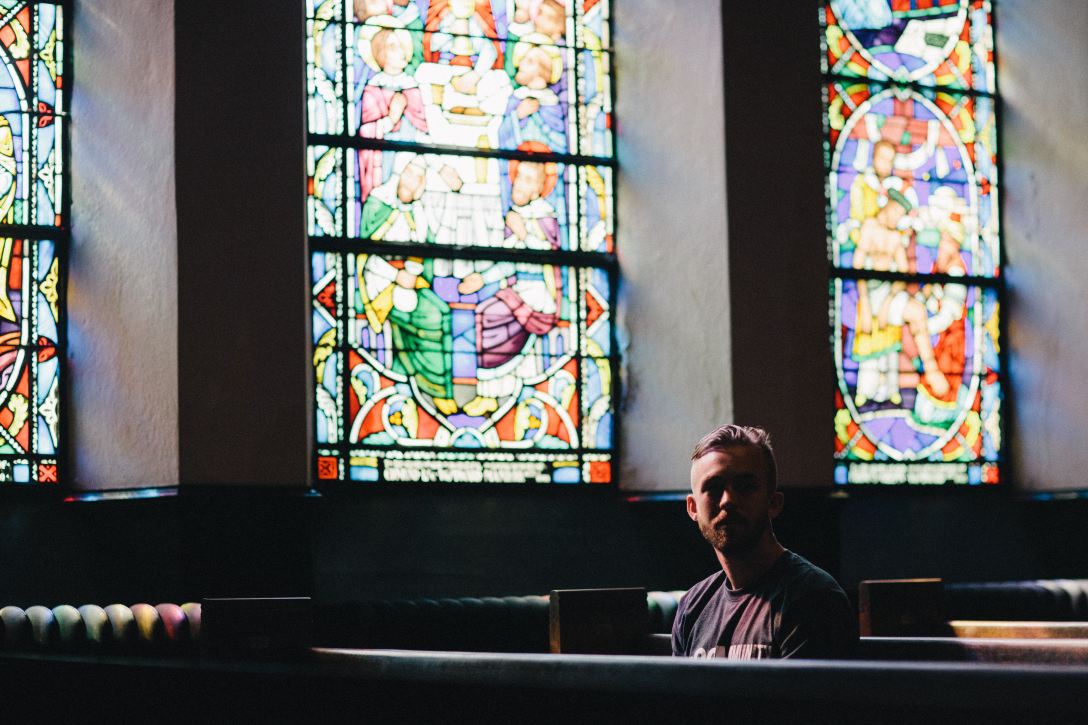

Between Churches

Let’s get real. There are many, many Christians out there that struggle going to church on a Sunday. You can’t just tell me it’s because they’re rebellious or whatever. In any given week, I speak to dozens of Christians from different gatherings where they express the same thoughts. At best going to church is something to do on a Sunday morning but it’s boringThe way we do church is very “one way.” We sit, stand, sit, listen to a speech from a person who we don’t really know about a book hardly any of us have learnt to actually read… We give money to an organisation because we think it’s what we’re supposed to do, we stand around the old dirty coffee urn and talk about the movies and how work was during the week… And at very best we go home with maybe a positive one-liner that we’ll forget by the next day like “God has a wonderful plan for your life.” We’re encouraged for all of Monday before reality comes crashing down on us and God’s wonderful plan looks more like broken despair then it does the upbeat abundant life that we’re told about. Church, as it is often done today, seems so out of touch with reality and out of touch with how it looks in the Bible. One can come and go from church for their entire lives without lifting a finger to love other people, without ever learning how to read the Bible for ourselves. We end up equating the Christian life being completed by going to a meeting for an hour or two per week. 

It’s no wonder then that even myself, one who has (at least in my eyes) a high ecclesiology, who stresses the importance of going to Sunday meetings and recognises the God-ordained life-changing event that is church finds it incredibly difficult to find himself at home in one. In the entire time that I’ve been a Christian, there have only been two churches that I’ve felt that I belonged and content in. The first one was a church on the Sunshine Coast and the second was in Brisbane. The two churches couldn’t be any more different from one another, yet I felt at home in them because I believe for three excellent reasons.

1. They valued other people more than themselves. One church had the motto “people matter.” That rings true throughout everything they do. From the gym to the cafe, to the swimming pool to the church on a Sunday, this church has built a community where people feel at home. Where they can kick their shoes off,  take a deep breath and try to pick up the pieces as they wander through this broken world. Sometimes they loved people so much that at times the line blurred between who were genuine Christians and who wasn’t. But I get it. When you love people so much, it can sometimes be challenging to draw distinctions because you want to always believe the best about them. My Church in Brisbane, on the other hand, was way more traditional. No community centre, no cafe, no swimming pool. Yet they carried your burdens and genuinely prayed for you. They were concerned about your holiness and love for God as well as your deep hurts and pains (1 Peter 4:8, John 15:12).

2. They loved the Bible. When I started going to the first church, they preached through the Bible in a year, twice. I got a great feed upon God’s Word and always walked away, knowing that God was speaking. The other church exposited the Scriptures with precision and clarity. Even on topics, I’d generally disagree with them on, I walked away, feeling God loved me and that He’d never forsake me. I can’t stress this enough, the importance and centrality of the Scriptures for a church. However, and this is true of almost every church I’ve been to, while in theory, they put the Bible into the hands of the people, and they encouraged the congregation to live by it there was no continuation or application on this through the rest of the week apart from a homegroup (Acts 17:11,  Colossians 3:16).

3. You felt God. At both churches, I regularly experienced the presence of God. Whether it was through the sermons, the sacraments, or through the people, God moved, and God made Himself known to His people. It was sanctifying, transformational and pushed me forward into the presence of God (John 17:3, 1 John 4:16).

So what’s my point in all this?

  1. Be merciful to those without a church. Likely, they’ve never experienced the above 3 things in a church.
  2. If you’re between churches take heart, these churches exist. Genuine love for God, the Word, and for others do abound.
  3. Finding the perfect church is like drinking the perfect cup of coffee. It doesn’t exist. No matter who you talk to, they’ve always had better. Instead, start brewing it yourself.

Seven Days that Ruled the World: Genesis 1-11 Part IV

Genesis 1 is one of the most loved and hotly debated chapters in all the Scriptures. Probably the most famous debate has been around issues like the age of the earth. Young Earth Creationists use Genesis 1 (and of course other passages) to argue for the existence of a Creator and even go so far as to use it as a model or paradigm for their scientific method. Others interpret Genesis exclusively as mythology, seeing no authority in the text whatsoever and understanding it as an ancient Jewish origins account of the world. These people think that in light of modern science, Genesis 1 has nothing to offer its contemporary readers. Two very different understandings of the text lead to two very different ways in which you can understand the world and God. I believe the truth lies somewhere in the middle.

In past blogs in this series, I have categorised Genesis 1-11 as mythological theological history. What I don’t mean by this is that the events in Genesis 1-11 didn’t happen. Instead, the primary point of these chapters is the divine truths the author is presenting. Mythological doesn’t mean fiction in this context. The mythological genre can be better understood as parabolic or allegorical. The events in Genesis 1-11 happened. However, the events recounted in the narrative bring out a theological point rather than a detailed account of the past. As Tremper Longman III says, “The book of Genesis is not a history-like story but rather a story-like history.” After we explore the literary genre of the chapter, we need to ask ourselves some critical questions.

  1. What is this saying about God?
  2. What is this saying about creation?
  3. What is this saying about humanity?

As we have already seen in the first verse, the Lord God is the creator, of all that exists. What we see in the rest of the chapter is that God places importance on an ordered and ruled creation rather than merely leaving it to its own devices. Unlike the other gods of the time, Yahweh is deeply concerned with every piece of His creation as He places everything in the right place and humanity has the crowning jewel.

The seven days of creation in Genesis 1 are not a scientific account of how God created the world, rather, it is a literary device standard in the Ancient Near Eastern world to describe God who is king ordering a cosmic temple to settle in and rule over. Another way to explain it is that Genesis 1 is not about the material origins of the universe. Instead, it is about the function of the things that exist with God at its centre. As John Walton explains:

I believe that people in the ancient world believed that something existed not by virtue of its material properties, but by virtue of its having a function in an ordered system.

Beginning in a state of chaos, in days 1-3 light, darkness, the sky, the earth, and the sea are all formed, separated and ordered. In days 4-6, God fills these spaces with the Sun, moon, stars, animals and humans to rule over them. In other words, God gives them a function. On day 6, humans are made in the image of God. The image or the imago Dei is another debated issue, but two things are clear in the text. The imago Dei is an ontological reality that is reflected in the function of flourishing humanity. They’re to have dominion over the earth (God’s cosmic temple), they’re to multiply and fill the earth.

On day 7 (the Hebrew number for completion – a recurring theme throughout the entire Bible), after having ordered His cosmic temple, Yahweh rests. The word rest here is important because as the story of the Bible progresses, it takes on developed meaning. Here, though, the word rest, according to John Walton, has royal and divine significance. It’s not merely God stopping or ceasing from His work (though that’s, of course, the apparent meaning of the text), instead, it’s God sort of sitting on the throne after completing the structuring of His cosmic temple where He now dwells.

In Genesis 1, the scene is set, the cosmic temple has been ordered, and God rules amid humanity and His good creation. Good though creation may be, it isn’t perfect. There is untapped potential that God wants humanity to cultivate and produce. This is the functional role that humanity is supposed to live in. Humanity in the world, God’s cosmic temple, is supposed to act as proto-priests as they tend to His good creation in harmony and peace. Genesis 2 fleshes this out more where Adam and Eve are to keep guard the Garden which is designated roles given to priests in Israel later in the Biblical story. For now, however, we see both male and female, and indeed all of creation was meant to live in an ordered world where God dwells and reigns from.

So what do these observations say about God? God is a divine king who wants to dwell imminently with His good creation as opposed to the ANE common understanding that gods were separate tyrannical rulers. What does this say about creation? That all of creation is good but has the capacity for more as it’s given to humanity to cultivate and rule over. What does this say about humanity? That humanity as God’s vice-regents, they were to live in harmony with God’s and the created order as they reign alongside God over the rest of creation and cultivate it.

As John Walton summarises

The key features of this interpretation include most prominently: The Hebrew word translated “create” (bārāʾ) concerns assigning functions. The account begins in verse 2 with no functions (rather than with no material). The first three days pertain to the three major functions of life: time, weather, food. Days four to six pertain to functionaries in the cosmos being assigned their roles and spheres. The recurring comment that “it is good” refers to functionality (relative to people). The temple aspect is evident in the climax of day seven when God rests—an activity in a temple. The account can then be seen to be a seven-day inauguration of the cosmic temple, setting up its functions for the benefit of humanity, with God dwelling in relationship with his creatures.

Human

“The man here tells us a truth that is awful – we baptise ourselves with names that are far from the only truth about ourselves.”
― Pádraig Ó Tuama, In the Shelter: Finding a Home in the World

One of life’s biggest question’s is who are we? What does it mean to be human? What is our purpose in life? What is the meaning to all of this? Essential questions, unfortunately, not quickly answered.

The Scriptures tell a story about us that starts on the first few pages of this ancient book. Humanity is made in God’s image (Genesis 1:26), from the dust of the ground, from the breath of God’s nostrils (Genesis 2:7), and from one another (Genesis 2:22). Humans were created to be like God and relate to Him by ruling over God’s creation. They were created with a connection to the earth as they were to cultivate and protect it (Genesis 2:15). Finally, they were created from one another as it is not good for anyone to be alone (Genesis 2:18). In Genesis 3, we became something less than human as we failed to be like God, and we allowed the serpent to rule over us. We became less than human as we failed to protect the Garden from evil. Then, we failed in our relationship with one another as we immediately turned to blame one another for our mistakes.

At the Fall, something happened to humanity where we lost our identity. We don’t know who we are anymore, we don’t really understand what we’re meant to be doing because of that loss of self. So in an attempt to recover our lost sense of self, we grab anything that seems to offer an answer to the big question “who are we?” A lot of us, at least in the West, have bought into the modern cultural meta-narratives of capitalism, scientism, gender equality, and probably dozens of ideas I can’t really think of right now. Why? Because even those these in and of themselves aren’t bad, these things help us make sense of who we are yet never really give us the complete picture. Each little story or philosophical idea makes us feel safe for just a fleeting moment. At the end of the day, it doesn’t matter how much science discovers, whether we find peace in the Middle East or if climate change is solved tomorrow, we’d still end up feeling sense of restlessness and loss of who we’re truly meant to be.

The Bible tells us that because we’re incapable of being human ourselves, God has to send someone who can fix that problem for us. Jesus is the perfect human. He was truly human in that He was completely like God (Colossians 1:15) He ruled over the serpent and evil (Matthew 4:1-11). He loved God and others as Himself (Matthew 22:36-40), even His enemies (Matthew 5:44). So as we’re united to Christ by His Spirit, we start to recover a real sense of who we’re all meant to be (I’m thinking the beatitudes here as an example). It’s only in Jesus that we truly begin our journey on becoming truly human, which will culminate in glory.


Gaining Wisdom

He who learns must suffer. And even in our sleep pain that cannot forget falls drop by drop upon the heart, and in our own despair, against our will, comes wisdom to us by the awful grace of God.

 – Aeschylus, Agamemnon 1. 177

Yoda, Gandalf, Rafiki, Dumbeldore, Morpheus, Professor X are among some of the greatest and wisest of characters throughout fictional cinematic history. We immediately gravitate towards these characters because they guide the hero (us) along the path, without them, there would be no happy ending. We love them because each one of us craves to either have someone like that in our lives or because we wish we were like that ourselves. How great would it be to be as wise as these characters? Even within our own history, we envy those who have gone before who seemed glimpse into the world a little then ourselves. Buddha, Muhammed, The Dhali Lama, The Pope, Jesus Himself. Each one (whether you’re religious or not) a guru and a sage in their own right. Each one has changed the course of history and that of their people in profound ways we’re only still beginning to comprehend. If only we had just a slice of their wisdom and insight into the world, maybe we’d have inner peace, perhaps we’d have it all together like they did. Maybe.

Unfortunately, wisdom has a high price. Nothing in this world is free, and wisdom is no exception to this rule. Whether it was fighting a Balrog, fighting in the clone wars and being overthrown by the Sith or being on the constant lookout for the One, Yoda, Gandalf, Rafiki, Dumbeldore, Morpheus, Professor X all went through their own trials to gain the wisdom and knowledge they had. Gautama (the actual name for the Buddha) had to observe and experience suffering before realising it had to be overcome and thus becoming enlightened. Even the Dhali Lama, how many lives (it’s a Hindu thing) has he gone through to accumulate the wisdom he aims to share with the world? Then there’s Jesus Christ Himself the Son of God, the greatest of them all, yet even He suffered and died so that His saving Gospel could go forth into every nation, tribe and tongue. Wisdom comes at a high cost, and it is pain, trials and tribulation.

Not only does it take pain and trials to acquire wisdom, but it takes a vast amount of time to accumulate it. There’s a reason why age is associated with wisdom. It is because those who are older have gone through the pain, they’ve experienced the vanity of this world and grasp what it is that makes the world tick. This is tied to their experiences. No amount of sitting under a tree or inspirational mountain hikes or #worshipsessions will give you wisdom, it’s something God teaches you as you walk gradually through the highs and lows of life. But it does begin with God (Prov 2:6), and as the Spirit carries you along the rough seas of life, you must always keep in mind that each vouge is a lesson that the Master has to bestow to you. We must have ears to hear and eyes to see and open hearts to receive.

The Epistle of James is a timely piece to read and meditate on. The main theological theme of James is wisdom and faith during trials and tribulations. James encourages us to ask God for wisdom. For He will give it liberally without hesitation (James 1:5). That the sort of wisdom God gives is “pure, peaceable, gentle, open to reason, full of mercy and good fruits, impartial and sincere” (James 3:17).  That these good fruits are produced through patience and a lifetime of learning through trials (James 5:7-12).

For me, I am learning to embrace and cherish each moment that is painful and hard (and there’s been a few of them lately) as I try to remember that God is working this out for my good (Romans 8:28), that He is sovereign over history which includes my life (Genesis 5:20; Psalm 115:3; Proverbs 16:9), and that out of He will conform me to the likeness of His Son Jesus (Romans 8:29) who is wise beyond measure (Colossians 2:3).

“Time, as it grows old, teaches all things.”
― Aeschylus, Prometheus Bound

Let’s Fight Depression

I have learned to kiss the waves that throw me up against the Rock of Ages. – C. H. Spurgeon

It’s only been hours since Jarrid Wilson pastor, and author of Love Is Oxygen: How God Can Give You Life and Change Your World, and Jesus Swagger died by suicide. As a personal favourite of mine, the news hit me hard. For the past two hours, I’ve been at a loss for word, tearing up, confused, shocked, and unable to properly process how someone like Jarrid – with a beautiful wife and two amazing kids, a successful author and megachurch pastor could, in a single moment give it all away. My heart aches for him, his friends and his family. I can bearly begin to fathom the hurt, trauma and anguish in the days, weeks, months and even years that are ahead for those closest to him. However, this hasn’t been the only case recently where a pastor has chosen to end their life rather than continue on. Suicide, depression and mental health problems are bombarding the Church in what seems like higher numbers than ever before. Personally, as someone who identifies strongly with this, I can’t help but say “this is not the kind of Christianity that I signed up for.” So many questions are rolling around in my head. Why is this happening to us? What is depression, and why is it so crippling? How do we fight this? Where’s God in all of this? I really don’t know.

This is not the Christianity I signed up for. Sure, I didn’t expect it to be all rainbows and butterflies, but the Christian life is meant to be full of joy and love and goodness, right? We were all told that God has a great and wonderful plan for our lives, that He wants to bless and prosper us. Where’s the light and easy yoke? Where’s the comfort, and the peace that surpasses all understanding? These are all legitimate promises and verses in the Bible, yet, in reality, it often feels like we rarely ever experience it. The fallen world gets the better of us. Sin crouches at the door, and it feels like we rarely rule over it. Depression smashes us and leaves us without hope, and we end up feeling like the Psalter who says:

My soul thirsts for God,
    for the living God.
When shall I come and appear before God?
My tears have been my food
    day and night,
while they say to me all the day long,
    “Where is your God?”
These things I remember,
    as I pour out my soul:
how I would go with the throng
    and lead them in procession to the house of God
with glad shouts and songs of praise,
    a multitude keeping festival.

Why are you cast down, O my soul,
    and why are you in turmoil within me? (Psalm 42:2-5a)

Notice though the glimmer of hope, how he longs to gladly shout praises amid his sorrow.  How hard it is to see the light at the end of the tunnel. I get that … I really do. God, dear beloved friend, gets it even more. Jesus, the man of sorrows shares in your pain, your anguish and your tears and He took them to the Cross. He longs to take hold of you and never let go. He loves you more then I could ever express in mere words. I know it’s impossible for you to see, but He offers new life.

Depression is dark and uncertain, but God called forth light and defeated darkness on the Cross so that we might live and live it abundantly. 

I don’t have answers. God does. Take up your swords fellow depressed and beaten down brothers and sisters, slay that which seeks to destroy your soul, take hold of the One who wants to bear your burden and for God sakes join arms with others. Please, we want to help you even if all we can do is hug you tight and pray. The fight sucks, but it is worth it…

Finally, here is my challenge:

  1. Christians make yourself available and make that publically known to everyone around you. Don’t let someone slip through the cracks because you were too lazy to love someone.
  2. Pastors stop preaching trash. Get it into your thick skull, the message of the Bible isn’t sunshine and lollipops. It’s light overcoming darkness, and that’s yet to come to completion until our King returns. Preach the Cross. Preach freedom. Preach life. Just don’t forget to preach it out of the reality we live in, not the one we try to create for ourselves.
  3. If you’re struggling hardcore with this and you know me. Contact me, please. Let’s walk, talk and drink coffee together. I’ll listen, pray and give you a hug. You’re worth it and much much more.