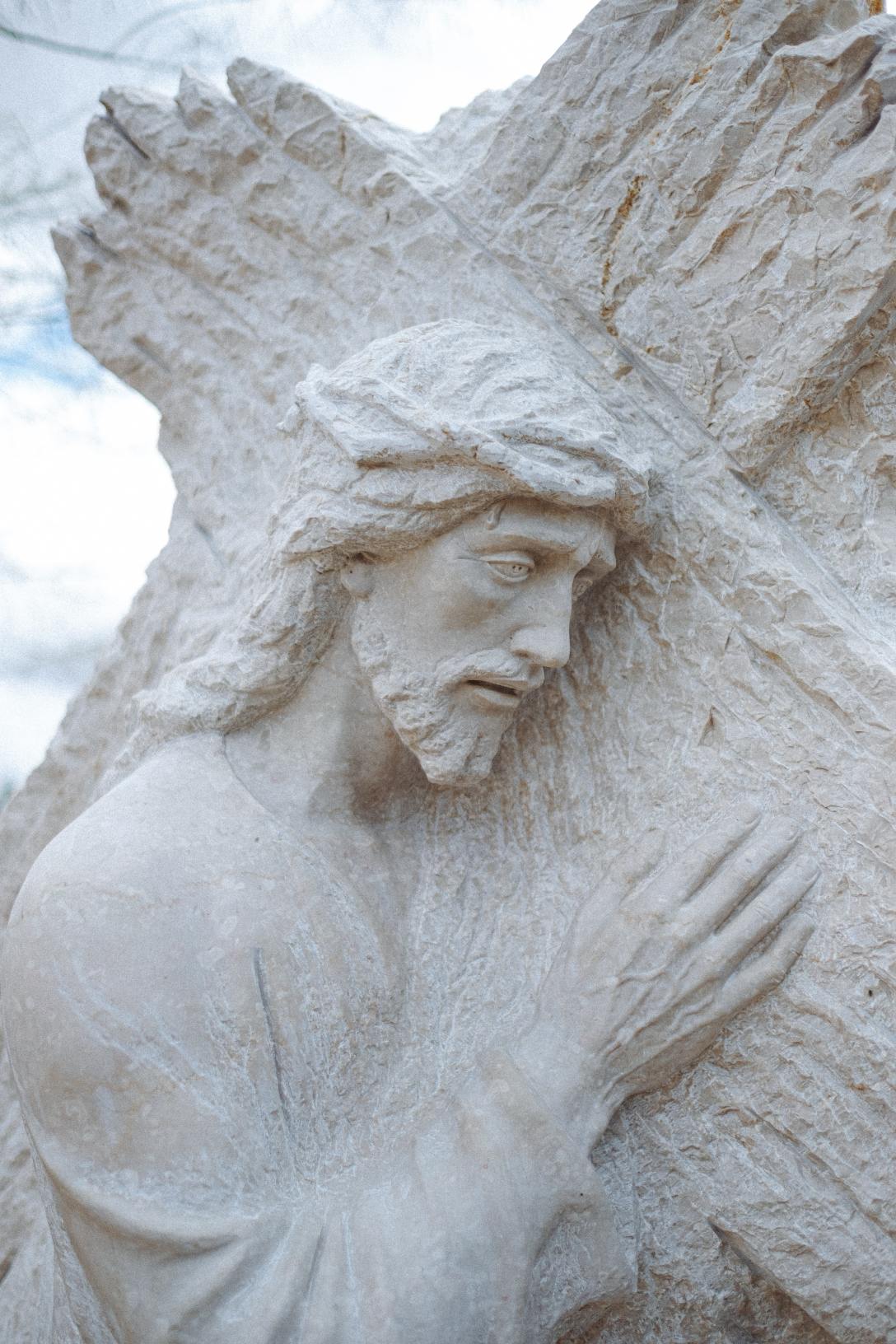
Books for the Road: Reading Through Doubt and Deconstruction

You’re not alone if you’re wrestling with doubt, rethinking your faith, or wandering the winding path of deconstruction. This journey is confusing, lonely, and sometimes even terrifying for many. But you’re not the first to walk it—and you don’t have to do it without companions.

Here are a few books that have offered wisdom, empathy, and even a little light in the dark for fellow pilgrims:

1. Faith After Doubt — Brian McLaren

McLaren gently reframes doubt not as the enemy of faith but as part of its maturation. If you’re deconstructing, this book offers a four-stage model that validates your questions and invites you to move forward with integrity.

2. The Audacity of Peace: Invisible Jesus in a Violent World — Scot McKnight

McKnight confronts the disconnect between the real Jesus and the distorted versions we often inherit. Rooted in peacemaking and justice, this book invites us to rediscover the counter-cultural Christ that many feared didn’t exist. It’s a bold, timely read for those burned by power-shaped religion.

3. The Sin of Certainty — Peter Enns

If “believing the right things” no longer works for you, Enns offers a different take: trust. Drawing from Scripture and his own story, he makes space for a more dynamic, less rigid faith.

4. When Everything’s on Fire — Brian Zahnd

I cannot recommend this book enough. Zahnd speaks to the crisis many face when faith burns down. But rather than leaving it all behind, he makes a passionate case for a deeper, post-deconstruction Christianity rooted in mystery and beauty.

5. Perhaps: Reclaiming the Space Between Doubt and Dogmatism — Josh McNall

McNall argues that we don’t need to choose between rigid certainty and total scepticism. Perhaps is a compelling call to humility and hope—a way to hold convictions while remaining open to mystery.

This isn’t a map—but maybe it’s a stack of trail notes passed from one wanderer to another.

I’d love to hear if you’ve read something that helped you stay in the wrestle.

Deconstruction and Reconstruction: Questioning the Faith

This is the sixth and final part in a series on apologetics that I’ve written with my friend Doug Espie over at Bride and World. To view earlier articles in the series, click on the following links

Part I: What is Apologetics?

Part II: People and Apologetics

Part III: Christianity and the Questions of Right and Wrong

Part IV: Reflections on Why the Biblical Story Makes Sense

Part V: The Historical Evidence for Christianity

and this is Part VI on Deconstruction and Reconstruction. Enjoy!

Deconstruction is the scary and sometimes liberating process of taking apart traditional theological ideas and seeing if they hold up under scrutiny. Reconstruction is the reformation of those ideas, and where they end up are sometimes different and sometimes the same. For me, a big de-reconstruction was around the age of Earth and debates on Genesis 1-2. When I first became a Christian, I was told by many people around me that the Earth was roughly 6000 years old. Genesis 1-2 was a proof text that God created the universe out of nothing in 6 literal days, with a literal Adam and Eve being our first two parents and that no one else existed until they had Cain and Abel. I attended seminars and was taught that evolution was one of the biggest enemies that the Church faced. We had to protect the Church and future generations from this scientific and biblically false worldview. There were nights during street evangelism where I would spend hours debating atheists, agnostics, and people with an evolutionary/Darwinian worldview believing that if I could poke holes in their arguments just enough, it’d save them from Hell. Unfortunately, in my time during those arguments, I never succeeded in converting anyone to Christianity. I went home week after week feeling deflated and frustrated that these people couldn’t see the world as I could. Eventually, I stopped debating with atheists and others from outside of the Faith. Instead, I endeavoured to learn more deeply about my own, to grow in wisdom and knowledge so that I could know more about the God I claimed to worship, myself, and the world around me.

In 2014 I entered into the wonderful world of biblical studies. I knew right away that my experiences at bible college would profoundly affect me in ways I wouldn’t even anticipate. My academic and spiritual mentors, coupled with other influences like the Bible Project (and books I was reading and podcasts I was listening to), unravelled an entirely new world of thought and personal development that I thirsted for. It was scholars such as Tim Mackie, John Walton, Tremper Longman III, John H. Sailhamer, Walter Brueggemann, J. Richard Middleton and even classic giants like Augustine of Hippo made me realise that Genesis 1-2 wasn’t so cut and dry as I had once been taught. Some of these scholars were evolutionary creationists (or theistic evolutionists) and trusted in mainstream science. Organisations such as Biologos facilitated collaboration with these faithful biblical scholars and Christian evolutionary scientists. Needless to say, my world was turned upside-down. Slowly, reluctantly, but surely, I began to embrace that a faithful reading of Genesis 1-2 didn’t need to be at odds with anything mainstream science advocated for. All in all, I fell head over heels in love with Genesis and after much wrestling, reading and praying, I finally settled on two things. 1. Genesis 1-2 isn’t a scientific retelling of the material origins of the universe. Instead it’s a theological narrative that makes sense of the purpose and meaning of the world the author was in. 2. Eventually, and even somewhat unwittingly, I became convinced that evolution made the most sense of the scientific data.

It’s a little strange for some; I suppose to end a series on apologetics by seemingly advocating for evolution. To be clear, I’m not. Evolution may come and go, and I’m definitely not a scientist. My point in this is that there are good deconstruction stories out there. Just because someone takes a different position on these ideas doesn’t mean they’ve abandoned the Faith. Yes, some do. Too often, we hear stories of once faithful Christians rejecting the Faith and even ferociously attacking it. These stories break my heart. My experiences with deconstruction (and I’ve had a few) have only deepened my faith and love for God. I would eventually become committed to reconstruction rather than letting the doubts and questions destroy everything I loved and held dear. Deconstruction can be a friend to the Christian, not a scary foe. During your time with serious apologetics, many questions that might challenge your faith will come your way. So here are some of my suggestions around dealing with deconstruction.

  1. Embrace the doubt. Don’t run away from doubt or use it to fuel some crusade against any particular brand or tradition of Christianity. List down your questions, and make sure they’re logical and concise. It is essential to know what it is you’re wrestling with and deconstructing. Don’t let abstract feelings and ideas cloud what it really is you’re wanting answers to. Do you struggle with the idea that people will burn for eternity in Hell if they reject Jesus? Great! List it down. Let the question sit with you. Don’t let your emotions around the idea (many of which may be valid) lead you to dismiss anything before seriously considering it.
  2. Research! Read widely and deeply. Listen to podcasts. Go to a bible college or seminary. Books are your friends. Don’t just Google it and find a random blog on the idea by some theological hack (ironic, I know). Go to reputable sources on both sides of the debate and weigh them. Give them time to work through you. A single question might take months or years to properly work through. That’s ok.
  3. Meditate on the Word. The Scriptures are the foundation for everything. It’s how we know who God is and what the Gospel is. “Blessed is the one who… delights in the law (teachings) of Yahweh. That person is like a tree planted by streams of water, which yields its fruit in season and whose leaf does not wither…” (Psalm 1). You may have questions about the Bible, about how to interpret it, about its validity. Good! You probably wouldn’t be human if you didn’t at some point. The Bible is meant to be wrestled with throughout your whole life. So sit with it. Let your questions bounce off the Scriptures and give it time to work. God is not afraid of your questions.
  4. So pray. I’m not very good at prayer. There’s something about talking into the air that feels unnatural to me. Nevertheless, some of the sweetest times of prayer I’ve ever had have been me looking back at when I felt God wasn’t there, but in hindsight, I saw Him working even when I couldn’t at the time. Suffering, pain, and brokenness often cloud our experiences of God (I’d also say so can joy and excitement). Yet, often they are the times when God does His best work.
  5. Time. I can’t stress this enough, time is your friend here. It can be very tempting to allow your frustrations and angst to get the better of you. “Idiots! how can they not see what I see? are they blind?” Probably, but you could be too. The best advice is, to be honest with yourself, allow the questions to sit with you, and let God do His work. Treat everyone around you as though God is using them to teach you. Slowly, with grace and love, ask questions with those around you whom you can trust. Go to your pastor and let God use the church to sanctify you (that’s its job, after all). Don’t have a point to prove or an agenda but let time do its thing. Let this be a season of growing in wisdom rather than a season of growing in bitterness and rejection of the beauty of the Gospel.
  6. Friends and pastors, chill out! In my experience, the most isolating experience in the world is having those who love you, the church God has called to grow you, push you away because you’re asking a few scary questions. The absolute worst thing you can do is dismiss and reject the deconstructing person. The church should be the safest place for these things to occur, not the enemy (as it is often perceived). These doubts and questions don’t happen in just a rebellious vacuum of heresy. They’re real people with genuine reasons and stories behind these burning doubts that they’re wrestling with.
  7. Commit to reconstructing. Pushing through the doubt (that never really leaves you – that’s fine) and reconstructing will, and I promise you this, leave you with a more robust and deeper faith than you ever had. It might take some time for you to get here. That’s to be expected. I can say without a doubt that I am more Christian than I have ever been on this side of my experiences, and I thank God for every one of them.

Apologetics is about defending the Faith and giving good reasons why we believe what we believe. One cannot defend a Faith that they haven’t genuinely wrestled with themselves. For those of us who wrestle harder then others, it’s my prayer that your deconstruction would be fruitful and Spirit led.

A faith without some doubts is like a human body with no antibodies in it. People who blithely go through life too busy or indifferent to ask the hard questions about why they believe as they do will find themselves defenseless against either the experience of tragedy or the probing questions of a smart skeptic. A person’s faith can collapse almost overnight if she failed over the years to listen patiently to her own doubts, which should only be discarded after long reflection.

– Tim Keller

Propitiation and Redemption in the Book of Romans

This was a recent essay I did in my Romans class at college. I’m proud of this because I got pretty good grades for it so I thought I’d share it with all of you. Enjoy 🙂

The themes of redemption (ἀπολυτρώσεως) and propitiation (ἱλαστήριον) can be found throughout the entire storyline of the Bible. From Genesis 3, where God makes the promise that a seed will come to destroy the serpent (Gen 3:15), then God takes an animal, slays it, and covers Adam and Eve in animal skin (Gen 3:21), through to the sacrificial laws in Leviticus, all the way to Jesus in the Gospels, these themes are richly integrated into the very fabric and thrust of the Bible’s entire narrative. Paul, in particular, picks up on these essential themes and, in his epistle to the Romans, he masterfully espouses a rich theology in light of the Messiah and the entire Old Testament Scriptures. However, the themes of propitiation and redemption in Romans have not been without controversy.

This essay will aim to trace Paul’s usage of both themes of propitiation and redemption throughout the book of Romans. This will be done by exploring critical passages in Romans where these themes occur, exploring the debate among scholars and the various interpretations of the terms, and finally exploring any implications that are applicable to the Christian life.

  • Redemption in Romans

First, it is crucial to have some historical context behind the idea of redemption to better understand how Paul uses the word in Romans. In the Greco-Roman world, to redeem someone was to liberate a slave by purchasing (or ransoming) their freedom (Morris 1993, 784). This understanding of redemption was true for all of antiquity, going back as far as the Exodus story where God frees (redeems and ransoms) Israel from servitude to the Egyptians (Ex 12-24). For Paul and his audience, the theme of redemption would have evoked memories of the exodus stories of freedom from slavery, crossing the red sea, wilderness wanderings, Passover, promised land, and exile (Wright 2002, 470-471). 

Twice we come across the word redemption explicitly being used. The first is in Romans 3:24 “and are justified by his grace as a gift, through the redemption that is in Christ Jesus,” and then again in Romans 8:23 “And not only the creation, but we ourselves, who have the firstfruits of the Spirit, groan inwardly as we wait eagerly for adoption as sons, the redemption of our bodies.” However, redemptive imagery can be found all over the letter such as in Romans 6, where Paul uses slavery language to demonstrate that those in Christ are now slaves to righteousness and God rather than sin and the flesh (Morris 1993, 785). 

  • Redemption in Romans 3:24

As aforementioned, the first place we find the word redemption is in Romans 3:24 quoted above. In this passage, Paul is arguing that justification (the forensic declaration of being acquitted from sin) is a gift from God that comes via freedom from slavery (redemption) to sin (Hagner 2008, 70-71). Scholars debate whether redemption in this passage includes payment (or ransom) so that one can be set free. As already mentioned, the ancient world and secular Greek literature always assumed some payment would occur for the slave to be set free. However, when one considers both the Septuagint (LXX) and the New Testament, it is evident that a ransom is not always present in the idea of redemption (Schreiner 2018, 197-198). Nevertheless, most scholars agree that Paul most likely had both ransom and redemption in mind (Schreiner 2018, 198). Though, instead of the ransom being paid by God the Son to God the Father (Moo 1996, 230-231), it was paid by God in Christ to “the personified power of sin” mentioned in Romans 3:9 (Dunn 1988, 180).

  • Redemption in Romans 8:23

The second passage we find the word redemption is in Romans 8:23. Here we have Paul discussing the redemption of the created order in relationship with human redemption. Throughout the entire letter of Romans, Paul has an impressive theology of creation that culminates in this passage as he is concerned with the renewal of everything God has created, not just humans or His elect (Stenschke 2017, 261-289). Scholars agree that redemption is closely related to adoption as they are used almost interchangeably to demonstrate the now and not yet tensions in Paul’s argument. Paul argues that the Christian has already been redeemed (adopted), that they are being redeemed (spiritually), and that they will be redeemed (physically) at the eschatological end of the age (Moo 1996, 518-520). Mike Bird explains this well in his commentary when he says, “in the case of redemption, it is not just redemption from the penalty of sin, but the redemption of the body from the presence of sin that remains outstanding. The resurrection of the body will be the event that will consummate both adoption and redemption” (Bird 2016, 280).

  • Hilasterion in Romans

Propitiation or the Greek word hilasterion (ἱλαστήριον) occurs only once in all of Paul’s letters in Romans 3:25, “whom God put forward as a propitiation by his blood, to be received by faith. This was to show God’s righteousness, because in his divine forbearance he had passed over former sins,” making Paul’s use of the word a hot topic for debate among scholars. C. H. Dodd famously argued that the word should be translated as expiation (the removal of sin) as opposed to the pagan idea of God’s anger needing to be satisfied through sacrifice (Hodd 1935, 82-95). Later, the reformed interpretation of propitiation (to satisfy God’s wrath) was championed by Leon L. Morris in his book “The Apostolic Preaching of the Cross” (Morris 1965, 144-213) as he called into question the validity of Dodd’s interpretation of the word (Moo 1996, 198-199). Additionally, others have argued that the hilasterion should be interpreted as “mercy seat” where atonement took place in Leviticus 16 (Gundry-Volf 1993, 279-284).

  • Propitiation

Some scholars argue that hilasterion should be translated as “propitiation”, meaning “the removal or satisfaction of God’s wrath.” Interestingly, there is some debate among exponents of propitiation as to whether “sacrifice” exists in the passage. Scholars agree that a sacrifice is not found in the atonement, making it difficult to argue for a sacrifice in Romans 3:25. However, some would argue that Paul innovatively develops the idea of a present sacrifice in the propitiatory theme (Moo 1996, 236). On the other hand, scholars would reject the idea of a sacrifice being present that Paul’s expression means “to make atonement” not “to offer a sacrifice.” They argue that, at best, sacrifice is in the back of Paul’s mind, not in the forefront. Nevertheless, advocates all agree that “Christ adverted the divine wrath from sinners” (Morris 1988, 181).

Scholars argue for propitiation in Romans 3:25 in two primary ways. First, scholars explain that the common use of the word in the ancient world was to either satisfy or remove wrath (Kidner 1982, 119-136). Second, proponents of propitiation argue that the biblical context of Romans 3:25 is that all of humanity are sinners under the wrath of God (Rom 1:18-3:20), insinuating that if hilasterion does not mean the removal of wrath, then humanity is still under it (Mounce 1995, 117). 

  • Expiation and Mercy Seat

Other scholars argue that hilasterion should be translated as expiation meaning that Christ’s death “is how God does away with his people’s sin – not symbolically, as in the ritual of Leviticus 16 in which the material mercy-seat figured, but really” (Bruce 1985, 111). In other words, God removes sin or cleanses a person via Christ’s blood and His death. Scholars who advocate for this view recognise the Old Testament connections that Paul is making to Exodus 25 and Leviticus 16, where the lid of the ark or “the mercy seat” was the place where sin was dealt with. It is where the high priest during the Day of Atonement would sprinkle blood as a sacrifice to cleanse the temple and himself so that he would not die in the presence of God (Wright 2002, 474). Additionally, the priest would lay the sins of the people on the head of a goat and literally remove the sin by sending the goat away from the camp. All of this was in Paul’s mind in Romans 3:25 (Dunn 1988, 171). These same scholars point out that in these rituals there is no mention of judgement or wrath being vicariously satisfied through the animals on behalf of the people. In fact, the killing of the animals was never part of the atonement, they were slain elsewhere, and it was the blood that was used at the alter (Wright 2016, 295-355). Finally, these scholars are quick to point out that the word hilasterion nearly always means or refers “mercy seat” in the LXX (Bailey 2000, 155-158) and in it means mercy seat in its other New Testament occurrence in Hebrews 9:5 (Stott 2001, 114).

  • Satisfy or Cleanse?

So out of the interpretations discussed in this essay, which are the most convincing? Both. When all the evidence is considered, there is no reason not to believe that Paul here has both in mind the secular use of the word hilasterion (propitiation) and the biblically canonical one (expiation and mercy seat). As N. T. Wright says in his commentary, “But that fact remains that in 1:18-3:20 Paul has declared that the wrath of God is revealed against all ungodliness and wickedness and that despite God’s forbearance this will this will finally be meted out; that in 5:8, and in the whole promise of 8:1-30, those who are Christ’s are rescued from wrath; and that the passage in which the reason for the change is stated is 3:25-26…” (Wright 2002, 476). In other words, the redemption of humanity comes via Christ’s hilasterion, that is, His expiating sacrifice as that removes sin and, in turn, wrath from those who are united to Him by faith (Bird 2016, 119).  

  • Implications for Christian Ministry and Living

The themes of redemption and hilasterion are among some of the most important themes in all of Scripture as they relate to the death of Jesus and our salvation. These themes are central to the Gospel, and therefore, central to the Christian life and ministry. For some, the nuance and semantics might lead some to dismiss the question of there being any implications in these fleshed out themes. However, without a nuanced understanding of our salvation, the Christian is left deficient in their ability to espouse the Gospel that saved them. These themes affect Christians in two main ways, in our church ministries (i.e., pulpit ministry) and how we live out our vocation as image-bearers (Gen 1:26).

  •  Ministry

Gospel-centred preaching is at the heart of our church services and ministries. Preaching God’s Word is how we teach, rebuke, correct, and instruct our members in righteousness so that they may be equipped to live out the Christian life (2 Tim 3:16-17). Therefore, having a nuanced and concise understanding of how we are saved shapes the way we live our lives. Is the emphasis of the Gospel on being saved from an angry God who hates humanity until we trust in Jesus, or is that we have been freed (redeemed), cleansed from sin (expiated) so that we can now live out our vocation as God intended? If it is only the former, then that simply solves God’s attitude towards humanity. The latter however, free’s humanity, in Christ to live as they were meant to, a kingdom of priests imaging God (1 Pet 2:9). This freeing and vocational calling needs to be the focus of our sermons.

  • Christian Life: Our Mission

If we get the Gospel nuances right in our pulpits, then we can live biblically in our lives and mission. If we see that Jesus’ death has freed us, ransomed us, cleansed us from sin for a purpose, we are starting to get to the heart of the Gospel. God has always intended humanity to be a new creation in Christ that images him and lives as genuinely human. N. T. Wright sums this up well when he says, “through the cross of Jesus won the Passover Victory over the powers, that he did this precisely by dying under the weight of the world’s sin, and that Christian mission consists of putting this victory into practice using the same means” (Wright 2016, 408). Love your neighbour (Mk 12:30-31) and enemies (Matt 5:44), even to the point of death so that they may “taste and see that the Lord is good” (Ps 34:8). 

  • Conclusion

In this essay, we explored the themes of redemption and propitiation in Paul’s epistle to the Romans. Paul’s use of the word redemption in Romans 3:24 indicates a clear theology of the individual being set free from sin, and 8:23 indicated Paul’s theology that the entire created order groans as it eagerly awaits to be set free (redeemed) from sin on the eschatological day of judgment when Jesus comes to make all things new. Furthermore, this essay explored Pauls use of the word hilasterion, which could either be translated as propitiation or expiation (and mercy seat taken from Leviticus 16). From all the evidence considered, it seems that Paul emphasises a theology of expiation with a propitiatory theme implicit in the text. This means that Jesus’ death cleanses the believer from sin, sets him free and then because of that expiation, God’s wrath is turned away from the believer (an implied consequence of Jesus’ death, not an explicit one). Finally, with that in mind, it is clear that this emphasis on expiation, when preached from our pulpits, results in a vocational calling for the Christian instead of simply an attitude shift from God’s behalf towards the person. 

List of References

Bailey, Daniel P. 2000. “Jesus as the Mercy Seat: The Semantics and Theology of Paul’s Use of Hilasterion in Romans 3:25.” Tyndale Bulletin, no. 51.1: 155-158.

Bird, Michael F. 2016. Romans. 2nd ed.The Story of God Bible Commentary. Edited by Tremper Longman III and Scot McKnight. Grand Rapids: Zondervan.

Dunn, J. D. G. 1988. Romans 1–8, Vol. 38A. World Bible Commentary. Dallas: Word Incorporated.

Bruce, F. F. 1985. Romans an Introduction and a Commentary. Tyndale New Testament Commentary. Downers Grove: Inter-Varsity Press.

Gundry-Volf, J, M. 1993. “Expiation, Propitiation, Mercy Seat” in The Dictionary of Paul and his Letters, edited by Gerald F. Hawthorn, Ralph P. Martin, and Daniel G. Reid, 279-284. Downers Grove: Inter-Varsity Press.

Hagner, Donald A. 2008. “Romans” in The Expositors Bible Commentary, Vol. 11, edited by Tremper Longman III and David E, 19-238. Grand Rapids: Zondervan.

Hodd, C. D. 1935. The Bible and the Greek. London: Hodder and Stoughton.

Kidner, Derek. 1982. “Sacrifice – Metaphors and Meaning.” Tyndale Bulletin no. 33: 119-136.

Moo, Douglas J. 1996. The Epistle to the Romans. The New International Commentary on the New Testament. Grand Rapids: Eerdmans Publishing Company.

Morris, L. 1955. The Apostolic Preaching of the Cross. Grand Rapids: Wm. B. Eerdman Publishing Co.

Morris, L. 1988. The Epistle to the Romans. The Pillar New Testament Commentary. Grand Rapids, MI; Leicester, England: W.B. Eerdmans; Inter-Varsity Press.

Morris, L. 1993. “Redemption” in The Dictionary of Paul and His Letters, edited by Gerald F. Hawthorn, Ralph P. Martin, and Daniel G. Reid, 784-786. Downers Grove: Inter-Varsity Press.

Mounce, R. H. 1995. Romans, Vol. 27. The New American Commentary. Nashville: Broadman & Holman Publishers.

Schreiner, Thomas R. 2018. Romans. 2nd ed. Baker Exegetical Commentary on the New Testament. Grand Rapids: Baker Academic.

Stenschke, Christoph. 2017. “Human and Non-Human Creation and Its Redemption in Paul’s Letter to the Romans.” Neotestamentica, no. 51:2. 261-289, 

Stott, John. 1994. The Message of Romans: God’s Good News for the World. The Bible Speaks Today. London: Inter-Varsity Press.

Wright, N. T. 2002. “Romans” in The New Interpreters Bible, Volume X. 393-770. Nashville: Abingdon Press.

Wright, N. T. 2016. The Day the Revolution Began. New York: Harper Collins Publishers.

Reflections on Why the Biblical Story Makes the Most Sense

This is part IV in a series on apologetics. If you want to read the other articles click on the following links:

Part I What is Apologetics?
Part II People and Apologetics
Part III Christianity and the Questions of Right and Wrong

Enjoy!

“The value of the myth is that it takes all the things we know and restores to them the rich significance which has been hidden by ‘the veil of familiarity.’ The child enjoys his cold meat, otherwise dull to him, by pretending it is buffalo, just killed with his own bow and arrow. And the child is wise. The real meat comes back to him more savory for having been dipped in a story…by putting bread, gold, horse, apple, or the very roads into a myth, we do not retreat from reality: we rediscover it.”

― C.S. Lewis, On Stories: And Other Essays on Literature

Life is full of myth, lore, and drama that ensnares the imagination and catches us up within the rich tapestry that makes up our human story – that makes sense of our existence. Every one of us has this deep sense of our life, meaning more than it does, from the Sun rising in the East to the birds singing in the early morning. From the kettle boiling, our stomachs rumbling, the caress of a brisk winter wind, or the smell of saltwater in the Summer. The high pitched cry of a newborn baby and the roof of your mouth burning after taking a bite from a slice of hot pepperoni pizza. The gutted feeling you get over betrayal or the stress of paying your bills on time. The weariness one feels after a long day at work or looking after the family. For some, depression, for others, worse. Finally, the contentment (or excitement) of being in the arms of a lover – these are all paragraphs in the chapters to the book that makes up our existence.

The greatest stories ever written are told so that humanity can make sense of themselves. So that we can all slowly stitch together those chaotic, beautiful and terrifying chapters that we’ve all starred in. The world’s oldest stories, from the Enuma Elis (The Epic of Gilgamesh), The Hermopolis Egyptian creation myth, and The Eridu Genesis, to the Aboriginal dream-time stories and the Native American Creation myths, every culture and civilization has within their memory a story that defines who they are and why they’re here. For the modern West, we look to science and western philosophy to make sense of our humanity. According to evolutionary biologists, humanity (Homo sapiens) evolved from Homo heidelbergensis somewhere around 100 000 years ago. All life (a biologist might argue) evolved from the big bang event approximately 13.7 million years ago, and humanity is the latest in the evolutionary chain (that we know of). In light of this, philosophers like Fredrick Nietzsche and scientists in the neo atheist movement such as Richard Dawkins, and socio-political critics such a Christopher Hitchens might argue that life has no intrinsic meaning or value (this is called existential Nihilism). As Dawkins famously said, “the universe we observe is precisely what we should expect if there is, at bottom, no design, no purpose, no evil, no good, nothing but blind, pitiless indifference.” However, for most of us, this bleak commentary on the nature of existence remains unsatisfactory. Most of us, perhaps even Dawkins himself (though he might never admit it), have a deep-seated sense of “something more.” One cannot look at oneself in the mirror of the cosmos and not have their heart leap as it longingly grasps for something greater than themselves. We want to be known, we want to be loved, but we must first know ourselves and our place.

Herein lies the power of the biblical story (i.e. the Gospel – the Good News). The unfolding drama of the biblical story compellingly peels back the lays of the human existence and uniquely relates them to God, to one another, and the world in a way no other story does. Why is this story significant? Because of the way we live, relate to one another, and the world around us, the way we relate to God profoundly depends on how we comprehend, perceive and understand all of these things; otherwise, Nihilism may be true. Let us then explore this narrative so that we may judge for ourselves how this story makes sense of our existence.

  • God gives meaning and purpose to all that exists and orders it out of a chaotic state (Genesis 1:1-25)
  • Humanity is endowed with God’s image (Genesis 1:26), and they’re tasked to multiply and subdue the earth (Genesis 1:27-28)
  • This image that God gives humanity is two things. It is 1. an ontological reality (a part of their nature) in which every human somehow shares in, participates, and retains something of God (separate but related to His likeness). 2. It is a task or vocation that God bestows upon humanity to live out this ontological reality. That task is to multiply, subdue the earth, and guard and keep the Garden (Genesis 2:15), the dwelling place of God.
  • Humanity fails at walking in God’s image. Instead of guarding the Garden, Adam and Eve allowed the serpent to enter God’s dwelling place and corrupt it. Adam and Eve, therefore, chose for themselves wisdom apart from God and decided to rule themselves apart from God’s love and wisdom (Genesis 3).
  • God takes Adam and Eve and removes them from His dwelling place, stopping them from eating from the Tree of Life. Humanity has now chosen spiritual death and disunity with God, and as a result, they are disconnected from one another and the creation around them.
  • However, God doesn’t let the world fall into chaos. He promises that through the line of Eve, humanity will be saved by crushing the serpents head even at the risk of the seed’s own life (Genesis 3:15).

In just the first three chapters of the Bible, we have a densely rich narrative that paints humanities reality. We were created and chosen by God for good things. For unity, for love, peace and joy. Yet we went our own way. From Genesis 3:15 onwards, the entire Bible is story after story of God rescuing the world through chosen individuals and people groups, eventually culminating in the person and work of Jesus Christ (1 Corinthians 15:3-8). In the final pages of the Bible, the Apostle John tells of a world where through Jesus the Messiah, there will be no sickness or death. There will be no separation from God, life, each other, and the world around us (Revelation 24).

At the end of the day, it is up to the individual to decide which stories they want to believe in, and which they don’t. The Bible is a big book, and it isn’t something that’s supposed to be read and understood in a day, week, or even a year. It’s complex, gritty, raw, alien, but all too familiar at the same time. I believe, if we wrestle with every page and let the Scriptures speak for themselves, this metanarrative we call the Bible makes the most sense of who we are (image bearers made to be in relationship with God, one another, and the created world), where we are (in an unjust fallen world that we all contribute to), and where we’re going (new creation free from the tyranny of sin and death). My invitation to you is to consider its message carefully, reflect, and ask yourself this critical question “does this make sense of our story?” Whether you realise it or not, you’re a character in its unfolding drama.

How will your chapter end?

People and Apologetics

I believe in Christianity as I believe that the sun has risen: not only because I see it, but because by it I see everything else.

C. S. Lewis

This is part II in a series on apologetics. If you want to read part I on “What is Apologetics?” click here. Enjoy!

Over the years, my relationship with apologetics has taken many turns. There was a time where you would find me arguing with university students until 3 or 4 in the morning about evolution vs creation or ethics at Gloria Jeans. I used to think if I could just come up with a really concise argument that was rational, it’d convince the world, and I’d be the next Billy Graham or whatever. Even though there is a lot of value in logic, facts, and arguments, I began to realise that even the most eloquent of arguments alone would never win over the hearts and minds of those who reject Jesus and His Gospel. Ironically, the more I studied at Bible college, the more Christianity became something more than an intellectual assent to a list of doctrines and beliefs. It wasn’t just “God is true because …”; instead, it became a “life, humanity, and the world makes sense because of God.” By Christianity, I saw and made sense (and am still making sense) of everything I see and experience. I started to move away from wanting to just win someone over to my way of thinking to seeing a real person. I wanted people to experience God and the world around them in the way they were always meant to. My focus shifted from a win-lose mentality to a sort of invitation-love-unity mentality. It is my conviction that when we engage in apologetics with other faiths and worldviews (even among people in our own Faith), we make enemies of them far too quickly because we forget some essential truths about those people.

  1. All of humanity is made in the image and likeness of God (Gen 1:26). This means a lot of different things to a lot of various scholars. I’ve written a bit about it here. However, here is a quick summary to make my point. For humanity to be made in the image of God means that they are to be a unified people that reflect God’s character to the created order by loving God, one another, and the world around them. Here’s the thing, this command was given to humanity in general, not just the Church. So every Muslim, Hindu, Sikh, Jew, New Ager, Atheist, Satanist, Witch, Wizard, Butcher, Baker, and Candlestick Maker have all been endowed with this “image” and are called to live it out. The only difference is that this is now only achievable in Christ as it is He who enables us by the Spirit to live out this calling. Nevertheless, the Genesis 1-3 story leads me to have a deep spiritual connection to everyone I talk to that stops me from having a win-lose mentality and instead makes me see them as human despite how flawed and sinful they are may be.
  2. The Hebrew Scriptures (the Old Testament) is about Yahweh (God) pursuing some of the most messed up people to ever exist. Israel’s story was full of the most bloodthirsty, faithless, abusive (sexually, physically, spiritually see Gen 16:1–16; 21:8–21), wicked (Is 13-23), idolatrous (Ex 32; Jer 2), murderous people (2 Sam 11-12). Yet, God still called them out to be His people, to represent Him and to be a kingdom of priests (or image bearers) to bring about His redemptive plan (Ex 19:6; Is 61:6). Don’t get me wrong, God hates sin (Ps 5:4-5), and I don’t think God ever intended sin to be a regular part of the human experience. However, on this side of the Fall (Gen 3), there is something very “human” about sin, brokenness and failure. It’s in that chaotic mess that God pursued Israel, and in turn, all of humanity in the person of Christ. What a picture of you, and what a picture of me. This is a constant reminder that God pursues me even as I fail, sin, and fall, and so to does He pursue every other person. God isn’t just trying to win over the person you’re talking about evolution with; he wants to transform them. Israel already knew God existed, right? God had already freed them from slavery, and even after He gave them the promised land, they continued to rebel. God wanted to transform and renew (Jer 31:31; Ezek 36:26), not just convince them of a set of doctrines and laws.
  3. Obviously, Israel didn’t always do a good job of being that royal priestly image-bearing kingdom of people God wanted them to be. Transformation was yet to come. This is where Jesus comes in. Read the Gospels. God comes in the likeness of human flesh (Lk 2:1-20; Rom 8:3), He travels around and preaches the Good News of the Kingdom of God (Matt 3:2, 4:17, 5-7), He performs miracles (John 2:1-11, 4:46-54, 5:1-15, 6:5-14, 6:16-24), and teaches people about Himself (Lk 4:21). Jesus gives up His life to be a ransom for many (Mk 10:45), He was raised from the dead (Mk 16), and before He ascends, He tells His disciples there’s more. He wants to transform, renew, and empower His people to be what Adam, Eve, and Israel couldn’t be. So He sends His Spirit to dwell among those who have trusted in Jesus (John 14:16, 15:26, 16:7; Acts 1-2). Jesus wants to bring everyone into an empowered family of people who image God and love one another. He doesn’t just want to convince them that He is real.

For me, this passage wraps up the vision Jesus has in the Gospels quite well:


Then I saw a new heaven and a new earth, for the first heaven and the first earth had passed away, and the sea was no more. And I saw the holy city, new Jerusalem, coming down out of heaven from God, prepared as a bride adorned for her husband. And I heard a loud voice from the throne saying, “Behold, the dwelling place of God is with man. He will dwell with them, and they will be his people, and God himself will be with them as their God. He will wipe away every tear from their eyes, and death shall be no more, neither shall there be mourning, nor crying, nor pain any more, for the former things have passed away.”
And he who was seated on the throne said, “Behold, I am making all things new.” Also, he said, “Write this down, for these words are trustworthy and true.” And he said to me, “It is done! I am the Alpha and the Omega, the beginning and the end. To the thirsty I will give from the spring of the water of life without payment (see also 2 Cor 5:17).

Revelation 21:1-6


Let’s circle back for a moment. A person is sitting across the table from you, and internally you are seething because they won’t accept that the earth is 6000 years old (“exasperated sigh”), or that ethics is static, or that Jesus died for their sin. As you try to stoically sip your triple-shot mocha with a pump of caramel, try to remember that there is more at stake here than trying to win an argument. These are real, fallen, broken, complex sinning, loving, crazy, logically irrational people that God loves. Loving your neighbour or your “enemy” is as important as getting across your point. As I have theologically demonstrated in this article, reflecting on the person’s substance will help remind you that they are a human to love, not just an argument to win.