
What Christmas Means to Me

Introduction

Christmas, what a wonderful time of the year. For half of the world, Christmas day is covered in snow, gingerbread houses, fireplaces, and eggnog. For the other half, Christmas day is all about the surf, the pool, ice-cold drinks, cold meats and trying to find the right balance of tan versus sunburn. Christmas means a lot of different things to a lot of different people. The one common thread at Christmas for the majority of the world are presents, Santa, and reindeer. For Christians, however, Christmas has a spiritual element to it.

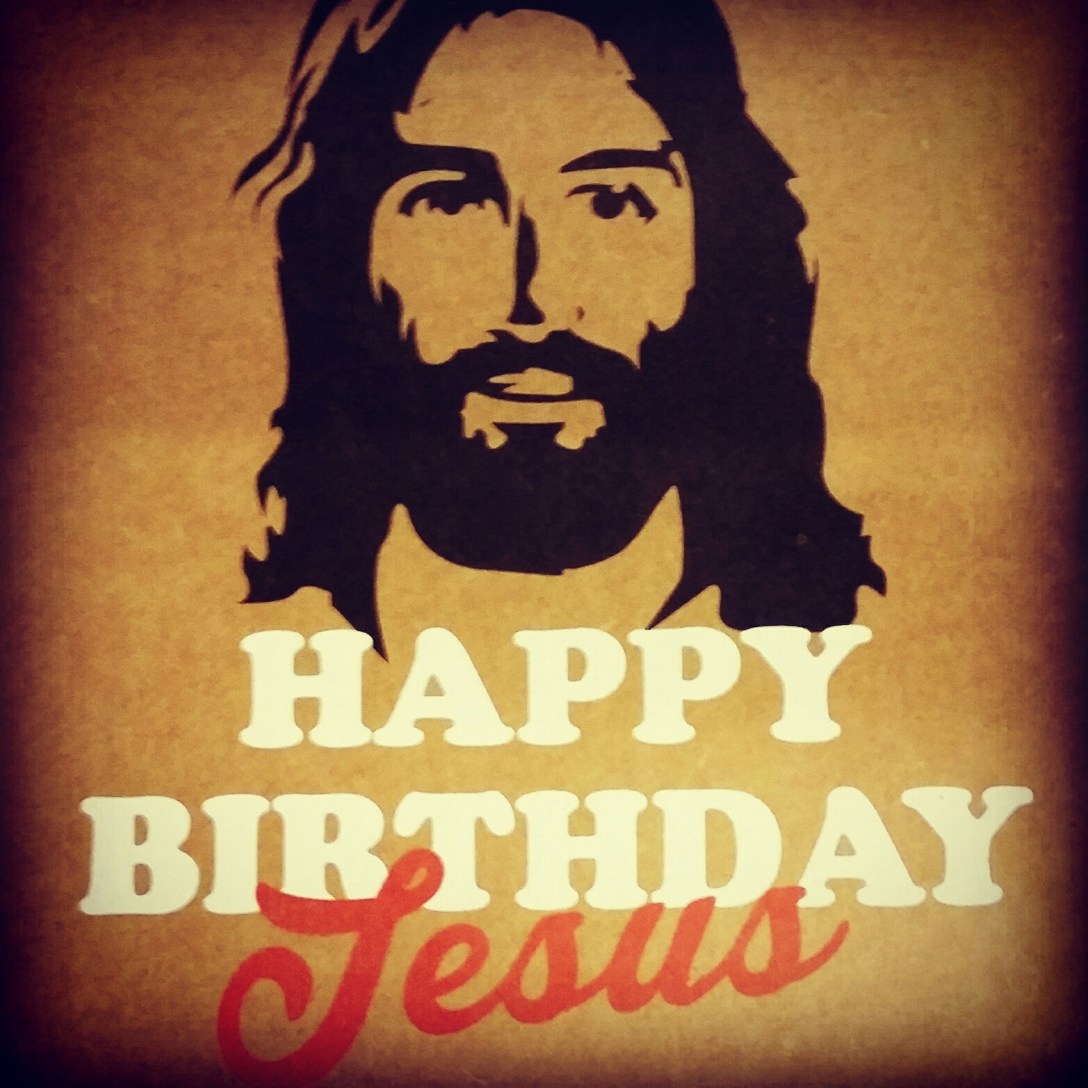
It is pretty well known that Jesus’ birthday wasn’t on the 25th of December. However, Christians all around the world take the day to remember the birth of our Lord and Saviour. Christians think back to the day Jesus was born in a dirty old manger among animals, dirt and muck, and celebrate the beginning of what was to be the end of our problem with sin (John 3:16). For me, however, Christmas has not always been like this.

My Christmas’

I grew up in a non-Christian family. So Christmas for me was never about Jesus. Christmas was more about prawns and fresh seafood. It was about beer and cold drinks. It was about family and friends gathering around one another and having a good old time. Mostly, though, Christmas was about what presents I would be getting that year. Christmas was about me.

I have a lot of fond memories of Christmas. I remember getting really excited and waking up at 5 or 6 am ready to unwrap all the cool new toys that I had asked for that year. What I don’t remember is Jesus. I remember going to my Nanny’s house in New South Wales and spending time at the beach exploring the rocks and getting dunked by waves. What I don’t remember is Jesus. I remember the laughter and joy that our friends and family had when they came over and visited. What I don’t remember is Jesus.  I remember a lot of great things. Things that I will cherish for the rest of my life. What I don’t remember though is Jesus or anything about Him. It wasn’t until I became a Christian that the meaning of Christmas changed for me.

The Change

I think one of the biggest things I realised as I experienced my first few Christmas’ as a Christian was how much Jesus really was absent. I would turn the T.V on in the morning to find someone preaching on the Christmas story. Instead, I would discover cartoons or prosperity preachers. I became hyper-aware of how much God was not a part of Christmas in my family. This really surprised me (it probably shouldn’t have) because Christmas was meant to be all about Jesus, right? I guess so. What I’ve come to realise though is that Christmas is really a non-Christian holiday that Christians use to glorify God in the best way that they can. So it shouldn’t surprise us when we don’t find Jesus on many Christmas cards or on T.V. Why would there be? Christmas isn’t really Christian…

A New Meaning 

So then what does Christmas mean to me now? Well, Christmas means to me three main things. First, Christmas is a day of connection. Connecting to people, family and friends I never see for the rest of the year are vital for me because, for some of them, I am the only Christian influence that they might have that entire year. Second, Christmas is a day that the Gospel can be talked about almost freely without repercussions. Most people know who the “Jesus guy” is, now is the time to declare to them the depth and love of His grace so that they might enter into His kingdom. Lastly, it is a day in which I can bring glory to our Lord. For me, Christmas can be a day where God can be glorified in the gift-giving, food eating, and every other activity that I do. With these three things in mind, every Christmas day can be centred on the person and work of Christ. Christmas has taken on a new meaning.

Identity & Idolatry: Part I

Introduction

I started my pastoral-ship in March of 2015, and I have to say it was one of the most intense decisions of my life. Ever since I became a Christian, I had the strongest desire and calling to teach God and His Word. However, I think it took me a while until I started to grasp what being a teacher really meant for my life. Early in my Christian walk, I remember holding Bible studies for Christians who had been walking with the Lord 3 or 4x as long as I had been. Yet despite their experience, I always had this deep longing to share the profound mysteries that God had been revealing to me in my zealous youth. I can just imagine now that those same Christians must have been grinning from ear to ear as I grappled with things like justification by faith, and the second coming of Jesus. However, as I reflect upon the friendships, I have developed over the years with those people I realise now that those things are still being talked about like as though we are only beginning to understand what they mean. However, I digress. That is a topic, perhaps for another blog. I suppose the point that I am trying to make is that it took me some time before I came into my own and felt comfortable in certain theological topics of conversation. Over the last 6 months, one of the topics that have gripped me the most has been Identity and Idolatry (hence the title for this series). So, reader, I implore you to come on this journey with me as we start to delve into what the Bible says about these things and try to make heads and tails of something that runs deep into the hearts of every person.

Idolatry: The Root

“Sin is the fruit, and idolatry is the root.” This was something my Bible College lecturer continuously reminded me of in my class on Romans and Pauline Theology. This is one of those sayings I think that will last a lifetime as it will remind me of the real reason why I do the things I do (we all reap what we sow). That is, I can tend to worship things that aren’t God. These things are called idols.

Idols saturate our culture. I’m not really talking about Hinduisms myriad of gods, or Buddha, or Allah. I’m talking about real influences that destroy our very souls. These idols can be pleasure, riches or fame. An Idol can be anything or anyone that you love more then you love your Creator. Idolatry is the root, and the sin in your life is the fruit. If you worship money (the root), you could be found overworking and not spending time with your family (the fruit). If you are worshipping pleasure (the root), you could be found caught in a range of sins from adultery, to drunkenness, drugs or any combination of these sins (the fruit). If you are found worshipping other people (the root), you usually can be found becoming obsessed, and your identity is found in whether or not that person (or thing) approves or disapproves of you (the fruit). It is important to understand that our identity is directly intertwined with whatever it is we worship. This can be seen clearly at the Fall with Adam and Eve.

The Fall: Our Identity Lost

In Genesis, we undoubtedly see God portrayed as the supreme ruler of the universe, and sovereign over all creation. God creates the sun, moon, stars, water, earth, birds, fish, cattle, and plants. To top it all off, God creates mankind in His image and likeness (Gen 1:26-27). Everything was good. However, something went terribly wrong. Adam and Eve were tempted into sin and were separated from God. Most people might read that and understand what happened and simply move on. However, Genesis 3 explains everything that is wrong with humanity and why we so desperately need our Creator to make us new once more. Let us explore what happened and its relevance to us today.

Now we know that back in chapter 2, God had made it forbidden to eat from the tree of knowledge of good and evil (Gen 2:16-17). The consequence of eating from the tree was death, spiritual separation from God. Unfortunately for us, that didn’t really take precedence in the minds of Adam and Eve because they were enticed with a greater promise. The serpent (presumably Satan) promised that if they were to eat from the tree, they would become gods themselves (Gen 3:4-5). Many people might rightly understand this to be a lie or a trick that the serpent had played on our original parents. However, if we continue in the story we actually see God Himself confirm that this became a reality saying, “Behold, the man has become like one of us in knowing good and evil…” (Gen 3:22). How does this make sense though in light of idolatry and identity?

First, it is essential to see that when Adam and Eve were tempted, they were enticed into receiving a new identity outside of the person of God. Instead of worshipping and loving God (which ultimately leads into becoming like Him), they wanted to become like gods themselves so that they could become worshipped and adored instead (I mean why else would you want to become a god right?).

Second, though becoming a god happened in some sense, it wasn’t what they expected. The moment they put their trust or faith into the created thing (the serpent) rather then the Creator God, they recognised their shame and sin and tried desperately to cover it up using fig leaves (Gen 3:7). What this ultimately means is that the promise was empty. There is always a catch when it comes to idolatry.

Third, because they trusted in created things instead of the Creator God, their image (or identity) was now scarred, and they reflected the image of corruptible idols (creation) instead of the image of the incorruptible God. The Apostle Paul practically writes a commentary on this in his letter to the Romans where he says,

For although they knew God, they did not honour him as God or give thanks to him, but they became futile in their thinking, and their foolish hearts were darkened. Claiming to be wise, they became fools and exchanged the glory of the immortal God for images resembling mortal man and birds and animals and creeping things (Rm 1:21-23). 

Paul has two things in mind here. Though I believe that he had Adam and Eve in the back of his mind, I also think that he has the entire state of humanity at the tip of his pen. We have all worshipped creation instead of Creator. All of us have received a different identity because we worship idols instead of worshipping God, who gave us life and purpose.

So is there any hope?

… To be continued