

A Scary Search for God Through A Million Miles of Blue Desert

Weird title hey? I was looking over the books of one of my favourite author’s Donald Miller and sort of meshed all the books I’ve read together. So enjoy that. Anyway, here are some random musings for the week. This is about really what I’m going through now in my walk with God. I hope this resonates with some of you. I’d love to hear from some of you 🙂

For me, my journey in the Faith started just before I turned twenty. God and Jesus were unfamiliar people, Christianity immediately seemed to be far too institutional, and the people in it weren’t any better then I was outside of the Faith. I hit the ground running, eager to be light years ahead theologically of anyone I knew and to change the world, the church, and the Faith for Jesus. Needless to say, I was vomiting zeal while injecting uninformed idealism into my veins. Furthermore, I was desperate to belong, On any given day I was inches away from being Reformed, charismatic, or some other tribe within the Christian-Protestant tradition (I think I was almost Catholic or Orthodox at one point). I read copious amounts of books on prayer, the Bible, revival, church, theology, and the classics from Spurgeon, Murray, Torrey, Finney. I went to a bible college where, like a sponge, I soaked up a theological education that placed me, so I thought, on top of the “Christian ladder.” I would even hit the streets where I would share the Gospel with anyone who’d walk by, desperate to pluck a soul from the fiery furnace of Hell that I believed any and all were destined to go without the forgiveness of sins. I was, as they say, a machine. It wasn’t until I started walking with a mentor and close friend of mine that I started to realise I was doing a lot but something really lacked in my relationship with God. The intimacy was missing that I think every Christian from time to time mulls over and wonders if God is even there. All of a sudden I started searching for God instead of doing a bunch of things, and it scared me. Suddenly my grounding wasn’t in my actions, my reading list or my theological education but I desperately was trying to find grounding in God Himself and in doing so, I hoped to find out who I truly was. This journey has been as strange, bewildering, lonely and hopeless as wandering through a million miles of dry blue desert (and it’s still going).

What am I even talking about? I’m not sure I know. What I do know is this. God is more than books and theology. God is more than the sermons and lectures, works and good things that I do. I’m reminded of a quote by Donald Miller where he says:

“There is something beautiful about a billion stars held steady by a God who knows what He is doing. (They hang there, the stars, like notes on a page of music, free-form verse, silent mysteries swirling in the blue like jazz.) And as I lay there, it occurred to me that God is up there somewhere. Of course, I had always known He was, but this time I felt it, I realized it, the way a person realizes they are hungry or thirsty. The knowledge of God seeped out of my brain and into my heart. I imagined Him looking down on this earth, half angry because His beloved mankind had cheated on Him, had committed adultery, and yet hopelessly in love with her, drunk with love for her.”

I read that and let out a breath I didn’t know I had been holding on to for maybe the last seven years. I need the knowledge of God to seep out of my brain and into my heart. I want to feel God as much as I read about God. I want to actually talk to Him, hear Him and feel His Spirit working in and through me. If the Christian life is only listening, reading, doing and never experiencing, I’m not sure that I want it.

Loving Tribes and Heretics

Wazup!!! It’s been a while hey? Sorry guys. I know you’ve all been eagerly anticipating my next blog. Well, here it is 🙂

The other day I was meeting with a mate of mine for a cup of smooth joe and we were talking about a whole range of things. A previous blog of mine on a controversial theologian and topic came up in conversation and my friend commended me on how gracious I was without compromising truth. That was encouraging, I needed to hear it. Out of nowhere though I said to him “if you can’t love those you disagree with, even those you believe to be heretics, if you can’t sit down with them over a coffee and love them, I think you’ve missed the point of the Gospel.” He seemed to really like that line, so much so I thought I’d write about it.

As I sit back and think about all the different movements, denominations and theological tribes within my own tradition (Protestantism), I can’t help but sometimes feel overwhelmed by how often this seems to cause division. I’m not talking about going to war or schisms per se, rather, I’m talking about the smaller divisions that happen in our lives, our colleges, our local churches. We hold so dearly to a certain doctrine or thought and believe is so integral to the Christian life we alienate (either wittingly or unwittingly) other people, not just unbelievers (God forbid), but the people Jesus told us to love in order to let people know we’re His disciples (John 13:35), our brothers and sisters in Christ. I can’t tell you how many times I’ve felt different, separated and alienated from friends, groups or even local churches for believing in one thing or another. It seems that sometimes in the quest for purity (which is so vitally important by the way) we unnecessarily cause disunity where there doesn’t need to be. More so, the people out there that we consider heretics and false teachers (whoever they may be), the people who probably need to hear the Gospel, and need God’s love more then even we do (we’re the only ones who can give it) are so easily cut off from even healthy dialogue because we so easily dismiss them, not just their theology.

Let me be clear because I’m sure someone would love to take a dig at me for being a cop-out or something. Heresy is heresy. False teaching needs to be addressed and dealt with. The Scriptures are fairly clear about this (Matthew 7:15-20, 2 Peter 2). However, as we deal with heresy or false teachings (or just people we generally disagree with), unity needs to only be sacrificed on the altar of purity as a last resort (sometimes it’s needed). We should never have these sorts of conversations at the expense of the person we disagree with who bears the image of God, the same God who tells us to love and bless our enemies (Matthew 5:44), to love our neighbours (Mark 12:31), and to pray for all people everywhere (1 Timothy 2:1-3). Discipline, truth and love aren’t mutually exclusive concepts. If Jesus sat with people who tended to be way off on their theology, eat with them and in patience correct them until they repented or left Him then so can we. Occasionally, we might have to shake the dust from our feet, declare the grace of God to be upon them and be on our merry way, but we need to do better at filtering out the toxicity in our conversation and injecting compassion, empathy and a sprinkle of wisdom into our dealings.

Love well dear friends, especially those we disagree with. They really need it, and Jesus really wants them.

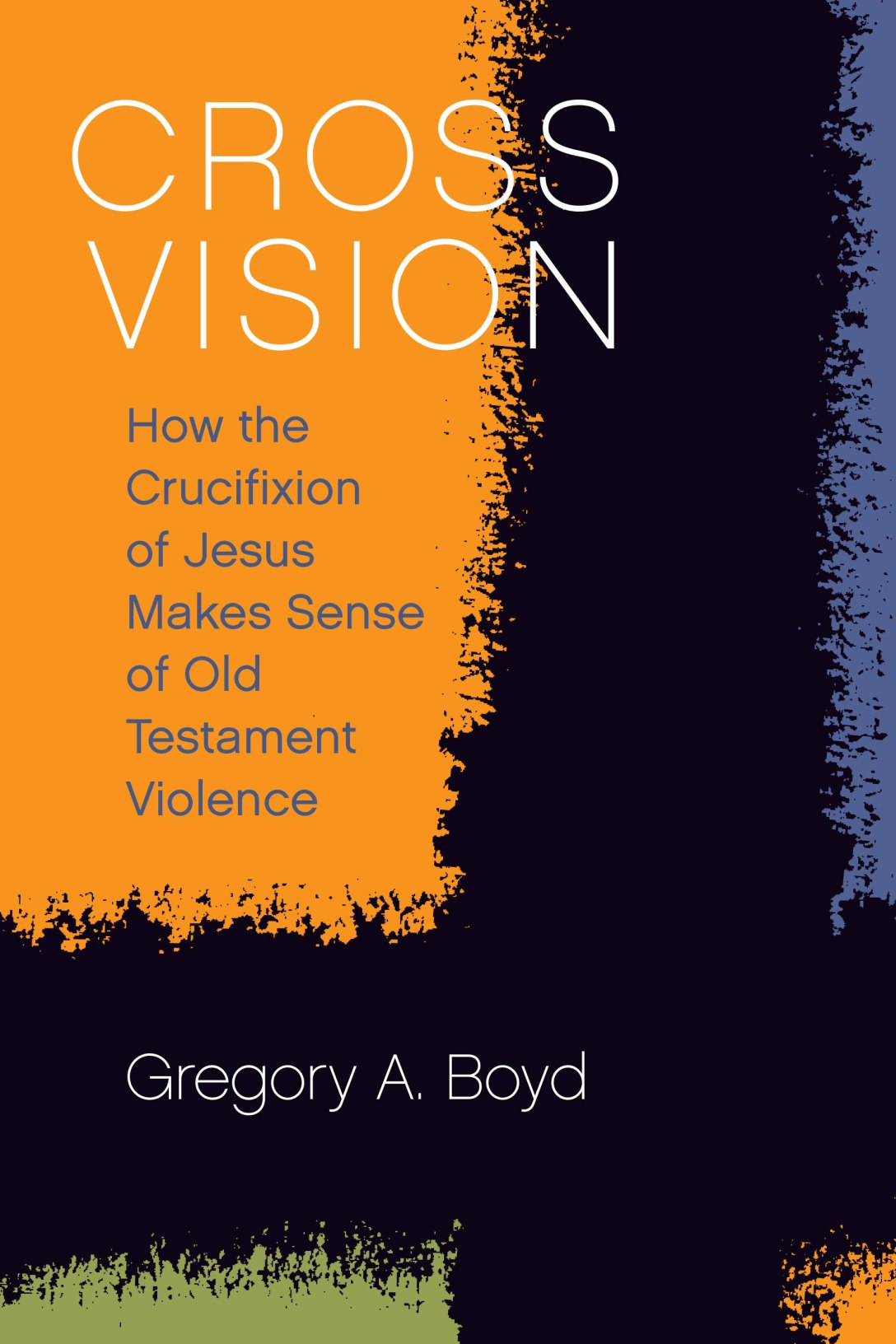
Blurred Vision: A Review on Boyd’s “Cross Vision.”

Take a seat, sit back and peruse the theological landscape of the 21st century. One doesn’t have to look far to notice that traditional perspectives of God’s wrath, violence and judgement are in a bloody war with more progressive interpretations and theology. The more progressive positions on God’s wrath abandon the traditional ways of thinking and instead strive to replace them with what is knowing as a “cruciformed hermeneutic.” In other words, everything we see in Scripture (particularly in the Old Testament) must be interpreted in light of the revelation of Jesus Christ and His work on the Cross. This cruciformed hermeneutic is championed by Gregory A. Boyd who is an esteemed pastor, theologian and scholar who has written his magnum opus “The Crucifixion of the Warrior God” and at a more popular level, his abridged version “Cross Vision.” This post will be focused on his later work.

Cross Vision was a great book to read, easy to follow, thought-provoking, very challenging at times. Like I mentioned in my review on Rob Bell’s “What is the Bible?” there’s never a time where I’d say “don’t read this book.” Every book is probably worth reading, meditating over and then considering in light of the Bible. Boyd is no exception to this rule, in fact, I’d encourage people to read if for no other reason then it is good to be challenged on ideas we’ve held for granted for so long. We all need to be rethinking and revisiting things we’ve been taught to make sure we remain faithful to the story of the Bible. To do this Boyd brings out some very heart-wrenching parables to drive his point home. Here’s one of those stories for the sake of the review:

It’s a few thousand years ago. A young Canaanite couple is enjoying an afternoon with their newborn infant. Like everybody else in their small town, this couple has heard rumors of a warring nomadic tribe called the Hebrews who worshipped a mighty warrior god named Yahweh. But the people of their town had prayed and made sacrifices to their chief god, Baal. And since Baal had protected them from other warring tribes and deities in the past, they had hope that the Hebrews would not attack their town. On this day, however, their prayers and sacrifices prove futile. This couple hears the battle horns and war cries of an approaching army. They see and hear neighbors screaming and frantically running down the dirt path outside their tiny hut. Their hearts pound as they stare at each other for a brief bewildered and terrified moment. Suddenly realizing what is taking place, the teenage mother sweeps up her newborn, the husband grabs his sword, and they turn to run out the door. Unfortunately, they’re too late. Before they reach the door, two sword-wielding Hebrew soldiers appear before them screaming, “Praise Yahweh! Yahweh is great!” The terrified husband raises his weapon, but the soldiers quickly run their swords through him. Seeing the hopelessness of her situation, the petrified mother curls up in the corner of her hut, crying and shaking as she clutches her wailing infant. As the two Hebrew soldiers approach her with their bloodied swords raised above their heads, she holds up her baby, begging the soldiers to at least have mercy on her infant. One of the soldiers is moved and hesitates for a moment as he thinks about his own young wife and newborn daughter. His comrade notices his hesitation and reminds him that Yahweh had specifically commanded Moses to have his people worship him by showing no mercy toward anyone or anything. “The mother and baby must also be offered up to Yahweh,” he the first soldier reluctantly nods his head, closes his eye, and shouts, “Praise be to Yahweh!” as he puts his full weight and strength into his falling sword. Both soldiers are splattered with blood as the sword splits the young mother’s skull. The other soldier then shouts the same praise as he bludgeons the crying infant to death.

Picture this on CNN or Fox News. This is a gut-wrenching story of how those early Canaanite conquests in the book of Joshua may have played out. Anyone today would call this genocide, and rage in protest if not vomit at such an incident. We’d be protesting and petitioning our governments to get involved and put an end to such injustice. Fair enough, I totally get that. I’d probably be protesting as well. The problem is, however, we want just that, someone to get involved and for there to be justice. There is this innate sense of retribution and a desire for justice that screams out in every one of us.

At this point, it is worth pointing out that I have written a two-part series here and here on the issue of God’s violence and wrath that will help give shape this discussion. However, in short, I’d like to say this. This is a blurry issue. I think where things become messy is in how God is presented in Scripture, and whether or not we’re ok with the person we see. Is God loving? Absolutely. Except, let’s stop defining love by our 21st Century Western standards and just take God for who He is portrayed in Scripture. This, I believe is ultimately where Boyd fails. I understand why he reinterprets God’s acts of “violence” (I’d say judgement in response to sin), but it just doesn’t stack up to the entire biblical story. God is ultimately about redeeming all of creation through Jesus, yes. But sometimes He also has to remove sinful people, places, and nations in order to achieve that ultimate goal.

Boyd is a great writer, theologian, pastor and brother in Christ. In a debate, I probably couldn’t hold my own against him but I’d still love to chat with him over a steaming hot cup of coffee. Read the book, it is a great read but stack it against other books like “Is God a Moral Monster?” by Paul Copan and “Confronting Old Testament Controversies” by Tremper Longman III (to be released in April) that I believe do a more faithful job in dealing with the issue of God’s violence and wrath.

All in all, I’d give this book a 7/10. Read it, love it, hate it, but most of all be challenged and prayerful about it. Never swallow any pill without reading the label if you catch my drift.

Glitches in the System

Last night at work I was talking to a friend of mine from India and he asked me if I noticed that often in life, whatever you desire you usually don’t get (strange I thought it was usually the opposite). It reminded me a lot of Ecclesiaties where the Teacher says “meaningless! meaningless! Everything is meaningless” (Ecclesiastes 1:1). The word meaningless in Hebrew is הֶבֶל (pronounced heh’vel) and this word actually is better understood as enigma, paradoxical, frustration, absurdity or in my definition a glitch. Why glitch? Because if you’ve ever played a video game or regularly use technology then you know how frustrating and even at times absurd glitches can be. You can save your work, press the right buttons, have the best setup but everything at some point fails, works slowly and glitches out.

One way you could read this verse then is “glitches! glitches! everything in life has a glitch!” This was the way I tried to explain the concept of heh’vel to my friend. Life it seems are full of these little glitches in the system of life. It doesn’t matter if you input the right commands, do the right things and think the right thoughts the glitch can always set you back and there’s nothing you can do about it. Life isn’t fair, people suffer that don’t deserve it, and those that do deserve suffering never seem to get their just desserts. You can pour your heart and soul into a job and get fired tomorrow. You can buy roses and lavish love upon your partner and be cheated on. On the flipside, you can lie cheat and steal and get everything you ever wanted. Life is indeed heh’vel and glitch-filled.

This brings to my mind a few questions that need answering:

  1. How do we live in a heh’vel glitch-filled world?
  2. How do we react to the heh’vel that comes my way?
  3. If this isn’t how life is supposed to be, how can I fix it?

These are hard questions to answer, they don’t come easily, but I do think the Bible offers some wisdom here. The Bible is a grand narrative that tells one important story:

Yahweh God in Heaven desires humanity to flourish in a good relationship with Himself, one another, and creation. Yet we have chosen to go our own way and in the process, we have broken our relationship with God, killed each other, and pillaged the earth. God then takes it upon Himself to fix our broken sinfulness by reconciling us to Him, me to you, and humanity to the earth. He does this through Jesus’ life, death, resurrection and His ongoing work as king over the earth. 

The glitch is sin and brokenness. The glitch is something that was never programmed by the Master Programmer. The glitch advocates for injustice, destruction and death. For thousands of years, we’ve all tried to fix the glitch to no avail. What we need is the Programmer to reprogram life beginning with the heh’vel and sin in our own hearts. This is Jesus. Jesus wants to work on you, in you and for you. Just ask.

Shadowy Darkness and Him

There are many things in the Christian life we’re to take hold of and cling to for dear life. Christ, forgiveness of sins, deliverance, the Holy Spirit, our adoption, resurrection, new creation and life. These things give us hope, comfort, and they make life a bit easier to manage as we all wander through the valley of the shadow of death. That Valley, however, can be very shadowy at times, so dark that it can be almost impossible to see The Shepherd. You start to believe that the Valley is all there is. Maybe your hopes were nothing but fiction, a fool’s errand as they say. The Serpent is a crafty fellow. We must be careful then to not lose sight of the One who leads us beside still waters. He is there calling us, beckoning us to feast even within the midst of darkness and terror. He does not forsake us, always eager to embrace and lead. Dear Human, I have not all the answers but life is very shadowy indeed, and I do know this, turn to the One that can guide you through it. For Jesus is a shepherd and He is very good.