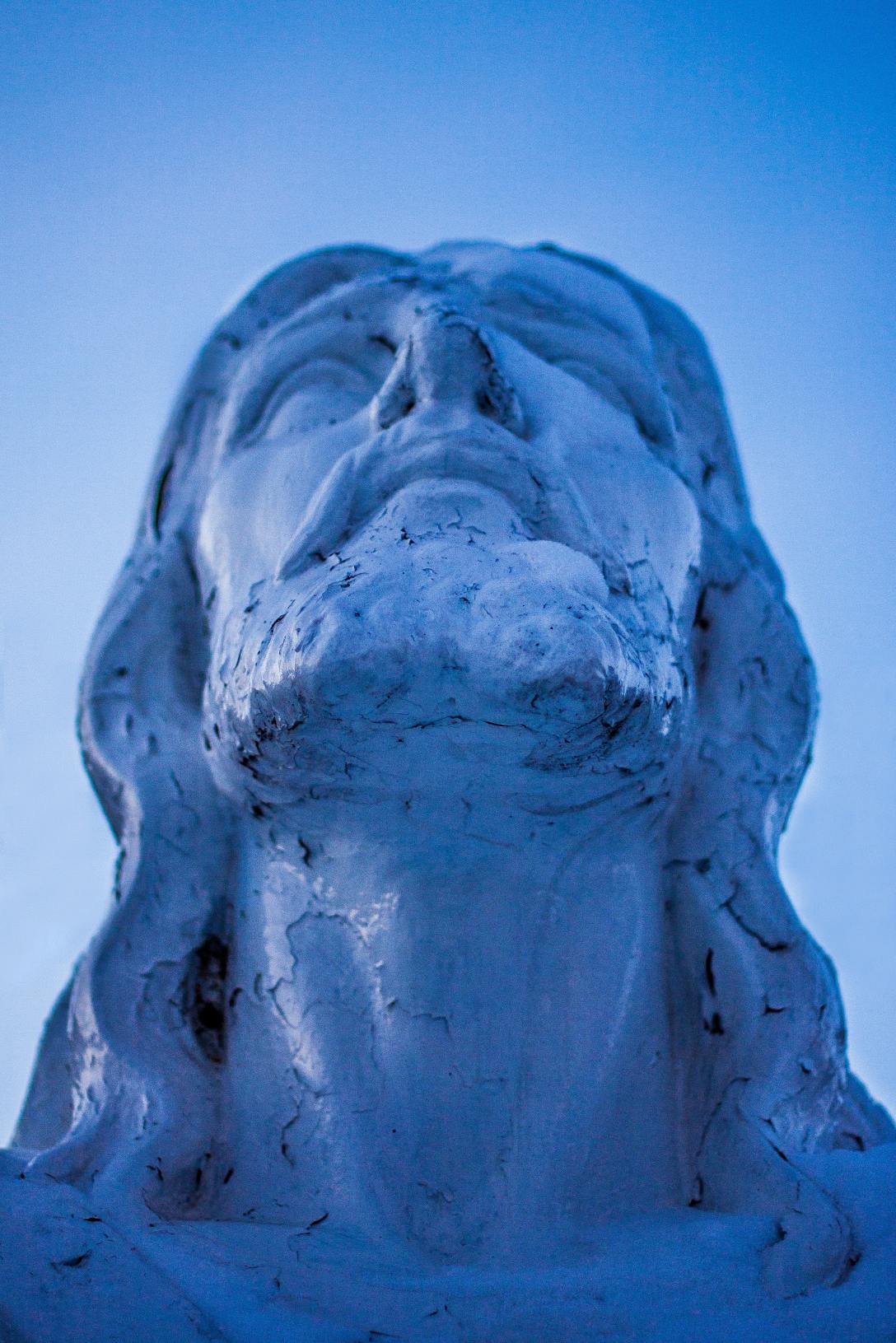

Trans-Tribal Christianity

One of the things I both love and hate about Christianity are the tribes it inevitably creates around theological positions. I love it because there needs to be a sense in which we define what is true and good. I’m not too fond of it because often we settle and become passionate about second and third-order issues at the expense of other people. Tribalism drives me crazy. It makes sense because what you believe is inescapably intertwined with your identity and your worship of God. We reflect what we believe. We worship what we reflect and love. What we love we passionately defend ether for good or for worse.

Here’s the thing. Before we become theologians, before we’re biblically sound, before we know what we believe (if you ever get there right on!) before we keep others at arm’s length because they believe in some different things to us, we must remember that 1. They’re image-bearers like you and 2. You’re a sinner just like them. Do they believe women can be pastors? Don’t forget they’re image-bearers and sinner just like you. Do they think the gifts of the spirit have continued into the modern-day? Remember they’re image-bearers and sinners just like you. Do they struggle with same-sex attraction? Remember they’re image-bearers and sinners just like you. Are they liberal? Are they evolutionists, do they like modern songs more than hymns or vice versa? Are they Reformed, Charismatic, Anglican, in a cult, heretics? Remember they bear the image of God and you are a sinner as well. All of these issues are important and are worth discussing (I love theology remember). However, I don’t believe these discussions and forming opinions and beliefs around these ideas need to necessarily come at the cost of genuine love for neighbour and God. While we naturally want to stick to our own, might I suggest another way? Trans-Tribal Christianity.

Tans-tribal Christianity is a label (ironic I know) I’m throwing out there to define a way of doing Christianity without ostracizing, isolating, or rejecting others within the Faith while still holding to your own beliefs and convictions. You’re going to be naturally drawn to some and not others. Ordinarily, you’ll worship in a church that is tailored more towards your own beliefs and convictions. However, I want to advocate for a more inclusive way of doing Christianity without compromising on “truth.” You might believe in a precise definition of the Gospel, or in the way a Christian should do church on a Sunday. Good. Hold on to that. However, We should have enough love and humility to see the potential wisdom in others. We don’t need to treat others as “second rate Christians” just because they believe the Lord’s Supper should be taken every week rather than once a month. We shouldn’t turn our nose up to people who see the Bible and the world a little bit different to us. Instead of immediately defending yourself and your position begin with the question “what can they teach me?” You might be surprised at what you learn.

Full disclosure. Some of this comes from a reflection of my own experience. I’m an evolutionary creationist. I have a literary approach to Scripture. On occasion I see myself agreeing with liberal Christians over conservative ones. I read scholars who in some circles are seen as edgy and semi liberal, where in others they’re orthodox. I have a Reformed ecclesiology, but I’m more Arminian soteriologically. I’m a mixed bag, and it feels like I never really fit in anywhere. Yet, I have friends from all over the spectrum, and it’s got me thinking. What if we can aim for a little more unity in our theological diversity? What if we can sit down and learn more openly from one another. I’m not suggesting we trade theological accuracy for unity. I’m suggesting we aim for a loving, humble unity – a friendship with others that doesn’t need to compromise our convictions. Friendship, understanding, and empathy with others who are different doesn’t need to come at the cost of our own doctrine. So here are some steps you could take the begin this journey (if you haven’t already):

  1. God created everyone in His image and likeness (Gen 1:26). Therefore, everyone deserves the same measure of respect and love that God would give them. 
  2. We’ve all sinned and fallen short of the glory of God (Rom 3:23). Sin is such a part of who we are that it even distorts at times our reading of the Scriptures. This includes you. Never assume you that have the monopoly on truth. Instead, while still holding firm to your convictions, humbly consider that others might have some wisdom and insight that you don’t. 
  3. Know your Bible well (Psalm 1). This speaks for itself. However, in case you’re unaware, the Bible is where our theology and Christian living springs out from. Go to bible college. Read, read and then re-read the Scriptures. Meditate on them for life.
  4. Read widely and deeply. Read from every part of the theological spectrum (or listen). But read wisely. Not everything is good. Not everything is worth taking on. Use discernment. Don’t forsake the wisdom of your pastors, friends, and from those who have gone before you (church tradition). 
  5. Buy coffee. Treat someone who doesn’t typically fit your mould to a hot cup of single-origin coffee. Please get to know them. Sit, listen and take it in. Exercise empathy. If they don’t drink coffee, then that’s a telltale sign of their depravity and error, and you wouldn’t want to listen to them anyway. 

Salvation Is: Recapitulation Part IV

Christians are obsessed with the idea of salvation. Fair enough, salvation is essential. The problem, however, is that everyone has different opinions on what salvation actually is. Different traditions tend to emphasise and even make exclusive claims to their own definition of salvation at the expense of others. So in this series, I aim to explore the different facets of salvation so that we may better understand what it really is. Here are the salvific themes we’re going to explore:

  1. Liberation and Exile
  2. Sin and Judgement
  3. Substitution and Sacrifice
  4. Recapitulation
  5. Vocation
  6. New Creation

Each motif plays a pivotal role in demonstrating what salvation is, how it is achieved and received, and how it is lived out by the believer. In this post, we will be exploring recapitulation.

The doctrine of recapitulation is just a fancy term to describe the idea that Jesus reenacted the drama of humanity. That is, humanity in the person of Adam was supposed to not “eat from the tree of knowledge of good and evil,” but in Genesis 3, they failed the test. Jesus, on the other hand, did pass the test, and every test subsequent perfectly. Joshua M. McNall explains recapitulation to be the foundation in which every other atonement theory makes sense.

Like every biblical theme, we see the origins of recapitulation on the first few pages of the Bible. In Genesis 1:26, we find that God created humanity in His image (the imago Dei). In previous posts, I’ve already explored what the image of God is, in short, it is a two-fold reality. First, the image is something ontological. In other words, the image is something that is part and parcel of human nature. Second, the image is expressed functionally through the command to “be fruitful and multiply and fill the earth and subdue it, and have dominion over the fish of the sea and over the birds of the heavens and over every living thing that moves on the earth” and to work and keep the Garden (Genesis 1:28, 2:13). The problem?

In Adam, all of humanity has now become a corrupted version of what God had intended. We’ve failed to have dominion and to keep and work the Earth. This failure becomes apparent in Genesis 3, where sin in the form of the serpent rules over humanity instead of humanity ruling over it. Also, instead of guarding and keeping the Garden (Gen 2:15), Adam and Eve allow it to be invaded by the serpent to tempt them into idolatry. Mainly, Adam and Eve failed at being human and imaging God. In Adam, we have all failed the test, and we’ve all failed to be human. However, God doesn’t just give up on humanity. Instead, God is about restoring and renewing humankind back to its original purposes, and in fact, a more excellent state (complete unity with God). So then, let us trace recapitulation through the rest of the Bible: 

  • Cain and Abel are offering up sacrifices to God (traditionally interpreted as an attempt to get back into the Garden). However, one fails at being human as Cain let’s sin rule over him (as it crouches at the door and wants to rule over him – creature language). Cain murders his brother and is sent eastward (Genesis 4).
  • Noah comes across as a good human. He builds an ark and preaches righteousness and judgement. Noah is faithful. The flood occurs. Then he gets off the ark and offers up sacrifices and plants a garden/vineyard, and God reestablishes the Adamic covenant with Noah (new Adam imagery). However, Noah gets drunks, lays around naked, and something suss happens. He fails at being human (Genesis 8-9).
  • God calls Abraham out of Babylon to be a blessing to the nations and a father of many. God wants to use Abraham to start a people that would be Yahweh’s own (Genesis 12). Yet immediately Abraham goes to Canaan with his family (though God said not to) to leave them behind). He doesn’t trust in God’s promises and has sex with a Hagar (Genesis 16). He fails at being genuinely human.
  • Moses is promising. He is called by God to deliver Yahweh’s people from bondage to Egypt (Exodus 2-3). On multiple occasions, Moses approaches Pharaoh and demands his people to be set free so that they can worship God. He sends plagues on Egypt (Exodus 7-11) until finally, Moses parts the Red Sea and leads them into the wilderness (Exodus 14). Moses goes up Mount Sinai and gets the law to give to Yahweh’s people (Exodus 19-24). The people love and trust Moses to be their representative to God. Moses might be this new human we’re looking for (Genesis 3:15). However, Moses loses faith in Yahweh and is subsequently barred from the Promise Land (Numbers 20:2-12).
  • David, the chosen the warrior king, and a man after God’s own heart ( 1 Samuel 13:14) faithfully ruled over Israel and with his son Solomon after him. Essentially they established the golden age of Israel for many years. However, David sees beautiful Bathsheba, kills her husband and takes her for his own. There’s so much blood on his hands that God won’t even let him build the temple (2 Samuel 7).
  • Solomon, the wisest king to ever rule (1 Kings 3) continued to raise Israel to a glorious standard. Solomon built the temple where God came to dwell (1 Kings 8), and was loved by all. Yet all the wisdom in the world failed to remind him that he wasn’t to accumulate much wealth, women or and army (Deuteronomy 17:14-20). Every one of these laws Solomon broke which ended up leading Israel into mass idolatry.
  • Jesus Christ, is the true prophet, priest and king (think Abraham, Moses and David). The true Israel, the new Adam, i.e. the new human. In a sense, Jesus reenacts all of Israels and humanities failed history in His own life and fulfils all of that in his own life, death and resurrection. That’s recapitulation.

My final thoughts. As we read the Scriptures, we’re supposed to see something of ourselves in them. We aren’t the heroes of the story. Far from it. We are, however, like Abraham, Moses and David. We’re all in some way or another, failures at being genuinely human. We all fail at loving others as ourselves and God with our entire beings. You could be a king like David, or a nobody like Abraham in a God-forsaken city, or a priest like Moses who talks to God like you would a friend, none of us are who we are meant to be. We all suck at imaging God. That’s ok. There is one who’s greater than us who is truly human. Who in His life took up the entire history of humanity, laid it upon Himself, and died for it. Now Jesus can make you human again, but it isn’t easy, and it doesn’t happen overnight.  

The essence of being human isn’t seeking perfection, but now, it’s seeking Christ.

Doubt

How long, O Lord? Will you forget me forever?

  How long will you hide your face from me?

How long must I take counsel in my soul

  and have sorrow in my heart all the day?

How long shall my enemy be exalted over me?

Consider and answer me, O Lord my God;

  light up my eyes, lest I sleep the sleep of death,

lest my enemy say, “I have prevailed over him,”

  lest my foes rejoice because I am shaken.

– Psalm 13:1-4

Just the other day I was in the car with my girlfriend Sarah driving as she was speeding down a street to get to MacDonald’s. I said “I’m not so sure of my salvation that if we were to die right now, I’d be in Heaven. Please slow down.” Immediately she slowed down and then asked me, “you’re not sure of your salvation?” “No” I replied. For some reason, Sarah could not fathom my doubt, and it hasn’t been the only time. Often, especially these days, I doubt my Christianity, my salvation, and even God. For some Christians like Sarah, this is hard to imagine. She’s had such tangible experiences with God to doubt His existence or to question His love for you is like doubting whether gravity or air exists. However, for me, I can’t even begin to imagine a life filled with such confidence. Just think of it, a life where no matter the situation you trust God with such unwavering faith that you never doubt His love for you let alone His existence. What bliss!

I envy people like that. I wish I just knew that everything I read and understood in Scripture is true without a shadow of a doubt. But I just can’t. I don’t know if it’s my sinful nature, Satan, whether I’m a product of post-modernism. I’m afraid. I’m so scared that I’ll believe the wrong things and die on the wrong side of whatever ends up being true. I’m always questioning myself and my doctrine. I’m continually wondering if what I think is right, is true. Perhaps I should attempt to lay aside my doubt and just swallow everything I’ve been taught hook, line, and sinker. The very thought makes me cringe – sick in fact! Yet the idea of living in doubt is just as crippling.

There are small comforts. I see real people in the Bible live with doubt. David, in his darkest moments, seems to question if God will ever act (story of my life). Peter doubted Jesus when asked to walk on water (Matt 14:30-31). Thomas doubted and needed to touch the risen Lord (John 20:24-29). Sure doubt is not something great, but it’s very human. I just want to say doubting is entirely normal. It’s expected. Uncertainty is something to live by and to fight against. The human experience is the constant battle between assurance and the doubt you experience from day-to-day. Living in the tension between these two experiences is very, very human. You are not the only one. Almost everyone wrestles with questions and ideas they’ve held to their entire lives. It’s good to test them and to hold fast to that which proves good. Embrace the journey.

I wonder if Jesus ever doubted anything? Immediately I want to say no. Maybe He didn’t. Yet when I read about Jesus in the Garden of Gethsemane, I wonder if a certain sense of uncertainty was trying to overcome Him. The Scriptures say that His soul was filled with grief and that He asked the Father if He would take away the impending cup (the coming atonement). Yes, Jesus immediately said “not my will but yours,” but why even express that unless doubt was crouching at the door wanting to rule over Him right? To me, this makes Jesus all the more human, and all the more relatable without taking away His Godly nature.

What’s my point? I dunno. Perhaps I want to remove the stigma that surrounds doubt. I want to be able to explore my doubts without feeling like I have to have it all together to be a good Christian while at the same time, I want to strive for assurance. We all just need a little help, I think.

“Belief in God does not exempt us from feelings of abandonment by God. Praising God does not inoculate us from doubts about God.” 

– Eugene Peterson

“I do not believe there ever existed a Christian yet, who did not now and then doubt his interest in Jesus. I think, when a man says, “I never doubt,” it is quite time for us to doubt him.” 

– Charles Spurgeon

“I think the trouble with me is lack of faith… often when I pray I wonder if I am not posting letters to a non-existent address.”

 – C.S. Lewis

Learning to Love Life

Quite a lot of my posts are about suffering and pain, and for a good reason. Life is full of suffering, it is inescapable, and we all need to be continuously reminded that suffering is one of the primary ways in which God uses to grow you and transform you into something genuinely human – Jesus Christ. However, I can get bogged down in the tragedy of life a bit too much. It’s easy to be overcome by it and to always be suffering in unnecessary ways. Some of the pain and suffering we experience can be brought upon ourselves. To combat the unnecessary suffering we can create, I think we need to learn to love and appreciate the beautiful parts of life God has given us. Paul says, “Finally, brothers, whatever is true, whatever is honourable, whatever is just, whatever is pure, whatever is lovely, whatever is commendable if there is any excellence, if there is anything worthy of praise, think about these things” (Philip 4:8).

Paul experienced a lot of suffering (2 Cor 11:25), yet remarkably it seems to me that he didn’t lose perspective of the bigger picture. Remember, Paul was a first-century Pharisee that loved Jesus. He knew his Bible very well. So he would’ve known that the world was created for humanity to flourish in, rule over, and enjoy (Gen 1-2). Paul was fully aware that God’s good world was given to humanity as a gift to responsibly indulge in as opposed to being taken advantage of for a profit and gain. Paul knows that man and woman were made for each other, to enjoy one another, to love and to multiply rather than to abuse and use. Every bird and beast, every tree and shrub, every stream and beachside, every fig and pear (except apples), every person was made good for us to partake of, enjoy and love. Paul knew that despite our fallen and broken condition (Gen 3) God still wants this. Paul knows that his God has a plan to restore the entire created order to the state in which once again, humanity can be at one with the world and one another (Rom 8:22-24). So for Paul, every time he caught a glimpse of this anticipated hope, every time he saw people loving one another as themselves, every time he saw the God of Israel among His people the Church he would consider it lovey and excellent and worth meditating upon. God wants humans to enjoy the world they’ve been given. Suffering might be unavoidable, but so is the beauty of life, and there is a lot of it. You just need to do a bit of looking.

For me, learning to love life starts in three places:

  1. Understanding, appreciating, and experiencing the majesty of God in Christ: Nothing moves me more, makes me tear up more, causes me to tremble more than the love of God in Christ. Admittedly, there are days and even seasons of my life where the Gospel and God can become quite dull or old hat. It is in those seasons I need to work through the hardness of my own heart, and the darkness blanketing it. However, when I move past my flesh, and I remember the stark truths of the Gospel, that’s where my motivation for flourishing, for loving others and to embrace God’s good gifts comes from.
  2. Seeing the beauty in your family and loving them fiercely as a result: For the men, there is no greater task (if God has given you the gift) to love your wife as Christ does the Church and to father your kids in the ways of the Lord (Eph 5). Nothing screams godly more than a man who takes family seriously to the point of willing to die for it. A beautiful life starts in the family.
  3. Being moved by the beauty and magnificence of friendship – loving others as yourself. Friendship – real friendship – is more than a simple catch up with your mates. Real friendship is laying your body upon the altar of sacrifice for the sake of the other. It is weeping when they weep, it is laughing when they laugh, it is bearing their burdens so that they too may enjoy the beauty God has to offer. Real friendship in Christ facilities human flourishing on a level that the world cannot hope to experience in and of themselves.

Dear friend, you suffer, you hurt, I know these things. I experience them almost on the daily. While we all experience these things, there is hope. Jesus Christ, our Lord, has defeated satan, sin, and death. Already you can taste and see that the Lord is good and that life is to be enjoyed not just suffered through. Don’t lose perspective of the bigger picture. Hold fast to the hope we have in Christ. Be in awe of His greatness. Love your family and friends well and just go to the beach, or the mountains or down to the park and have a good drink and food and give thanks to the Lord. You’ll be better for it.

All Things

It has taken years to continue to live into the truth that if I believe we are from God and for God, then we are from Goodness and for Goodness. To greet sorrow today does not mean that sorrow will be there tomorrow. Happiness comes too, and grief, and tiredness, disappointment, surprise and energy. Chaos and fulfilment will be named as well as delight and despair. This is the truth of being here, wherever here is today. It may not be permanent but it is here. I will probably leave here, and I will probably return. To deny here is to harrow the heart. Hello to here. ― Pádraig Ó Tuama

One of my favourite verses in the Bible is; “And we know that for those who love God all things work together for good, for those who are called according to his purpose” – Romans 8:28. What a crazy beautiful verse. Amen, we yell. We post on Facebook and hang it up on our calendars and fridges. What. An. Encouragement. Yet, as I sit back and meditate over the depth of this verse, a sort of anxiety starts to creep over me. Anxiety? Fear? An uncomfortableness? I begin to realise that what God is saying is not a promise to spirit us away from trials, but rather to thrust us into it, guide us through it, and to make us more human as a result of it. That. Is. Scary. Wouldn’t you agree? Think about it. Now everything you do in life has meaning. There’s a point to everything. When you wake up, eat breakfast, go to work, love your family, fight with others, watch television, read books, go to church. It all has meaning. Every trial and tribulation, every breath you take is now being worked out towards a single goal, your good which is terrifying. Because now you can’t just ignore that fight you had with your wife, there’s meaning in the fight. You can’t just go to work, come home and forget about the day because there’s meaning in your workYou can’t just pick up a book, or watch a show and switch off because there’s meaning to what you’re taking in. Because when God says all things, He means all things, even your doubt. As the Teacher says:

There is a time for everything, and a season for every activity under the heavens: a time to be born and a time to die, a time to plant and a time to uproot, a time to kill and a time to heal, a time to tear down and a time to build, a time to weep and a time to laugh, a time to mourn and a time to dance, a time to scatter stones and a time to gather them, a time to embrace and a time to refrain from embracing, a time to search and a time to give up, a time to keep and a time to throw away, a time to tear and a time to mend, a time to be silent and a time to speak, a time to love and a time to hate, a time for war and a time for peace. – Ecclesiastes 3:1-8

Life is now to be embraced rather than simply tolerated. Meditated on rather than dismissed. Lived rather than spectated. We now all walk towards the end goal which the Apostle Paul says here is our good. Like the theological poet, Pádraig Ó Tuama says in the quote above, ” I believe we are from God and for God, then we are from Goodness and for Goodness.” We mustn’t forget, however, that goodness comes in all shapes and sizes, and often in ways, we don’t expect. In fact, in my experience, it is through the most suffering that the most amount of good has come about for me. The complete and perfect human Jesus Christ suffered and died, and in that is something very human that God longs to pass on to us. As I’ve argued elsewhere, suffering is an unavoidable and an integral part of the Christian life.

So, if you want to be like Christ, then learn to suffer. Learn to love. Learn to anger well. Learn to find meaning in all things. In all things, ask yourself the question “what is God doing here for my good, what is He teaching me?”

“How we spend our days is, of course, how we spend our lives.” – Annie Dillard