Poetic and Theological Reflections on Genesis 1:1–2
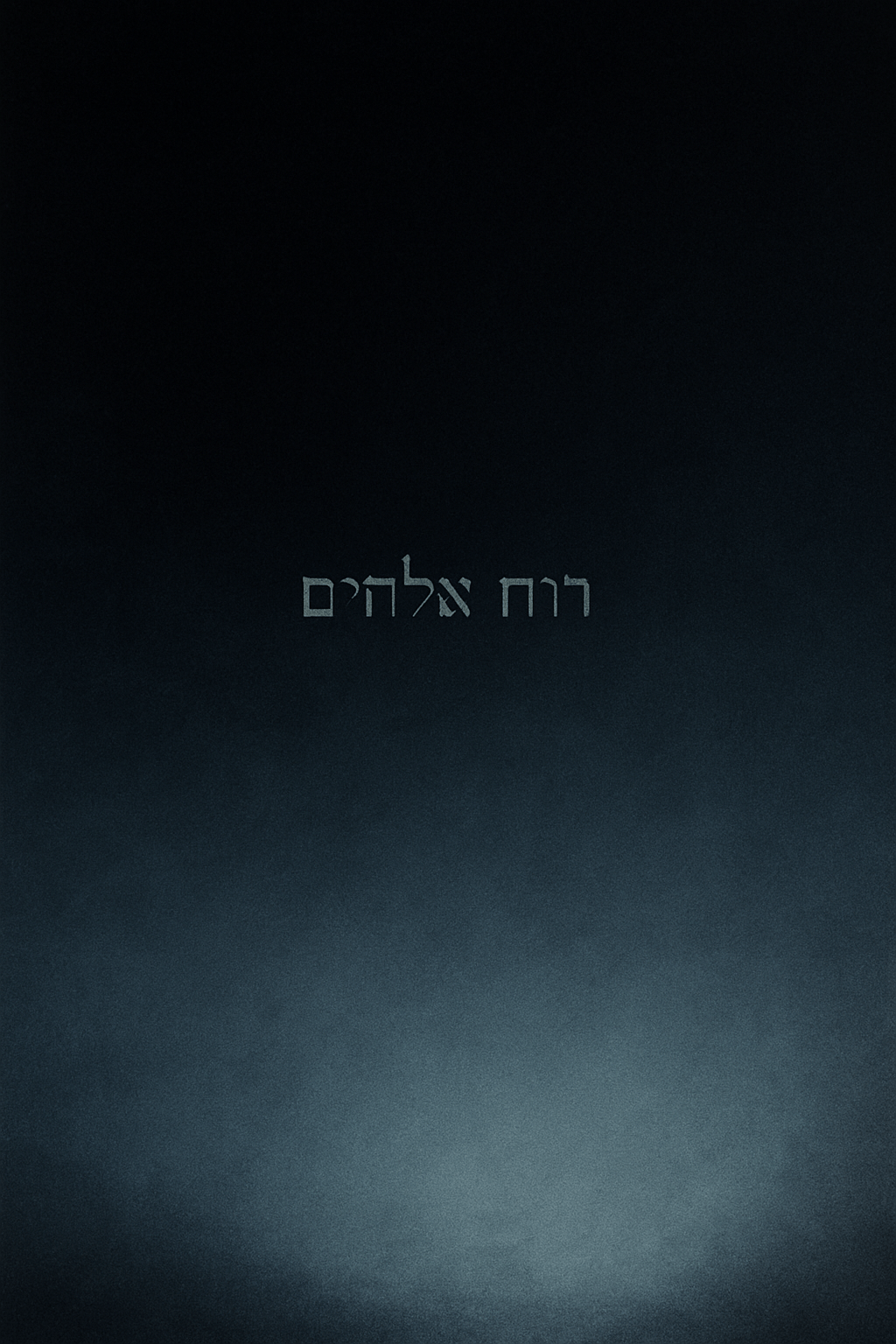
“Now the earth was formless and empty, darkness was over the surface of the deep, and the Spirit of God was hovering over the waters.” — Genesis 1:2
In the beginning
there was no beginning.
Not like we think.
Not a ticking clock
not a big bang or a blank slate.
Only
deep.
dark.
Formless
unfurnished
uninviting.
And the Breath of God
hovering
not rushing
not fixing
not panicking
just waiting.
A mother-bird
brooding over brokenness
wings sheltering what could be.
This is where our story starts
not in triumph
but in tension.
Not in arrival
but in anticipation.
In the beginning,
God didn’t make things
not first.
God made room.
A place.
A sacred space.
He carved order out of what was not yet useful.
He called forth function
from futility.
He said:
“Let this be a place where I dwell
and they dwell.
Let it be home.”
The first act of creation
was not to build
but to breathe.
And the Breath still moves
over your chaos.
over your depths.
over your formless days
and unlit nights.
Don’t rush the Spirit.
It’s still hovering.
It’s still preparing.
It’s still holy.
Because in the beginning,
God made time to wait.
And called even the waiting good.
A Theological Reflection
Genesis does not begin with a scientific explanation nor with abstract philosophy. It begins with God. “In the beginning, God created the heavens and the earth” (Genesis 1:1). But what follows is striking: “Now the earth was formless and empty”—tohu v’vohu in Hebrew—”darkness was over the surface of the deep, and the Spirit of God was hovering over the waters” (Genesis 1:2). The story opens not with perfection, but with potential. Not with answers but with mystery.
This state of tohu v’vohu—wild, waste, and without purpose—is not described as a problem to be eradicated but a canvas awaiting intention. In the biblical imagination, this primordial chaos is not evil. It is simply untamed. The deep, or tehom, is not a demonic force to conquer, as in the Babylonian Enuma Elish, but an unordered reality that awaits divine speech.
Genesis 1 is not a science textbook. Nor is it an ancient myth. It is sacred theology told through poetic narrative. As I’ve written elsewhere, Genesis 1 is not about material origins but functional order. It’s not primarily about how the world was made but how God gave it meaning. In the ancient Near Eastern mindset, something did not truly “exist” until it had a name, a function, a role in the cosmic order. As Old Testament scholar John Walton argues, creation in Genesis is about assigning purpose, not assembling matter.
This is evident in the structure of the text: six days of calling forth realms and rulers—light and dark (Day 1), sky and sea (Day 2), land and vegetation (Day 3), and then the lights (Day 4), birds and fish (Day 5), animals and humanity (Day 6). Each act ends with God’s affirmation: “And God saw that it was good” (Genesis 1:10, 12, 18, etc.). Good not as morally perfect, but functioning as intended. Creation is liturgy. Each day builds like a worship service, culminating in God’s rest on the seventh day (Genesis 2:1–3).
Genesis 1 portrays the world as a cosmic temple, with God taking up residence on Day 7. In the ancient world, a temple was not finished until the deity rested within it. “The heavens are my throne, and the earth is my footstool,” says the Lord in Isaiah 66:1—a temple image that harks back to Eden. When God rests, it’s not because he is tired but because creation is complete, purposeful, and ready to be inhabited by the divine presence.
Notice also what God does not do. The Spirit of God does not launch into production but hovers—rachaph in Hebrew—like a bird tending its young (Deuteronomy 32:11 uses the same word to describe an eagle hovering over its nest). This is not a moment of domination but of delicate presence. Before God says a word, God is simply there, waiting, brooding, holding space. The Spirit does not conquer the darkness but prepares the way for light.
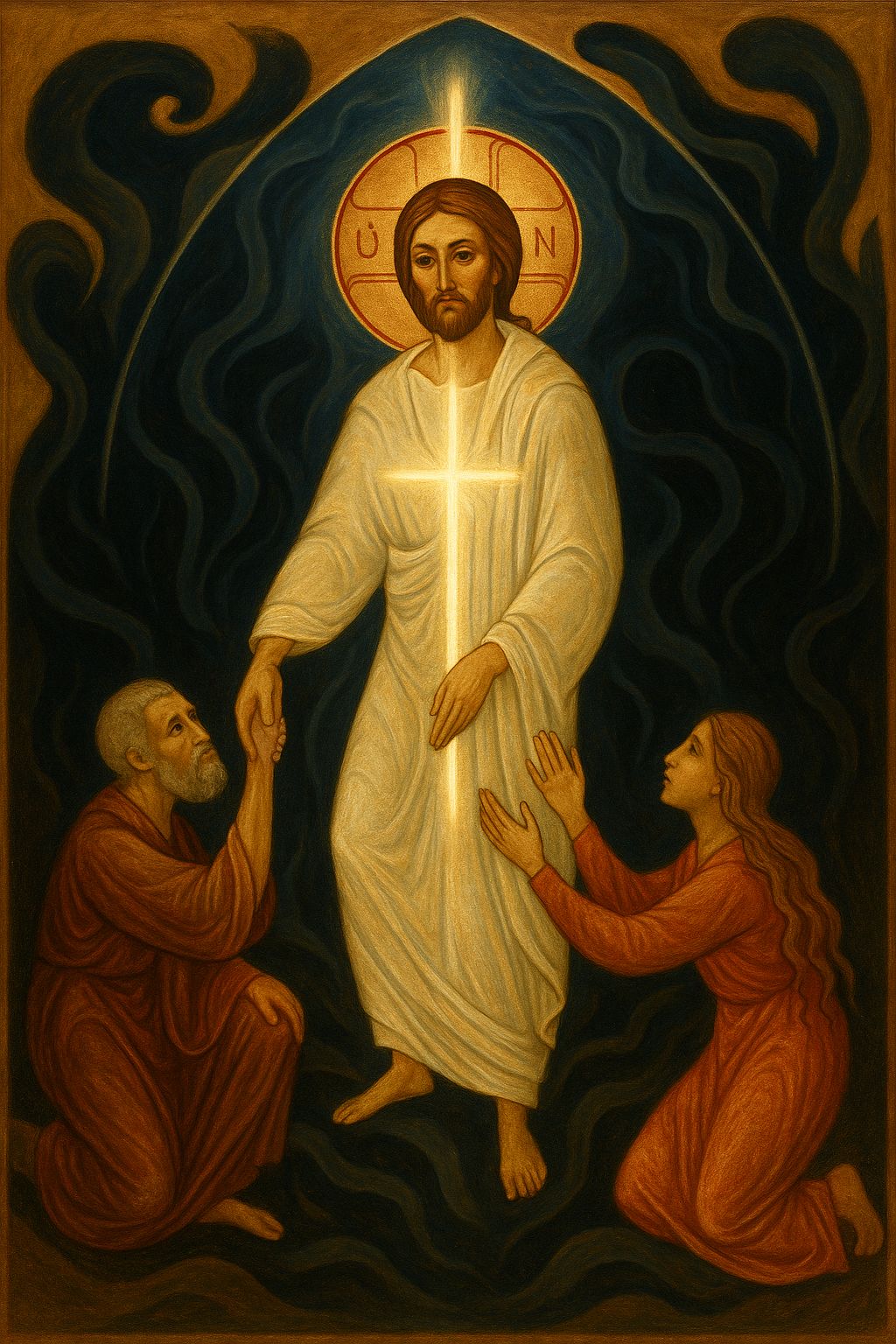
This image is carried throughout Scripture. In the Gospels, when Jesus is baptized, the heavens open, and the Spirit descends like a dove (Luke 3:22). The waters part, the voice speaks, and once again, God hovers over the waters—not in creation now, but in new creation. Paul will echo this theme in 2 Corinthians 5:17: “If anyone is in Christ, the new creation has come.” Creation and re-creation are both acts of divine hovering, divine speaking, divine presence.
Likewise, in John 1, we hear another beginning: “In the beginning was the Word… through him all things were made” (John 1:1–3). This is Genesis 1, revisited with Christ at the centre. The chaos is not overcome by violence but illumined by speech: “The light shines in the darkness, and the darkness has not overcome it” (John 1:5). There is no war between light and dark in Genesis, just a calling forth—of form from formlessness, rhythm from silence, cosmos from chaos.
So we are reminded that Genesis is not just history—it is theological storytelling. It doesn’t answer all the questions of “how,” but it speaks profoundly to the questions of “why.” Who are we? What kind of world do we live in? What kind of God do we serve?
A God who hovers.
A God who speaks meaning into voids.
A God who rests not when he is done making but when the world is ready to be home.
So when we look into our own chaos—personal, cultural, existential—we do so not with fear but with faith. Because the God of Genesis 1 still hovers. Still speaks. Still brings light out of darkness.
Genesis opens not with resolution but with possibility.

 Scribbling Theology