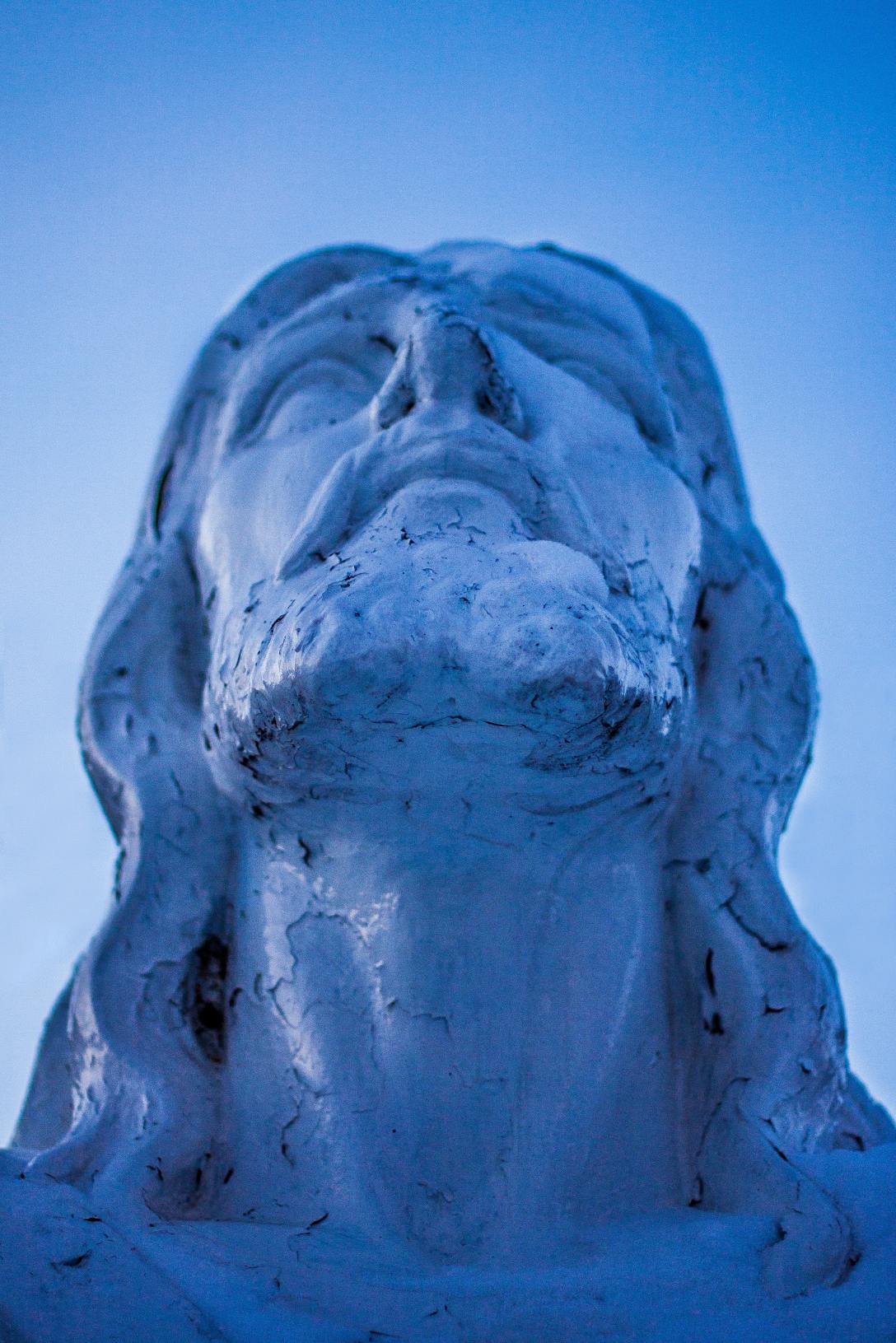

Learning to Love Life

Quite a lot of my posts are about suffering and pain, and for a good reason. Life is full of suffering, it is inescapable, and we all need to be continuously reminded that suffering is one of the primary ways in which God uses to grow you and transform you into something genuinely human – Jesus Christ. However, I can get bogged down in the tragedy of life a bit too much. It’s easy to be overcome by it and to always be suffering in unnecessary ways. Some of the pain and suffering we experience can be brought upon ourselves. To combat the unnecessary suffering we can create, I think we need to learn to love and appreciate the beautiful parts of life God has given us. Paul says, “Finally, brothers, whatever is true, whatever is honourable, whatever is just, whatever is pure, whatever is lovely, whatever is commendable if there is any excellence, if there is anything worthy of praise, think about these things” (Philip 4:8).

Paul experienced a lot of suffering (2 Cor 11:25), yet remarkably it seems to me that he didn’t lose perspective of the bigger picture. Remember, Paul was a first-century Pharisee that loved Jesus. He knew his Bible very well. So he would’ve known that the world was created for humanity to flourish in, rule over, and enjoy (Gen 1-2). Paul was fully aware that God’s good world was given to humanity as a gift to responsibly indulge in as opposed to being taken advantage of for a profit and gain. Paul knows that man and woman were made for each other, to enjoy one another, to love and to multiply rather than to abuse and use. Every bird and beast, every tree and shrub, every stream and beachside, every fig and pear (except apples), every person was made good for us to partake of, enjoy and love. Paul knew that despite our fallen and broken condition (Gen 3) God still wants this. Paul knows that his God has a plan to restore the entire created order to the state in which once again, humanity can be at one with the world and one another (Rom 8:22-24). So for Paul, every time he caught a glimpse of this anticipated hope, every time he saw people loving one another as themselves, every time he saw the God of Israel among His people the Church he would consider it lovey and excellent and worth meditating upon. God wants humans to enjoy the world they’ve been given. Suffering might be unavoidable, but so is the beauty of life, and there is a lot of it. You just need to do a bit of looking.

For me, learning to love life starts in three places:

  1. Understanding, appreciating, and experiencing the majesty of God in Christ: Nothing moves me more, makes me tear up more, causes me to tremble more than the love of God in Christ. Admittedly, there are days and even seasons of my life where the Gospel and God can become quite dull or old hat. It is in those seasons I need to work through the hardness of my own heart, and the darkness blanketing it. However, when I move past my flesh, and I remember the stark truths of the Gospel, that’s where my motivation for flourishing, for loving others and to embrace God’s good gifts comes from.
  2. Seeing the beauty in your family and loving them fiercely as a result: For the men, there is no greater task (if God has given you the gift) to love your wife as Christ does the Church and to father your kids in the ways of the Lord (Eph 5). Nothing screams godly more than a man who takes family seriously to the point of willing to die for it. A beautiful life starts in the family.
  3. Being moved by the beauty and magnificence of friendship – loving others as yourself. Friendship – real friendship – is more than a simple catch up with your mates. Real friendship is laying your body upon the altar of sacrifice for the sake of the other. It is weeping when they weep, it is laughing when they laugh, it is bearing their burdens so that they too may enjoy the beauty God has to offer. Real friendship in Christ facilities human flourishing on a level that the world cannot hope to experience in and of themselves.

Dear friend, you suffer, you hurt, I know these things. I experience them almost on the daily. While we all experience these things, there is hope. Jesus Christ, our Lord, has defeated satan, sin, and death. Already you can taste and see that the Lord is good and that life is to be enjoyed not just suffered through. Don’t lose perspective of the bigger picture. Hold fast to the hope we have in Christ. Be in awe of His greatness. Love your family and friends well and just go to the beach, or the mountains or down to the park and have a good drink and food and give thanks to the Lord. You’ll be better for it.

All Things

It has taken years to continue to live into the truth that if I believe we are from God and for God, then we are from Goodness and for Goodness. To greet sorrow today does not mean that sorrow will be there tomorrow. Happiness comes too, and grief, and tiredness, disappointment, surprise and energy. Chaos and fulfilment will be named as well as delight and despair. This is the truth of being here, wherever here is today. It may not be permanent but it is here. I will probably leave here, and I will probably return. To deny here is to harrow the heart. Hello to here. ― Pádraig Ó Tuama

One of my favourite verses in the Bible is; “And we know that for those who love God all things work together for good, for those who are called according to his purpose” – Romans 8:28. What a crazy beautiful verse. Amen, we yell. We post on Facebook and hang it up on our calendars and fridges. What. An. Encouragement. Yet, as I sit back and meditate over the depth of this verse, a sort of anxiety starts to creep over me. Anxiety? Fear? An uncomfortableness? I begin to realise that what God is saying is not a promise to spirit us away from trials, but rather to thrust us into it, guide us through it, and to make us more human as a result of it. That. Is. Scary. Wouldn’t you agree? Think about it. Now everything you do in life has meaning. There’s a point to everything. When you wake up, eat breakfast, go to work, love your family, fight with others, watch television, read books, go to church. It all has meaning. Every trial and tribulation, every breath you take is now being worked out towards a single goal, your good which is terrifying. Because now you can’t just ignore that fight you had with your wife, there’s meaning in the fight. You can’t just go to work, come home and forget about the day because there’s meaning in your workYou can’t just pick up a book, or watch a show and switch off because there’s meaning to what you’re taking in. Because when God says all things, He means all things, even your doubt. As the Teacher says:

There is a time for everything, and a season for every activity under the heavens: a time to be born and a time to die, a time to plant and a time to uproot, a time to kill and a time to heal, a time to tear down and a time to build, a time to weep and a time to laugh, a time to mourn and a time to dance, a time to scatter stones and a time to gather them, a time to embrace and a time to refrain from embracing, a time to search and a time to give up, a time to keep and a time to throw away, a time to tear and a time to mend, a time to be silent and a time to speak, a time to love and a time to hate, a time for war and a time for peace. – Ecclesiastes 3:1-8

Life is now to be embraced rather than simply tolerated. Meditated on rather than dismissed. Lived rather than spectated. We now all walk towards the end goal which the Apostle Paul says here is our good. Like the theological poet, Pádraig Ó Tuama says in the quote above, ” I believe we are from God and for God, then we are from Goodness and for Goodness.” We mustn’t forget, however, that goodness comes in all shapes and sizes, and often in ways, we don’t expect. In fact, in my experience, it is through the most suffering that the most amount of good has come about for me. The complete and perfect human Jesus Christ suffered and died, and in that is something very human that God longs to pass on to us. As I’ve argued elsewhere, suffering is an unavoidable and an integral part of the Christian life.

So, if you want to be like Christ, then learn to suffer. Learn to love. Learn to anger well. Learn to find meaning in all things. In all things, ask yourself the question “what is God doing here for my good, what is He teaching me?”

“How we spend our days is, of course, how we spend our lives.” – Annie Dillard

Friendship

Friendship is hard. Really hard. I’m talking about real friendship, not the kind where you float into a room laugh, smile, shake hands, talk about movies and books, and then leave. That’s just social convention. That’s being friendly. Friendship is something, I think, a lot of us don’t really have. Real friendship, at least the kind I believe we all long for, the kind God wants us to have is exhausting, challenging, and painful. Yet, it’s addicting, beautiful, fun, and sanctifying. True friendship requires a lot of sacrifices. It requires a sacrifice of the ego, of your own desires. Humility is essential to intimacy. Why?

Throughout the 29 years of my life on this earth, I can only count three, maybe four real friendships that I’ve ever had. Two I see every week, one lives half a world away, and the other had fallen apart long before I even realised there was anything wrong. There is a fifth. Each of these relationships has been really different, complex, fun, and exhausting in different ways. The two I see every week requires constant engagement, attention, communication, love, service, sacrifice and humility. The problem though is that I suck at all these things. Despite being bullied my whole life, I continuously put one down (under the guise of Aussie humour) to make me feel better about myself. The other (and my best friend) I almost have nothing in common with outside of Jesus. Often when we meet, I have to feign interest in what he likes because I’m afraid that if I don’t listen to him, he won’t listen to my more important stories and mind-blowing (sarcasm) thoughts on theology and the universe. This is the problem with the ego (at least with mine). It sees my friends as a commodity, something to be used to form an identity, to achieve validation and as things to serve me rather than image-bearing people to love and serve. Real intimacy and friendship are scary because if I don’t lay aside my sinful and broken desires for the sake of those around me, I will end up losing the very people that God uses to make me holy in the first place.

So, there are a few things I need to get my head around and maybe they’ll help you as well.

  1. I’m actually not that smart. My apparently amazing insights into all things spiritual are pretty lame. Even as I write this line, every part of me wants to delete it because I still think I’m pretty wise. I’m not. Stop it.
  2. Despite the prevailing cultural narrative, I’m not special. I’m incredibly average. My blogs aren’t going to change the world. God hasn’t called me to be an Avenger for the Gospel, just to earnestly love my friends and then even my enemies. If I can’t get the former right, what hope do I have for the latter?
  3. My friends are just as broken and messed up as I am, only in different ways. They need love, validation and real friendship as much as I do. They’re broken but still retain something of the image of God. This passage comes to mind when Paul says:

Let love be genuine. Abhor what is evil; hold fast to what is good. Love one another with brotherly affection. Outdo one another in showing honour. Do not be slothful in zeal, be fervent in spirit, serve the Lord. Rejoice in hope, be patient in tribulation, be constant in prayer. Contribute to the needs of the saints and seek to show hospitality. – Romans 12:9-13

So here’s my point. Let’s be better friends. See friendships as a God-given gift to heal the broken, to sanctify the sinner and for the flourishing of our souls. Lay aside “self” and honour the image of God that is the human you’re having intimacy with. Let God use them to soften you, to transform you into the likeness of His Son. At the end of the day, just get over yourself and love others as you want to be loved, right?

Six Months In: The Journey so Far

It’s been six months since my wife and I separated. Six months of battling depression. Six months of battling anxiety. Six months of battling doubts about God. Six months doubting my future and what it has to bring. Six months of some amazing highs. Six months of a lot of struggle and lows. Almost every day it feels like a challenge to get out of bed, shower and even drink coffee (the thing I love more than anything else). Almost every day there’s something new and overwhelming to face and I’m never really sure if I’m able to face it until all of a sudden I realise it’s midnight and I’ve got to do it all over again the next day. I want to cry. I want to run away. I want to scream. I want to punch something. I feel like the Psalmist who says:

For my soul is full of troubles,
and my life draws near to Sheol.
I am counted among those who go down to the pit;
I am a man who has no strength,
like one set loose among the dead,
like the slain that lie in the grave,
like those whom you remember no more,
for they are cut off from your hand.

Psalm 88:3–5

Many days can only be described biblically as despair, the yoke is heavy, and I feel like I’ve gotten more than I can bear.

This isn’t a cry for help or attention. This isn’t me putting on a depressing show so I can get a pat on the back or a hug from you. This. Is. Life. I’ve been a Christian for over ten years now I can tell you right now that I’m learning more in this season than I have perhaps in the entire ten years of ever being Christian. Pain, trials, and tribulations refine the Christian and God is teaching me things I’m barely even beginning to grasp.

There are two types of people in this world. There are those who try to escape the pain and brokenness of life through encouragement, positive thinking and relying on the positive aspects of God’s promises. This is completely understandable. God wants us to believe that He has good things for us and that He wants to give us good gifts. Then there’s those who embrace the trials and pain and see it as a good thing in light of God’s promises to sanctify them and to grow them in wisdom. The former unfortunately seem to overlook the promises and sobering reality of life. Jesus never promised to take us out of this sinful, broken world, only to forgive us and free us from it while still being in it. Jesus never promises to take us away from pain and suffering, rather, He promised to walk with us through it. If anything is true of Christianity, it is this: pain and suffering have now become my friends. They’re a heightened, necessary experience for us in which God uses to transform the Christian into a sage and a saint for the time and place they live in.

Herein lies the rub. Pain and suffering is, quite literally the crux of the Gospel. I wonder, how many times when the Gospel is presented to someone do we offer suffering as a drawcard for conversion? Imagine “hey man! Give your life to Jesus. You’ll have forgiveness of sin, new life in Jesus… Which will probably suck. You’ll lose friends, family, jobs, money, and maybe your life. Pretty sick huh?” Not very appealing. However, this is exactly what Jesus was getting at when He said to take up your cross to follow me (Matt 16: 24-26), that one must hate all else to follow Him (Luke 14:26). Jesus knew what it would take to be His disciple. It is not easy, and one who has never experienced true suffering will never understand the importance of becoming its friend and letting it move you. Suffering takes the one who befriends it to greater heights and greater wisdom. That saint and sage glorifies his God more than he ever would have otherwise. Therefore, it is imperative to walk the same path as Christ our King. Remember, no servant is greater than their master.

“Out of suffering have emerged the strongest souls; the most massive characters are seared with scars.”
Kahlil Gibran

Does God Know You? by Alan P. Stanley

Not everyone who says to me, ‘Lord, Lord,’ will enter the kingdom of heaven, but only the one who does the will of my Father who is in heaven. Many will say to me on that day, ‘Lord, Lord, did we not prophesy in your name and in your name drive out demons and in your name perform many miracles?’ Then I will tell them plainly, ‘I never knew you. Away from me, you evildoers! (Matt 7:21–23).

Matthew 7:21–23 has to be one of the most confronting passages in the Bible. Just listen to the commentators: “These, surely, are in many ways the most solemn and solemnising words ever uttered in this world,” [1] “a passage of heart-piercing application,” [2] “a dreadful warning.” [3] And this from a Christian blog: “This is the saddest and scariest portion of scripture.” [4]

This passage, on the lips of Jesus, is a warning. Christians on the whole find warning passages confronting, and the reason is that these passages typically warn against the absence of works (e.g., James 2:14–26) and fruit (John 15:1–6), or the presence of disobedience (1 Cor 6:9–10; Eph 5:5) and apostasy—turning away from Jesus (e.g., Heb 6). And because we tend to be our own worst critic, it’s understandable that we might be unsettled by such passages.

But this passage in Matthew, while a warning, is different. For it is not a warning against the absence of works, but the presence of them; it is not a warning against disobedience if anything it seems to be the opposite: these people did things in Jesus’ name! And it certainly does not address apostasy. So, to put it bluntly, what the heck?

I want to address one issue, the key to understanding what is going on in this passage, what is the Father’s will? But let’s first deal with a couple of quick issues. First, the destiny of these people? What will it mean to hear, “I never knew you”? Despite objections to the contrary, it is quite evident that “Away from me . . .” carries the same connotations as “Depart from me, you who are cursed, into the eternal fire prepared for the devil and his angels” elsewhere in Matthew (Matt 25:41). An alternative interpretation that is somewhat popular is that these people have not done the Father’s will, which, according to Jesus in John’s Gospel, is to believe in Jesus (see John 6:40).[5] But these people have believed in Jesus. They call Jesus “Lord, Lord,” and they have carried out various activities in his name. But as is common in the New Testament, there is such a thing as belief or faith that turns out not to be non-saving (e.g., John 2:23–25; 8:31–47; 1 Cor 15:1–2; James 2:14–19).

The second issue, quickly, is when will Jesus says these words? The future tense (“Not everyone . . . will enter”; “Many will say”; “I will tell them plainly”) together with the phrase “on that day” indicates that this is a scene that will play out the final judgment. As to the question of whether these people were ever ‘saved,’ I think not given that Jesus says, “I never knew you.” But I don’t think this question is as important as we often think it is. Whether these people have lost their salvation or never had it, makes no practical difference in the end. But that is enough on that for now.

The more important question, by a country mile, is what is “the will of my Father”? since not doing the Father’s will is what excludes people from the kingdom? Doing the Father’s will is an essential concept in the New Testament. Jesus, in Matthew, announces that “whoever does the will of my Father in heaven is my brother and sister and mother” (Matt 12:50). Similarly, Hebrews encourages its readers of the “need to persevere so that when you have done the will of God, you will receive what he has promised”, going on to make clear that what is promised is salvation (Heb 10:36, 39). And John: “whoever does the will of God lives forever” (1 John 2:17). It is not those who confess Jesus Lordship that will enter the kingdom but only those who do the Father’s will. This is something Matthew, in particular, wants to highlight. What though is the Father’s will?

Jesus tells some pointed parables aimed directly at “the chief priests and the elders of the people” (Matt 21:23). The first parable (21:28–32) compares two sons. The first son, while initially refusing to listen to his father and work in his vineyard, eventually changes his mind and does what his father told him. The second son says he’ll go but never does. The point of the parable centres on this question: “Which of the two did what his father wanted?”, or more literally in the Greek: “Which of the two did the will of the father?” The point of the parable, Jesus makes clear in the end, is that Israel’s leaders are not entering the kingdom because they have not done the Father’s will (21:31b–32).

As to what the Father’s will is, Jesus fleshes out in a second parable immediately following; about a landowner who planted a vineyard and leased it out to farmers (Matt 21:33–44). When it came time for the landowner to collect “fruit” from the vineyard, the farmers beat or killed whoever the landowner sent, the last one being his son. The parable is clear: “the kingdom of God will be taken away from [the Jews] and given to a people who will produce its fruit” (21:43).

The Father’s will, then, is that His people produce “fruit.” Readers of Matthew’s Gospel will remember that early on, John the Baptist tells Israel’s leaders to “Produce fruit in keeping with repentance. And do not think you can say to yourselves, ‘We have Abraham as our father.’. . . The axe is already at the root of the trees, and every tree that does not produce good fruit will be cut down and thrown into the fire” (Matt 3:8–10). In other words, fruit is what will count at the final judgment. One’s family tree has nothing to do with it. We need to understand how this would have sounded to first-century Jewish ears, who while they believed that God would one day judge the world and separate the wicked from the righteous, did not believe that Israel would be on the wrong side of the ledger.

That fruit counts at the final judgment turns out to be a central theme in Matthew’s Gospel, a theme that his structure makes strikingly clear. Matthew’s five major sections each end with a strong ethical thrust concerning the final judgment. 1) Only those who put Jesus’ words into practice will escape judgment (Matt 7:24–27); 2) only those who take up their cross and follow Jesus will be rewarded at the judgment (10:37–42); 3) at the end of the age the wicked will be separated from the righteous, those that sin from those who do evil (13:40–50); 4) God will show no mercy to those who have not shown mercy to others (18:23–35); and 5) the Son of Man will separate the righteous from the unrighteous at the final judgment, the former will inherit the kingdom, the latter will “go away into eternal punishment” (25:21–46).

Thus, it is not just texts here and there, but Matthew has so crafted his Gospel to make the point that fruit arising from repentance is what will count at the final judgment, not taking solace in “We have Abraham as our father” (Matt 3:9).

But still, we have not answered what doing the Father’s will, or fruit means. Another big picture sweep of Matthew reveals that Jesus repeatedly indicts Israel’s leaders for not knowing their Scriptures: “Haven’t you read what David did” (Matt 12:3), “haven’t you read in the Law” (12:5), “Haven’t you read [in Genesis 1–2]” (19:4), “have you never read [in Psalm 8]” (21:16), “Have you never read in the Scriptures” (21:42), “have you not read what God said to you [in Exodus]” (22:31)? Now, of course, they have read their Scriptures; they know them well. They “sit in Moses’ seat” (23:2), teach the Scriptures (23:7, 10), are familiar with the finer details of the law (23:24), and are knowledgeable about Israel’s Messiah (2:4–6; 22:42). So what do they not understand?

The Scriptures are, of course, the place where God has revealed his will to Israel (cf. Rom 2:18). Therefore, for Jesus to question Israel’s knowledge or understanding of their Scriptures, is to question their understanding of God’s will. We see this clearly in Matthew’s twice repeated reference to a central Scripture, Hosea 6:6: “I desire mercy, not sacrifice”? (Matt 9:13; 12:7). No other Gospel writer cites this verse, and yet Matthew does so, and twice! A significant clue!

Matthew’s use of Hosea for the overall point he wants to make cannot be overstated. First, we should not miss the fact that the word “desire” in the Hosea citation is the Greek word “will!” God’s will is mercy, not sacrifice. Notice the two contexts in which Jesus employs Hosea. In the first context, the Pharisees protest against Jesus eating with “tax collectors and sinners” (Matt 9:9–11). They do not care that these people are “sick” and in need of a “doctor,” to use Jesus’ analogy. They are more interested in remaining pure and undefiled before God, and for that, they must separate themselves from sinners.

In chapter 12, the Pharisees protest again, this time against the disciples who upon feeling hungry while walking through a grain field, pick and nibble on some grain—on the Sabbath! The Pharisees do not care that the disciples are hungry, only that they are doing what is “not lawful” (Matt 12:1–8).

In both these scenarios, sacrifice—a fastidious obsession with obeying the law—has replaced mercy. The heart of Jesus’ critique in both cases mirrors that of another confrontation between Jesus and Israel’s leadership. In Matthew 15, the Pharisees and teachers of the law once again protest against the disciples’ application of the law. But this is merely another example of sacrifice before mercy; an unhealthy obsession with the law and its requirements: money that should go toward parents in their old age is kept back so as not to break an oath made to God.

Do you see the problem that Jesus is rallying against? Let me put it plainly: Israel’s leaders care more about obedience and holiness than they do about people. Matthew 23:23 expresses the heart of Jesus’ critique: “Woe to you, teachers of the law and Pharisees, you hypocrites! You give a tenth of your spices—mint, dill and cumin. But you have neglected the more important matters of the law—justice, mercy and faithfulness. You should have practised the latter, without neglecting the former.”

Jesus describes the people who he never knew as “workers of lawlessness” (Matt 7:23; NIV has “evildoers”). Since then “the more important matters of the law” are “justice, mercy and faithfulness” there is no question that those who do the Father’s will are those who are also characterised by justice, mercy and faithfulness. Elsewhere Jesus says that where “lawlessness” exists, “love” has grown cold (24:12). Again, let’s put this plainly: those who Jesus never knew may have been focused on exercising wonderful gifts, but they have not been focused on people.

The threads and themes in Matthew’s Gospel substantiate this conclusion. One obvious theme is that of mercy. For a start, the mercy word group occurs more frequently in Matthew than any of the other Gospels (see Matt 5:7; 6:2–4; 9:13, 27; 12:7; 15:22; 17:15; 18:33; 20:30–31; 23:23). Accompanying this theme is Matthew’s emphasis on attitudes and behaviour toward other people (5:21–26, 38–42, 43–46; 6:12, 14–15; 7:1–5, 12; 9:9–13; 10:40–42; 12:1–7; 18:6–35; 22:36–40; 23:23; 24:12; 25:31–46). These emphases explain why Jesus sums up the Law and the Prophets as “do to others what you would have them do to you” (7:12) and “Love your neighbour as yourself (22:39–40). Hence, “for Matthew, the love command presents the core of God’s will.” [6]

What might we say about this concerning application? Though we could say more, here are a couple of things:

First, we need to be careful that we don’t get the wrong idea of holiness or righteousness. If someone asked you “How is your relationship with God?” what would you say? Where would your mind go? What criteria would you use? Typically, we go to our Quiet Times. We think about how often we are ‘in the word’ and prayer, how vibrant is our ‘connection’ with God? But without wanting to sound too dismissive, where did we ever get the idea that these kinds of things marked a relationship with God? Just read Isaiah 58 and John 13:34–35 for an alternative answer. J. I. Packer has observed that it is possible for “fellow believers” to be “constantly seeking to advance themselves in godliness” and yet “show little direct interest in God himself.” According to Packer, “There is something narcissistic and, to tell the truth, nutty in being more concerned about godliness than about God.” [7] Imagine being more concerned about holiness than God. Who is at the centre of such an obsession? Is it not “I,” myself? The only reason we would place holiness above God is because being holy makes us feel worthy, acceptable, clean. Who enjoys feeling like a sinner? I mean it’s one thing to know that we are a sinner, but it’s another thing to experience it.

Do you ever feel like going out and witnessing or saving people when you fall into sin? Or perhaps spending some sustained time in prayer and repentance? Why? It’s just possible that we are unwilling to confront the reality of our own hearts. John Coe observes that it is possible for sincere Christians to hide behind things such as prayer, reading the Bible, holiness, and ministry “to avoid feelings of guilt and . . . shame.” [8] He articulates the phenomenon as the attempt to deal with our spiritual failure, guilt and shame by means of spiritual efforts, by attempting to perfect one’s self in the power of the self. It is the attempt of the well-intentioned believer to use spiritual formation, spiritual disciplines, ministry, service, obedience—being good in general—as a way to relieve the burden of spiritual failure, lack of love and the guilt and shame that results.[9]

In case you haven’t realised, all this leads to self-righteousness, which is precisely the problem with the Pharisees. But self-righteous people will never be able to extend love and mercy to sinners, not real love and mercy. Only broken people can minister to broken people. We all know what it’s like to have struggled with something, and in turn, been effective in being able to help someone else down the track with a similar struggle. But self-righteous people are judgmental (Matt 7:1–5) and saltless (5:13–14), good for nothing; unable to help. They are concerned about being holy, but only because they want to avoid contamination, not realising that they are already contaminated, they only need to see the depth of it for themselves (see 5:3–6). When they do, they are then free to extend radical amounts of love and mercy to others, knowing just how much they themselves have been recipients of God’s love and mercy (6:14–15).

The second point of application is to note how enamoured we can be with greatness (Matt 18:1–4). And yet Matthew is fond of exalting the last to the place of first (Matt 5:3–6; 18:1–4; 19:30; 20:16; 21:31), which of course is exactly what had happened to Matthew (9:9). There are two types of religion, or righteousness, in Matthew. There is a righteousness that is characterised by great activity: prophesying, casting out demons and performing miracles (7:21–23); great attention: giving, praying and fasting (6:1–18); great exclusion (9:1–13; 12:1–14; 15:1–11); and great appearance (chap. 23).

But in the midst of all of this greatness, Matthew presents another kind of righteousness: those who give “even a cup of cold water to one of these little ones who is my disciple” (10:42). This kind of righteousness seeks no recognition (6:1–18), in fact it is a righteousness that would not even label its acts as righteous (25:35–37). It is a righteousness that is ‘learned’ from the one who is “gentle and humble in heart” (11:28–30). He leads the way: entered this world as a nobody (chaps. 1–2), accepted a sinners baptism (3:13–17), gained a reputation for being “a glutton and a drunkard, a friend of tax collectors and sinners” (11:19), and ended up where no self-respecting God person would want to be seen, on a Roman cross reserved for sinners, nobodies and criminals (chap. 27). Yes, there were miracles, demons were cast out, prophesying occurred, but that his fate was crucifixion demonstrates where his real focus always was: “not as I will, but as you will” (26:39).

[1] D. Martyn Lloyd-Jones, Studies in the Sermon on the Mount (Nottingham: IVP, 1959-60), 577.

[2] J. C. Ryle, Expository Thoughts on the Gospels (1856: anniversary edition of Matthew and Mark, Zondervan), 69–70, cited in John Stott, The Message of the Sermon on the Mount: Christian Counter-Culture (BST; Leicester: IVP, 1978), 205.

[3] S. de Diétrich, Saint Matthew (London, 1962) cited in Leon Morris, The Gospel According to Matthew (PNTC; Grand Rapids: IVP, 1992), 181.

[4] http://adamkoppin.blogspot.com/2011/08/i-never-knew-you.html.

[5] Bob Wilkin, “Not Everyone Who Says ‘Lord, Lord’ Will Enter the Kingdom: Matthew 7:21-23” http://www.faithalone.org/news/y1988/88dec3.html.

[6] Petri Luomanen, Entering the Kingdom of Heaven: A Study on the Structure of Matthew’s View of Salvation (Tübingen: Mohr, 1998), 98.

[7] J. I. Packer, Meeting God: A Lifeguide Bible Study (Madison, Wis.: InterVarsity, 1986), 9 cited in Larry Crabb, Shattered Dreams: God’s Unexpected Path to Joy (Colorado Springs: WaterBrook Press, 2001), 182–83.

[8] John Coe, “Resisting the Temptation of Moral Formation: Opening to Spiritual Formation in the Cross and the Spirit,” Journal of Spiritual Formation and Soul Care 1 (Spring 2008), 63.

[9] Coe, “Resisting the Temptation of Moral Formation,” 55.