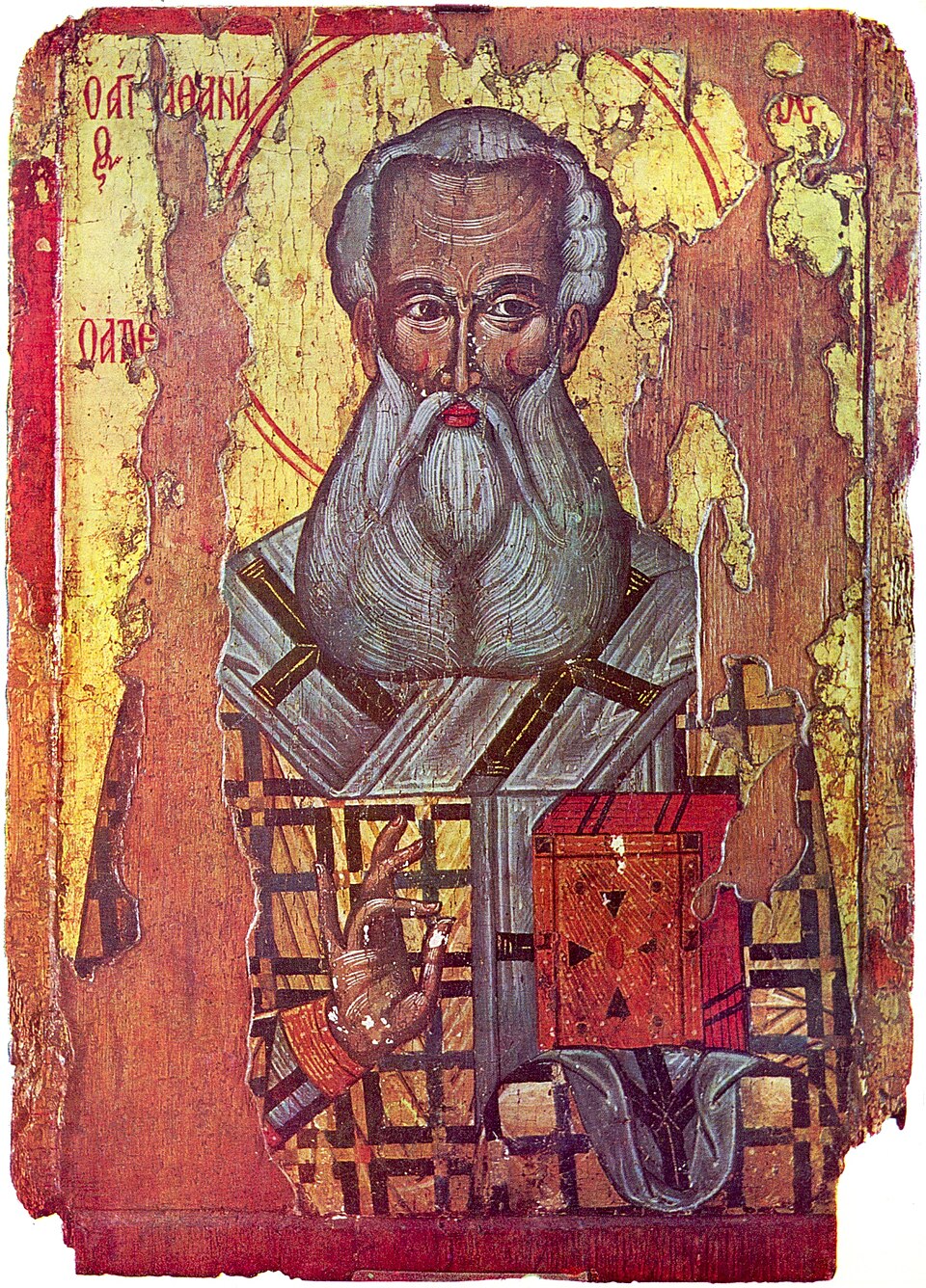
On the Incarnation: Athanasius, Christmas, and the Healing of the World

A Theological Reflection on “On the Incarnation” in Its Historical Moment

In the early fourth century, Christians went from facing persecution to receiving uncertain support from the empire. Athanasius of Alexandria wrote On the Incarnation during a time of confusion and exile. Many believers lost homes and were divided over who Christ was. For them, the question of Jesus’s identity had real and urgent consequences (Athanasius, On the Incarnation 1–2).

Athanasius lived and wrote in Alexandria, a city known for its intellectual life. Here, Greek philosophy, Jewish theology, Roman authority, and Christianity all met. The main conflict was about one question: Who is Jesus? Was he fully God or a created being? The Arian controversy was serious, as it affected Christian worship, prayer, and salvation (John 1:1–3; Colossians 1:15–20).

Athanasius said that if Christ is not fully God, then humanity stays trapped in decay (Athanasius, On the Incarnation 7). A created being cannot restore creation; only the Creator can heal what is broken (Psalm 36:9; Hebrews 2:14–15). Only God saves; Jesus saves; therefore, Jesus is God. This fundamental principle forms the basis of Athanasius’s argument and guides the whole book. Athanasius is not just focused on philosophical detail; he wants to show that the world is being restored.

Athanasius retells the Christmas story as a struggle involving the whole universe, underscoring its importance for his message. He moves beyond simple sweetness or just historical views, placing the empire’s power alongside the quiet strength of Christ’s simple birth. Where others see only a child in a manger, Athanasius sees a revolution: the incarnation as God’s bold action in the world of power.

Jesus was born during a time of empire, census, displacement, and fear (Luke 2:1–7). Caesar Augustus claimed to bring peace, but did so through taxes and military force. Joseph and Mary travelled because of an imperial order. Jesus was born not in a palace, but in a borrowed place, far from power. For Athanasius, this is important. While the empire tries to keep order, creation is falling apart (Athanasius, On the Incarnation 4).

Athanasius says that humanity’s problem is not only moral failure, but also corruption. God made people from nothing and keeps them alive through relationship. When people turn away from God, they move toward nothingness (Athanasius, On the Incarnation 4–5; Genesis 1:26–27; Romans 1:21). Sin breaks things apart. Death serves as more than a punishment; it is what happens when we separate from the source of life (Romans 6:23).

Athanasius sees Christmas as the turning point, the moment when God enters humanity’s broken world.

The incarnation shows that God does not abandon creation. The Word does not rule from far away or just send messages from heaven. The Word becomes flesh (John 1:14). For Athanasius, being truly human is essential. Salvation cannot happen from a distance. Healing requires closeness. What is not assumed cannot be restored (Athanasius, On the Incarnation 8–9).

Athanasius focuses on Christ’s body for a reason. The manger leads to the cross, not simply a feeling, but as a core belief. The body placed in the straw is the same body placed in the tomb (Athanasius, On the Incarnation 20; Luke 23:46). God chooses to be fully vulnerable from the beginning. Hunger, tiredness, suffering, and death are not too low for God (Hebrews 2:17).

The Controversy

The Arian controversy questioned whether Christ was truly God. It said the Son was separate and lower than the Father. Arians said that if the Son was born, there was a time when he did not exist. This made him a created being, not the Creator. The idea made God seem easier to understand by making the Son less than fully God. These arguments became popular because they seemed logical and because explaining the Trinity is hard. However, Athanasius challenges this by asking: How can something created save all of creation? He argues that if death holds humanity, only the Author of life can break that hold (Athanasius, On the Incarnation 7; Acts 2:24). Therefore, when the immortal Word enters death, death meets what it cannot control. Athanasius says the resurrection is not an afterthought, but the public result of what the incarnation began (Athanasius, On the Incarnation 25; 1 Corinthians 15:54–57).

Athanasius shows that incarnation and salvation go together. What we believe about Christ is linked to what we believe about humanity. To say Christ is truly human also says something about all people (Athanasius, On the Incarnation 54; Romans 8:29). Jesus is not an exception; he reveals what it means to be human. Salvation brings humanity back to what it should be.

This vision deeply affects how we live our faith. If God has entered human life, then every part of our physical existence matters spiritually (Athanasius, On the Incarnation 8; Genesis 1:31). Eating, working, loving, suffering, and rejoicing are all ways we can meet God (1 Corinthians 6:19–20). Holiness is not about leaving the world; it’s about living in it. Practically, this means engaging in kindness and service, seeing God’s face in each person. It also means practising daily gratitude and being mindful of God’s presence, whether in quiet reflection or in busy work. By fostering loving, compassionate relationships, we reflect Athanasius’s incarnational theology, connecting deeply with others and God through our everyday actions.

In the fourth century, there was political turmoil, theological conflict, and fear. Athanasius makes a bold claim: reality’s centre is now in human flesh (Athanasius, On the Incarnation 16; Ephesians 1:10). The world’s stability depends not on empire or philosophy, but on a child born under occupation (Luke 2:7). This is a profound challenge to powers that demand ultimate loyalty, both then and now. The focus shifts from secular dominance to divine presence in unexpected places.

For Athanasius, that is what Christmas is all about.

Christmas means that God joins his life to the world (Matthew 1:23). Heaven does not wait for people to reach up; it comes down. Instead, heaven comes down and lifts us from within (Athanasius, On the Incarnation 54; John 3:13). The manger is the main path, not a side road.

Athanasius believes that because the Word enters our story, history now moves toward life rather than emptiness (Athanasius, On the Incarnation 56; Revelation 21:5).

Even though it is deep theologically, On the Incarnation is easy to read. Athanasius writes in a clear, urgent, and caring way. This theology is not only for experts; it speaks to a Church trying to remember God during times of confusion and fear. That alone makes it worth reading.

But even more, this book gently changes how we see things. It moves past sentimental Christmas ideas and offers something stronger and more hopeful. God does not control humanity from a distance. Instead, God enters our weakness and heals it from the inside. That vision stays with you long after you finish reading.

For those seeking a Christmas book that is honest, challenging, and full of life, On the Incarnation stands out. It does not offer easy comfort. Instead, it presents a vision of a world upheld by the Word made flesh.
Books for the Road: Reading Through Doubt and Deconstruction

You’re not alone if you’re wrestling with doubt, rethinking your faith, or wandering the winding path of deconstruction. This journey is confusing, lonely, and sometimes even terrifying for many. But you’re not the first to walk it—and you don’t have to do it without companions.

Here are a few books that have offered wisdom, empathy, and even a little light in the dark for fellow pilgrims:

1. Faith After Doubt — Brian McLaren

McLaren gently reframes doubt not as the enemy of faith but as part of its maturation. If you’re deconstructing, this book offers a four-stage model that validates your questions and invites you to move forward with integrity.

2. The Audacity of Peace: Invisible Jesus in a Violent World — Scot McKnight

McKnight confronts the disconnect between the real Jesus and the distorted versions we often inherit. Rooted in peacemaking and justice, this book invites us to rediscover the counter-cultural Christ that many feared didn’t exist. It’s a bold, timely read for those burned by power-shaped religion.

3. The Sin of Certainty — Peter Enns

If “believing the right things” no longer works for you, Enns offers a different take: trust. Drawing from Scripture and his own story, he makes space for a more dynamic, less rigid faith.

4. When Everything’s on Fire — Brian Zahnd

I cannot recommend this book enough. Zahnd speaks to the crisis many face when faith burns down. But rather than leaving it all behind, he makes a passionate case for a deeper, post-deconstruction Christianity rooted in mystery and beauty.

5. Perhaps: Reclaiming the Space Between Doubt and Dogmatism — Josh McNall

McNall argues that we don’t need to choose between rigid certainty and total scepticism. Perhaps is a compelling call to humility and hope—a way to hold convictions while remaining open to mystery.

This isn’t a map—but maybe it’s a stack of trail notes passed from one wanderer to another.

I’d love to hear if you’ve read something that helped you stay in the wrestle.

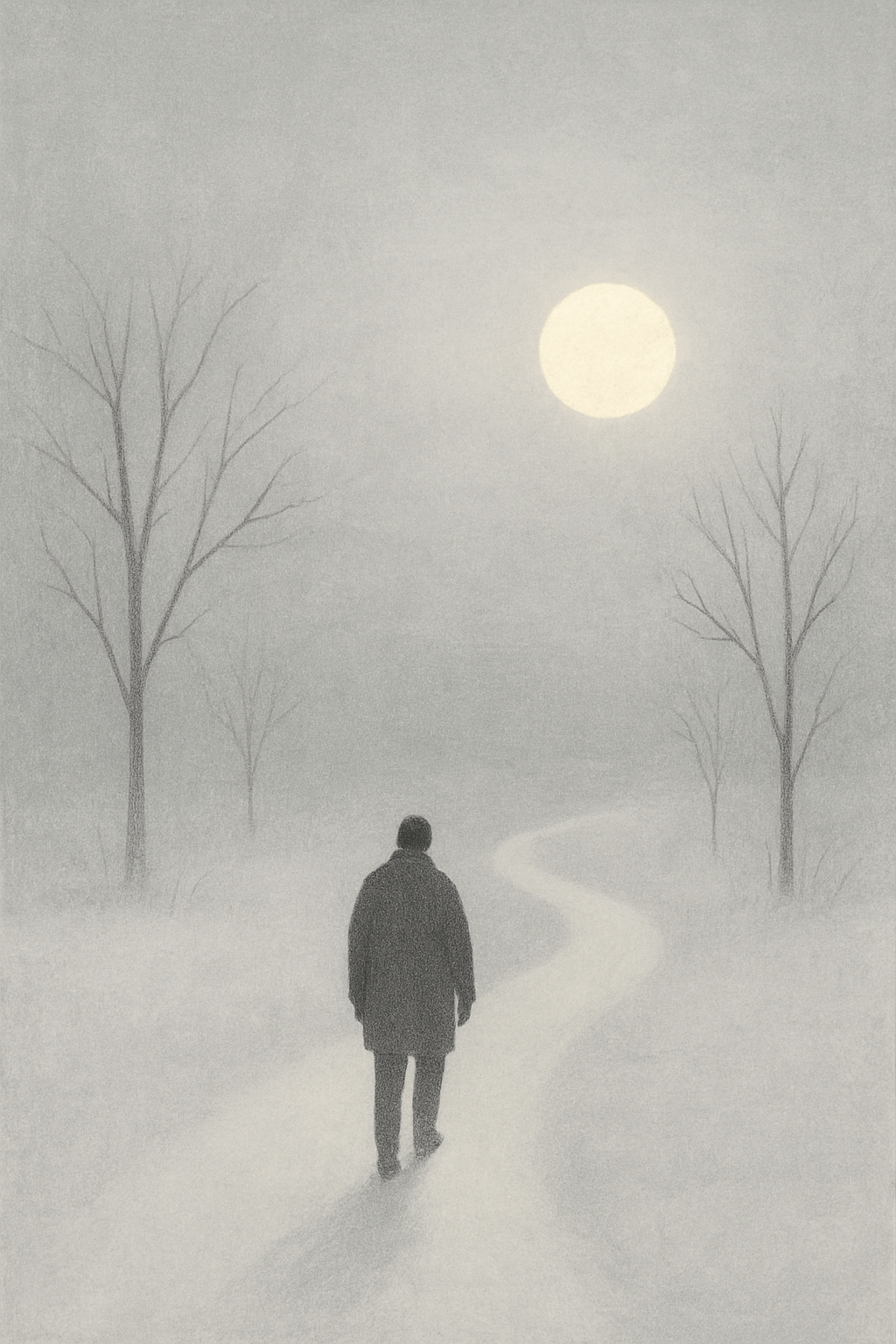
Following the Winter Sun

There are seasons in the soul when the warmth of faith feels far off. The glow that once saturated your days with clarity fades into a pale shimmer low on the horizon. These are the winter months of discipleship—when following Jesus feels less like dancing in the light and more like trudging through shadows.

And yet, the call remains.

Christ does not promise us eternal summer (at least in this life). His road leads through the wilderness (Mark 1:12–13), through the long dark of Gethsemane (Luke 22:44), and through the silence between Good Friday and Easter morning. “Take up your cross,” He said (Luke 9:23), not your picnic blanket. Faith becomes less about the brilliance of belief and more about the posture of trust, especially when nothing feels certain.

To follow the winter sun is to trace faint light when it offers no heat. It is to remember that the sun is still rising, even when its warmth is hidden. In the same way, to follow Jesus in seasons of silence, sorrow, or struggle is to walk with Him not for what He gives, but for who He is.

“Your word is a lamp to my feet and a light to my path” (Psalm 119:105). But notice—lamps in ancient times did not flood the road. They lit only the next few steps. God rarely overwhelms us with certainty. Instead, He invites us to walk in rhythm with Him, step by unsure step.

The winter sun teaches us that light is still light, even when dim. Christ is still Christ, even when His presence feels like absence. And sometimes, that kind of trust is the holiest kind.

I have followed the sun
when it was warm,
when it laid itself across my back
like a blessing.
When it sang golden through the leaves
and made holiness seem easy.

But now—
it is winter.
The sun slips sideways
into low skies and long shadows.
It does not warm,
only glimmers.
And still—
I follow.

I do not follow because it is bright,
but because I have seen it rise
from behind the hills
too many mornings
to doubt its return.

I do not follow because I feel it—
most days, I don’t.
I follow because
once, it found me
when I wasn’t looking.
And that kind of finding
is hard to forget.

So I walk
with a stiff wind against my chest,
shoes wet with old rain,
the path uncertain—
but I walk.

Because some loves
are not about feeling
but choosing.

And some mornings
are not about light
but trust.

And I trust
that even this cold sun
knows where it’s going—
and that it is worth
following.

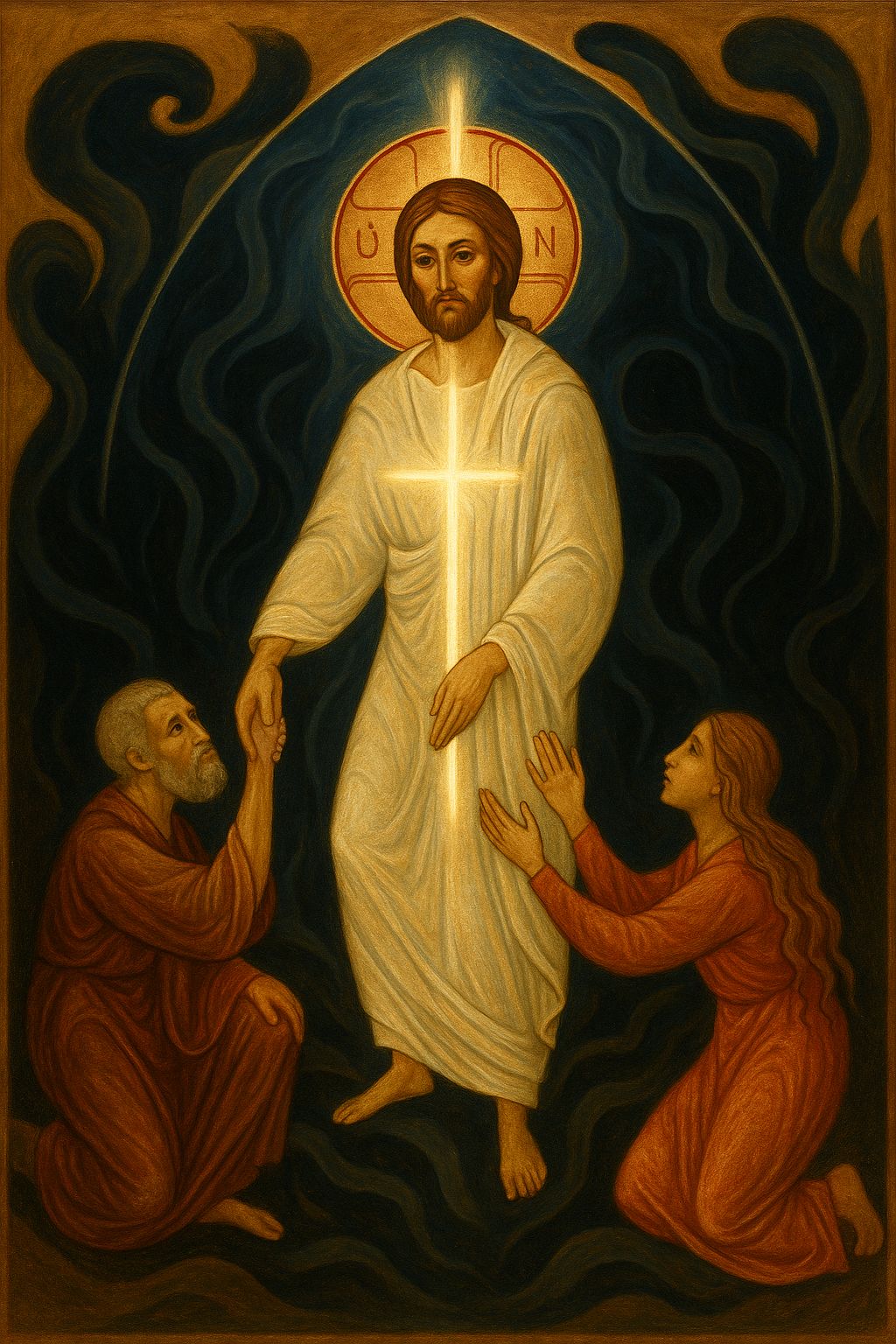
The Long Night

Sheol saw me and was shattered, and Death ejected me and many with me. I measured its depth and I was not held captive, for I became a light to those who were in its depths.”

– (Ode 42)

He walked the long night

where no prayers reach,

where silence is thicker than stone.

Sheol held its breath.

The tomb was not still—

it trembled.

He wore no armor

but the memory of light.

He sang no song

but still the gates cracked.

One by one

He called the names of the forgotten.

Dust stirred.

Chains rusted.

Even Death blinked and turned

its face away,

unable to hold Him

who had measured its depth

and found it shallow.

– (a poem I wrote inspired by Ode) The Long Night

Scribbling Journal: Entry 3

Tis the season…


A book in the bible I often return to is Ecclesiastes. A particular passage that comes to mind is:
There is a time for everything,
and a season for every activity under the heavens:
a time to be born and a time to die,
a time to plant and a time to uproot,
a time to kill and a time to heal,
a time to tear down and a time to build,
a time to weep and a time to laugh,
a time to mourn and a time to dance,
a time to scatter stones and a time to gather them,
a time to embrace and a time to refrain from embracing,
a time to search and a time to give up,
a time to keep and a time to throw away,
a time to tear and a time to mend,
a time to be silent and a time to speak,
a time to love and a time to hate,
a time for war and a time for peace.


The funny thing about this time of year is that Christmas confuses the seasons and the times. It is far flung from the sacred holy day it once was. Christmas has become a bubbling cauldron of consumerism, suicide, crippling debt, and anxiety with a pinch of hope, a sprinkle of love, and a snifter of joy.


For me, Christmas has always been about presents. As a child, I would often wake up when it was still dark to find gifts at the end of the bed or under the tree. I’d be excited as I desperately hoped for pokemon cards or a new N64 game (The Legend of Zelda was my favourite). My parents spoiled me. My mum was a crafty character. She’d often hide or pretend that I wouldn’t get so much, and then when I least expected it, bam! There’d be a new bike or a new gaming console. Thanks, mum. As I got older and my parents separated, I started paying close attention to those around me. Especially in my young adult years, I saw that Christmas became less enjoyable for most people because putting together the perfect day was more important than people “just being.” But who can blame them? The perfect Christmas day is every other day of our lives turned up to eleven.


I love Ecclesiastes 3:1-8 because life is ordered, simple, and easy to understand. Life is hardly that easy, unfortunately. For many of us, every day is an anxiety-riddled, depressed-filled, hope-flickering Christmas day that we all try to manage. Like Christmas, Jesus fights for the spotlight in life. We often shove Him off into a dark corner after a quick chat as we eagerly unwrap our other presents.


I often feel at odds with myself because I know I should be enjoying the gift of Grace more than anything else. Still, the new God of War PS5 game seems so much more fulfilling in the moment. I mean, it’s not like Jesus carries around an axe and slays pagan gods with a broody demeanour. It’s not like Jesus shamed the other gods of the world, had victory over them, and now rules over them from Heaven. Sarcasm, by the way, because he is (weird side thought, who’d win in a fight between Kratos and Jesus…?). It doesn’t always feel like it when every other power inundates me daily. Like at Christmas, it is easy to lose sight of the One in whom love and life are found.


Recently, I had an argument with one of my bosses about the Christmas season. Knowing I’m a Christian, he asked, “what do you think of carols, Cam?” I don’t really like them, I replied, already exhausted with where this was going. Surprised, he said, why now? I rattled off a few reasons I don’t like carols or Christmas in general. I gave statistics on how suicide rates increase over the season, how much waste is used over the holiday, how much food we throw out, and how much crippling debt people go into. After my two-minute rant, he told me, “it’s not Christmas’s fault that people go into debt. They don’t have to spend that much money.” Of course, he was right. What shocked me, however, was not the answer he gave me. Instead, it was the gross oversimplification of the statement. Of course, people can decide not to go into debt, kill themselves, or waste food and rubbish. However, the question we should be asking ourselves is, “why are they?” Why do people need to spend money and ruin Christmas with petty fights that expose the ego? In reality, why do we do anything?

Why do we do anything? For the longest time, I believed that our motivations and intentions were driven by evil hearts that always wanted to do wicked and sinful things. I no longer believe this to be the case. Most of us do what we believe is right in seriously broken ways. There are expectations to this, I’m sure. However, I think most people don’t wake up and decide to murder, steal, cheat, or lie. Instead, our actions result from a lifetime (generations even) of decisions to good that often cause more harm than good. People are trapped in debt because they believe that spending so much money is the right thing to do. They’re afraid of the social consequences of not buying the latest Ipad for their partner or a family member. People kill themselves over the Christmas season because they’ve bought into the lie that what they lack is more important than who they are and the world would be better without them. There are narratives and systems, and ideas being told that cause people to do the things they’re doing. The human heart, of course, would find another way – no doubt. My point is that we can’t simply chalk actions up to the doctrine of original sin and total depravity (for the black and white Christian), or (for the more secular), we can’t just assume people make choices in a historical vacuum void of influence or trauma.

A closing thought. Perhaps we just need a reformation around Christmas, actually in life. As Christmas day was intended, every day should be participated in and meditated on in light of the Incarnation and what that means for humanity. What is that meaning? In the words of Jesus himself, “The Spirit of the Lord is upon me, because he has anointed me to proclaim good news to the poor. He has sent me to proclaim liberty to the captives and recovering of sight to the blind, to set at liberty those who are oppressed, to proclaim the year of the Lord’s favour” (Luke 4:18-19).