
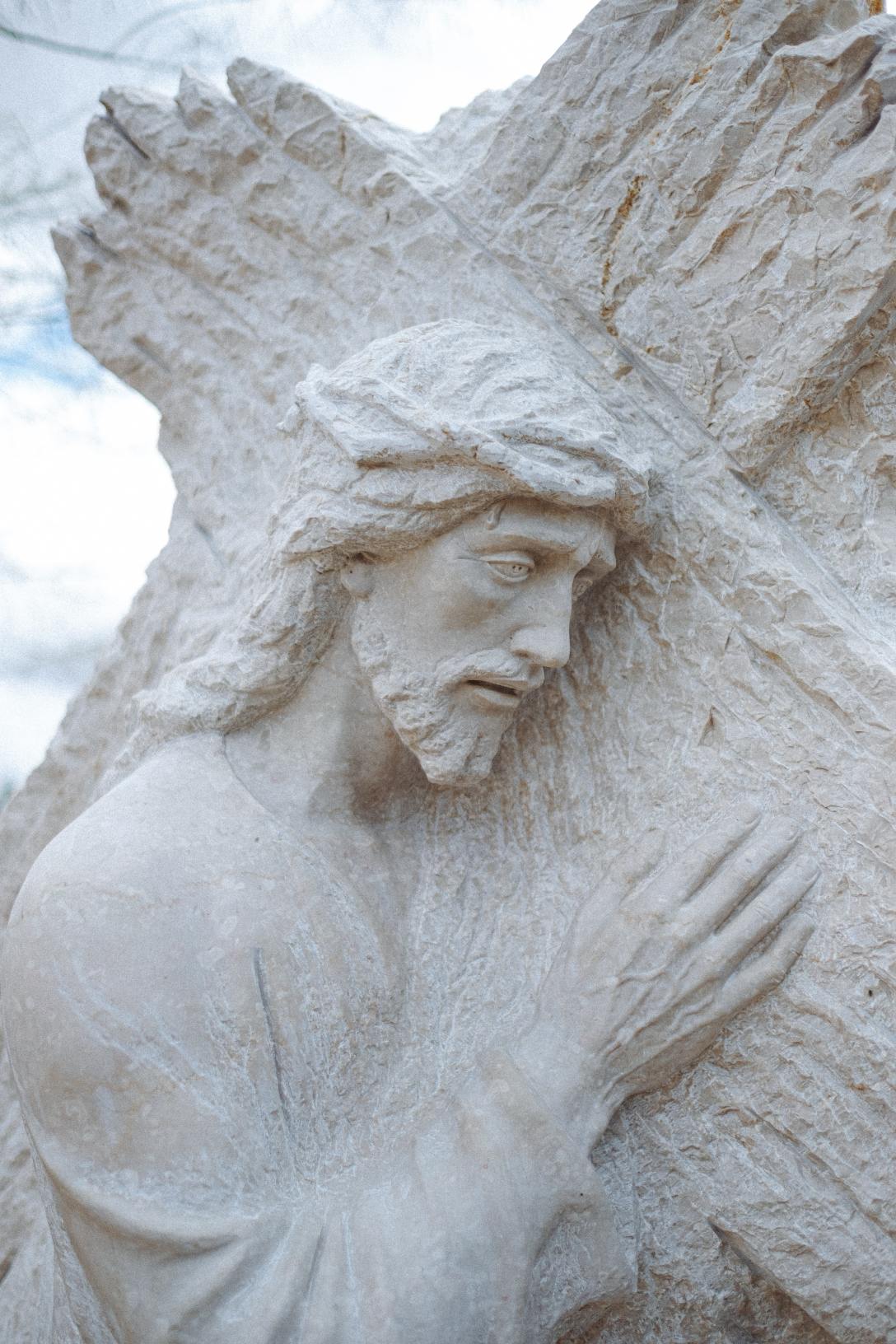
This was a recent essay I did in my Romans class at college. I’m proud of this because I got pretty good grades for it so I thought I’d share it with all of you. Enjoy 🙂
The themes of redemption (ἀπολυτρώσεως) and propitiation (ἱλαστήριον) can be found throughout the entire storyline of the Bible. From Genesis 3, where God makes the promise that a seed will come to destroy the serpent (Gen 3:15), then God takes an animal, slays it, and covers Adam and Eve in animal skin (Gen 3:21), through to the sacrificial laws in Leviticus, all the way to Jesus in the Gospels, these themes are richly integrated into the very fabric and thrust of the Bible’s entire narrative. Paul, in particular, picks up on these essential themes and, in his epistle to the Romans, he masterfully espouses a rich theology in light of the Messiah and the entire Old Testament Scriptures. However, the themes of propitiation and redemption in Romans have not been without controversy.
This essay will aim to trace Paul’s usage of both themes of propitiation and redemption throughout the book of Romans. This will be done by exploring critical passages in Romans where these themes occur, exploring the debate among scholars and the various interpretations of the terms, and finally exploring any implications that are applicable to the Christian life.
- Redemption in Romans
First, it is crucial to have some historical context behind the idea of redemption to better understand how Paul uses the word in Romans. In the Greco-Roman world, to redeem someone was to liberate a slave by purchasing (or ransoming) their freedom (Morris 1993, 784). This understanding of redemption was true for all of antiquity, going back as far as the Exodus story where God frees (redeems and ransoms) Israel from servitude to the Egyptians (Ex 12-24). For Paul and his audience, the theme of redemption would have evoked memories of the exodus stories of freedom from slavery, crossing the red sea, wilderness wanderings, Passover, promised land, and exile (Wright 2002, 470-471).
Twice we come across the word redemption explicitly being used. The first is in Romans 3:24 “and are justified by his grace as a gift, through the redemption that is in Christ Jesus,” and then again in Romans 8:23 “And not only the creation, but we ourselves, who have the firstfruits of the Spirit, groan inwardly as we wait eagerly for adoption as sons, the redemption of our bodies.” However, redemptive imagery can be found all over the letter such as in Romans 6, where Paul uses slavery language to demonstrate that those in Christ are now slaves to righteousness and God rather than sin and the flesh (Morris 1993, 785).
- Redemption in Romans 3:24
As aforementioned, the first place we find the word redemption is in Romans 3:24 quoted above. In this passage, Paul is arguing that justification (the forensic declaration of being acquitted from sin) is a gift from God that comes via freedom from slavery (redemption) to sin (Hagner 2008, 70-71). Scholars debate whether redemption in this passage includes payment (or ransom) so that one can be set free. As already mentioned, the ancient world and secular Greek literature always assumed some payment would occur for the slave to be set free. However, when one considers both the Septuagint (LXX) and the New Testament, it is evident that a ransom is not always present in the idea of redemption (Schreiner 2018, 197-198). Nevertheless, most scholars agree that Paul most likely had both ransom and redemption in mind (Schreiner 2018, 198). Though, instead of the ransom being paid by God the Son to God the Father (Moo 1996, 230-231), it was paid by God in Christ to “the personified power of sin” mentioned in Romans 3:9 (Dunn 1988, 180).
- Redemption in Romans 8:23
The second passage we find the word redemption is in Romans 8:23. Here we have Paul discussing the redemption of the created order in relationship with human redemption. Throughout the entire letter of Romans, Paul has an impressive theology of creation that culminates in this passage as he is concerned with the renewal of everything God has created, not just humans or His elect (Stenschke 2017, 261-289). Scholars agree that redemption is closely related to adoption as they are used almost interchangeably to demonstrate the now and not yet tensions in Paul’s argument. Paul argues that the Christian has already been redeemed (adopted), that they are being redeemed (spiritually), and that they will be redeemed (physically) at the eschatological end of the age (Moo 1996, 518-520). Mike Bird explains this well in his commentary when he says, “in the case of redemption, it is not just redemption from the penalty of sin, but the redemption of the body from the presence of sin that remains outstanding. The resurrection of the body will be the event that will consummate both adoption and redemption” (Bird 2016, 280).
- Hilasterion in Romans
Propitiation or the Greek word hilasterion (ἱλαστήριον) occurs only once in all of Paul’s letters in Romans 3:25, “whom God put forward as a propitiation by his blood, to be received by faith. This was to show God’s righteousness, because in his divine forbearance he had passed over former sins,” making Paul’s use of the word a hot topic for debate among scholars. C. H. Dodd famously argued that the word should be translated as expiation (the removal of sin) as opposed to the pagan idea of God’s anger needing to be satisfied through sacrifice (Hodd 1935, 82-95). Later, the reformed interpretation of propitiation (to satisfy God’s wrath) was championed by Leon L. Morris in his book “The Apostolic Preaching of the Cross” (Morris 1965, 144-213) as he called into question the validity of Dodd’s interpretation of the word (Moo 1996, 198-199). Additionally, others have argued that the hilasterion should be interpreted as “mercy seat” where atonement took place in Leviticus 16 (Gundry-Volf 1993, 279-284).
- Propitiation
Some scholars argue that hilasterion should be translated as “propitiation”, meaning “the removal or satisfaction of God’s wrath.” Interestingly, there is some debate among exponents of propitiation as to whether “sacrifice” exists in the passage. Scholars agree that a sacrifice is not found in the atonement, making it difficult to argue for a sacrifice in Romans 3:25. However, some would argue that Paul innovatively develops the idea of a present sacrifice in the propitiatory theme (Moo 1996, 236). On the other hand, scholars would reject the idea of a sacrifice being present that Paul’s expression means “to make atonement” not “to offer a sacrifice.” They argue that, at best, sacrifice is in the back of Paul’s mind, not in the forefront. Nevertheless, advocates all agree that “Christ adverted the divine wrath from sinners” (Morris 1988, 181).
Scholars argue for propitiation in Romans 3:25 in two primary ways. First, scholars explain that the common use of the word in the ancient world was to either satisfy or remove wrath (Kidner 1982, 119-136). Second, proponents of propitiation argue that the biblical context of Romans 3:25 is that all of humanity are sinners under the wrath of God (Rom 1:18-3:20), insinuating that if hilasterion does not mean the removal of wrath, then humanity is still under it (Mounce 1995, 117).
- Expiation and Mercy Seat
Other scholars argue that hilasterion should be translated as expiation meaning that Christ’s death “is how God does away with his people’s sin – not symbolically, as in the ritual of Leviticus 16 in which the material mercy-seat figured, but really” (Bruce 1985, 111). In other words, God removes sin or cleanses a person via Christ’s blood and His death. Scholars who advocate for this view recognise the Old Testament connections that Paul is making to Exodus 25 and Leviticus 16, where the lid of the ark or “the mercy seat” was the place where sin was dealt with. It is where the high priest during the Day of Atonement would sprinkle blood as a sacrifice to cleanse the temple and himself so that he would not die in the presence of God (Wright 2002, 474). Additionally, the priest would lay the sins of the people on the head of a goat and literally remove the sin by sending the goat away from the camp. All of this was in Paul’s mind in Romans 3:25 (Dunn 1988, 171). These same scholars point out that in these rituals there is no mention of judgement or wrath being vicariously satisfied through the animals on behalf of the people. In fact, the killing of the animals was never part of the atonement, they were slain elsewhere, and it was the blood that was used at the alter (Wright 2016, 295-355). Finally, these scholars are quick to point out that the word hilasterion nearly always means or refers “mercy seat” in the LXX (Bailey 2000, 155-158) and in it means mercy seat in its other New Testament occurrence in Hebrews 9:5 (Stott 2001, 114).
- Satisfy or Cleanse?
So out of the interpretations discussed in this essay, which are the most convincing? Both. When all the evidence is considered, there is no reason not to believe that Paul here has both in mind the secular use of the word hilasterion (propitiation) and the biblically canonical one (expiation and mercy seat). As N. T. Wright says in his commentary, “But that fact remains that in 1:18-3:20 Paul has declared that the wrath of God is revealed against all ungodliness and wickedness and that despite God’s forbearance this will this will finally be meted out; that in 5:8, and in the whole promise of 8:1-30, those who are Christ’s are rescued from wrath; and that the passage in which the reason for the change is stated is 3:25-26…” (Wright 2002, 476). In other words, the redemption of humanity comes via Christ’s hilasterion, that is, His expiating sacrifice as that removes sin and, in turn, wrath from those who are united to Him by faith (Bird 2016, 119).
- Implications for Christian Ministry and Living
The themes of redemption and hilasterion are among some of the most important themes in all of Scripture as they relate to the death of Jesus and our salvation. These themes are central to the Gospel, and therefore, central to the Christian life and ministry. For some, the nuance and semantics might lead some to dismiss the question of there being any implications in these fleshed out themes. However, without a nuanced understanding of our salvation, the Christian is left deficient in their ability to espouse the Gospel that saved them. These themes affect Christians in two main ways, in our church ministries (i.e., pulpit ministry) and how we live out our vocation as image-bearers (Gen 1:26).
- Ministry
Gospel-centred preaching is at the heart of our church services and ministries. Preaching God’s Word is how we teach, rebuke, correct, and instruct our members in righteousness so that they may be equipped to live out the Christian life (2 Tim 3:16-17). Therefore, having a nuanced and concise understanding of how we are saved shapes the way we live our lives. Is the emphasis of the Gospel on being saved from an angry God who hates humanity until we trust in Jesus, or is that we have been freed (redeemed), cleansed from sin (expiated) so that we can now live out our vocation as God intended? If it is only the former, then that simply solves God’s attitude towards humanity. The latter however, free’s humanity, in Christ to live as they were meant to, a kingdom of priests imaging God (1 Pet 2:9). This freeing and vocational calling needs to be the focus of our sermons.
- Christian Life: Our Mission
If we get the Gospel nuances right in our pulpits, then we can live biblically in our lives and mission. If we see that Jesus’ death has freed us, ransomed us, cleansed us from sin for a purpose, we are starting to get to the heart of the Gospel. God has always intended humanity to be a new creation in Christ that images him and lives as genuinely human. N. T. Wright sums this up well when he says, “through the cross of Jesus won the Passover Victory over the powers, that he did this precisely by dying under the weight of the world’s sin, and that Christian mission consists of putting this victory into practice using the same means” (Wright 2016, 408). Love your neighbour (Mk 12:30-31) and enemies (Matt 5:44), even to the point of death so that they may “taste and see that the Lord is good” (Ps 34:8).
- Conclusion
In this essay, we explored the themes of redemption and propitiation in Paul’s epistle to the Romans. Paul’s use of the word redemption in Romans 3:24 indicates a clear theology of the individual being set free from sin, and 8:23 indicated Paul’s theology that the entire created order groans as it eagerly awaits to be set free (redeemed) from sin on the eschatological day of judgment when Jesus comes to make all things new. Furthermore, this essay explored Pauls use of the word hilasterion, which could either be translated as propitiation or expiation (and mercy seat taken from Leviticus 16). From all the evidence considered, it seems that Paul emphasises a theology of expiation with a propitiatory theme implicit in the text. This means that Jesus’ death cleanses the believer from sin, sets him free and then because of that expiation, God’s wrath is turned away from the believer (an implied consequence of Jesus’ death, not an explicit one). Finally, with that in mind, it is clear that this emphasis on expiation, when preached from our pulpits, results in a vocational calling for the Christian instead of simply an attitude shift from God’s behalf towards the person.
List of References
Bailey, Daniel P. 2000. “Jesus as the Mercy Seat: The Semantics and Theology of Paul’s Use of Hilasterion in Romans 3:25.” Tyndale Bulletin, no. 51.1: 155-158.
Bird, Michael F. 2016. Romans. 2nd ed.The Story of God Bible Commentary. Edited by Tremper Longman III and Scot McKnight. Grand Rapids: Zondervan.
Dunn, J. D. G. 1988. Romans 1–8, Vol. 38A. World Bible Commentary. Dallas: Word Incorporated.
Bruce, F. F. 1985. Romans an Introduction and a Commentary. Tyndale New Testament Commentary. Downers Grove: Inter-Varsity Press.
Gundry-Volf, J, M. 1993. “Expiation, Propitiation, Mercy Seat” in The Dictionary of Paul and his Letters, edited by Gerald F. Hawthorn, Ralph P. Martin, and Daniel G. Reid, 279-284. Downers Grove: Inter-Varsity Press.
Hagner, Donald A. 2008. “Romans” in The Expositors Bible Commentary, Vol. 11, edited by Tremper Longman III and David E, 19-238. Grand Rapids: Zondervan.
Hodd, C. D. 1935. The Bible and the Greek. London: Hodder and Stoughton.
Kidner, Derek. 1982. “Sacrifice – Metaphors and Meaning.” Tyndale Bulletin no. 33: 119-136.
Moo, Douglas J. 1996. The Epistle to the Romans. The New International Commentary on the New Testament. Grand Rapids: Eerdmans Publishing Company.
Morris, L. 1955. The Apostolic Preaching of the Cross. Grand Rapids: Wm. B. Eerdman Publishing Co.
Morris, L. 1988. The Epistle to the Romans. The Pillar New Testament Commentary. Grand Rapids, MI; Leicester, England: W.B. Eerdmans; Inter-Varsity Press.
Morris, L. 1993. “Redemption” in The Dictionary of Paul and His Letters, edited by Gerald F. Hawthorn, Ralph P. Martin, and Daniel G. Reid, 784-786. Downers Grove: Inter-Varsity Press.
Mounce, R. H. 1995. Romans, Vol. 27. The New American Commentary. Nashville: Broadman & Holman Publishers.
Schreiner, Thomas R. 2018. Romans. 2nd ed. Baker Exegetical Commentary on the New Testament. Grand Rapids: Baker Academic.
Stenschke, Christoph. 2017. “Human and Non-Human Creation and Its Redemption in Paul’s Letter to the Romans.” Neotestamentica, no. 51:2. 261-289,
Stott, John. 1994. The Message of Romans: God’s Good News for the World. The Bible Speaks Today. London: Inter-Varsity Press.
Wright, N. T. 2002. “Romans” in The New Interpreters Bible, Volume X. 393-770. Nashville: Abingdon Press.
Wright, N. T. 2016. The Day the Revolution Began. New York: Harper Collins Publishers.




 Scribbling Theology