
My Story I

“Almost everyone can agree that one of the big differences between us and our ancestors of five hundred years ago is that they lived in an ‘enchanted’ world, and we do not.”

Charles Taylor

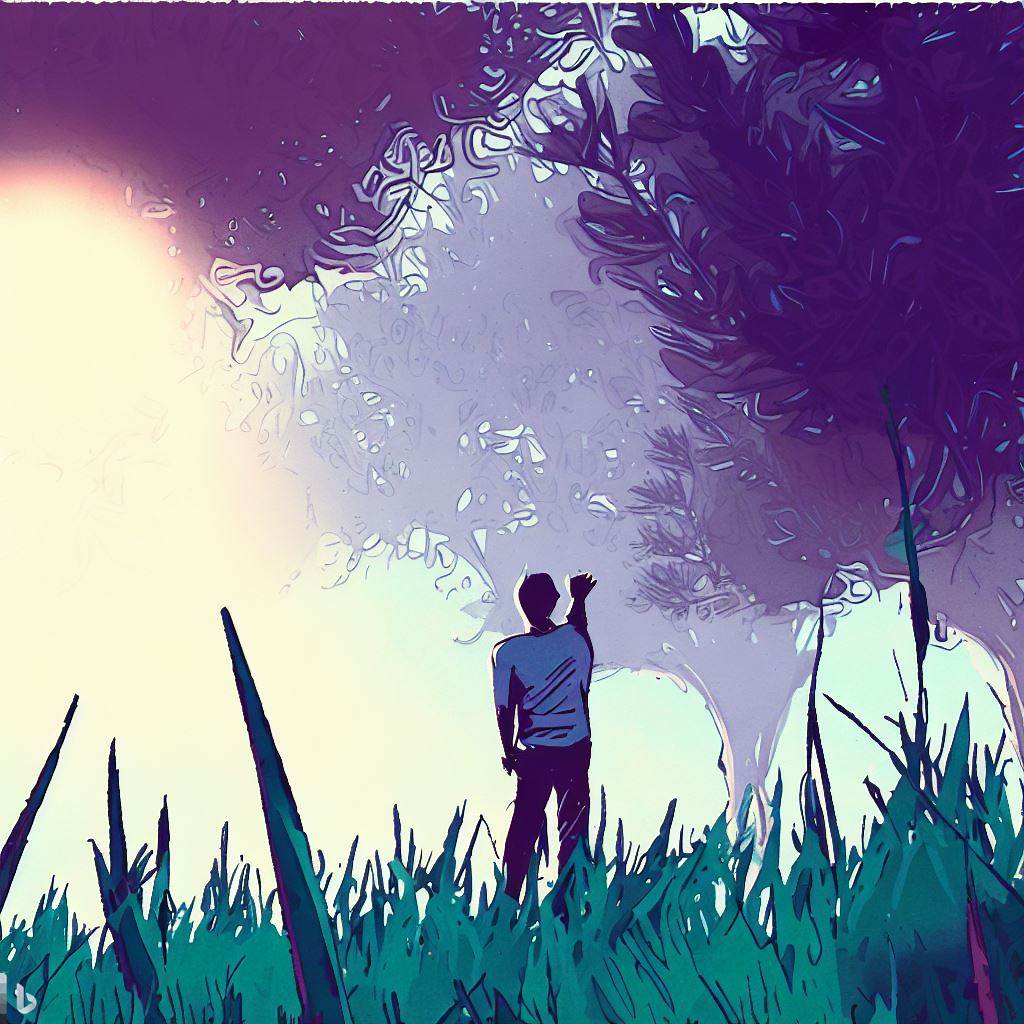
If I had to distil my entire life into one thing, it would be the search for ‘magic.’ From an early age, I was fascinated by other and bigger things. I remember running around in the yard trying to dig up fossils, reading books about ancient Egypt, and going to the science centre for my birthday (all I wanted were Pokemon Cards). I loved reading books like Eragon, Harry Potter, and The Chronicles of Narnia. My favourite video games as a kid were anything with a sword or gun, but in particular, it was The Legend of Zelda: Ocarina of Time (OoT), released on November 21 1998, that I loved the most. I played the heck out of that thing. For those who don’t know, OoT is the first attempt at an open-world 3d game and is considered by many to be the greatest video game of all time, scoring almost a perfect score on every gaming website. In the game, you could trek into deep forests, climb high mountains, swim rivers and lakes, visit populated villages, and save princesses. But the most essential element in the game was that the world felt more alive, authentic, and meaningful than the one I lived in.


Now, you can chalk all this up to a young boy indulging in escapism, having a wild imagination, not yet matured. I get that. If that’s the case, I’ve never grown up. Maturity, for me, has been less about searching for the magic in the world and more about realising it was here all along. Western Culture (the Church has a massive role in this) has veritably done away with the world in the wardrobe, the sacred groves in the forests, the transcendent high places that strike awe in the beholder, and traded it in for formulas, fast food spirituality and living—a bland, tasteless existence. Can you hardly blame me then for chasing hedonism in place of ‘magic?’ The moment I was able to, I chased women, started clubbing, and partying in a desperate bid to experience the world afresh. However, much like the Preacher in Ecclesiastes, it was all meaningless. I needed more. I wanted more. I craved something more until, one day, I tasted a bit of that lost ‘magic.’


I would love to tell you that once I met Jesus, everything changed, life got better, and the drudgery of life washed away in a sea of awe and wonder. It didn’t. The decision to follow Jesus has been met with suffering and hardship: death, divorce, broken hearts, depression, and a lot of uncertainty and doubt. Christianity hasn’t made things clearer for me. What it has done, however, is rebuilt me through trials in a way life never would have in and of its own.


When I met Jesus, it was off the back of a failed relationship that had gone through an abortion. I was still interested in something other than life, but ultimately, the decision to try out Jesus was just another day and another choice. There was no voice from heaven, no beam of light, no stirring deep within my soul. I just decided that Jesus probably had some good things to say and was worth listening to. Since then, over the years, slowly but surely, Jesus has peeled back the layers of my disenchanted heart and shown me that what I was looking for was under my nose the entire time. Salvation for me has been a slow transformative process, not a single instant event. The Cross is less about (but not void of) any atonement theory and more about a pathway into the world unified unto God, the created world, and My Self. As I nerded out over theology, the bible, and spirituality, I realised every church and gathering could be a sacred grove. Every door opened could have a Narnia behind it. Every road travelled could be turned into a pilgrimage. I’ve been a Christian for over ten years, and I can say that God hasn’t finished turning this mess into a slightly less mess.

I look forward to where He’ll have me in another ten. For now I will leave you with this quote:

The Christian story of incarnation in the body of a boy- a boy whose ancestors were both famous and infamous – is one that can spur us towards living with the courage that is indigenous to us. To be human is to be in the image of something good, and image comes from imagination. To be human is to be in the imagination of God, and the imagination is the source of integrity as well as cracks. To be born is to be born into a story of possibility, a story of failure, a story of imagination and the failure of imagination. To be born is to be born with the possibility of courage. Hello to courage.

Pádraig Ó Tuama

The Church of Eden

Some people, in order to discover God, read books. But there is a great book: the very appearance of created things. Look above you! Look below you! Note it. Read it. God, whom you want to discover, never wrote that book with ink. Instead, He set before your eyes the things that He had made. Can you ask for a louder voice than that?

Saint Augustine. The City of God, Book XVI

In my experience, Christianity and nature don’t go together. I think a lot of us Protestants are scared of making an idol out of cheese. Stepping out and getting any spiritual substance from nature feels like pagan worship. Nevertheless, for thousands of years, the Church and even the Old Testament Jews have had a rich tradition of finding God not only in the pages of sacred texts or within the walls of a temple or a church but in nature itself. For me, church on a Sunday can get boring. Nature doesn’t. At church, we have baptisms in a font. In nature, God baptises the world with ever-winding rivers, boundless oceans, and tranquil lakes. At church, we have choirs and bands that stir a crowd. In nature, God stirs the heart with the clap of the trees, the melody of the wind, and the euphony of the animals. At church, we preach from the Scriptures to teach, correct, and rebuke. In nature, God strikes the reader with awe as we pore over the stars. In church, we meet with God in sometimes clinical rituals, polished halls, and typically with masks on. In nature, we meet with God in untamed sacraments, wild establishments, and unmasked hearts.

I’m not a hippy. I don’t hug trees, and I’m not about to join PETA. I’m not even a good environmentalist. I love long showers, I’m often lazy with recycling, and I love a good steak. (and wings). There are days, weeks even where I’d rather spend my time playing video games, binging the Big Bang Theory, and scrolling through Facebook. I love rainy days, coffee, and sleeping in. As much as I know nature is a good place for me to be, it takes more effort than I’m proud to admit to get amongst. Nevertheless, when I’m forced to climb that mountain and see that view, or when I’m walking along the esplanade and I see the ocean stretched out before me, I’m always struck, even just a little, by how God takes up and dwells in more than the four walls of a church.

Elsewhere, I argue that our churches should be a slice of paradise. A taste of the newly created earth. A miniature Eden and a sacred space. I can’t remember the last time, if ever, where I felt awe-inspired, moved, and truly like I was treading hollowed ground in a church. Particularly within the Protestant tradition, we have demystified, disenchanted, and robbed our sacred spaces of their “magic.” We’ve traded awe and wonder for fog machines and light. We’ve sold profound unity and community and bought programs. We’ve replaced stories and myths with conversations about the weather and movies. We’ve exchanged God’s presence for “doing church.”

In the beginning, God created the world; it was wild and waste; there was darkness and chaos, but God’s Spirit hovered over the deep. Over six days, God moulded the world. He placed the stars, the sun, and the moon in the sky and gave them purpose. God divided the seas above from the waters below, filled them, and gave them purpose. He raised trees, shrubs, bushes, mountains, oceans, rivers, and streams from the earth and gave them purpose. God filled the world with birds, fish, and land animals and gave them purpose. He created humanity and gave them purpose. Finally, on the seventh day, God dwelled with what He had made, and there was purpose and goodness. This is how things are supposed to be in our local churches. Our local churches should feel like we’ve tasted a bit of heaven. Goodness, purpose, God’s presence, unity, flourishing, and life should all be markers of a healthy church. Yet I talk to people who experience emptiness, frustration, shallow relationships, trivial teachings, and superficial prayers every week. It seems that our churches are less Eden and more Tower of Babel.

2024

Some may or may not know I took a year off writing (despite this, I’ve had the most views since I started writing). In 2023, I posted one blog (I felt compelled then). It is 2024, and I’m slowly emerging out of blogging hibernation. From my first blog in 2015 to my next, as is faithful with most things in life, my theology and thoughts on Christian spirituality have evolved. I look back on my first blog and chuckle. I’m sure I’ll look back on 2024 in another ten years and cringe. Since I started blogging, I’ve started and graduated from bible college. I’ve married and remarried. I’ve gone through different jobs, moved around, and gone through various churches (finally, I’ve found a nice one to rest in). I’ve had my doubts and struggles. I’ve wanted to walk away from the faith. I’ve wanted to give up and try other things. Yet here I am, still tripping after Jesus (good blog title).

So what does this year hold for Scribbling Theology? More meaningless ramblings of a guy who has literally no idea what he’s talking about (I guarantee that). We’ll discuss God’s creation, beauty and some of the not-so-traditional ways of engaging with God. On the flip side, we’ll discuss the importance of finding a healthy community of believers where you can flourish. We’ll talk about liturgy and the importance of ancient rituals and beliefs. We’ll talk about how stories, both new and old, can transform us and lead us deeper into ourselves (collectively and individually) and into the presence of God. I’ll review a book or two (to start you off read, “How to Know a Person by David Brooks”), a podcast or three and maybe spin a poem. I don’t know where I’ll start or finish. But as always, Scribbling Theology has been an outlet, a creative and even spiritual practice that has helped me to release and vent my own thoughts.

2022 Mix Up: My Five Favourite Blogs of the Year

  1. Scribbling Journal: Entry 2
  2. Jesus Wept: A Short Theological Reflection on Grief
  3. Being Human
  4. Short Reflections on Christian Politics
  5. Scribbling Journal: Entry 1

Happy New Year!

Scribbling Journal: Entry 3

Tis the season…


A book in the bible I often return to is Ecclesiastes. A particular passage that comes to mind is:
There is a time for everything,
and a season for every activity under the heavens:
a time to be born and a time to die,
a time to plant and a time to uproot,
a time to kill and a time to heal,
a time to tear down and a time to build,
a time to weep and a time to laugh,
a time to mourn and a time to dance,
a time to scatter stones and a time to gather them,
a time to embrace and a time to refrain from embracing,
a time to search and a time to give up,
a time to keep and a time to throw away,
a time to tear and a time to mend,
a time to be silent and a time to speak,
a time to love and a time to hate,
a time for war and a time for peace.


The funny thing about this time of year is that Christmas confuses the seasons and the times. It is far flung from the sacred holy day it once was. Christmas has become a bubbling cauldron of consumerism, suicide, crippling debt, and anxiety with a pinch of hope, a sprinkle of love, and a snifter of joy.


For me, Christmas has always been about presents. As a child, I would often wake up when it was still dark to find gifts at the end of the bed or under the tree. I’d be excited as I desperately hoped for pokemon cards or a new N64 game (The Legend of Zelda was my favourite). My parents spoiled me. My mum was a crafty character. She’d often hide or pretend that I wouldn’t get so much, and then when I least expected it, bam! There’d be a new bike or a new gaming console. Thanks, mum. As I got older and my parents separated, I started paying close attention to those around me. Especially in my young adult years, I saw that Christmas became less enjoyable for most people because putting together the perfect day was more important than people “just being.” But who can blame them? The perfect Christmas day is every other day of our lives turned up to eleven.


I love Ecclesiastes 3:1-8 because life is ordered, simple, and easy to understand. Life is hardly that easy, unfortunately. For many of us, every day is an anxiety-riddled, depressed-filled, hope-flickering Christmas day that we all try to manage. Like Christmas, Jesus fights for the spotlight in life. We often shove Him off into a dark corner after a quick chat as we eagerly unwrap our other presents.


I often feel at odds with myself because I know I should be enjoying the gift of Grace more than anything else. Still, the new God of War PS5 game seems so much more fulfilling in the moment. I mean, it’s not like Jesus carries around an axe and slays pagan gods with a broody demeanour. It’s not like Jesus shamed the other gods of the world, had victory over them, and now rules over them from Heaven. Sarcasm, by the way, because he is (weird side thought, who’d win in a fight between Kratos and Jesus…?). It doesn’t always feel like it when every other power inundates me daily. Like at Christmas, it is easy to lose sight of the One in whom love and life are found.


Recently, I had an argument with one of my bosses about the Christmas season. Knowing I’m a Christian, he asked, “what do you think of carols, Cam?” I don’t really like them, I replied, already exhausted with where this was going. Surprised, he said, why now? I rattled off a few reasons I don’t like carols or Christmas in general. I gave statistics on how suicide rates increase over the season, how much waste is used over the holiday, how much food we throw out, and how much crippling debt people go into. After my two-minute rant, he told me, “it’s not Christmas’s fault that people go into debt. They don’t have to spend that much money.” Of course, he was right. What shocked me, however, was not the answer he gave me. Instead, it was the gross oversimplification of the statement. Of course, people can decide not to go into debt, kill themselves, or waste food and rubbish. However, the question we should be asking ourselves is, “why are they?” Why do people need to spend money and ruin Christmas with petty fights that expose the ego? In reality, why do we do anything?

Why do we do anything? For the longest time, I believed that our motivations and intentions were driven by evil hearts that always wanted to do wicked and sinful things. I no longer believe this to be the case. Most of us do what we believe is right in seriously broken ways. There are expectations to this, I’m sure. However, I think most people don’t wake up and decide to murder, steal, cheat, or lie. Instead, our actions result from a lifetime (generations even) of decisions to good that often cause more harm than good. People are trapped in debt because they believe that spending so much money is the right thing to do. They’re afraid of the social consequences of not buying the latest Ipad for their partner or a family member. People kill themselves over the Christmas season because they’ve bought into the lie that what they lack is more important than who they are and the world would be better without them. There are narratives and systems, and ideas being told that cause people to do the things they’re doing. The human heart, of course, would find another way – no doubt. My point is that we can’t simply chalk actions up to the doctrine of original sin and total depravity (for the black and white Christian), or (for the more secular), we can’t just assume people make choices in a historical vacuum void of influence or trauma.

A closing thought. Perhaps we just need a reformation around Christmas, actually in life. As Christmas day was intended, every day should be participated in and meditated on in light of the Incarnation and what that means for humanity. What is that meaning? In the words of Jesus himself, “The Spirit of the Lord is upon me, because he has anointed me to proclaim good news to the poor. He has sent me to proclaim liberty to the captives and recovering of sight to the blind, to set at liberty those who are oppressed, to proclaim the year of the Lord’s favour” (Luke 4:18-19).