

The Church of Eden

Some people, in order to discover God, read books. But there is a great book: the very appearance of created things. Look above you! Look below you! Note it. Read it. God, whom you want to discover, never wrote that book with ink. Instead, He set before your eyes the things that He had made. Can you ask for a louder voice than that?

Saint Augustine. The City of God, Book XVI

In my experience, Christianity and nature don’t go together. I think a lot of us Protestants are scared of making an idol out of cheese. Stepping out and getting any spiritual substance from nature feels like pagan worship. Nevertheless, for thousands of years, the Church and even the Old Testament Jews have had a rich tradition of finding God not only in the pages of sacred texts or within the walls of a temple or a church but in nature itself. For me, church on a Sunday can get boring. Nature doesn’t. At church, we have baptisms in a font. In nature, God baptises the world with ever-winding rivers, boundless oceans, and tranquil lakes. At church, we have choirs and bands that stir a crowd. In nature, God stirs the heart with the clap of the trees, the melody of the wind, and the euphony of the animals. At church, we preach from the Scriptures to teach, correct, and rebuke. In nature, God strikes the reader with awe as we pore over the stars. In church, we meet with God in sometimes clinical rituals, polished halls, and typically with masks on. In nature, we meet with God in untamed sacraments, wild establishments, and unmasked hearts.

I’m not a hippy. I don’t hug trees, and I’m not about to join PETA. I’m not even a good environmentalist. I love long showers, I’m often lazy with recycling, and I love a good steak. (and wings). There are days, weeks even where I’d rather spend my time playing video games, binging the Big Bang Theory, and scrolling through Facebook. I love rainy days, coffee, and sleeping in. As much as I know nature is a good place for me to be, it takes more effort than I’m proud to admit to get amongst. Nevertheless, when I’m forced to climb that mountain and see that view, or when I’m walking along the esplanade and I see the ocean stretched out before me, I’m always struck, even just a little, by how God takes up and dwells in more than the four walls of a church.

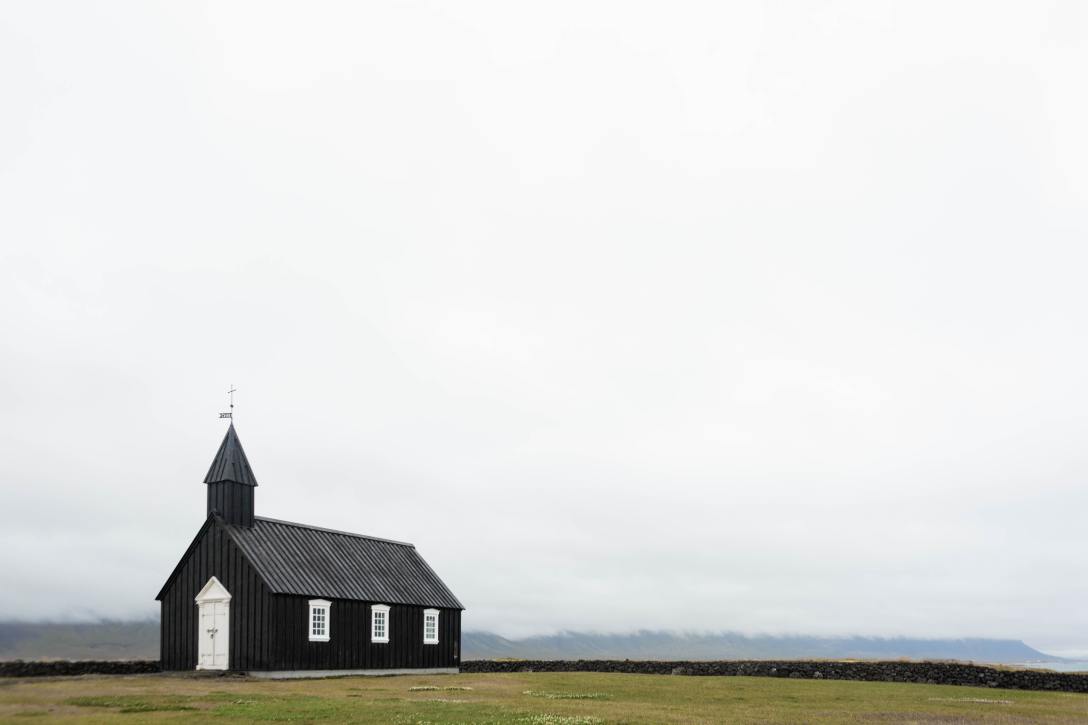
Elsewhere, I argue that our churches should be a slice of paradise. A taste of the newly created earth. A miniature Eden and a sacred space. I can’t remember the last time, if ever, where I felt awe-inspired, moved, and truly like I was treading hollowed ground in a church. Particularly within the Protestant tradition, we have demystified, disenchanted, and robbed our sacred spaces of their “magic.” We’ve traded awe and wonder for fog machines and light. We’ve sold profound unity and community and bought programs. We’ve replaced stories and myths with conversations about the weather and movies. We’ve exchanged God’s presence for “doing church.”

In the beginning, God created the world; it was wild and waste; there was darkness and chaos, but God’s Spirit hovered over the deep. Over six days, God moulded the world. He placed the stars, the sun, and the moon in the sky and gave them purpose. God divided the seas above from the waters below, filled them, and gave them purpose. He raised trees, shrubs, bushes, mountains, oceans, rivers, and streams from the earth and gave them purpose. God filled the world with birds, fish, and land animals and gave them purpose. He created humanity and gave them purpose. Finally, on the seventh day, God dwelled with what He had made, and there was purpose and goodness. This is how things are supposed to be in our local churches. Our local churches should feel like we’ve tasted a bit of heaven. Goodness, purpose, God’s presence, unity, flourishing, and life should all be markers of a healthy church. Yet I talk to people who experience emptiness, frustration, shallow relationships, trivial teachings, and superficial prayers every week. It seems that our churches are less Eden and more Tower of Babel.

Scribbling Journal: Entry 1

The thing about the Christian life is that no one really knows what they’re doing (this is true for most of life). There’s a reason why we have so many different denominations and sects. I’ve met pastors, scholars, and believers from all sorts of churches and traditions, and, apart from Jesus, the one thing we all have in common is that none of us really know what to do with it.


Once I met a guy who had a family, and he was an avid street evangelist. He would stand on street corners and loudly preach repentance. He was even arrested for it once. It wasn’t long after that, however, that he did a complete 180 and became aggressively antichristian in everything he did. He told me that he changed his mind on everything because we don’t even have the original copies of the bible. This surprised me because I wasn’t aware that we believed there were.


I used to meet regularly with a friend for coffee at a local cafe near the beach when I was a pastor. He was and still is one of the most passionate people about Jesus I’ve ever met. We used to talk about everything “bible.” From miracles to church to science and faith. One morning, as we were discussing science and biblical interpretation, he said that if evolution was true, he could never be a Christian. I was shocked. Here was one of the most lovely, passionate people I’ve met who never backs down from talking about Jesus to people and yet a single potential change in his worldview could lead to his entire faith being undermined.


I meet people like this day in and day out. I’m not saying there aren’t legitimate reasons why one would walk away from their faith. There is. The reasons above are justifiable. I completely get it. What surprises me is how easy it is for these reasons to cause us to walk away from something we’ve placed our entire identity on. Though I doubt and wrestle with God, and I sometimes wonder what life would be like if I didn’t follow Jesus, I’ll never not believe until I’m dead and come face to face with endless nothing. Until then, I’m winging it. I try to attend church, knowing it’s good for me, even if it’s boring. I read my bible, knowing that I am getting to know Jesus more and more, even if most of what it says is either lost on me or it just drags on. I try to pray even if no one talks back. I do good even if there’s not always sense in doing so. My life is based on risk. My life is a gamble. I believe my choices in the here and now will pay off in a potential eternity.


The irony is that if I gave it all up now, I’d be trading one sense of freedom for another and one doubt for the next. If I walked away from Jesus, I’d spend the rest of my life wondering if I made the right choice. What if He is real? What if Hell does exist? I would be wrestling with the God of Nothing, wondering if worshipping at his altar is any better than the last. Would I miss how the biblical story makes the most sense of my existence, or would I ignore the voice at the back of my mind and embrace the meaninglessness that my new God offers?


All this diatribe makes me wonder if Jesus struggled with the same levels of doubt. We’re told that he was tempted in every way we were, yet he was without sin… But did Jesus doubt that God was real (a strange thought given Jesus is God) or that he was imminent or in his corner? When offered the riches of the world from Satan, did he – even for a fleeting moment consider bending the knee? There’s debate within theological circles as to whether or not Jesus could really sin.


On the one hand, some say he can’t because God can’t sin. Others say his temptations couldn’t have been genuine if he couldn’t sin. The answer may depend on how you see the person of Jesus. There’s something comforting in the idea that the humanity of Christ genuinely struggled with doubt, questions and temptations on the same level that we are tempted. He overcame sin not because he was divine but because he was truly human. Which means most of us aren’t truly human. Which begs the question, what does it mean to be human?


I’ve been watching and listening to many of J. R. R. Tolkien’s works lately. The more I get into it, the more I identify with the Hobbits of all people, or I may want to identify with them. Living in the rolling lush green hills of the Shire with its winding creeks and rivers, the Hobbits are reclusive but communal. They’re simple and well-fed, not wanting to stick their noses where it doesn’t belong. Bilbo Baggins cooks, cleans and smokes his pipe. Frodo runs around the Shire and plays as they anticipate festivals and parties. They are living the human dream.


Furthermore, the one ring, perhaps one of if not the most corrupting power in Middle Earth, has a hard time genuinely turning them to darkness. Humans, on the other hand, wage war and consume and destroy anything they get their hands on. They build up their kingdoms, and the ring corrupts them very quickly.


I see the good life in the Shire, but I know it’s currently in the power-hungry cities and wartorn lands of men. I desire the carefree life of Bilbo (before he goes on his adventure), but I try to take it according to my own power rather than wait for the good life to be given to me. I maybe have 50 years-ish left on earth, and as I look back on the last 30 and the world around me, I realise that the thing that defines humans the most is having an idea of the good, striving for it, but in all the wrong ways.

Thoughts on the Mission of the Church

Whenever somebody asks, “what is the church’s mission?” they’re asking, “how is the local church supposed to act in the world, and why?” It isn’t hard to imagine then that there are so many ways to answer this question because there are so many local churches. In my particular tradition (Queensland Baptist), the church usually functions:

1. As a place for people to come and listen to a sermon for twenty minutes.

2. For people to come and sing to and about God.

3. To catch up with coffee and tea afterwards while eating expired biscuits.

Community engagement varies depending on the church and its theology. Some churches have huge community buildings with swimming pools, cafes, gyms, and sports centres. These churches typically have very little formal “evangelism” with those who come and go in their building, instead relying on relationships and ongoing conversations to perhaps one day influence them towards Jesus and the Kingdom. Other churches (usually smaller) have formal evangelism. They hit the streets, give out Gospel tracts, and awkwardly tell people they’re going to hell. Then there are those churches you hear about only in far-flung corners of the Australian underbelly. The kind that is ruthlessly preaching Jesus and baptising every chance they get and passionately serving their community’s needs.

Recently, as social justice issues such as racism, gender inequality, and climate change have been turned up to eleven, churches, at least in my context, have struggled to engage meaningfully in the question “how is the local church supposed to act in the world, and why?” Some have defaulted to a more insulated view of the church. These people believe that the local church is only supposed to preach, pray, and encourage its members to live out their faith and engage with the community in their own time. In frustration with the first kind of church, other churches passionately leap at every chance they get to engage with social justice issues. They plant trees, feed the hungry, and advocate for human rights. However, this sometimes comes at the expense of telling people about the Kingdom itself. Finally, some people have opted out of the social justice conversation altogether. Instead, they focus on living out a private faith, and you wouldn’t even know that they follow Jesus unless you asked.

As I sit and ponder the entire issue, I can’t help but feel empathy for both sides of the problem. On the one hand, preaching (2 Timothy 2:15), worship (Ephesians 5:19), and the traditional activities that make up our regular Sunday morning services are vital. In fact, it is a passion of mine to recover a fresh sense of the Scriptures, Christ-centered preaching, and sound theology in our local churches. However, traditionally, Christianity has been at the forefront of many social justice problems. In the past, they’ve been among the first to serve those in need in extremely practical ways. Why can’t we have the best of both worlds? It seems to me that good biblical, theological preaching would lead a church to want to care for creation (Genesis 1:26-28), feed the hungry, stand up for injustice, and protect the most vulnerable among (Isaiah 1:17; Micah 6:8) us as we proclaim the Good News (Isaiah 52:7; Romans 10:15).

For me, the Gospel starts in Genesis 1 and ends in Revelation 22. When we talk to people about the Gospel and share Jesus, we try to distil the most essential information so that whoever is listening can walk away with enough to help them follow Him. However, unless the entire biblical narrative informs our understanding of our distilled version of the Gospel, the way we do church will always come out looking a little twisted. I believe that our churches are supposed to look like mini Edens where life and goodness flow. When people enter the doors, they should sense that God walks and dwells with His people (Exodus 29:45; 2 Corinthians 6:16; Revelation 21:3). Not just because there’s good preaching and worship, but because in the mini garden, humanity’s needs are being met, where we’re all one in Christ Jesus (Genesis 1:26; Galatians 3:28), where sickness and the corruption of this world are being tended to, there is no hunger, no thirst (James 5:14; Revelation 21:4), and creation is in harmony with those who are supposed to steward it (Genesis 2; Revelation 21-22).

Short Reflections on Christian Politics

Voting as a Christian is hard. Why? Because (as I’ve argued in a previous post) how you engage in politics is a part of your worship. This means four things. First, it means that who you vote for is an expression of your faith, your place in, and your vision of God’s Kingdom. Second, who you vote for expresses your love towards your neighbour and the world around you. Third, who you vote for expresses your love towards God. Fourth, not only does voting impact the world around you, but it also forms and transforms you inwardly. For some Christians, this makes voting easy (whoever is pro-life, right?). For me, it complicates it. Gone are the days when I could pick a single issue and vote with it in mind. Gone are the days when I could make fun of politics (though I still do that) and not care about who influences our nation. Voting matters because, as James K. A. Smith says:

The call to follow Christ, the call to desire his kingdom, does not simplify our lives by segregating us in some “pure” space; to the contrary, the call to bear Christ’s image complicates our lives because it comes to us in the midst of our environments without releasing us from them.

– James K. A. Smith in Awaiting the King

As my faith and theology mature, voting becomes increasingly tricky. If voting profoundly impacts the world around me (including myself), then my vote can’t be taken lightly. Add to that the lack of reasonable candidates to vote for is the perfect recipe for a Lamentations part II. No matter who I vote for, I compromise on something. Do I care for the unborn? Of course. Outstanding, but voting for a party with anti-abortion policies means I have to compromise on climate change policies (and the lives climate change affects around the world) and vice versa. There’s always a trade-off, and I hate that this is the reality in which we live. Trying to love one group of neighbours means I have to neglect the other groups. I understand why some people avoid politics altogether (not a luxury we have in Australia). So what do we do? Do we abstain from voting (illegal in most cases in our country)? Do I donkey vote (that feels like a waste of a vote)? Do I vote for independents and hope for the best (does that ever make a difference)? What is the appropriate Christian response here? There’s no clear answer, to be honest. However, there are perhaps a few things to consider before giving up on the system altogether. Nationwide change, where God’s kingdom comes and His will is done on earth as it is in heaven (Matthew 6:9-13), begins within the Christian, then in the church, and then extends into the world.

  1. It starts with the Christian. What I mean by this is before you hit the voting booths and you loudly proclaim who you’re voting for, a Christian must learn to live out the values and ideas wisely that they are voting for in the first place. Do you care for the environment and climate change? Then start taking practical steps to reduce your own carbon footprint. Eat a more plant-based diet, and consider changing your lightbulbs to LED. Plant some trees. Do you care about the unborn? Love and educate parents who are considering it and might not know the impact of their choices. Invest in organisations that will incentivise mothers to give up children for adoption rather than aborting, or better yet, help to find ways of addressing why they’re aborting at all in the first place. Finally, no matter the issue, serving in that area only goes so far. The Gospel of Jesus Christ will cause changed hearts that lead to the right praxis. You can plant all the trees in the world and feed all the hungry people you can, but real change happens at a heart level that forms communities of people who want to represent Jesus. This is the local church.
  2. It moves to church. There are Christians worldwide from different traditions and walks of life who vote and are passionate about various issues. Each one believes they are doing what they think is best to express how they understand the kingdom of God coming to earth. This is called the universal Church. However, God doesn’t leave us to do the work by ourselves. Through His Spirit, God forms visible communities of believers to work out how to do the Christian life together. While members of a local church might differ on politics, what binds them together is the Gospel that saved them and their allegiance to King Jesus – the person every Christian has cast their first vote for. I have argued elsewhere, and I’ll repeat it – the local church is supposed to be a little slice of heaven on earth. The local church is a community of political tyranny made up of different people from different ethnicities, genders, ideas, and such that submit to the one true King. Local churches challenge, spur, encourage and sharpen one another to live out the Gospel and extend the Kingdom of God into the world around us. The pulpit isn’t supposed to be hijacked to peddle anyone’s political agenda. However, the Gospel of King Jesus is intrinsically political as we urge one another to be a part of His Kingdom in all that we do.
  3. Now, if you must vote, vote. This, I realise, has left us with no real answers on how to vote faithfully. What I’m getting at here is that voting is actually the last thing we do on a list of many meaningful steps of authentic transformation. As we make real changes around us and form Gospel centred communities of people who ultimately see Jesus as the only real solution to anything, voting will be carried along with the ebb and flow of whatever impact we have as we witness to the ends of the earth (or to the darkest corners of our local areas).

Whatever you do during this election, just remember to “love the Lord your God with all your heart and with all your soul and with all your strength and with all your mind, and your neighbour as yourself” (Luke 10:27).

My Reflections On Vaccines

Wuhan, China 2019 – the first reported case of Covid-19 emerged, the first seed of a global crisis that would, in the coming years, kill over 5 million people. At the time, I didn’t give much thought to it. I had heard of epidemics and killer viruses before. None of the worst ones had ever reached Western shores in my lifetime, why would they now? It wasn’t long, however, before Australia was thrown into restrictions and lockdowns; people hoarded toilet paper, and thousands lost their jobs as only businesses deemed “essential” could stay open. All in all, Australia has had it pretty good. We’ve only had around 200 thousand cases in total and less than 2 thousand related deaths. Compare that to the U.S. and other countries and Australia has suffered very little. Nevertheless, as the virus took life after life, we all scrambled for a vaccine. One study suggests that in an unprecedented move, over 92 billion U.S. dollars (worldwide) have been poured into vaccine-related products and research since the start of the pandemic. As a result, vaccines were fast-tracked and mass-produced, allowing for an estimated 42.7% of the world to be already fully vaccinated against the original strains of the virus. Australia, in particular, has been pushing three major vaccines; AstraZeneca, Pfizer and Moderna. As of now, 86.7% of Australia’s population between the ages of 16 and 80 is fully vaxxed. This is a little snap-shot of where we’re at as a nation.

I’m not a doctor and I’m not an expert in vaccines and pandemics. I’ve just finished my degree in ministry/theology and that’s where my first love lay, so my reflections will be mostly theological in nature. Until now, I have been hesitant to blog about my own thoughts on the issue of vaccines, but here we are. I look forward to the fire and pitchforks.

  1. Vaccines are not a Gospel issue (or anywhere even close). The Gospel (Good News) is about how God and humanity can be reconciled to God in Christ Jesus (Colossians 1). It isn’t about public health, potential government agendas, and global depopulation. Mandates are an important issue for us to work through as citizens of Australia and even as the Church. However, your status in the Kingdom is not dependant upon the reception or rejection of the vaccine – it is dependant solely on the grace of God and the atoning work of Jesus. This leads me to my next point…
  2. Vaccines are not the mark of the beast. Getting the vaccine won’t identify you on judgement day as a child of Satan or whatever. The book of Revelation is highly figurative, rife with Old Testament imagery that would have made sense to its contemporary audience. Vaccines were not even in the mind of the author (the Apostle John) as he wrote it (they weren’t invented yet). Please go to a Bible college or seminary. Read a good book or three, attend a rational local church where the pastor loves the Bible. In fact, let me give you some good places to start when reading up on Revelation and the mark; just click hereherehere and here.
  3. Vaccine mandates are not akin to the Holocaust or Nazi Germany. That this needs to be explained is mind-blowing, but here we are. I’m no history buff, but it seems to me that Nazi Germany became a thing, that Jews and other races were thrown into camps and gassed because of racism and xenophobia, not because Hitler and The Third Reich were genuinely concerned by a pandemic that was wiping out the global population. Restricting unvaxxed people doesn’t seem like segregation, at least not in the traditional sense. If I were in government and health professionals were telling me that Covid-19 was killing people around the world, I’m not entirely sure I’d be making different decisions. Believe me when I say I am extremely uncomfortable with some of the mandates and how it affects people’s lives. I know many people who won’t get the vaccine (a choice I honour) who won’t be able to see loved one’s who are sick or even be able to catch up with me for a coffee come mid-December. I’m not sitting here smugly believing I’m superior for getting the vaccine (though I do believe it is, perhaps, the wiser choice to make), I am burdened for my brothers and sisters in the Church and in Australia who have a particularly hard road ahead of them.
  4. Mandates need to be heavily scrutinised and reformed. Over the last few days and weeks, I have seen mass protests where thousands, even hundreds of thousands, all over the nation and globe have been protesting against the unvaxxed mandates. It warms my heart. I believe in the people’s right to protest peacefully. I don’t believe the government has always handled this entire situation well. The people deserve vulnerability from their leaders, clear communication, and a say in how this is all handled.
  5. How beautiful are the feet of those that bring the Good News (Isaiah 52:7). As the Church we should be heavily praying for our leaders, preaching the Gospel, and planting churches so that God revives the hearts and minds of our nation before we protest and lobby. Before we try to preserve our earthly kingdoms, we need to be about the work of bringing God’s Kingdom to earth through the work that God has prepared for us in advance.

A final thought. Bad theology and sin lead to disunity in the Church during a time where unity is needed more than ever. Christians can differ on taking the vaccine, but they can’t break fellowship over it. Coming to the Lord’s table is a time where we remember and demonstrate Jesus’ atoning death until His return. We must lay aside those things that so easily cause us to hate one another, and place Jesus and His mission at the centre of our lives and meetings. As of today, I am double vaxxed. I say this with a certain degree of trepidation as I lay at the foot of the King. If you decide to not get the jab, I will never stop meeting with you, worshipping with you, and loving you in our shared calling to take the Gospel out to all nations which include our own backyards. You will always be welcome in my home. I will trust that the Spirit has led you to reasonable conclusions about this issue, I simply encourage you to consider the above points.

I therefore, the prisoner in the Lord, beg you to lead a life worthy of the calling to which you have been called, with all humility and gentleness, with patience, bearing with one another in love, making every effort to maintain the unity of the Spirit in the bond of peace. There is one body and one Spirit, just as you were called to the one hope of your calling, one Lord, one faith, one baptism, one God and Father of all, who is above all and through all and in all.

Ephesians 4:1-6