(A Reflection on) The Theology of Lingering

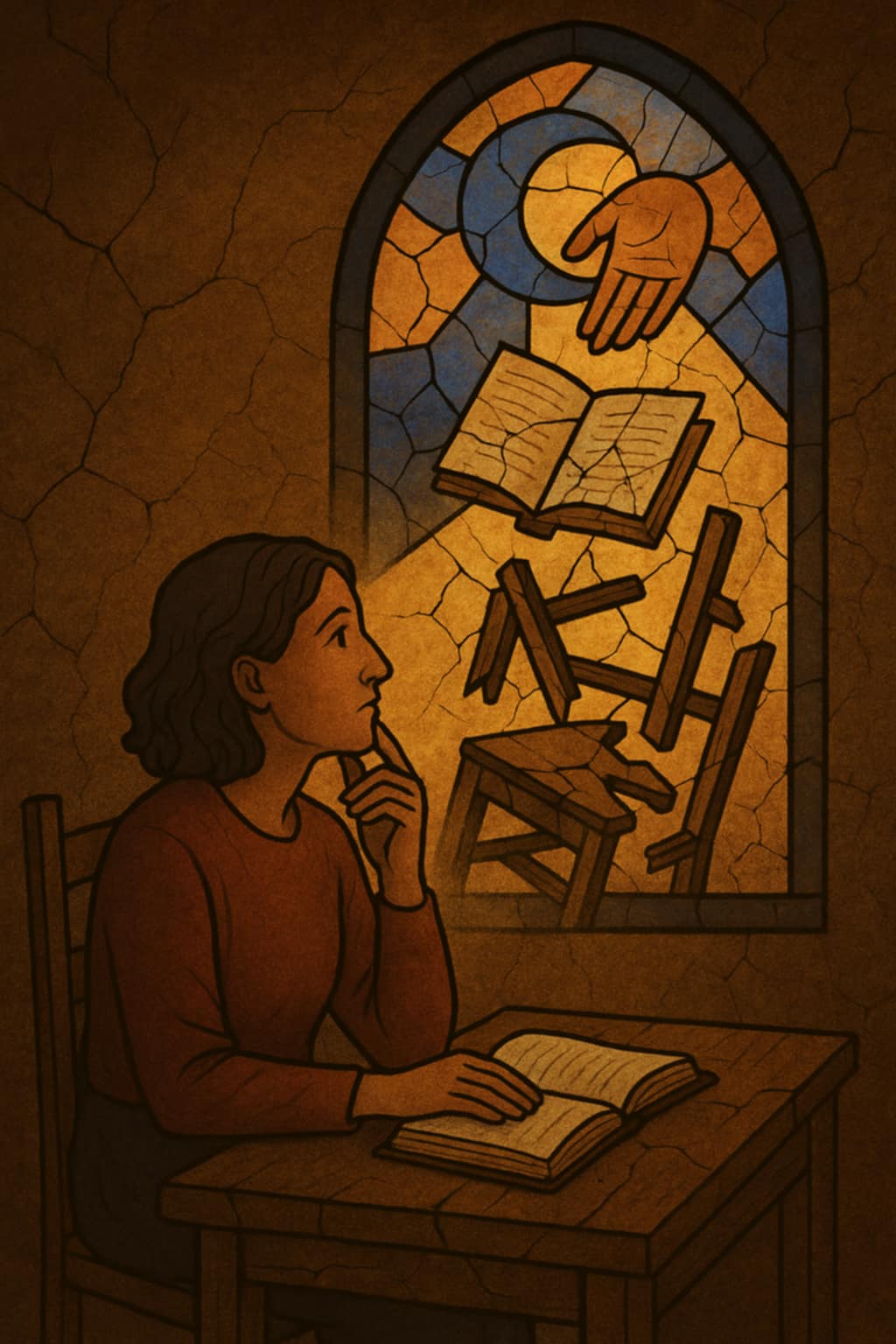
Dallas Willard once said, “hurry is the great enemy of the spiritual life in our day.” I remember years ago listening to a podcast by Rob Bell, who talked about how we’ve lost the ability just to be bored. John Mark Comer argues that we must ruthlessly eliminate hurry from our lives. Every generation says this, but life isn’t the same as it used to be. Our weeks are filled with to-do lists, meetings, and appointments. We work forty-hour weeks (if you’re lucky), we try to eat right and stay healthy, go home, look after the kids, clean the house, go to church, try to catch up with that friend for coffee or lunch, meet your spouses needs, listen to that podcast, read that blog (the irony is not lost on me), catch up with the latest social media news, video, tweet, or reel. We study, try to improve our skill set, and bring work home with us (because there is rarely enough time to do your job in a 9-5), which is what it means to be a functioning human being in 2024.

In the 90s and early 2000s, I felt like imagination was king. Boredom drove me to creativity. I couldn’t mindlessly flick through reels of videos, watch people playing Fortnight, or throw on a podcast (all things I love, by the way). Instead, a rock or a piece of clay became a fossil. The front trees and gardens became hideouts for me to store waterbombs and hide from the other kids on the street. I used to write my name in Egyptian hieroglyphics (not very well, mind you). I used to spend time with my mum. We talked—a lot. I remember my first-ever coffee (a mocha with whipped cream on top) and trips to Wet n’ Wild. I remember going to my Nannas house on holidays and playing cricket in the street with my Dad. Going to the beach or doing road trips always seemed convenient and easy. Nowadays, travelling more than half an hour gets the best of you. It takes work to keep focused and your attention on things that should be important to you. Unconsciously, I reach for my phone to see if I have a notification. Switching off when friends talk about something that doesn’t matter to you is so easy. It’s easy to go to church for an hour and a half a week, passively take in a sermon, half-heartedly sing a few songs and “hurry God” like He is a fast food worker and McDonald’s or something. Most of us don’t know how to slow down, rest, be bored, and linger.

In six days, God created the universe, and on the seventh, He rested, or to put it another way, he lingered, hung around, and delighted in what he had made (Genesis 1-2). The definition of lingering is to stay in a place longer than is expected or usual. It is unusual in our day and age to linger, to stay in one place and enjoy it without distraction or a “productive purpose.” When was the last time you sat, meandered, or rested while just taking in the world around you? Have you ever sighed a breath of relief and just lingered on what you have already accomplished (no matter how seemingly insignificant)? When have you last just plodded around in the messiness of your space and just delighted in your stage of life? I love that God rests. He didn’t need to. God doesn’t have a cap on His capacity. He wasn’t taking the day off because he was tired. He rested and lingered and delighted in his creation because (I believe) He brought him joy.

Fast forward in the story, and in the Exodus, we have Israel enslaved and forced to work every day. They were the peak of productivity. Their worth was weighed in the bricks they made and the work they did. Israelite identity became so entrenched in their slavery that even when they had been freed, they longed to return to it (Exodus 16:3). What I find funny is that the Jews wanted to go back into slavery even while having God’s tangible presence with them in the wilderness (Exodus 13:21). Even after they got into the promised land, established a kingdom and a temple with God dwelling among his chosen people, they still worshipped other gods. Israel forgot to dwell with God and linger in his presence. Though God wasn’t far from any of them, they never stopped and experienced his presence in any intimate and authentic way. I wonder how different history might have been had Adan and Eve lingered with God in the Garden, if the Jews lingered with God in the wilderness, or dwelt with him more intimately in the temple. How different might things have been if the disciples lingered with Jesus? Rather than expecting things from him, they were just with him. Maybe they would have seen Jesus as the messiah he was instead of what they expected him to be.

And this is the problem. We expect God to be something or someone he doesn’t want to be. Just like the Jews, we have theological categories (some of which are helpful) that impose expectations of God into history. God heals. Therefore, whenever I pray, he heals. Except he doesn’t. God is in control. Therefore, everything must work according to his will, except life is chaotic and challenging, and it rarely feels like God is in control. God is love. Yet he often feels distant. God is wrathful. Yet evil always seems to prevail. These categories came to me through books and podcasts, not God himself (though, of course, these are things God can use). These things are true, but I don’t always know it.

In Celtic spirituality, thresholds are seen as a line between one space and the next, one time and another. I’m not just talking about the threshold between your bedroom and the hallway; I’m talking about the thin places in our lives that God whispers and beckons us through so that we may linger, refreshed, transformed, and made new. We may need to stop and linger more often.

My Story I

“Almost everyone can agree that one of the big differences between us and our ancestors of five hundred years ago is that they lived in an ‘enchanted’ world, and we do not.”

Charles Taylor

If I had to distil my entire life into one thing, it would be the search for ‘magic.’ From an early age, I was fascinated by other and bigger things. I remember running around in the yard trying to dig up fossils, reading books about ancient Egypt, and going to the science centre for my birthday (all I wanted were Pokemon Cards). I loved reading books like Eragon, Harry Potter, and The Chronicles of Narnia. My favourite video games as a kid were anything with a sword or gun, but in particular, it was The Legend of Zelda: Ocarina of Time (OoT), released on November 21 1998, that I loved the most. I played the heck out of that thing. For those who don’t know, OoT is the first attempt at an open-world 3d game and is considered by many to be the greatest video game of all time, scoring almost a perfect score on every gaming website. In the game, you could trek into deep forests, climb high mountains, swim rivers and lakes, visit populated villages, and save princesses. But the most essential element in the game was that the world felt more alive, authentic, and meaningful than the one I lived in.


Now, you can chalk all this up to a young boy indulging in escapism, having a wild imagination, not yet matured. I get that. If that’s the case, I’ve never grown up. Maturity, for me, has been less about searching for the magic in the world and more about realising it was here all along. Western Culture (the Church has a massive role in this) has veritably done away with the world in the wardrobe, the sacred groves in the forests, the transcendent high places that strike awe in the beholder, and traded it in for formulas, fast food spirituality and living—a bland, tasteless existence. Can you hardly blame me then for chasing hedonism in place of ‘magic?’ The moment I was able to, I chased women, started clubbing, and partying in a desperate bid to experience the world afresh. However, much like the Preacher in Ecclesiastes, it was all meaningless. I needed more. I wanted more. I craved something more until, one day, I tasted a bit of that lost ‘magic.’


I would love to tell you that once I met Jesus, everything changed, life got better, and the drudgery of life washed away in a sea of awe and wonder. It didn’t. The decision to follow Jesus has been met with suffering and hardship: death, divorce, broken hearts, depression, and a lot of uncertainty and doubt. Christianity hasn’t made things clearer for me. What it has done, however, is rebuilt me through trials in a way life never would have in and of its own.


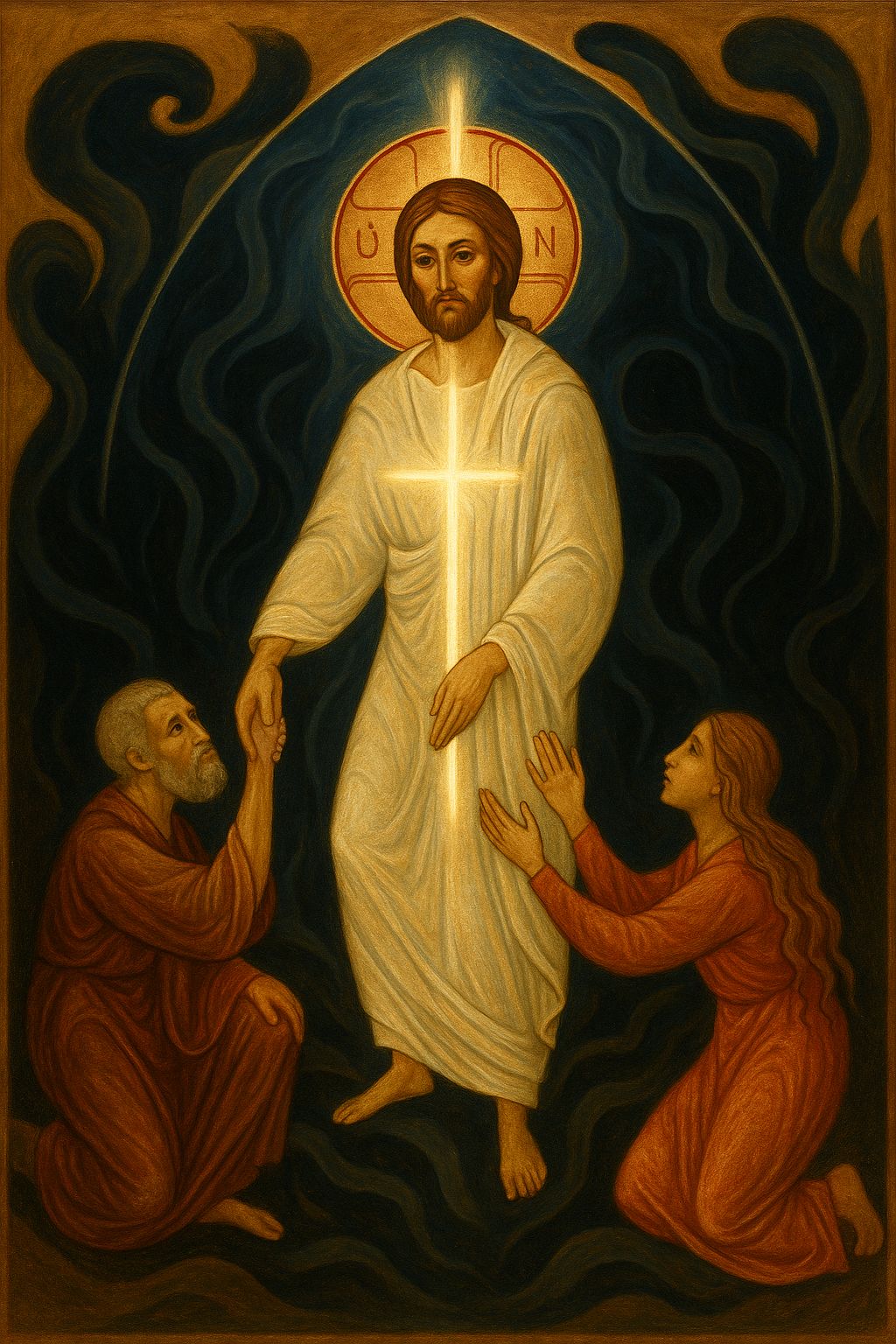
When I met Jesus, it was off the back of a failed relationship that had gone through an abortion. I was still interested in something other than life, but ultimately, the decision to try out Jesus was just another day and another choice. There was no voice from heaven, no beam of light, no stirring deep within my soul. I just decided that Jesus probably had some good things to say and was worth listening to. Since then, over the years, slowly but surely, Jesus has peeled back the layers of my disenchanted heart and shown me that what I was looking for was under my nose the entire time. Salvation for me has been a slow transformative process, not a single instant event. The Cross is less about (but not void of) any atonement theory and more about a pathway into the world unified unto God, the created world, and My Self. As I nerded out over theology, the bible, and spirituality, I realised every church and gathering could be a sacred grove. Every door opened could have a Narnia behind it. Every road travelled could be turned into a pilgrimage. I’ve been a Christian for over ten years, and I can say that God hasn’t finished turning this mess into a slightly less mess.

I look forward to where He’ll have me in another ten. For now I will leave you with this quote:

The Christian story of incarnation in the body of a boy- a boy whose ancestors were both famous and infamous – is one that can spur us towards living with the courage that is indigenous to us. To be human is to be in the image of something good, and image comes from imagination. To be human is to be in the imagination of God, and the imagination is the source of integrity as well as cracks. To be born is to be born into a story of possibility, a story of failure, a story of imagination and the failure of imagination. To be born is to be born with the possibility of courage. Hello to courage.

Pádraig Ó Tuama

The Church of Eden

Some people, in order to discover God, read books. But there is a great book: the very appearance of created things. Look above you! Look below you! Note it. Read it. God, whom you want to discover, never wrote that book with ink. Instead, He set before your eyes the things that He had made. Can you ask for a louder voice than that?

Saint Augustine. The City of God, Book XVI

In my experience, Christianity and nature don’t go together. I think a lot of us Protestants are scared of making an idol out of cheese. Stepping out and getting any spiritual substance from nature feels like pagan worship. Nevertheless, for thousands of years, the Church and even the Old Testament Jews have had a rich tradition of finding God not only in the pages of sacred texts or within the walls of a temple or a church but in nature itself. For me, church on a Sunday can get boring. Nature doesn’t. At church, we have baptisms in a font. In nature, God baptises the world with ever-winding rivers, boundless oceans, and tranquil lakes. At church, we have choirs and bands that stir a crowd. In nature, God stirs the heart with the clap of the trees, the melody of the wind, and the euphony of the animals. At church, we preach from the Scriptures to teach, correct, and rebuke. In nature, God strikes the reader with awe as we pore over the stars. In church, we meet with God in sometimes clinical rituals, polished halls, and typically with masks on. In nature, we meet with God in untamed sacraments, wild establishments, and unmasked hearts.

I’m not a hippy. I don’t hug trees, and I’m not about to join PETA. I’m not even a good environmentalist. I love long showers, I’m often lazy with recycling, and I love a good steak. (and wings). There are days, weeks even where I’d rather spend my time playing video games, binging the Big Bang Theory, and scrolling through Facebook. I love rainy days, coffee, and sleeping in. As much as I know nature is a good place for me to be, it takes more effort than I’m proud to admit to get amongst. Nevertheless, when I’m forced to climb that mountain and see that view, or when I’m walking along the esplanade and I see the ocean stretched out before me, I’m always struck, even just a little, by how God takes up and dwells in more than the four walls of a church.

Elsewhere, I argue that our churches should be a slice of paradise. A taste of the newly created earth. A miniature Eden and a sacred space. I can’t remember the last time, if ever, where I felt awe-inspired, moved, and truly like I was treading hollowed ground in a church. Particularly within the Protestant tradition, we have demystified, disenchanted, and robbed our sacred spaces of their “magic.” We’ve traded awe and wonder for fog machines and light. We’ve sold profound unity and community and bought programs. We’ve replaced stories and myths with conversations about the weather and movies. We’ve exchanged God’s presence for “doing church.”

In the beginning, God created the world; it was wild and waste; there was darkness and chaos, but God’s Spirit hovered over the deep. Over six days, God moulded the world. He placed the stars, the sun, and the moon in the sky and gave them purpose. God divided the seas above from the waters below, filled them, and gave them purpose. He raised trees, shrubs, bushes, mountains, oceans, rivers, and streams from the earth and gave them purpose. God filled the world with birds, fish, and land animals and gave them purpose. He created humanity and gave them purpose. Finally, on the seventh day, God dwelled with what He had made, and there was purpose and goodness. This is how things are supposed to be in our local churches. Our local churches should feel like we’ve tasted a bit of heaven. Goodness, purpose, God’s presence, unity, flourishing, and life should all be markers of a healthy church. Yet I talk to people who experience emptiness, frustration, shallow relationships, trivial teachings, and superficial prayers every week. It seems that our churches are less Eden and more Tower of Babel.

2024

Some may or may not know I took a year off writing (despite this, I’ve had the most views since I started writing). In 2023, I posted one blog (I felt compelled then). It is 2024, and I’m slowly emerging out of blogging hibernation. From my first blog in 2015 to my next, as is faithful with most things in life, my theology and thoughts on Christian spirituality have evolved. I look back on my first blog and chuckle. I’m sure I’ll look back on 2024 in another ten years and cringe. Since I started blogging, I’ve started and graduated from bible college. I’ve married and remarried. I’ve gone through different jobs, moved around, and gone through various churches (finally, I’ve found a nice one to rest in). I’ve had my doubts and struggles. I’ve wanted to walk away from the faith. I’ve wanted to give up and try other things. Yet here I am, still tripping after Jesus (good blog title).

So what does this year hold for Scribbling Theology? More meaningless ramblings of a guy who has literally no idea what he’s talking about (I guarantee that). We’ll discuss God’s creation, beauty and some of the not-so-traditional ways of engaging with God. On the flip side, we’ll discuss the importance of finding a healthy community of believers where you can flourish. We’ll talk about liturgy and the importance of ancient rituals and beliefs. We’ll talk about how stories, both new and old, can transform us and lead us deeper into ourselves (collectively and individually) and into the presence of God. I’ll review a book or two (to start you off read, “How to Know a Person by David Brooks”), a podcast or three and maybe spin a poem. I don’t know where I’ll start or finish. But as always, Scribbling Theology has been an outlet, a creative and even spiritual practice that has helped me to release and vent my own thoughts.

2022 Mix Up: My Five Favourite Blogs of the Year

  1. Scribbling Journal: Entry 2
  2. Jesus Wept: A Short Theological Reflection on Grief
  3. Being Human
  4. Short Reflections on Christian Politics
  5. Scribbling Journal: Entry 1

Happy New Year!