Unbuilding

Do you believe in God? I used to answer quickly.

Now, I pause —

not out of rebellion, but reverence.

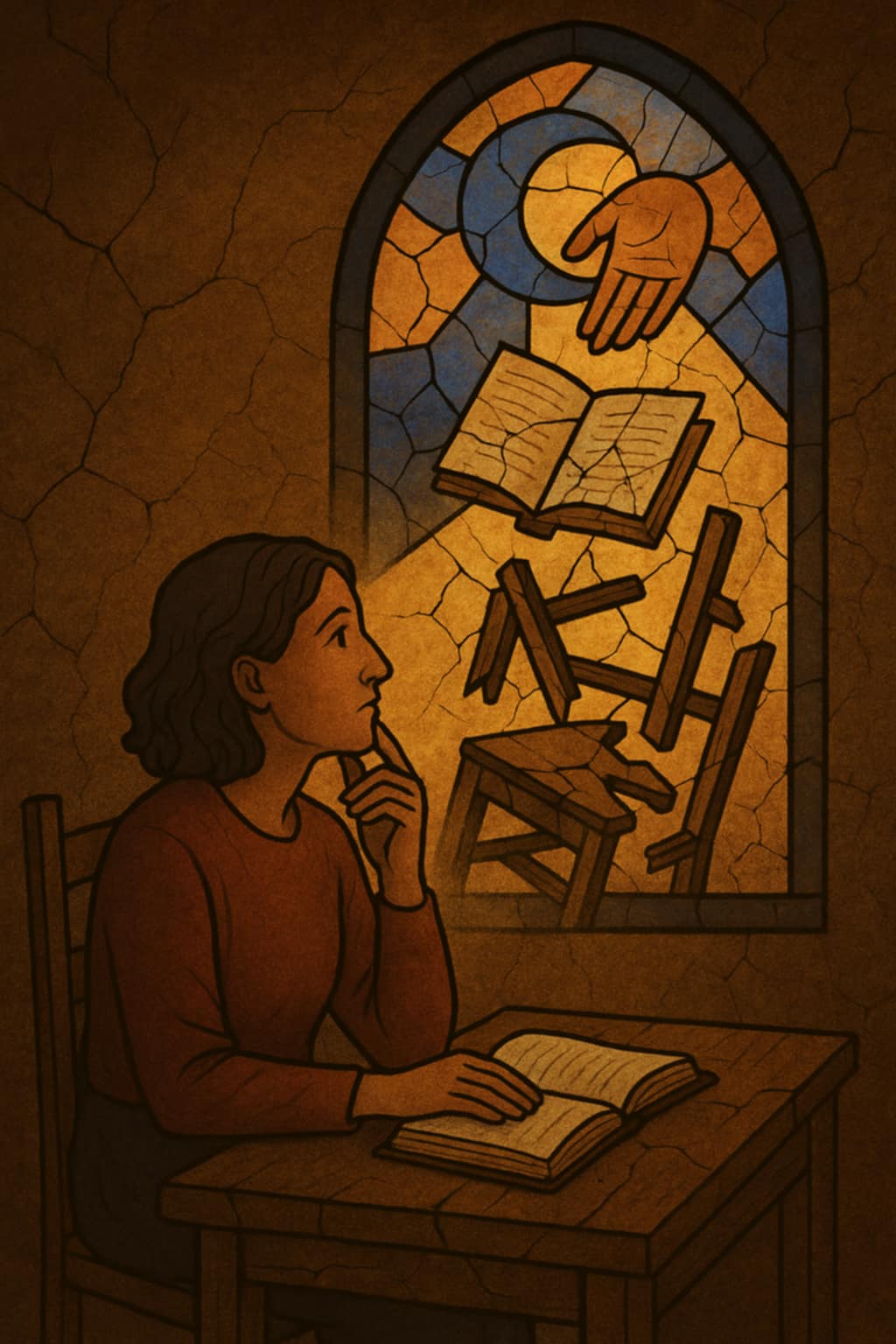
I dismantle doctrines like old furniture,

finding splinters of truth and tradition embedded in my hands.

The creeds I once recited now echo with questions, each word a doorway to deeper understanding or further doubt.

In the quiet morning, amidst the smell of roasted coffee, I find sacredness in the mundane, grace in the unspoken.

Scripture pages worn thin from searching, not for answers, but for the presence that lingers between lines.

I am both the builder and the ruins, the seeker and the found.

Do you believe in God? I still ask, not seeking certainty, but connection.

Every Church Needs a Nerdy Mystic

I once heard Tim Mackie from the Bible Project say that every (local) church needs a bible nerd. I couldn’t agree more. I’ve been a Christian for over a decade and around several churches. Usually, a church falls into one of two categories. They’re either highly focused on worship songs and emotionally connecting to God via the Spirit (both good things), or they’re so Scripture-focused (preaching and teaching the Bible) that Christianity becomes an intellectual ascent to a set of doctrines (again – doctrine is a great thing – I have a degree in it). The problem is that without the Scriptures shaping the local church, it becomes chaotic, messy, and unhinged. Without prayer, music, emotions, and practising the presence of God, the church becomes stale, another club to belong to, and lacks life. I will never go to another church that preaches well but never lingers in God’s presence. I will never go to a church that throws out the Book in favour of fever and emotionalism. Getting the balance right is, of course, challenging. We’re not perfect. But if I have to listen to another TED talk at church just because they have better music, I may as well stay home. If I have to endure another 1-2 hrs of dreariness to hear people take the teaching of Scripture seriously, I may as well listen to podcasts and throw on some Hillsong. Why can’t we have the best of both worlds? Why can’t we have excellent bible teaching (not just surface-level rubbish – meaty, juicy, heartfelt teaching of Scripture), great music, prayer, emotional responses, and God’s presence? Well, maybe every church needs a nerdy mystic (a scary word, I know).

A bible nerd mystic: noun – a person who froths and geeks out over Scripture while lingering in God’s presence and embracing the mystery and transcendence.

It seems that the Bible’s people had the best of both worlds:

Moses was a mystic and loved to teach. He performed miracles (Exodus 4:3-4, 6-7, 30; 7:14-25; 8-12; 14:21-31; 15:22-25; 17:1-13; Numbers 12:13-15; 16:44-50), he taught Torah (Exodus 18:20; 24:3-4; Deuteronomy 4:1-2; 5:1; 6:1-9; 31:9-13), and he frequently spends time in the presence of God (Exodus 3:1-6; 24:12-18; 33:7-11; 34:28).

Jesus was both a massive Bible nerd and a mystic (Jesus is God, so that’s kinda cheating). On the one hand, he went around healing people (Matthew 8:2-3, 5-13, 14-15; 9:20-22, 27-31; 12:9-13) and casting out demons (Luke 4:33-37, 41; 8:2, 26-39). We have Jesus going into the wilderness (Mattew 4:1-11) and into isolated places in nature to recalibrate and pray (Matthew 14:13, Mark 6:31-32, Luke 6:12, John 6:15), and even situations where Jesus hears the voice of God (Matthew 3:16-17; 17:5 John12:28-30). Yet, on the other hand, we have Jesus the rabbi clearly nerding out over Scripture and interpreting it (Matthew 4:4, 7, 10; 21:13; 22:37-40; Luke 4:18-19) and teaching people around him (Matthew 5-7; 13:1-9; Mark 1:21-22; 4:1-2; 6:34; Luke 5:3).

Paul had a list of similar experiences. He healed (Acts 14:8-10; 19:11-12; 20:9-12; 28:8-9) and cast out demons (Acts 16:16-18). He went into the wilderness to recalibrate his thinking (Galatians 1:17-18) and had mystical experiences and visions hearing God’s voice (Acts 9:3-6; 22:17-21; 23:11; 2 Corinthians 12:2-4). Yet Paul still taught the scriptures (Acts 17:2-3; 18:4-5; 19:8-10; 20:7-12) and thought they were important enough for others to continue teaching (2 Timothy 3:16-17).

We don’t need to trade one for the other. Our churches should be filled with a sense of both worlds. We can have the tangible expressions of God’s presence and the deep meat of teaching the Scriptures. One should only be happening with the other, yet they often don’t.

My Story I

“Almost everyone can agree that one of the big differences between us and our ancestors of five hundred years ago is that they lived in an ‘enchanted’ world, and we do not.”

Charles Taylor

If I had to distil my entire life into one thing, it would be the search for ‘magic.’ From an early age, I was fascinated by other and bigger things. I remember running around in the yard trying to dig up fossils, reading books about ancient Egypt, and going to the science centre for my birthday (all I wanted were Pokemon Cards). I loved reading books like Eragon, Harry Potter, and The Chronicles of Narnia. My favourite video games as a kid were anything with a sword or gun, but in particular, it was The Legend of Zelda: Ocarina of Time (OoT), released on November 21 1998, that I loved the most. I played the heck out of that thing. For those who don’t know, OoT is the first attempt at an open-world 3d game and is considered by many to be the greatest video game of all time, scoring almost a perfect score on every gaming website. In the game, you could trek into deep forests, climb high mountains, swim rivers and lakes, visit populated villages, and save princesses. But the most essential element in the game was that the world felt more alive, authentic, and meaningful than the one I lived in.


Now, you can chalk all this up to a young boy indulging in escapism, having a wild imagination, not yet matured. I get that. If that’s the case, I’ve never grown up. Maturity, for me, has been less about searching for the magic in the world and more about realising it was here all along. Western Culture (the Church has a massive role in this) has veritably done away with the world in the wardrobe, the sacred groves in the forests, the transcendent high places that strike awe in the beholder, and traded it in for formulas, fast food spirituality and living—a bland, tasteless existence. Can you hardly blame me then for chasing hedonism in place of ‘magic?’ The moment I was able to, I chased women, started clubbing, and partying in a desperate bid to experience the world afresh. However, much like the Preacher in Ecclesiastes, it was all meaningless. I needed more. I wanted more. I craved something more until, one day, I tasted a bit of that lost ‘magic.’


I would love to tell you that once I met Jesus, everything changed, life got better, and the drudgery of life washed away in a sea of awe and wonder. It didn’t. The decision to follow Jesus has been met with suffering and hardship: death, divorce, broken hearts, depression, and a lot of uncertainty and doubt. Christianity hasn’t made things clearer for me. What it has done, however, is rebuilt me through trials in a way life never would have in and of its own.


When I met Jesus, it was off the back of a failed relationship that had gone through an abortion. I was still interested in something other than life, but ultimately, the decision to try out Jesus was just another day and another choice. There was no voice from heaven, no beam of light, no stirring deep within my soul. I just decided that Jesus probably had some good things to say and was worth listening to. Since then, over the years, slowly but surely, Jesus has peeled back the layers of my disenchanted heart and shown me that what I was looking for was under my nose the entire time. Salvation for me has been a slow transformative process, not a single instant event. The Cross is less about (but not void of) any atonement theory and more about a pathway into the world unified unto God, the created world, and My Self. As I nerded out over theology, the bible, and spirituality, I realised every church and gathering could be a sacred grove. Every door opened could have a Narnia behind it. Every road travelled could be turned into a pilgrimage. I’ve been a Christian for over ten years, and I can say that God hasn’t finished turning this mess into a slightly less mess.

I look forward to where He’ll have me in another ten. For now I will leave you with this quote:

The Christian story of incarnation in the body of a boy- a boy whose ancestors were both famous and infamous – is one that can spur us towards living with the courage that is indigenous to us. To be human is to be in the image of something good, and image comes from imagination. To be human is to be in the imagination of God, and the imagination is the source of integrity as well as cracks. To be born is to be born into a story of possibility, a story of failure, a story of imagination and the failure of imagination. To be born is to be born with the possibility of courage. Hello to courage.

Pádraig Ó Tuama

The Church of Eden

Some people, in order to discover God, read books. But there is a great book: the very appearance of created things. Look above you! Look below you! Note it. Read it. God, whom you want to discover, never wrote that book with ink. Instead, He set before your eyes the things that He had made. Can you ask for a louder voice than that?

Saint Augustine. The City of God, Book XVI

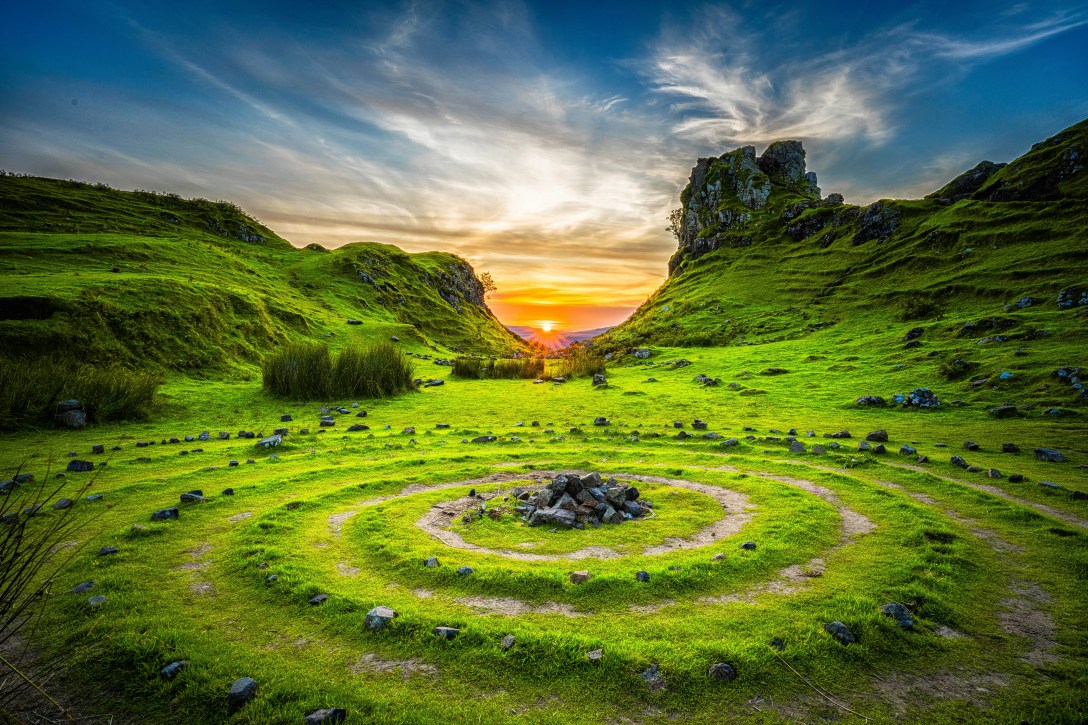
In my experience, Christianity and nature don’t go together. I think a lot of us Protestants are scared of making an idol out of cheese. Stepping out and getting any spiritual substance from nature feels like pagan worship. Nevertheless, for thousands of years, the Church and even the Old Testament Jews have had a rich tradition of finding God not only in the pages of sacred texts or within the walls of a temple or a church but in nature itself. For me, church on a Sunday can get boring. Nature doesn’t. At church, we have baptisms in a font. In nature, God baptises the world with ever-winding rivers, boundless oceans, and tranquil lakes. At church, we have choirs and bands that stir a crowd. In nature, God stirs the heart with the clap of the trees, the melody of the wind, and the euphony of the animals. At church, we preach from the Scriptures to teach, correct, and rebuke. In nature, God strikes the reader with awe as we pore over the stars. In church, we meet with God in sometimes clinical rituals, polished halls, and typically with masks on. In nature, we meet with God in untamed sacraments, wild establishments, and unmasked hearts.

I’m not a hippy. I don’t hug trees, and I’m not about to join PETA. I’m not even a good environmentalist. I love long showers, I’m often lazy with recycling, and I love a good steak. (and wings). There are days, weeks even where I’d rather spend my time playing video games, binging the Big Bang Theory, and scrolling through Facebook. I love rainy days, coffee, and sleeping in. As much as I know nature is a good place for me to be, it takes more effort than I’m proud to admit to get amongst. Nevertheless, when I’m forced to climb that mountain and see that view, or when I’m walking along the esplanade and I see the ocean stretched out before me, I’m always struck, even just a little, by how God takes up and dwells in more than the four walls of a church.

Elsewhere, I argue that our churches should be a slice of paradise. A taste of the newly created earth. A miniature Eden and a sacred space. I can’t remember the last time, if ever, where I felt awe-inspired, moved, and truly like I was treading hollowed ground in a church. Particularly within the Protestant tradition, we have demystified, disenchanted, and robbed our sacred spaces of their “magic.” We’ve traded awe and wonder for fog machines and light. We’ve sold profound unity and community and bought programs. We’ve replaced stories and myths with conversations about the weather and movies. We’ve exchanged God’s presence for “doing church.”

In the beginning, God created the world; it was wild and waste; there was darkness and chaos, but God’s Spirit hovered over the deep. Over six days, God moulded the world. He placed the stars, the sun, and the moon in the sky and gave them purpose. God divided the seas above from the waters below, filled them, and gave them purpose. He raised trees, shrubs, bushes, mountains, oceans, rivers, and streams from the earth and gave them purpose. God filled the world with birds, fish, and land animals and gave them purpose. He created humanity and gave them purpose. Finally, on the seventh day, God dwelled with what He had made, and there was purpose and goodness. This is how things are supposed to be in our local churches. Our local churches should feel like we’ve tasted a bit of heaven. Goodness, purpose, God’s presence, unity, flourishing, and life should all be markers of a healthy church. Yet I talk to people who experience emptiness, frustration, shallow relationships, trivial teachings, and superficial prayers every week. It seems that our churches are less Eden and more Tower of Babel.

Knowing

To be known is one of the most important things that a person can get a handle on in their life. The desire to be understood is built into our very DNA. It’s part of who we are. I’m not talking about learning a list of facts about a person. Camaron Smith, aged 31, male, likes writing, theology, video games, poetry, spiced rum and craft beer. These are facts, essential facts, because they give you small glimpses into who I am. However, to truly be known by another is a whole other level of knowledge that takes a lifetime of relationships and journeying to grasp. To me, there are four knowings one needs to embark on in life to fulfil the yearning inside of the heart (in no particular order):

  1. To know thy self
  2.  To know the cosmos (the universe around us)
  3.  To know other people and be known
  4.  To know God

To Know Thy Self

Every man has forgotten who he is. One may understand the cosmos but never the ego; the self is more distant than any star.

G. K. Chesterton

We all know the ancient Greek maxim coined by Socrates to “know thy self.” Over the last two thousand years of human history, it seems like all we’ve been trying to do is make our mark on the world, bring meaning to our existence, and define who we are, from the great empires of the world to the religious institutions that have shaped our cultural moments (for better or worse), to the Enlightenment the industrial revolution and the Western free market. Society in the world that I live in has wrestled with what it means to be human from a buffet of different perspectives. Interestingly, today, the quest to know oneself is as prevalent as ever. With the rise of what Carl Trueman calls “expressive individualism”, the West’s desperate attempt to understand the self has spiralled out of control. The human desire to be known and to know thy self is so significant to the modern person that we’ve all lost all meaning of the self and instead have opted to identify as anything but, which, in turn, has influenced society at large and confused the masses. As Carl Trueman says

The rise of the sexual revolution was predicated on fundamental changes in how the self is understood. The self must first be psychologized; psychology must then be sexualized, and sex must be politicized.

Carl Trueman – The Rise and Triumph of the Modern Self

In a world where instant gratification is the norm, so do people believe that knowing the self is something that can be worked out in a personality test, a course, a self-help book, six weeks of therapy, or a moment of “inspiration” about who they genuinely are (typically expressed in a hyper-sexual way). Any therapist worth their weight in gold, any spiritual guru from any religion will tell you that the quest to know the self takes a lot of time. I’m not talking about 12 months or three, but your entire life. There’s a reason why monks, gurus, and hermits live for years in isolation. Why? Enlightenment, truth, knowledge, and “knowing” take time. In the words of pastor John Mark Comer,

We live in a culture that is addicted to speed and instant gratification. We want everything now. We don’t want to wait. We don’t want to work hard. We don’t want to suffer. We don’t want to grow. But that’s not how God works. God works slowly. God works deeply. God works through process and time.

John Mark Comer 

Rome wasn’t built in a day, and neither was the world. It was built in six or in 1.658 trillion days (approximately), depending on what you believe. So settle in. The road to self-discovery is a long but rewarding one.

To Know the Cosmos

It seems to me that the natural world is the greatest source of excitement, the greatest source of visual beauty, the greatest source of intellectual interest. It is the greatest source of so much in life that makes life worth living.

Sir David Attenborough

The cosmos is a tricky thing to understand. Depending on your relationship with science and faith, you will make sense of the world around you differently. For some, nature is something we live in, but we’re apart from it. For others, the universe is a series of complex systems that can ultimately be understood with math and science. For me, the cosmos is something I can live in, enjoy, and get meaning from. I can understand myself, others, and the God who made me. Creation is a mirror, a glimpse, and a window into the soul of the material world. At night, when I look out at the stars, I resonate with the Psalmist, who writes, “When I behold Your heavens, the work of Your fingers, the moon and the stars, which You have set in place— what is man that You are mindful of him, or the son of man that You care for him? (Psalm 8:3-4). When I look out over the ocean, Paul comes to mind when he writes, “His invisible attributes, namely, his eternal power and divine nature, have been clearly perceived, ever since the world’s creation, in the things that have been made. (Romans 1:20). Historically, nature has played a massive role in developing our knowledge of God and ourselves. The early church father, Basil of Caesarea, once said, “The visible things of God’s creation are like syllables or letters by which we may spell out some words concerning him.” In more modern times, Emil Bruner argued, “Natural theology is the attempt to attain an understanding of God and his will on the basis of the nature of man and his world, without reference to the special revelation of God in Christ.” 

I can imagine going from place to place, seeing a waterfall, the ocean, a tree, a mountain, a person, or a valley – each “letter” of creation falls into place as the cosmos writes the greatest story ever told as we attempt to understand God and ourselves.

The world is a book, and those who do not travel read only one page.

St. Augustine

To Be Known and To Know Other People

In The Soul of Desire, psychiatrist Curt Thompson suggests that underneath all our longings is the desire to be known―and what’s more, that this fundamental yearning manifests itself in our deep need to make things of beauty, revealing who we are to others. Coupled with my therapy sessions in my attempt to know myself, what I read in Thompson’s book was the most profound idea I had heard all year. In Genesis 2:18, God says, “It is not good for the human to be alone.” Vivek Murthy, the former U.S. Surgeon General, has been raising awareness about the “loneliness epidemic” that affects millions of people around the world. He argues that loneliness is not only a personal problem but also a public health issue that can contribute to various physical and mental illnesses, such as addiction, violence, depression and anxiety. In his book Together: The Healing Power of Human Connection in a Sometimes Lonely World, he explores the causes and consequences of loneliness and offers practical solutions to cultivate more meaningful relationships in our lives. He believes that human connection is essential for our well-being and happiness and that we all have a deep desire to be known by others.

Until recently, I don’t think I’ve ever been really known by anyone, let alone myself. I’ve had knowledge of a lot of people, and I use a lot of defence mechanisms to stop myself from being known by others, but I’ve always been quite lonely and unsure of what it means to be Camaron Smith. Despite our advancements in technology and social media, despite all the self-help books, and despite the emails and instant messages, I don’t know if I’ve ever really been known or if I’ve ever truly known another person.

Our Western world has long emphasized knowledge—factual information and “proof”—over the process of being known by God and others. No wonder, then, that despite all our technological advancements and the proliferation of social media, we are more intra- and interpersonally isolated than ever. Yet it is only when we are known that we are positioned to become conduits of love. And it is love that transforms our minds, makes forgiveness possible, and weaves a community of disparate people into the tapestry of God’s family.

Curt Thompson

To Know God

To know God is to live.

Leo Tolstoy

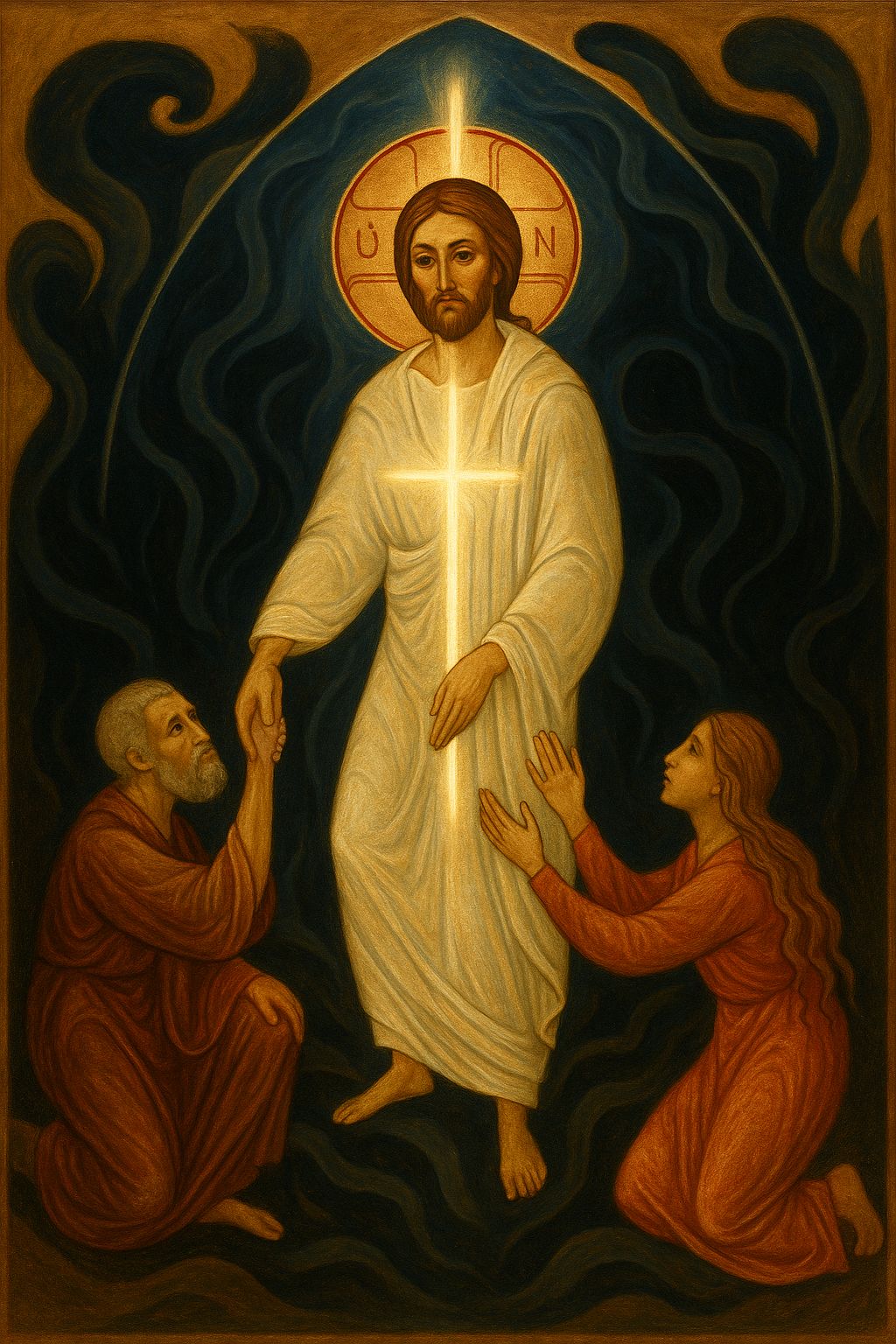
St. Ignatius of Loyola once said, “God freely created us so that we might know, love, and serve him in this life and be happy with him forever.” The Westminister Confession of Faith asks, “What is the chief end of man?” and it answers, “Man’s chief end is to glorify God and to enjoy him forever.” To glorify God, one must enjoy Him. Enjoying God is knowing God. I don’t mean having a clear, concise doctrine of God or having your orthodoxy and theology ticked off properly. I don’t mean that we just read about Him or listen to talks and sermons on the Bible. What I mean is knowing God in the way one might know a dear friend or a life partner. John writes, “This is eternal life, that they may know You, the true God, and Jesus Christ, whom You have sent” (John17:3). The knowing that I want is the intimate knowledge one might have of God as one walks with Him in every moment of every day. This is something I need to work on a lot. It’s effortless for me to throw up defence mechanisms and push God away despite my wanting to be known by Him and my wanting to know Him. I’m afraid of what that would mean. Eternal life is this kind of intimacy with God. Why wait?

There, I greet God in my own disorder. I say hello to my chaos, my unmade decisions, my unmade bed, my desire and my trouble. I say hello to distraction and privilege, I greet the day and I greet my beloved and bewildering Jesus.

Pádraig Ó Tuama