
When Faith Stops Feeling Life-Giving
I once managed belief like a fragile museum piece, feeling the weight of maintaining it rather than living it. Before deconstruction, my faith felt exhausting. Not because I didn’t believe, but because the answers I had adopted stopped helping me live freely or flourish. Over time, they settled into a shallow kind of idea-ism, a way of thinking about faith that meant my spirituality, my questions, and even my own human experience had to be constantly filtered through categories that needed defending, maintaining, and keeping in order. Faith became something to manage rather than inhabit. Something to defend instead of embody.
Unresolved Theological Tension
Faith started to feel like something that needed constant attention instead of bringing rest. I carried a lot of unresolved tensions. The sharpest was the contradiction of a loving God who was also described as perpetually angry. It was difficult to reconcile the message of the cross as good news with explanations that felt wrong to me. I was told to trust Scripture, but only within rigid boundaries, which impacted how I viewed science and historical contexts. These tensions weren’t just ideas. They manifested in politics and in divided groups. Faith increasingly felt like an exercise in picking sides to stay ‘biblical.’ Underneath, I was sorting people: who was orthodox or heretical, faithful or compromised, who belonged and who didn’t. None of it felt life-giving. All of it carried weight, and over time, that weight became unbearable. Eventually, I didn’t just feel strained. I stopped altogether. I stopped engaging. I stopped trying to hold everything together, not out of rebellious spirit or a hard heart, but out of exhaustion.
Why I Stepped Away
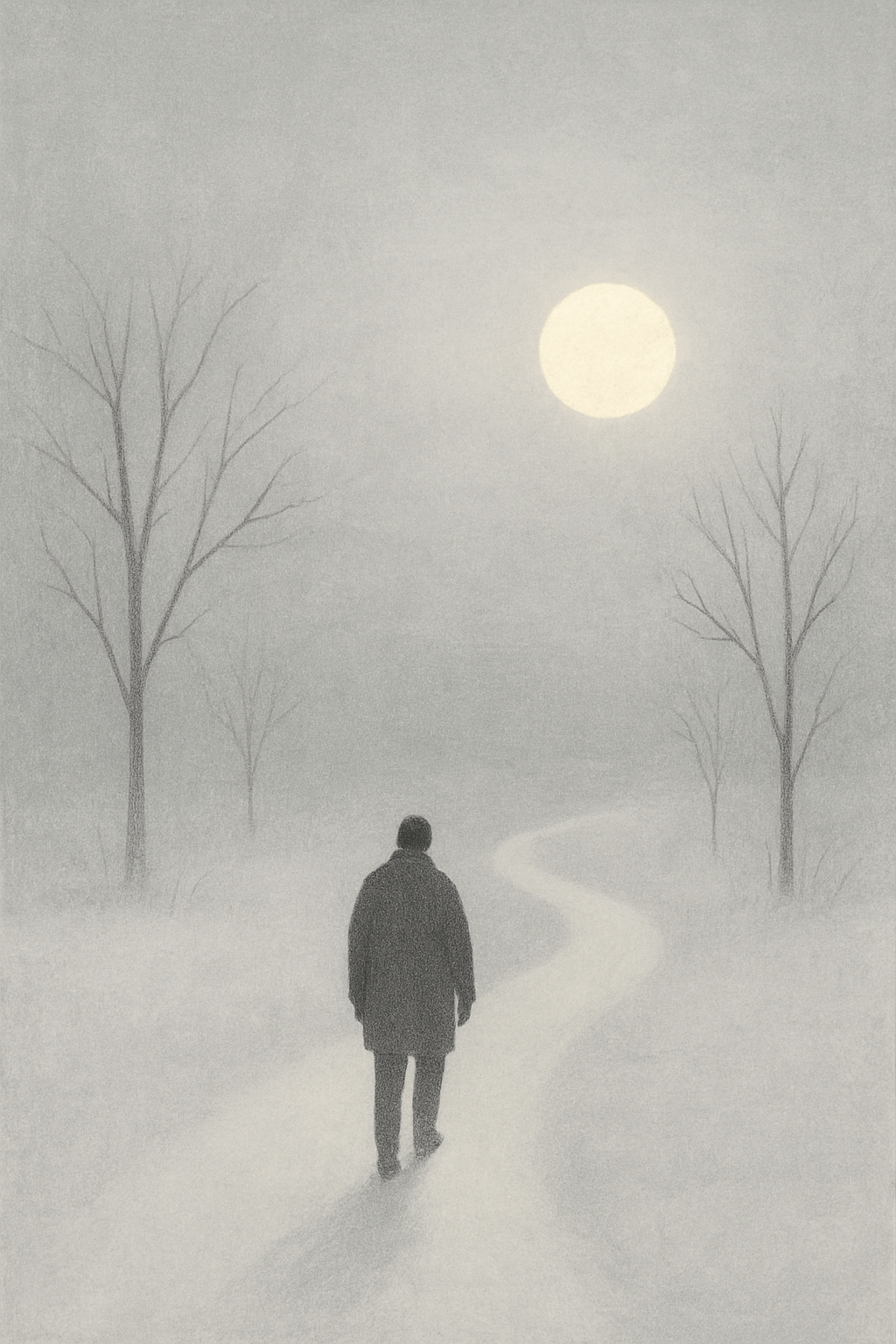
It wasn’t some hidden sin I wanted to justify that led me to deconstruct. Rather, it was the heavy burden of traditional evangelism, a way of holding faith that was slowly hollowing me out rather than giving life. I needed distance. Not dramatically or all at once, but carefully. Slowly and surely, I removed myself from it. Stepping back didn’t feel brave. It felt disorienting. I wasn’t replacing one system with another. I was letting go of the constant explanations and seeing what was left.
At first, stepping back felt uncomfortable, but also freeing. Without my old ways of thinking, I didn’t know what to do next. My prayers changed. I stopped trying to say the right words and just sat with my feelings, embracing these moments as a form of silent prayer or centering. This contemplative posture allowed me to talk less at God and be more present. Faith didn’t come with easy answers anymore. There were no safe categories or certain words. The mystery I used to fear started to feel interesting instead of scary.
Deconstrucion Research
As I went through this, I noticed I wasn’t alone. Increasingly, I realized that deconstruction was happening everywhere. Research shows that about 42 percent of adults have questioned the faith they grew up with, and many still call themselves Christian. Barna’s research says about a third of practising Christians have seriously re-examined their inherited beliefs without leaving their faith. This shows that deconstruction isn’t simply about leaving Christianity. For many, it’s a personal reckoning inside the Church. Commentators such as Scot McKnight helped me understand this further. In Invisible Jesus, McKnight says that much of modern Christianity has replaced the real Jesus with other versions: a political Jesus, a nationalist Jesus, a moral enforcer, or a doctrinal gatekeeper. When people deconstruct, they’re often not rejecting Christ, but these distorted versions, hoping to find the real one.
Deconstruction as Reformation
Seen this way, deconstruction begins to look less like collapse and more like correction. Building on this, it almost ironically carries the marks of reform and renewal. Historically, movements that return people to the centre of faith are rarely neat or reassuring in the moment. They disrupt settled systems and force hard questions. Consider Martin Luther’s 95 Theses in 1517, which challenged the practices of the Church and sparked the Protestant Reformation, a period of profound religious renewal born out of significant disruption. Today, deconstruction feels like that kind of moment. As Brian Zahnd has often said, the future Christian will likely be a mystic, not someone chasing spiritual novelty, but someone formed by presence rather than control, encounter rather than certainty, love in place of fear. Taken together, the data and lived experience tell the same story. Deconstruction is not about killing Christianity. For many, it is about clearing away what is brittle and broken, so that something more ancient, deeper, and more Christ-centred can emerge.
Deconstruction as Formation
When I stepped back, not everything disappeared. In fact, some things stayed, not because I fought to keep them, but because they were never tied to the frameworks I had let go of. Christ stayed. Not as a system to defend or a set of conclusions to maintain, but as the person I kept returning to. Even when I wasn’t sure what I believed, Jesus himself remained compelling. His way of being in the world. His closeness to those on the margins. His refusal to grasp for power. Whatever else shifted, I couldn’t shake him. Sometimes, in silent prayer, it felt like Jesus whispered, ‘I’m here with you.’ It was as if he was telling me, ‘It’s okay to ask questions, to seek understanding. I am with you in your doubts and your discoveries.’ Scripture stayed too. And in many ways, it became more profound. I never stopped loving the Bible. I’ve always been a Bible nerd. What changed wasn’t my affection for the text, but the way I read it. As I let go of the lenses I had adopted, Scripture stopped being something I approached primarily to extract answers or defend positions. It became sacramental. Life-giving. Formative.
Deconstruction and Orthodox
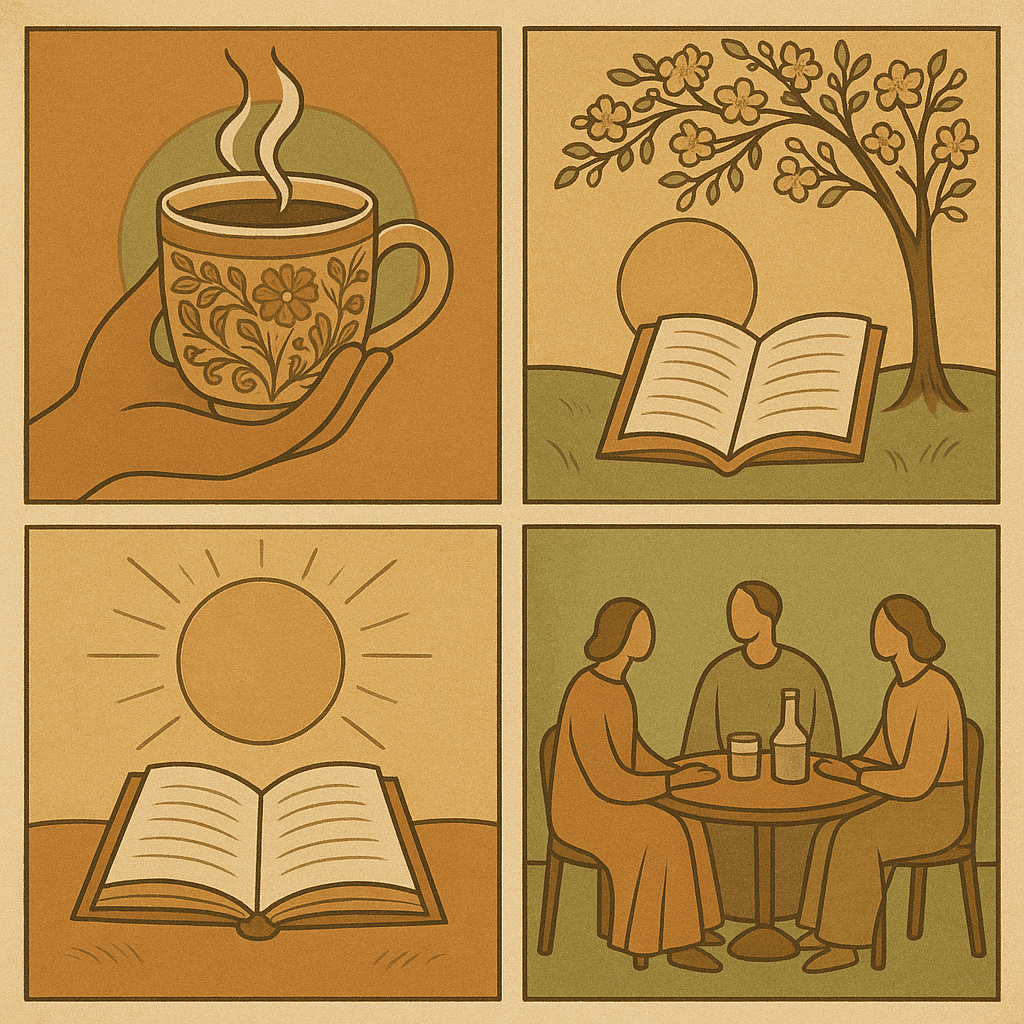
I came to recognise the Bible not as a puzzle to solve, but as a place to meet God. Reading it this way made me slow down. It shaped how I think and what I care about. It worked deep inside me, not just in arguments. The text didn’t always answer my questions, but it kept bringing me back to Christ and to living more like him. That didn’t weaken my faith. It made it stronger. Orthodoxy came back, but it felt different.
What I eventually realised was that orthodoxy really is about healthy boundaries. In its earliest expressions, orthodoxy existed to confront heresy and guard the heart of the Christian confession. The creeds and confessions were shaped in conflict because what was at stake was not abstract correctness, but the truth about God, Christ, and what it means to be human. That work mattered. It still does. What surprised me was discovering that those boundaries were never meant to suffocate faith. They were meant to protect life.
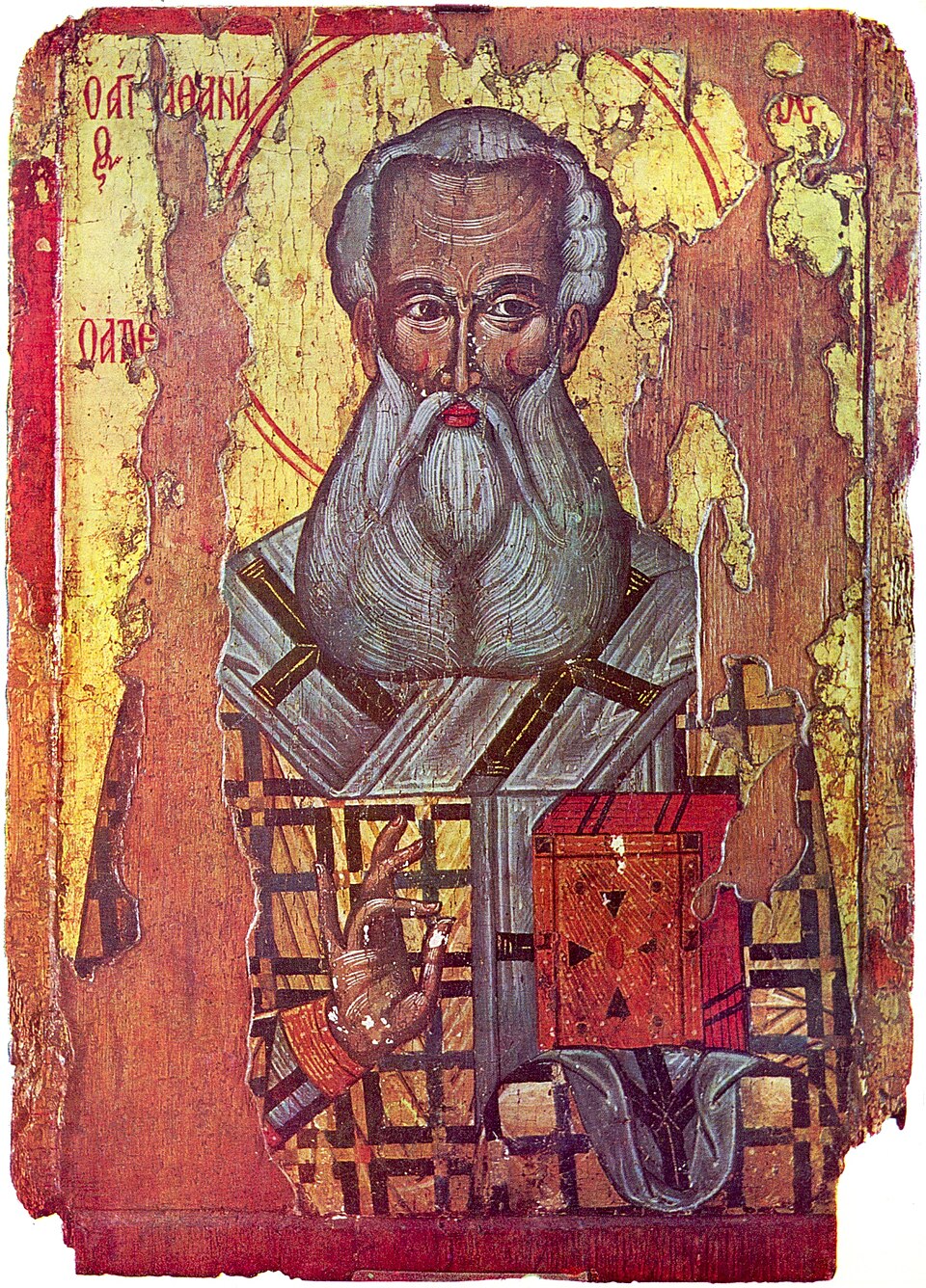
Reading the early Church Fathers made this clear. Figures like Athanasius and Gregory of Nyssa were deeply orthodox and fiercely committed to doctrinal clarity, yet their theology was never anxious or thin. For Athanasius, orthodoxy mattered because if Christ is not truly God, then humanity is not truly healed. Doctrine was inseparable from salvation. Gregory of Nyssa, equally committed to the creedal faith, insisted that God always exceeds our concepts. Orthodoxy did not eliminate mystery. It required it. Doctrine named the centre, but it also opened the soul toward continual growth, desire, and transformation.
From there, the tradition opened rather than closed. I found this same orthodoxy expressed across several streams of the Church, in the earthy devotion of Celtic Christianity, in the depth and union spoken of by Catholic and Eastern mystics, and even in modern voices who continue to live this faith attentively and sincerely. Each tradition nurtures humility and compassion, drawing from the same well of Christ’s love and teachings. What united all of it was Christ, not as an idea to defend, but as a life to enter.
Deconstruction didn’t take me away from orthodoxy. It led me into a deeper kind of orthodoxy.
To Those Watching Other’s Deconstruct
That’s why I want to offer a word of caution to those watching others deconstruct: how we respond matters. Treating deconstruction as betrayal, danger, or moral failure does not protect faith. It reinforces the very wounds that made faith unlivable in the first place. If the goal is depth, maturity, and Christlikeness, then fear-driven responses are counter-formative. What deconstructing people need is love, not suspicion. Curiosity, not control. Space to ask honest questions without punishment. Orthodoxy was never meant to be enforced through fear. It was meant to form people into the likeness of Christ.
I didn’t lose my faith. I lost a version of it that could not carry life.
What remains now is not certainty, but commitment. Not answers I can deploy, but a way of living I am learning to inhabit. Christ abides at the centre again. Scripture is sacramental. Orthodoxy is formative. Mystery is no longer something I rush to resolve. For the first time in a long while, faith doesn’t require vigilance. It asks for faithfulness. Faith now feels like breathing, not balancing plates. It sustains me quietly, like a gentle rhythm that I can finally rest in. And that feels like something I can truly live with.

 Scribbling Theology