
My Top 5 Books of 2025

I do not usually read with lists in mind. I read slowly, often distractedly, sometimes devotionally, sometimes just to survive a season. But looking back over this year, a handful of books stand out not because they impressed me intellectually, but because they helped to form me. They changed the way I noticed the world. They softened me. They reoriented my imagination toward God.

These are my top five books of 2025, not ranked by importance, but gathered because each met me where I was and quietly moved me somewhere better.

1. Haiku: Japanese Poems for the Four Seasons edited by Ornella Civardi

This book did something simple. It forced me to slow down.

Haiku does not allow for rushing. There is no room for verbosity or explanation. You must attend. You must notice. A falling leaf. The sound of rain. A moment that would otherwise pass unnoticed. Reading these poems is helping me to train my attention outward again, away from constant abstraction and into the texture of the world around me.

Spiritually, this mattered more than I expected. It reminded me that presence is not a technique but a posture. That the sacred often hides in what is small and fleeting. That God does not always speak in paragraphs but sometimes in a single image, held long enough to be received.

I found myself more deliberate after reading this book. More aware of light, sound, and stillness. In a culture obsessed with speed and productivity, haiku felt quietly resistant. Almost monastic.

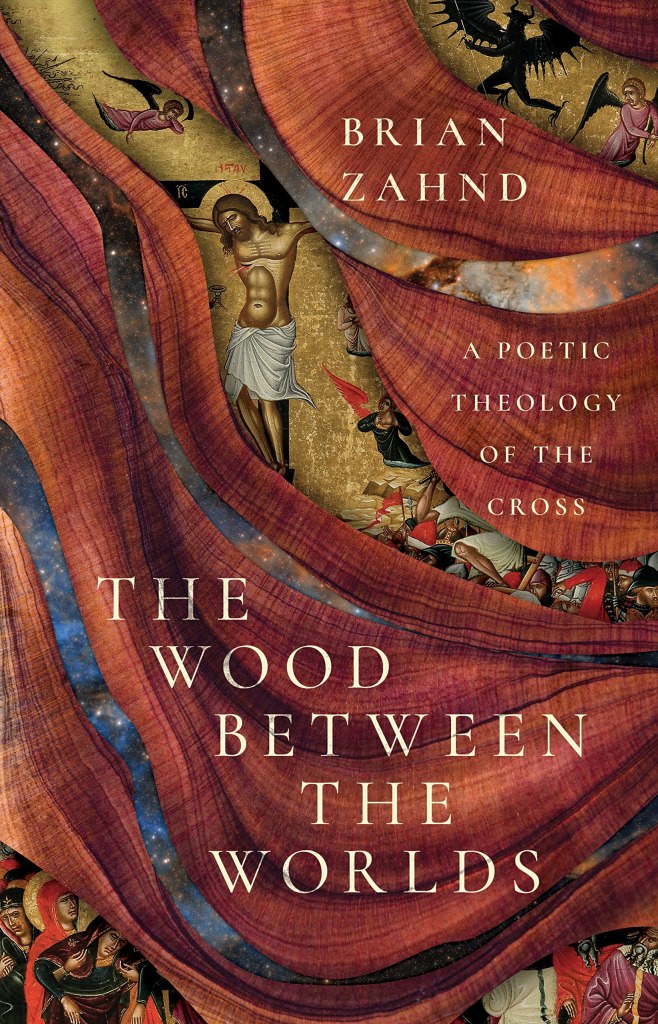
2. The Wood Between the Worlds by Brian Zahnd

Zahnd has a gift for naming the thin places between heaven and earth, and this book lives entirely in that space. Drawing its imagery from C S Lewis, The Wood Between the Worlds explores liminality, transformation, and the places where God meets us between certainty and chaos.

What I appreciated most was its refusal to rush toward answers. This is not a book trying to win arguments. It is a book inviting readers into mystery, into surrender, into the slow work of unlearning false images of God.

It resonated deeply with my own growing sense that faith is less about holding tight to certainty and more about learning how to dwell faithfully in the in between. Zahnd writes with pastoral warmth, theological depth, and poetic imagination, making this a book I returned to more than once.

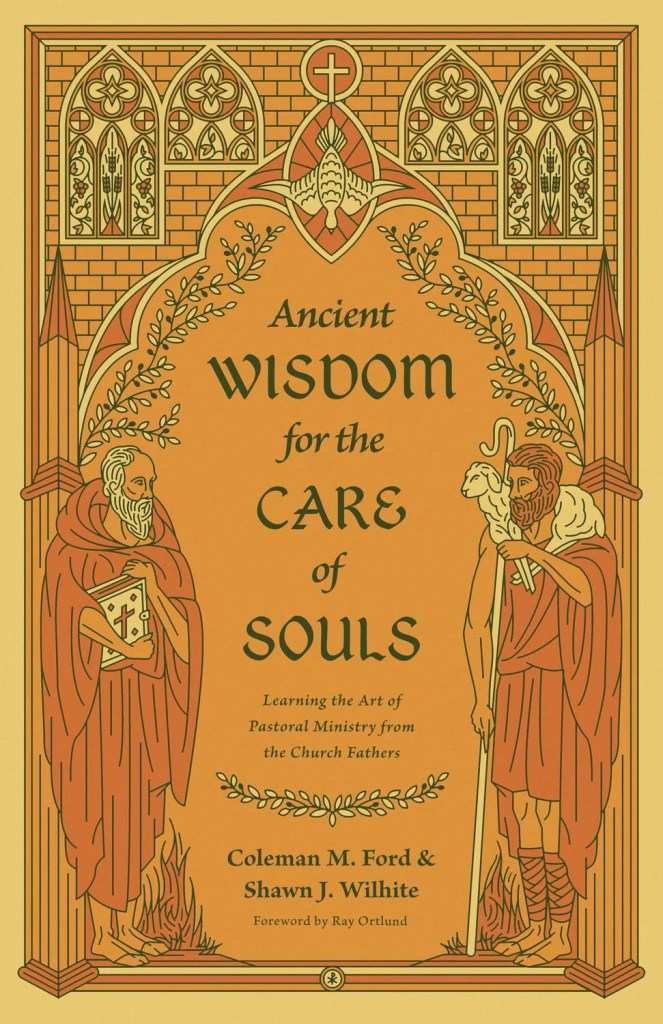
3. Ancient Wisdom for the Care of Souls: Learning the Art of Pastoral Ministry from the Church Fathers By Coleman M. Ford and Shawn J. Wilhite

In an age where pastoral ministry is often shaped by metrics, branding, and performance, this book gently but firmly pulls us back to a much older vision of soul care. One rooted in patience, humility, discernment, and deep attention to the inner life.

The section on Gregory of Nyssa stood out to me in particular. His vision of the soul as endlessly journeying into God, always growing, always becoming, reframed formation not as fixing people but as accompanying them. Gregory does not see humanity as a problem to be solved, but as a mystery to be loved into wholeness.

That perspective has stayed with me. It has shaped the way I think about spiritual direction, formation, and even my own inner life. It reminded me that good pastoral care is slow, relational, and deeply human.

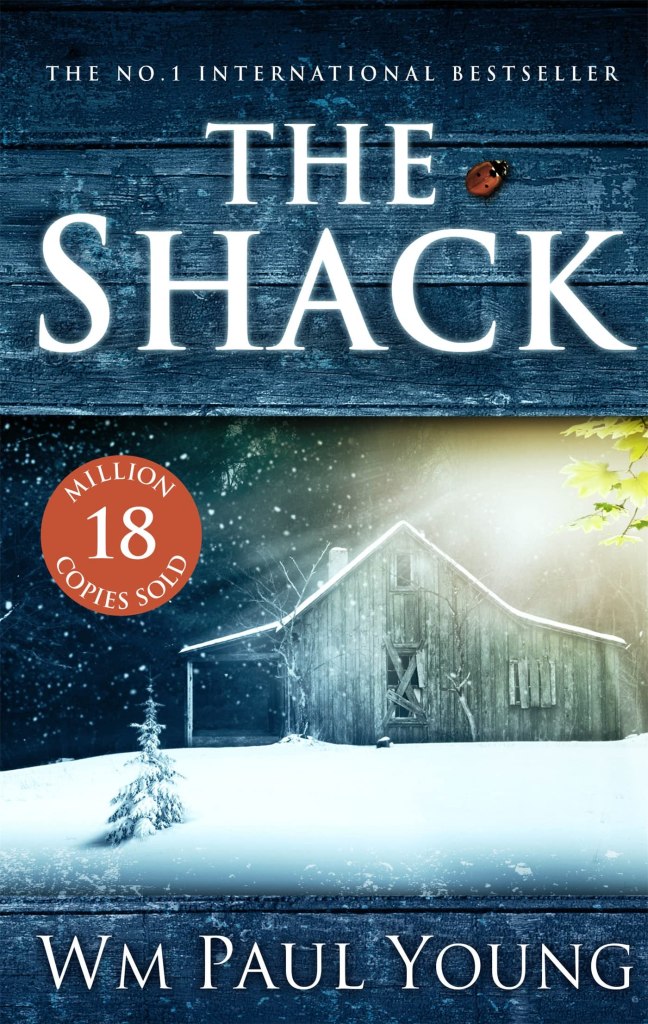
4. The Shack by William Paul Young

I know this book divides opinion. But this year, God used it powerfully in my life.

The Shack met me at a time when I needed healing more than explanation. It did not answer all my theological questions, nor did it try to. Instead, it reintroduced me to a God who is present in suffering, gentle with wounds, and more loving than my fear had allowed me to imagine.

Reading it felt less like consuming a book and more like being accompanied through a difficult conversation. It helped clarify my path toward God this year, not by removing doubt, but by reshaping trust.

For all its simplicity, The Shack carries a deeply pastoral theology. One that prioritises relationship over control, love over fear, and presence over performance. I am grateful for it.

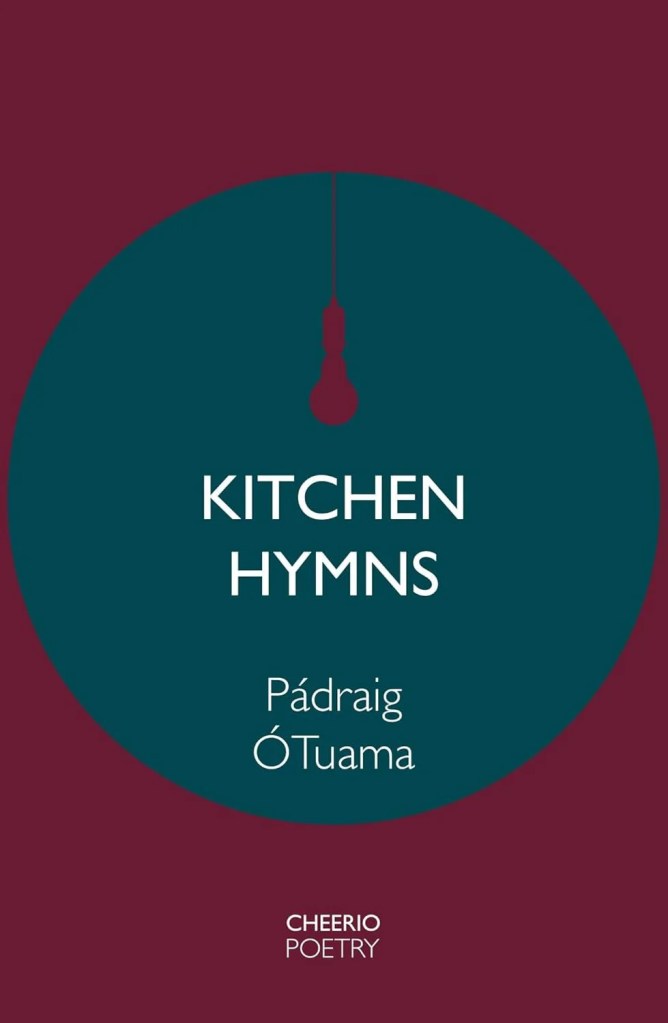
5. Kitchen Hymns by Pádraig Ó Tuama

Reading Pádraig always feels like home.

Ó Tuama has a remarkable ability to write about God without forcing God into the room. Kitchen Hymns is intimate, domestic, and deeply human. It finds the sacred in ordinary spaces, conversations, and moments that rarely feel religious enough to matter.

What I loved most is how gently theological it is. The poems and reflections do not preach. They listen. They honour complexity. They allow grief, joy, doubt, and love to sit at the same table.

This book reinforced something I keep returning to in my own writing and faith. That God is not waiting for us in abstraction or spiritual achievement, but already present in kitchens, friendships, silence, and shared meals.

Christian Nihilism

We’ve all heard about Christian Hedonism, but what if it’s difficult to enjoy God? What about Christian Nihilism?

Vanity of vanities, says the Preacher,
    vanity of vanities! All is vanity.
What does man gain by all the toil
    at which he toils under the sun?
A generation goes, and a generation comes,
    but the earth remains forever.
The sun rises, and the sun goes down,
    and hastens to the place where it rises.
The wind blows to the south
    and goes around to the north;
around and around goes the wind,
    and on its circuits, the wind returns.
All streams run to the sea,
    but the sea is not full;
to the place where the streams flow,
    there they flow again.
All things are full of weariness;
    a man cannot utter it;
the eye is not satisfied with seeing,
    nor the ear filled with hearing.
What has been is what will be,
    and what has been done is what will be done,
    and there is nothing new under the sun.
Is there a thing of which it is said,
    “See, this is new”?
It has been already
    in the ages before us.
There is no remembrance of former things,
    nor will there be any remembrance
of later things yet to be
    among those who come after.

~ Ecclesiastes 1:2-11 ~

John Piper has famously coined the term “Christian Hedonism.” Piper defines Christian Hedonism as, “the conviction that God’s ultimate goal in the world (his glory) and our deepest desire (to be happy) are one and the same because God is most glorified in us when we are most satisfied in him. Not only is God the supreme source of satisfaction for the human soul, but God himself is glorified by our being satisfied in him. Therefore, our pursuit of joy in him is essential.”

Piper’s definition here has two key phrases I would like the highlight. 1. “God is most glorified in us when we are most satisfied in him. 2. “Our pursuit of joy in him is essential.” These two ideas are the essence of Christian hedonism, feasting on God and indulging in Him. What Piper espouses is a wonderful idea, and I thank God that Piper has been teaching this throughout his life and ministry. However, (and I’m sure that Piper addresses all this within Christian Hedonism), what if Christians find it impossible to find contentment and joy in God? While I believe our pursuit of joy and contentment in God is essential so that we glorify Him, there are seasons, if not entire lifetimes, where some of us experience the never-ending onslaught of suffering and angst the world has in store for us. God becomes distant and impossible to relate to at times. You feel like you could never glorify God, not even in your best moments. Jesus becomes an idea rather than the person you used to be swooning over. Where there was purpose and meaning, now is chaos and the unfamiliar. You begin to think like the Preacher, “vanity of vanities” – this all becomes meaningless suffering and grief. The cloud of uncertainty settles upon the heart as you wander through life like a lost bedouin. “Exiles”, the Bible calls us (1 Peter 1:1-2), and you certainly begin to feel like one. How do we make sense of all of this “vanity?” I propose Christian Existentialism Nihilism.

Christianity and Nihilism


Christian Nihilism is an oxymoron if ever there was one. On the one hand, you have Christianity that teaches us to be joyful, happy, and content in all things. Christianity teaches us that there’s a purpose, a plan, and meaning in the darkest places (true, by the way). On the other hand, Nihilism teaches us that life and suffering are ultimately random, meaningless, and chaotic. For proponents of Nihilism like Friedrich Nietzsche, the belief in God and the practice of religion is a crutch that humanity uses to make sense of a senseless existence. Christian Nihilism is an almost paradoxical embracement of both realities. As one walks through life through the seemingly purposeless and brutal sufferings that life brings us, we are to embrace the pain and grief it throws at us (allow the barbs of suffering to settle in your heart). Christian Nihilism is the idea that while joy and contentment in God might be ideal, they might never be experienced on this side of eternity. It is embracing the chaos while trusting that God will make all things work together for our good, even if the good isn’t always seen.


In reality, this isn’t anything new. The Bible often speaks of the suffering and pain Christians are to go through. I suppose what I aim to do with this idea is to alleviate the burden of joy for those who are constantly pursuing it and only ever experiencing more pain and sorrow. To be clear, I’m not suggesting that Christian Hedonism is wrong. I’m just putting a new card on the table as I wrestle with a reality that I’ve experienced, and I’m sure many others do. Pursuing joy and contentment in God has been an extremely tiring journey that has yielded little fruit for me. However, I believe God is doing something in me apart from my effort and typical expectations. As I walk, I painfully groan with creation as I patiently await the new world.

Now all has been heard;
    here is the conclusion of the matter:
Fear God and keep his commandments,
    for this is the duty of all mankind.
For God will bring every deed into judgment,
    including every hidden thing,
    whether it is good or evil.

~ Ecclesiastes 12:13-14 ~