
The Long Night

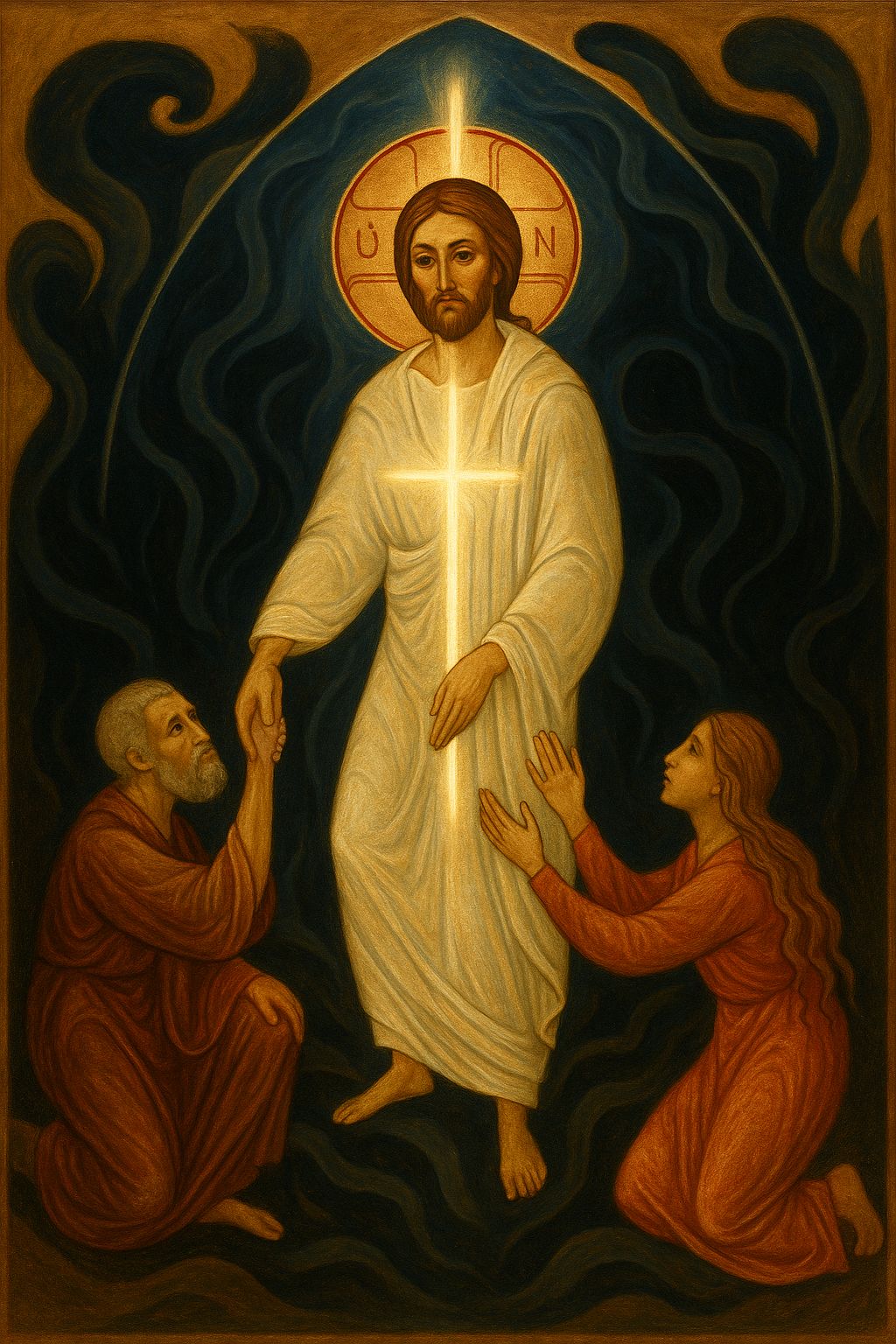
Sheol saw me and was shattered, and Death ejected me and many with me. I measured its depth and I was not held captive, for I became a light to those who were in its depths.”

– (Ode 42)

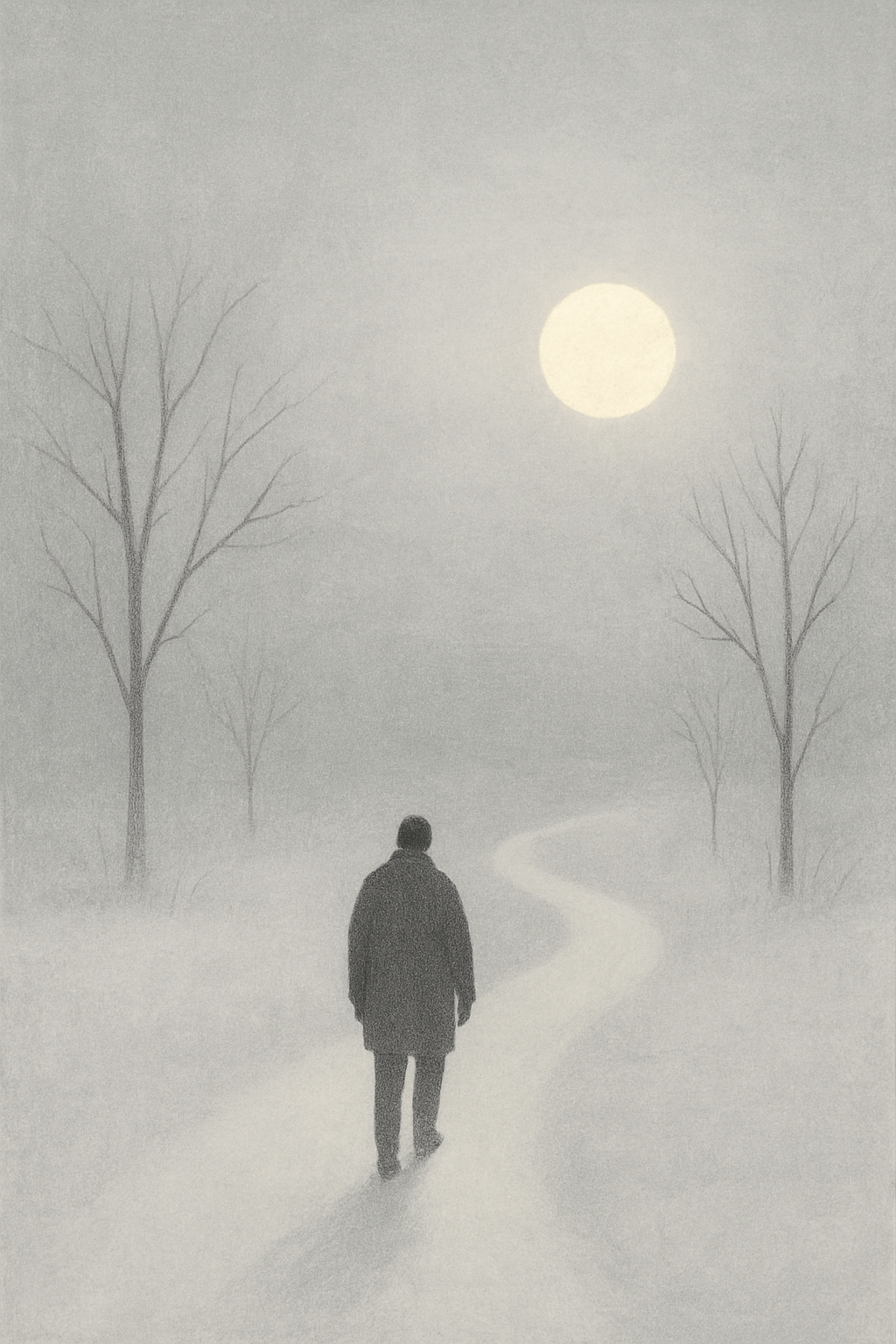
He walked the long night

where no prayers reach,

where silence is thicker than stone.

Sheol held its breath.

The tomb was not still—

it trembled.

He wore no armor

but the memory of light.

He sang no song

but still the gates cracked.

One by one

He called the names of the forgotten.

Dust stirred.

Chains rusted.

Even Death blinked and turned

its face away,

unable to hold Him

who had measured its depth

and found it shallow.

– (a poem I wrote inspired by Ode) The Long Night

Unbuilding

Do you believe in God? I used to answer quickly.

Now, I pause —

not out of rebellion, but reverence.

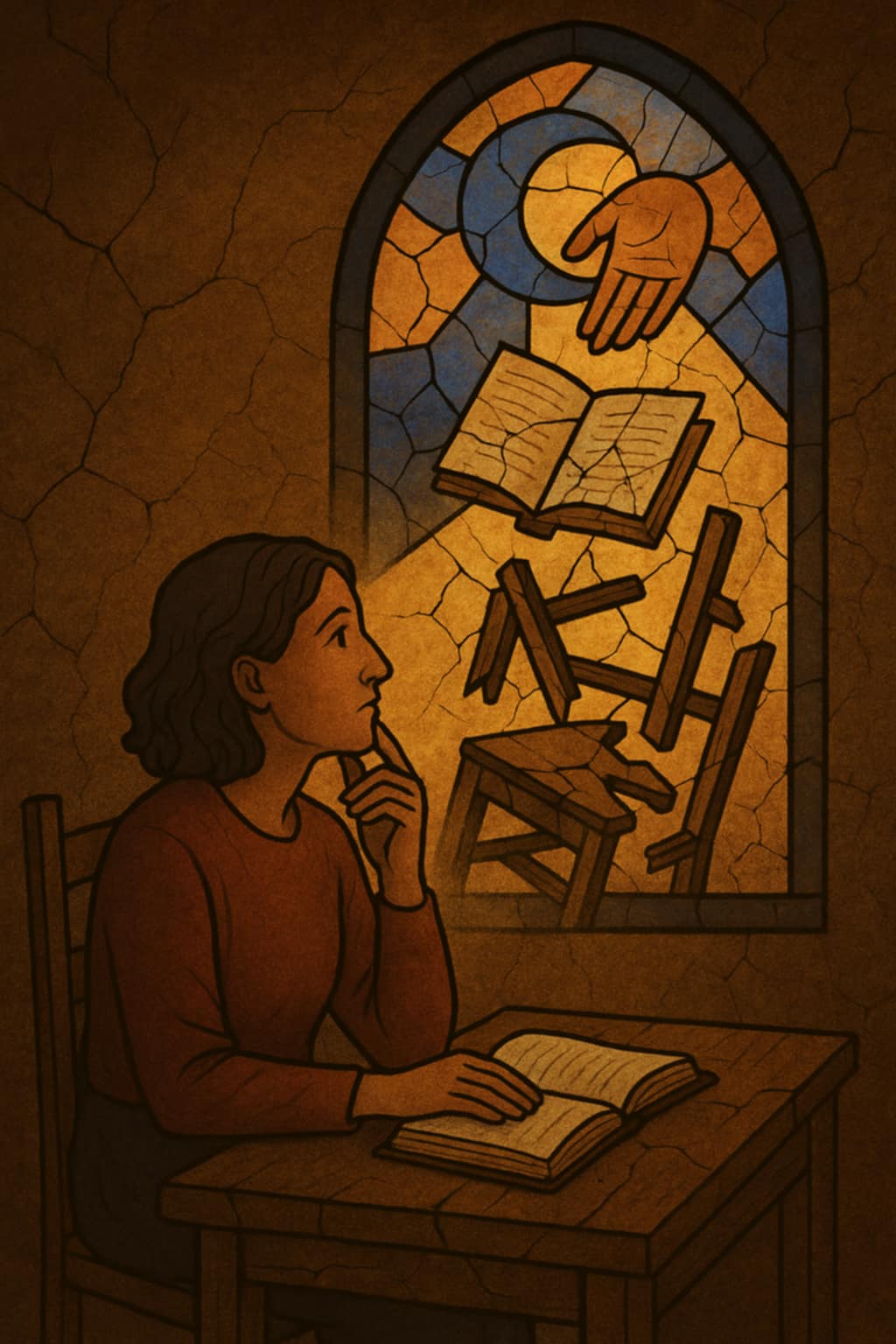
I dismantle doctrines like old furniture,

finding splinters of truth and tradition embedded in my hands.

The creeds I once recited now echo with questions, each word a doorway to deeper understanding or further doubt.

In the quiet morning, amidst the smell of roasted coffee, I find sacredness in the mundane, grace in the unspoken.

Scripture pages worn thin from searching, not for answers, but for the presence that lingers between lines.

I am both the builder and the ruins, the seeker and the found.

Do you believe in God? I still ask, not seeking certainty, but connection.

Every Church Needs a Nerdy Mystic

I once heard Tim Mackie from the Bible Project say that every (local) church needs a bible nerd. I couldn’t agree more. I’ve been a Christian for over a decade and around several churches. Usually, a church falls into one of two categories. They’re either highly focused on worship songs and emotionally connecting to God via the Spirit (both good things), or they’re so Scripture-focused (preaching and teaching the Bible) that Christianity becomes an intellectual ascent to a set of doctrines (again – doctrine is a great thing – I have a degree in it). The problem is that without the Scriptures shaping the local church, it becomes chaotic, messy, and unhinged. Without prayer, music, emotions, and practising the presence of God, the church becomes stale, another club to belong to, and lacks life. I will never go to another church that preaches well but never lingers in God’s presence. I will never go to a church that throws out the Book in favour of fever and emotionalism. Getting the balance right is, of course, challenging. We’re not perfect. But if I have to listen to another TED talk at church just because they have better music, I may as well stay home. If I have to endure another 1-2 hrs of dreariness to hear people take the teaching of Scripture seriously, I may as well listen to podcasts and throw on some Hillsong. Why can’t we have the best of both worlds? Why can’t we have excellent bible teaching (not just surface-level rubbish – meaty, juicy, heartfelt teaching of Scripture), great music, prayer, emotional responses, and God’s presence? Well, maybe every church needs a nerdy mystic (a scary word, I know).

A bible nerd mystic: noun – a person who froths and geeks out over Scripture while lingering in God’s presence and embracing the mystery and transcendence.

It seems that the Bible’s people had the best of both worlds:

Moses was a mystic and loved to teach. He performed miracles (Exodus 4:3-4, 6-7, 30; 7:14-25; 8-12; 14:21-31; 15:22-25; 17:1-13; Numbers 12:13-15; 16:44-50), he taught Torah (Exodus 18:20; 24:3-4; Deuteronomy 4:1-2; 5:1; 6:1-9; 31:9-13), and he frequently spends time in the presence of God (Exodus 3:1-6; 24:12-18; 33:7-11; 34:28).

Jesus was both a massive Bible nerd and a mystic (Jesus is God, so that’s kinda cheating). On the one hand, he went around healing people (Matthew 8:2-3, 5-13, 14-15; 9:20-22, 27-31; 12:9-13) and casting out demons (Luke 4:33-37, 41; 8:2, 26-39). We have Jesus going into the wilderness (Mattew 4:1-11) and into isolated places in nature to recalibrate and pray (Matthew 14:13, Mark 6:31-32, Luke 6:12, John 6:15), and even situations where Jesus hears the voice of God (Matthew 3:16-17; 17:5 John12:28-30). Yet, on the other hand, we have Jesus the rabbi clearly nerding out over Scripture and interpreting it (Matthew 4:4, 7, 10; 21:13; 22:37-40; Luke 4:18-19) and teaching people around him (Matthew 5-7; 13:1-9; Mark 1:21-22; 4:1-2; 6:34; Luke 5:3).

Paul had a list of similar experiences. He healed (Acts 14:8-10; 19:11-12; 20:9-12; 28:8-9) and cast out demons (Acts 16:16-18). He went into the wilderness to recalibrate his thinking (Galatians 1:17-18) and had mystical experiences and visions hearing God’s voice (Acts 9:3-6; 22:17-21; 23:11; 2 Corinthians 12:2-4). Yet Paul still taught the scriptures (Acts 17:2-3; 18:4-5; 19:8-10; 20:7-12) and thought they were important enough for others to continue teaching (2 Timothy 3:16-17).

We don’t need to trade one for the other. Our churches should be filled with a sense of both worlds. We can have the tangible expressions of God’s presence and the deep meat of teaching the Scriptures. One should only be happening with the other, yet they often don’t.

(A Reflection on) The Theology of Lingering

Dallas Willard once said, “hurry is the great enemy of the spiritual life in our day.” I remember years ago listening to a podcast by Rob Bell, who talked about how we’ve lost the ability just to be bored. John Mark Comer argues that we must ruthlessly eliminate hurry from our lives. Every generation says this, but life isn’t the same as it used to be. Our weeks are filled with to-do lists, meetings, and appointments. We work forty-hour weeks (if you’re lucky), we try to eat right and stay healthy, go home, look after the kids, clean the house, go to church, try to catch up with that friend for coffee or lunch, meet your spouses needs, listen to that podcast, read that blog (the irony is not lost on me), catch up with the latest social media news, video, tweet, or reel. We study, try to improve our skill set, and bring work home with us (because there is rarely enough time to do your job in a 9-5), which is what it means to be a functioning human being in 2024.

In the 90s and early 2000s, I felt like imagination was king. Boredom drove me to creativity. I couldn’t mindlessly flick through reels of videos, watch people playing Fortnight, or throw on a podcast (all things I love, by the way). Instead, a rock or a piece of clay became a fossil. The front trees and gardens became hideouts for me to store waterbombs and hide from the other kids on the street. I used to write my name in Egyptian hieroglyphics (not very well, mind you). I used to spend time with my mum. We talked—a lot. I remember my first-ever coffee (a mocha with whipped cream on top) and trips to Wet n’ Wild. I remember going to my Nannas house on holidays and playing cricket in the street with my Dad. Going to the beach or doing road trips always seemed convenient and easy. Nowadays, travelling more than half an hour gets the best of you. It takes work to keep focused and your attention on things that should be important to you. Unconsciously, I reach for my phone to see if I have a notification. Switching off when friends talk about something that doesn’t matter to you is so easy. It’s easy to go to church for an hour and a half a week, passively take in a sermon, half-heartedly sing a few songs and “hurry God” like He is a fast food worker and McDonald’s or something. Most of us don’t know how to slow down, rest, be bored, and linger.

In six days, God created the universe, and on the seventh, He rested, or to put it another way, he lingered, hung around, and delighted in what he had made (Genesis 1-2). The definition of lingering is to stay in a place longer than is expected or usual. It is unusual in our day and age to linger, to stay in one place and enjoy it without distraction or a “productive purpose.” When was the last time you sat, meandered, or rested while just taking in the world around you? Have you ever sighed a breath of relief and just lingered on what you have already accomplished (no matter how seemingly insignificant)? When have you last just plodded around in the messiness of your space and just delighted in your stage of life? I love that God rests. He didn’t need to. God doesn’t have a cap on His capacity. He wasn’t taking the day off because he was tired. He rested and lingered and delighted in his creation because (I believe) He brought him joy.

Fast forward in the story, and in the Exodus, we have Israel enslaved and forced to work every day. They were the peak of productivity. Their worth was weighed in the bricks they made and the work they did. Israelite identity became so entrenched in their slavery that even when they had been freed, they longed to return to it (Exodus 16:3). What I find funny is that the Jews wanted to go back into slavery even while having God’s tangible presence with them in the wilderness (Exodus 13:21). Even after they got into the promised land, established a kingdom and a temple with God dwelling among his chosen people, they still worshipped other gods. Israel forgot to dwell with God and linger in his presence. Though God wasn’t far from any of them, they never stopped and experienced his presence in any intimate and authentic way. I wonder how different history might have been had Adan and Eve lingered with God in the Garden, if the Jews lingered with God in the wilderness, or dwelt with him more intimately in the temple. How different might things have been if the disciples lingered with Jesus? Rather than expecting things from him, they were just with him. Maybe they would have seen Jesus as the messiah he was instead of what they expected him to be.

And this is the problem. We expect God to be something or someone he doesn’t want to be. Just like the Jews, we have theological categories (some of which are helpful) that impose expectations of God into history. God heals. Therefore, whenever I pray, he heals. Except he doesn’t. God is in control. Therefore, everything must work according to his will, except life is chaotic and challenging, and it rarely feels like God is in control. God is love. Yet he often feels distant. God is wrathful. Yet evil always seems to prevail. These categories came to me through books and podcasts, not God himself (though, of course, these are things God can use). These things are true, but I don’t always know it.

In Celtic spirituality, thresholds are seen as a line between one space and the next, one time and another. I’m not just talking about the threshold between your bedroom and the hallway; I’m talking about the thin places in our lives that God whispers and beckons us through so that we may linger, refreshed, transformed, and made new. We may need to stop and linger more often.

The Church of Eden

Some people, in order to discover God, read books. But there is a great book: the very appearance of created things. Look above you! Look below you! Note it. Read it. God, whom you want to discover, never wrote that book with ink. Instead, He set before your eyes the things that He had made. Can you ask for a louder voice than that?

Saint Augustine. The City of God, Book XVI

In my experience, Christianity and nature don’t go together. I think a lot of us Protestants are scared of making an idol out of cheese. Stepping out and getting any spiritual substance from nature feels like pagan worship. Nevertheless, for thousands of years, the Church and even the Old Testament Jews have had a rich tradition of finding God not only in the pages of sacred texts or within the walls of a temple or a church but in nature itself. For me, church on a Sunday can get boring. Nature doesn’t. At church, we have baptisms in a font. In nature, God baptises the world with ever-winding rivers, boundless oceans, and tranquil lakes. At church, we have choirs and bands that stir a crowd. In nature, God stirs the heart with the clap of the trees, the melody of the wind, and the euphony of the animals. At church, we preach from the Scriptures to teach, correct, and rebuke. In nature, God strikes the reader with awe as we pore over the stars. In church, we meet with God in sometimes clinical rituals, polished halls, and typically with masks on. In nature, we meet with God in untamed sacraments, wild establishments, and unmasked hearts.

I’m not a hippy. I don’t hug trees, and I’m not about to join PETA. I’m not even a good environmentalist. I love long showers, I’m often lazy with recycling, and I love a good steak. (and wings). There are days, weeks even where I’d rather spend my time playing video games, binging the Big Bang Theory, and scrolling through Facebook. I love rainy days, coffee, and sleeping in. As much as I know nature is a good place for me to be, it takes more effort than I’m proud to admit to get amongst. Nevertheless, when I’m forced to climb that mountain and see that view, or when I’m walking along the esplanade and I see the ocean stretched out before me, I’m always struck, even just a little, by how God takes up and dwells in more than the four walls of a church.

Elsewhere, I argue that our churches should be a slice of paradise. A taste of the newly created earth. A miniature Eden and a sacred space. I can’t remember the last time, if ever, where I felt awe-inspired, moved, and truly like I was treading hollowed ground in a church. Particularly within the Protestant tradition, we have demystified, disenchanted, and robbed our sacred spaces of their “magic.” We’ve traded awe and wonder for fog machines and light. We’ve sold profound unity and community and bought programs. We’ve replaced stories and myths with conversations about the weather and movies. We’ve exchanged God’s presence for “doing church.”

In the beginning, God created the world; it was wild and waste; there was darkness and chaos, but God’s Spirit hovered over the deep. Over six days, God moulded the world. He placed the stars, the sun, and the moon in the sky and gave them purpose. God divided the seas above from the waters below, filled them, and gave them purpose. He raised trees, shrubs, bushes, mountains, oceans, rivers, and streams from the earth and gave them purpose. God filled the world with birds, fish, and land animals and gave them purpose. He created humanity and gave them purpose. Finally, on the seventh day, God dwelled with what He had made, and there was purpose and goodness. This is how things are supposed to be in our local churches. Our local churches should feel like we’ve tasted a bit of heaven. Goodness, purpose, God’s presence, unity, flourishing, and life should all be markers of a healthy church. Yet I talk to people who experience emptiness, frustration, shallow relationships, trivial teachings, and superficial prayers every week. It seems that our churches are less Eden and more Tower of Babel.