When William Paul Young wrote The Shack, he was not trying to explain why terrible things happen. He was writing his way through sorrow. Like Job, he sat among the ashes, surrounded by questions that would not rest. Out of that ache came a story. Not a sermon, but a parable about the God who meets us in our broken places.
The Silence of God
In the book of Job, the suffering man cries into the dark, “Oh, that I knew where I might find him.” Mackenzie, the father in The Shack, makes the same cry. He pleads for answers, for justice, for the God who seems to have turned away. And then, like Job, he receives not an explanation but an encounter.
The story reminds us that God does not stand outside pain, observing from a safe distance. God enters it. The cross is not a theory of evil but the place where God shares it. Gregory of Nyssa (c. 335–395) once wrote, “That which He has not assumed He has not healed.” When Christ took on our humanity, our confusion, our fear, our grief, He turned suffering into the place where healing begins.
The Human Face of God
What startled many readers of The Shack was how ordinary God seemed. The Father, called Papa, is a warm woman who laughs and bakes bread. The Spirit moves like a soft wind, full of life. Jesus is earthy, playful, and scarred.
For some, this felt irreverent. For others, it was freeing. It reminded us that the mystery of God is larger than our imagination, and that God is not afraid of being close. Irenaeus of Lyons (c. 130–202) once said, “The glory of God is a human being fully alive.” The divine shows up not in grand displays of power but in the tenderness of relationship.
For me, that image of God as a woman was strangely comforting. I have carried my own wounds around the word “father,” the kind of ache that makes intimacy with God feel complicated. Meeting God first in a motherly form would be a gentler introduction for my heart, an invitation to trust again before I could rediscover what “Father” might really mean. And that is all right.
God is not confined to any one image or gender. Scripture speaks of God as a mother who comforts her child, as a father who runs to embrace his son, as wisdom dancing at creation, as spirit breathing over the waters. God contains them all and yet exceeds them all. When God meets us, it is always in the way that heals us best.
And perhaps that is what The Shack captures so beautifully. God does not always have to relate to us in perfect theological categories. The God of the novel might not look exactly like the Trinitarian formulations of church history, but that does not make the encounter less true. Sometimes what is doctrinally perfect is not what is pastorally healing. Sometimes what is fact is not yet what is good for us.
God meets us where we are, not where we have managed to arrive theologically.
These kitchen scenes of cooking, laughing, and washing dishes are not incidental. They show us that heaven is not far away, and that holiness is not fragile. God is at home in our kitchens and our conversations, in the small things that hold the world together. Bread broken in love is never just bread. It becomes the body of grace in every act of forgiveness.
The Dance of Relationship
The story shows the Trinity not as an idea to explain but as a living dance of love. Mack finds himself in a circle of laughter, humility, and delight. Father, Son, and Spirit moving together. There is no hierarchy, no fear, only mutual joy.
This is what divine life looks like, communion that never ends. Mack’s healing does not come through answers but through being drawn into relationship. He learns to trust again. He learns that forgiveness is not demanded of him but offered to him. The Father holds his pain without rushing him. The Spirit guides him into honesty. Jesus walks beside him in the dirt, showing him that redemption is as simple and sacred as friendship.
The Trinity is not explained here. It is experienced. The story whispers that God’s power is not the power to control but the power to love without limit.
The Mystery of Shared Suffering
When Mack asks why God allowed his daughter to die, God does not give a reason. God grieves with him. The most daring moment in the book is when we see God cry. Those tears are not weakness. They are the heart of compassion.
In Christ, God takes our pain into Himself, and in doing so makes it holy. The tears of God in The Shack reflect the tears of Christ at Lazarus’ tomb, tears that do not remove death but transform it.
The story shifts our question from Why does God allow suffering? to Where is God in my suffering? And the answer, again and again, is Here.
The Shacks We Carry
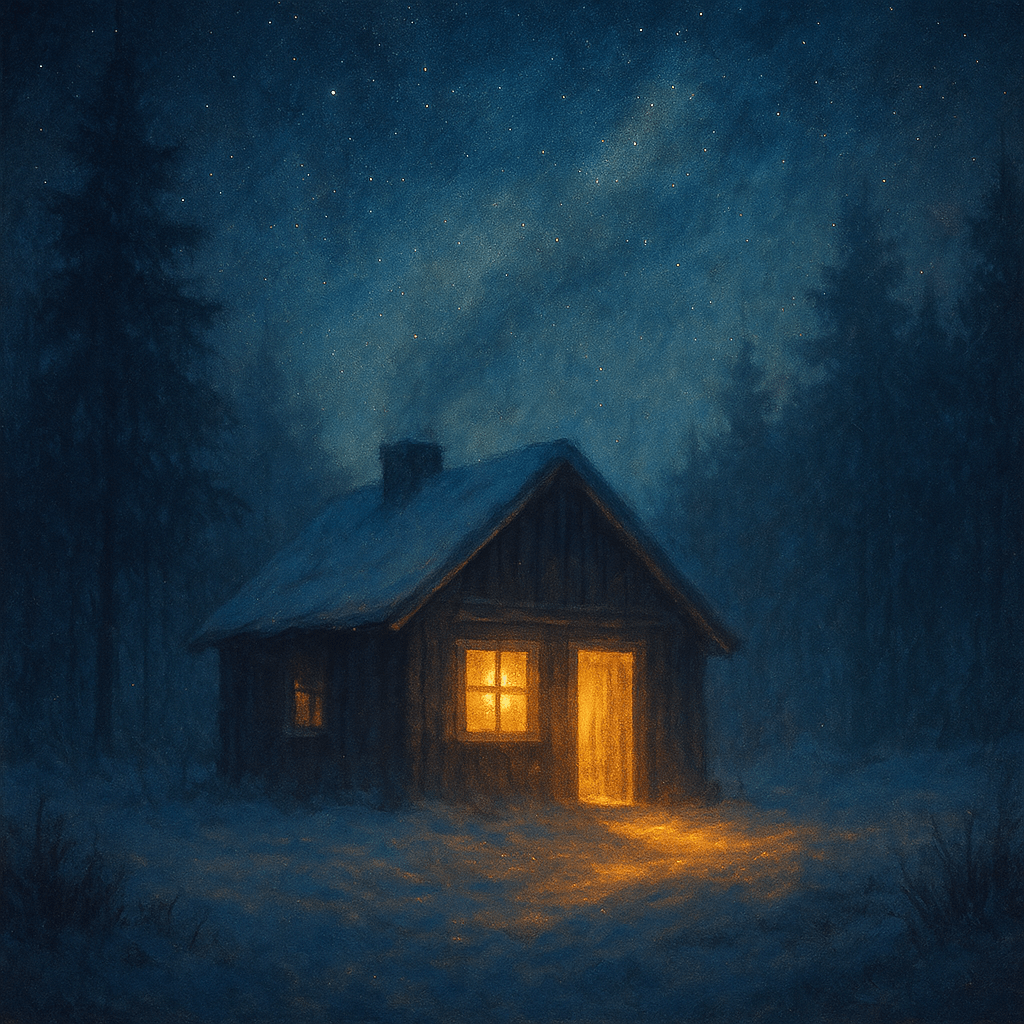
Each of us has a shack, a place in our hearts that we have boarded up, a room where grief or guilt still lives. We avoid it. We build our lives around it. But this story invites us to step inside again, not alone but with God.
When we dare to enter that place, we may find what Mack finds, that the very ground of our pain can become the ground of God’s presence. The shack becomes a temple. It becomes a place of communion.
Athanasius of Alexandria (c. 296–373) once wrote, “God became what we are, that He might make us what He is.” In other words, God steps fully into our humanity so that our humanity can be gathered into divine love. God meets Mack not to undo what happened, but to show him that nothing, not even the deepest wound, can separate him from love. What changes is not the past but the way it is carried, from isolation to belonging, from despair to trust.
An Invitation
Perhaps The Shack is not a story to be solved but a space to inhabit. It does not offer tidy explanations. It opens a room for encounter. It asks whether we are willing to meet God, not the idea of God, but the living presence who cooks, who laughs, who cries, who stays.
So maybe the question for us is this.
Where is our own shack?
Where is that place we have locked away because it hurts too much to enter?
And what if God is already there, waiting by the fire, patient as bread rising in the oven, whispering, “You were never meant to carry this alone”?
The heart of the story is not about understanding suffering but about discovering love. It is not about solving God but trusting God. Faith is not built on answers. It is built on presence.
And maybe that is the quiet truth of The Shack: that God is nearer than we ever dared to believe, nearer than our pain, nearer than our fear, nearer than our own breath.
Tag: Contemplative spirituality
My Burden
Jesus said,
my yoke is easy, my burden is light.
I want to believe him,
but most days
the burden feels like stone.
The burden of anxiety,
the burden of belief,
the burden of trying to be human
when I am tired,
so tired.
If this is light,
what does heavy feel like?
And yet,
he keeps whispering, “Come, walk with me,
learn the rhythm of gentleness,
tie your tired shoulders
to mine.”
Maybe the lightness
is not in the absence of weight
but in the presence of love.
Maybe the rest is not escape
but the slow discovery
that I am not alone in the carrying.
There are still crosses,
still losses,
still days when being human
feels heavier than faith.
But if he is beside me
then even the heavy
can be held.
So I take a breath,
take a step,
and say,
teach me again
how to be human
under your light burden
that does not feel light
God Who Walks in Twilight
At the Wind of the Day
The first time we hear of God walking, it is not in a blaze of glory.
Not in the brightness of noon when everything is sharp and defined.
It is in the cool of the evening, Genesis says.
The Hebrew calls it l’ruach hayom, “at the wind of the day.”
That soft shift when the heat is letting go and the air changes,
when light seems to slip away almost without you noticing.
It is the time when the work has been done
but no one has yet gone to bed,
when the shadows pull long lines across the ground
and you feel that strange mix of ending and beginning at the same time.
From the start, God is not a voice far off in the heavens.
He is there in the dust, walking.
Unhurried.
Not pressing toward a task.
Just present in that in-between space.
And that time of day keeps turning up in the story, as if God likes it.
Abraham meets Him near the oaks of Mamre when the sun is leaning away.
Israel’s first Passover happens “between the evenings,”
with lamb’s blood on doorframes while the light is thinning.
In the Temple, the daily rhythm gives that same hour a place of its own
the evening sacrifice,
the smell of bread and incense
rising into the dimming sky.
Jesus keeps to the pattern.
On the road to Emmaus,
He meets two people when the day is almost spent.
He walks with them,
talks with them,
and sits at their table,
and in the breaking of bread,
as the darkness edges in from the fields,
they know Him.
It feels like twilight has always been His hour,
the place where He can hold light and dark together in one moment.
Maybe that is why most of life with God seems to happen in the in-between.
We live in the “already and not yet” of His kingdom.
Evening-souled people,
learning the slow pace of faith,
breathing out hope that has learned how to wait,
lingering in love that does not rush away.
He still comes walking when the air cools
and the day takes its last breath.
Creation to New Creation
That first walk in Eden ended badly,
with hiding and shame where welcome should have been.
But the story does not stay there.
At the end of Scripture, in the New Jerusalem,
there is no night at all, and the gates are never closed.
It is as if the first invitation to walk with Him is restored and made permanent.
The story that began with God searching for His image bearers in the evening breeze
ends with Him living among them,
no lamp needed,
because the Lamb Himself is their light.
For now, we live in the long dusk between creation and new creation.
But when the wind shifts,
when shadows stretch out over the ground,
when the air feels like it is holding its breath before the dark,
I think of Him.
I think of how He has not stopped walking.
And I hold onto the hope
that one day this twilight will give way,
not to night,
but to a dawn that never ends.
Hard to Pray
The prayer I can’t quite pray yet
I keep meaning to say something to you, God.
Or maybe not to you.
Maybe at you.
But then I stop.
It catches somewhere in my chest.
It is not that I do not believe.
I do.
Probably too much.
It just hurts in ways I do not know what to do with.
If you are listening
and I keep hoping you are
you would hear all of it.
The sharpness in my voice.
The tiredness tucked in my bones.
That little stone in my coat pocket
I have carried since winter started.
It is smoothed down now
from my fingers rubbing it.
I do not want this to be prayer.
I want prayer to sound like afternoons when I was ten,
playing video games with the window open,
Tracey Chapman’s voice spilling from the stereo,
and Mum cleaning in the background,
the smell of dust and polish drifting into the room.
But this is all I have
bits of half sentences
silences that keep stretching
the weight of this stone in my pocket.
If you are there
and I guess you already know if you are
then you know
this is the best I can manage
today.
The God Who Refuses to Behave: Wrestling with God at Peniel
I’ve been told God is tidy. Predictable.
A polite guest who knocks at the door of my heart (Revelation 3:20)
and waits patiently until I invite Him in.
Calm. Respectable.
Never raising His voice.
Never moving a chair out of place
unless I have done something so bad He cannot ignore it.
But that is not the God I have met.
The God I know does not knock.
He storms in
like a summer squall,
blowing the screen door off its hinges.
I have felt Him in the sting of sudden tears while washing dishes.
In the silence after a friend spoke truth I did not want to hear.
In the way a bush can blaze in the middle of nowhere (Exodus 3:2).
He walks through locked rooms (John 20:19).
He meets you in the night for a wrestling with God
until you cannot tell if you are losing or being saved
just as Jacob did at Peniel (Genesis 32:24–30).
Some days I love Him for this.
Some days I do not.
Not the God of Neat Theology
I used to think faith was holding the right answers in a tight grip.
I could draw the Trinity’s diagram.
Recite the problem of evil like a manual.
God as a solved equation.
But He slipped through my grip.
Like wind through a cracked window
rattling the frame.
Job knew this.
He asked for reasons and got a whirlwind (Job 38–41).
Questions instead of answers.
Not cruelty, invitation.
Awe, not explanation.
The Bible’s God has edges.
Fire on Sinai (Exodus 19:18).
A whisper Elijah almost misses (1 Kings 19:12).
Splitting seas (Exodus 14:21–22).
Walking gardens at dusk (Genesis 3:8).
Same God.
No one pattern.
The same untameable God who shows up in ways we never expect.
The Unmanageable Presence
We put Him in systems.
Creeds.
Charts.
Doctrine matters.
But I have seen how beautiful cages still hold prisoners.
And the God inside always finds a way out.
Jeremiah sees almond blossoms in winter (Jeremiah 1:11–12).
Hosea marries the unfaithful (Hosea 3:1).
Mary gives birth in straw and animal breath (Luke 2:7).
None of it fits the script.
The mystics knew.
Meister Eckhart prayed, “God, rid me of God.”
Julian of Norwich called Him “our clothing”
close as skin
but also a love without edge or floor.
The Rebellion of Love
I have heard Him in creation groaning (Romans 8:22).
In the psalmist’s clenched fist:
“Awake, O Lord! Why do You sleep?” (Psalm 44:23).
I have seen Him in the eyes of the crucified
where my answers go to die (Mark 15:34).
I do not want the domesticated god anymore.
The god who never interrupts.
The god who never overturns.
The real God flips tables (John 2:15).
Strips my blankets.
Leaves me with Himself.
No roadmap.
No checklist.
Just a Presence.
Wild. Untameable.
Too beautiful to bear for long.
The Limp of Faith: Wrestling with God
Jacob left Peniel with a blessing and a limp.
The limp is holy.
The awkward walk of those who have been wrestling with God
and lived to tell of it.
I have learned to live with mine.
To let mystery sit where certainty used to.
God’s ways are higher (Isaiah 55:8–9).
Not just in glory
in strangeness too.
Let the theologians frown.
Let the pious keep their polite God.
I will take the One who wrestles me until dawn.
Who wounds to heal.
Who tears down my idols
and gives me Himself.
The Dangerous God Who Saves
He will not fit my doctrines.
But He will fit my wounds.
He splits seas.
Mends hearts.
Consumes like fire (Hebrews 12:29).
Hides me like a refuge (Psalm 32:7).
He will not behave.
And that is good news.
Because a God who will not behave
is a God who will cross every line to find me.
Even the line between life and death.
If that is dangerous theology
then give me more danger.
And if You will not behave
If You will not behave
neither will I.
I will not pray tidy prayers.
I will pray with fists.
With silence.
With the names I do not know how to use for You.
If You will not stay in the lines
take me with You.
Past the fences.
Past the rules.
Past the maps I drew to keep from getting lost.
Find me in the dark.
Wrestle me to the ground.
Bless me with the limp
that teaches me how to walk.
And I will call it love.