
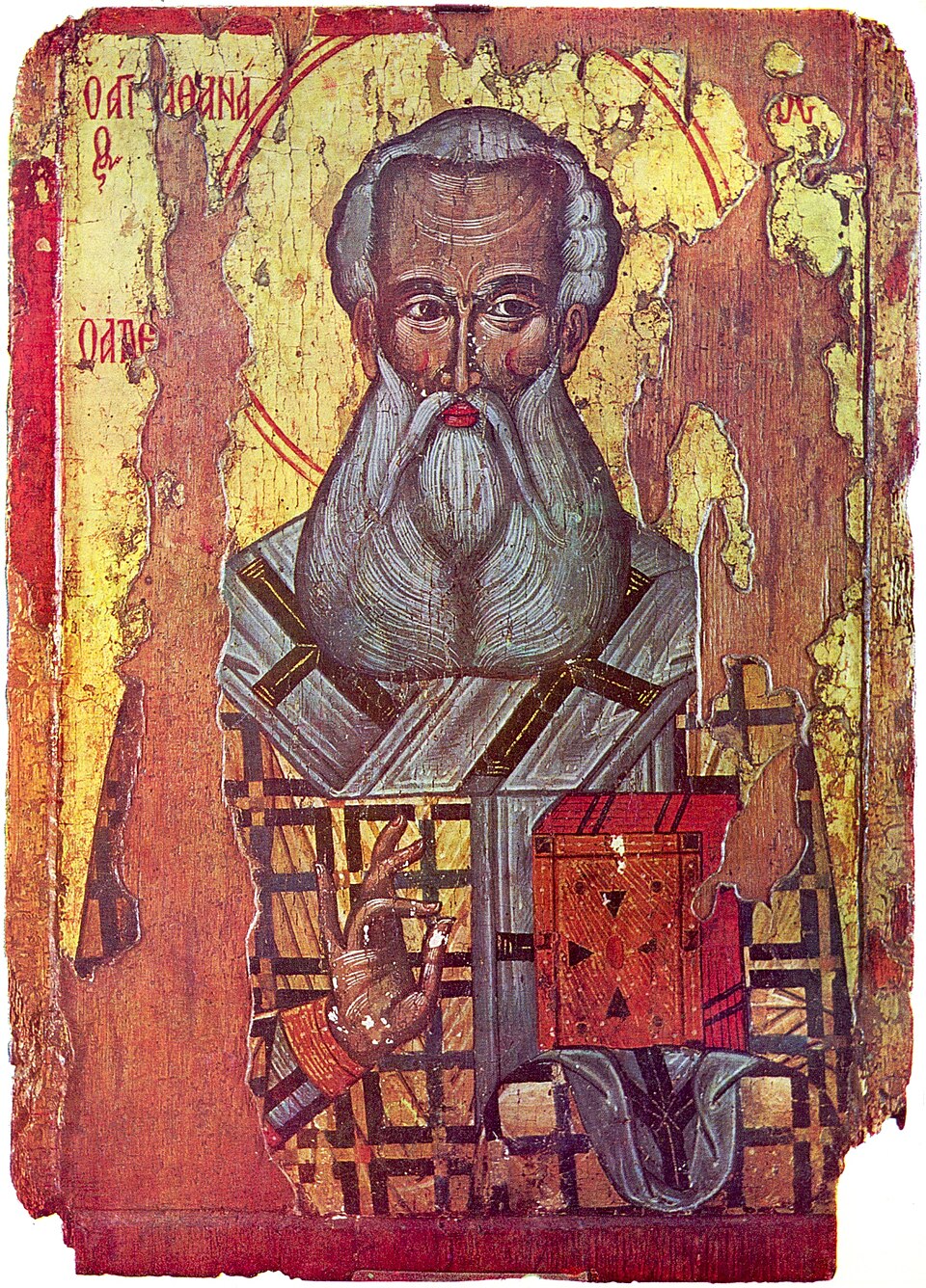
On the Incarnation: Athanasius, Christmas, and the Healing of the World

A Theological Reflection on “On the Incarnation” in Its Historical Moment

In the early fourth century, Christians went from facing persecution to receiving uncertain support from the empire. Athanasius of Alexandria wrote On the Incarnation during a time of confusion and exile. Many believers lost homes and were divided over who Christ was. For them, the question of Jesus’s identity had real and urgent consequences (Athanasius, On the Incarnation 1–2).

Athanasius lived and wrote in Alexandria, a city known for its intellectual life. Here, Greek philosophy, Jewish theology, Roman authority, and Christianity all met. The main conflict was about one question: Who is Jesus? Was he fully God or a created being? The Arian controversy was serious, as it affected Christian worship, prayer, and salvation (John 1:1–3; Colossians 1:15–20).

Athanasius said that if Christ is not fully God, then humanity stays trapped in decay (Athanasius, On the Incarnation 7). A created being cannot restore creation; only the Creator can heal what is broken (Psalm 36:9; Hebrews 2:14–15). Only God saves; Jesus saves; therefore, Jesus is God. This fundamental principle forms the basis of Athanasius’s argument and guides the whole book. Athanasius is not just focused on philosophical detail; he wants to show that the world is being restored.

Athanasius retells the Christmas story as a struggle involving the whole universe, underscoring its importance for his message. He moves beyond simple sweetness or just historical views, placing the empire’s power alongside the quiet strength of Christ’s simple birth. Where others see only a child in a manger, Athanasius sees a revolution: the incarnation as God’s bold action in the world of power.

Jesus was born during a time of empire, census, displacement, and fear (Luke 2:1–7). Caesar Augustus claimed to bring peace, but did so through taxes and military force. Joseph and Mary travelled because of an imperial order. Jesus was born not in a palace, but in a borrowed place, far from power. For Athanasius, this is important. While the empire tries to keep order, creation is falling apart (Athanasius, On the Incarnation 4).

Athanasius says that humanity’s problem is not only moral failure, but also corruption. God made people from nothing and keeps them alive through relationship. When people turn away from God, they move toward nothingness (Athanasius, On the Incarnation 4–5; Genesis 1:26–27; Romans 1:21). Sin breaks things apart. Death serves as more than a punishment; it is what happens when we separate from the source of life (Romans 6:23).

Athanasius sees Christmas as the turning point, the moment when God enters humanity’s broken world.

The incarnation shows that God does not abandon creation. The Word does not rule from far away or just send messages from heaven. The Word becomes flesh (John 1:14). For Athanasius, being truly human is essential. Salvation cannot happen from a distance. Healing requires closeness. What is not assumed cannot be restored (Athanasius, On the Incarnation 8–9).

Athanasius focuses on Christ’s body for a reason. The manger leads to the cross, not simply a feeling, but as a core belief. The body placed in the straw is the same body placed in the tomb (Athanasius, On the Incarnation 20; Luke 23:46). God chooses to be fully vulnerable from the beginning. Hunger, tiredness, suffering, and death are not too low for God (Hebrews 2:17).

The Controversy

The Arian controversy questioned whether Christ was truly God. It said the Son was separate and lower than the Father. Arians said that if the Son was born, there was a time when he did not exist. This made him a created being, not the Creator. The idea made God seem easier to understand by making the Son less than fully God. These arguments became popular because they seemed logical and because explaining the Trinity is hard. However, Athanasius challenges this by asking: How can something created save all of creation? He argues that if death holds humanity, only the Author of life can break that hold (Athanasius, On the Incarnation 7; Acts 2:24). Therefore, when the immortal Word enters death, death meets what it cannot control. Athanasius says the resurrection is not an afterthought, but the public result of what the incarnation began (Athanasius, On the Incarnation 25; 1 Corinthians 15:54–57).

Athanasius shows that incarnation and salvation go together. What we believe about Christ is linked to what we believe about humanity. To say Christ is truly human also says something about all people (Athanasius, On the Incarnation 54; Romans 8:29). Jesus is not an exception; he reveals what it means to be human. Salvation brings humanity back to what it should be.

This vision deeply affects how we live our faith. If God has entered human life, then every part of our physical existence matters spiritually (Athanasius, On the Incarnation 8; Genesis 1:31). Eating, working, loving, suffering, and rejoicing are all ways we can meet God (1 Corinthians 6:19–20). Holiness is not about leaving the world; it’s about living in it. Practically, this means engaging in kindness and service, seeing God’s face in each person. It also means practising daily gratitude and being mindful of God’s presence, whether in quiet reflection or in busy work. By fostering loving, compassionate relationships, we reflect Athanasius’s incarnational theology, connecting deeply with others and God through our everyday actions.

In the fourth century, there was political turmoil, theological conflict, and fear. Athanasius makes a bold claim: reality’s centre is now in human flesh (Athanasius, On the Incarnation 16; Ephesians 1:10). The world’s stability depends not on empire or philosophy, but on a child born under occupation (Luke 2:7). This is a profound challenge to powers that demand ultimate loyalty, both then and now. The focus shifts from secular dominance to divine presence in unexpected places.

For Athanasius, that is what Christmas is all about.

Christmas means that God joins his life to the world (Matthew 1:23). Heaven does not wait for people to reach up; it comes down. Instead, heaven comes down and lifts us from within (Athanasius, On the Incarnation 54; John 3:13). The manger is the main path, not a side road.

Athanasius believes that because the Word enters our story, history now moves toward life rather than emptiness (Athanasius, On the Incarnation 56; Revelation 21:5).

Even though it is deep theologically, On the Incarnation is easy to read. Athanasius writes in a clear, urgent, and caring way. This theology is not only for experts; it speaks to a Church trying to remember God during times of confusion and fear. That alone makes it worth reading.

But even more, this book gently changes how we see things. It moves past sentimental Christmas ideas and offers something stronger and more hopeful. God does not control humanity from a distance. Instead, God enters our weakness and heals it from the inside. That vision stays with you long after you finish reading.

For those seeking a Christmas book that is honest, challenging, and full of life, On the Incarnation stands out. It does not offer easy comfort. Instead, it presents a vision of a world upheld by the Word made flesh.


Benediction: Go in Awe

Go in awe

Not awe at a distance, or awe in that of a spectacle, but real awe that comes
when the everlasting God draws near to share our dustiness.

Go in awe

of the real Jesus Christ
not an idea to be managed
or a symbol to be admired,
but God in flesh,
breathing our air,
walking our ground,
carrying our humanity.

The God through whom all things were made
did not stand outside the world and call it back.
He stepped into it.
Into time.
Into history.
Into skin and bone, hunger and rest.

This is how God chose to love.
Not from above,
but from within.

God did not heal humanity
by replacing it.
He healed it
by joining Himself to it.
By binding divine life
to human life so closely
that nothing human is left untouched,
and nothing broken is left outside His care.

Go in awe

remembering
that the first word of this good news
was spoken in the dark,
to the watchful and the waiting.
Glory opened the night
not in halls of power
but in open fields.
Peace was announced
not as control,
but as presence.

This is the peace that mends what power cannot.
The peace that gathers what has been scattered.
The peace that restores the world
by healing it from the inside.

In Jesus,
God has said yes
to the earth,
yes to flesh,
yes to humanity,
and yes to the long work
of making all things new.

Nothing is abandoned.
No place is empty of God.
No human life exists
outside the reach of His nearness.

Go in awe


as people shaped by this good news.
Let it steady your fear,
soften your judgement,
and widen your mercy.

Go bearing witness
not by force,
but by faithfulness.
Not by escape,
but by presence.
Not by standing above the world,
but by standing within it.

And may the God
who came to be with us
remain with you,
among you, in you
and ahead of you,
until heaven and earth are gathered as one,
and all things are restored
in Him.

Amen.

The Shack: A Reflection

When William Paul Young wrote The Shack, he was not trying to explain why terrible things happen. He was writing his way through sorrow. Like Job, he sat among the ashes, surrounded by questions that would not rest. Out of that ache came a story. Not a sermon, but a parable about the God who meets us in our broken places.

The Silence of God

In the book of Job, the suffering man cries into the dark, “Oh, that I knew where I might find him.” Mackenzie, the father in The Shack, makes the same cry. He pleads for answers, for justice, for the God who seems to have turned away. And then, like Job, he receives not an explanation but an encounter.

The story reminds us that God does not stand outside pain, observing from a safe distance. God enters it. The cross is not a theory of evil but the place where God shares it. Gregory of Nyssa (c. 335–395) once wrote, “That which He has not assumed He has not healed.” When Christ took on our humanity, our confusion, our fear, our grief, He turned suffering into the place where healing begins.

The Human Face of God

What startled many readers of The Shack was how ordinary God seemed. The Father, called Papa, is a warm woman who laughs and bakes bread. The Spirit moves like a soft wind, full of life. Jesus is earthy, playful, and scarred.

For some, this felt irreverent. For others, it was freeing. It reminded us that the mystery of God is larger than our imagination, and that God is not afraid of being close. Irenaeus of Lyons (c. 130–202) once said, “The glory of God is a human being fully alive.” The divine shows up not in grand displays of power but in the tenderness of relationship.

For me, that image of God as a woman was strangely comforting. I have carried my own wounds around the word “father,” the kind of ache that makes intimacy with God feel complicated. Meeting God first in a motherly form would be a gentler introduction for my heart, an invitation to trust again before I could rediscover what “Father” might really mean. And that is all right.

God is not confined to any one image or gender. Scripture speaks of God as a mother who comforts her child, as a father who runs to embrace his son, as wisdom dancing at creation, as spirit breathing over the waters. God contains them all and yet exceeds them all. When God meets us, it is always in the way that heals us best.

And perhaps that is what The Shack captures so beautifully. God does not always have to relate to us in perfect theological categories. The God of the novel might not look exactly like the Trinitarian formulations of church history, but that does not make the encounter less true. Sometimes what is doctrinally perfect is not what is pastorally healing. Sometimes what is fact is not yet what is good for us.

God meets us where we are, not where we have managed to arrive theologically.

These kitchen scenes of cooking, laughing, and washing dishes are not incidental. They show us that heaven is not far away, and that holiness is not fragile. God is at home in our kitchens and our conversations, in the small things that hold the world together. Bread broken in love is never just bread. It becomes the body of grace in every act of forgiveness.

The Dance of Relationship

The story shows the Trinity not as an idea to explain but as a living dance of love. Mack finds himself in a circle of laughter, humility, and delight. Father, Son, and Spirit moving together. There is no hierarchy, no fear, only mutual joy.

This is what divine life looks like, communion that never ends. Mack’s healing does not come through answers but through being drawn into relationship. He learns to trust again. He learns that forgiveness is not demanded of him but offered to him. The Father holds his pain without rushing him. The Spirit guides him into honesty. Jesus walks beside him in the dirt, showing him that redemption is as simple and sacred as friendship.

The Trinity is not explained here. It is experienced. The story whispers that God’s power is not the power to control but the power to love without limit.

The Mystery of Shared Suffering

When Mack asks why God allowed his daughter to die, God does not give a reason. God grieves with him. The most daring moment in the book is when we see God cry. Those tears are not weakness. They are the heart of compassion.

In Christ, God takes our pain into Himself, and in doing so makes it holy. The tears of God in The Shack reflect the tears of Christ at Lazarus’ tomb, tears that do not remove death but transform it.

The story shifts our question from Why does God allow suffering? to Where is God in my suffering? And the answer, again and again, is Here.

The Shacks We Carry

Each of us has a shack, a place in our hearts that we have boarded up, a room where grief or guilt still lives. We avoid it. We build our lives around it. But this story invites us to step inside again, not alone but with God.

When we dare to enter that place, we may find what Mack finds, that the very ground of our pain can become the ground of God’s presence. The shack becomes a temple. It becomes a place of communion.

Athanasius of Alexandria (c. 296–373) once wrote, “God became what we are, that He might make us what He is.” In other words, God steps fully into our humanity so that our humanity can be gathered into divine love. God meets Mack not to undo what happened, but to show him that nothing, not even the deepest wound, can separate him from love. What changes is not the past but the way it is carried, from isolation to belonging, from despair to trust.

An Invitation

Perhaps The Shack is not a story to be solved but a space to inhabit. It does not offer tidy explanations. It opens a room for encounter. It asks whether we are willing to meet God, not the idea of God, but the living presence who cooks, who laughs, who cries, who stays.

So maybe the question for us is this.
Where is our own shack?
Where is that place we have locked away because it hurts too much to enter?
And what if God is already there, waiting by the fire, patient as bread rising in the oven, whispering, “You were never meant to carry this alone”?

The heart of the story is not about understanding suffering but about discovering love. It is not about solving God but trusting God. Faith is not built on answers. It is built on presence.

And maybe that is the quiet truth of The Shack: that God is nearer than we ever dared to believe, nearer than our pain, nearer than our fear, nearer than our own breath.

Faith and Mental Health, Part Two: The Tenderness of Hope

A solitary figure walks a winding path toward the sunrise, symbolising hope and new creation.

Faith does not erase suffering. If Part I was about honesty in the ache, Part II is about the slow tenderness of hope. Not a hope that denies pain or covers it up, but one that sits with it, honours it, and still dares to believe that God has not let go.

Picking Up the Thread

The Bible’s honesty about despair is matched by its honesty about hope. The psalms of lament often end in trust, but never without tears first. Job ends not with tidy answers but with God showing up in the whirlwind (Job 38). Jesus rises from the grave, but he rises with scars still on his body (John 20:27).

Hope in the Christian story is not neat or fast. It is not the removal of pain but the presence of God within it. Hope does not compete with suffering. It accompanies it. And it points forward, to new creation.

God With Us in Weakness

At the centre of Christian faith is the incarnation. God chose to take on human flesh, not in power but in vulnerability.

The Gospels give us a Jesus who is weary by a well (John 4:6), who weeps at the tomb of a friend (John 11:35), who withdraws to pray alone when the crowds overwhelm him (Luke 5:16), and who sweats blood in Gethsemane under the weight of anguish (Luke 22:44).

This is not a God who condemns weakness. This is a God who enters it.

Paul writes that the Spirit intercedes for us with groans too deep for words (Romans 8:26). When you cannot pray, when the silence feels unbearable, the Spirit is praying in you. When words fail, God does not. This is the same Spirit who raised Jesus from the dead and who will one day give life to our mortal bodies (Romans 8:11).

The Slow Dawn of Healing

Psychology tells us that healing is rarely instant. Trauma does not evaporate. Depression is not prayed away. Anxiety does not dissolve just because we will it to.

Healing takes time, care, and patience. It takes therapy, medication, a safe community, and embodied practices that help the body and mind recover. None of these are signs of weak faith. They are means of grace.

Taking your medication can be sacramental. Going to therapy can be more nourishing than confession. Choosing to keep breathing, even when you want to disappear, can be holy. These are not second-rate versions of spirituality. They are faith lived in the grit of real life.

Theologian Jürgen Moltmann once wrote that hope is not an escape from reality, but the strength to endure reality because God’s future has already broken into it. Healing is like that too. Slow. Patient. Painful at times. But still a witness that God is not done.

The Mystic Thread

Mystics spoke of hope not as triumph but as trust in darkness. St John of the Cross called the “dark night of the soul” not abandonment but the hidden place where God works most deeply. It is love stripped bare, learning to cling when nothing else remains. Hope is not the quick confidence that all will be fixed, but the quiet courage to stay when nothing makes sense, trusting that God is near even when unseen.

Hope, in this sense, is not shallow optimism. It is not pretending. It is a quiet trust that even in silence, even in sorrow, God is present. It is a trust that the story is moving toward new creation, when God will wipe away every tear (Revelation 21:4).

A Community of Sanctuary

The church at its best is not a hall of triumph but a sanctuary for the weary. A place where people can say “I’m not okay” and still belong.

Too often, churches have offered slogans instead of presence and belonging. But the call of the church is to be the body of Christ, scarred, vulnerable, open to touch. The early church carried one another’s burdens (Galatians 6:2). They wept together. They broke bread together. They bore witness to a kingdom where the wounded are not cast out but welcomed.

What would it look like if our churches became places where mental health struggles were not seen as shameful but as part of what it means to be human? Places where therapy is affirmed, medication is blessed, and silence is held without fear?

The world does not need churches that tell people to “pray harder.” It needs communities that sit in the dark and wait together for dawn, trusting that God and his kingdom is already breaking in.

The Shape of Hope

So what does hope look like when you live with depression, anxiety, or the weight of trauma?

Hope is not always joy. Sometimes it is simply endurance. Sometimes it is the quiet conviction that your story is not over. Sometimes it is the love of a friend who does not leave. Sometimes it is the courage to wake up to another day.

Hope is the scarred Christ showing up in the locked room to say, “Peace be with you” (John 20:19). Hope is the Spirit praying when you cannot. Hope is the Father who does not break a bruised reed or snuff out a smouldering wick (Isaiah 42:3).

Hope is tenderness. It does not rush. It does not shame. It does not demand. It whispers: you are not alone. And one day, this tenderness will give way to joy when creation itself is made new.

A Closing Blessing

So, may you know that your sorrow is not a failure.

May you find a small mercy in the day, even if it is only breath.

May the silence not undo you, but hold you,

until you can trust that God is still there.

May hope come like a slow dawn,

not rushing, not demanding, but faithful.

And may you remember that the One who carries scars

carries you, too,

into the promise of all things made new.